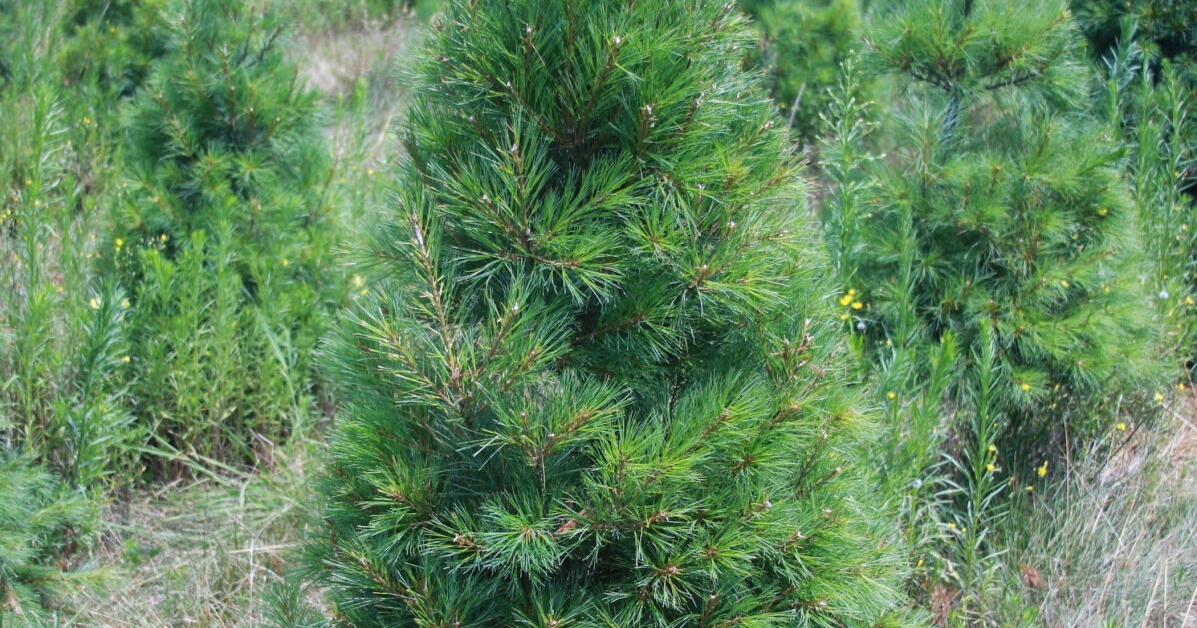
If you decided to select a pre-cut tree, pick one of the freshest you can find. Fresh needles bend easily. When the trees have dried out, their needles will snap.
Once you have your tree home, it’s a good idea to saw off about one inch from the bottom of the tree. After doing this, place the tree in a container of water. If it will be a few days before you bring it in to decorate, store it in a cool place such as your garage.
When you do bring it inside, be sure you place the tree in a stand that will hold some water. Keeping your tree dry should help minimize any fire hazard with the tree.
Another way to minimize the risk of fire is to locate the tree away from heat sources such as a heater vent or especially the fireplace. And make sure your stand is of an appropriate size to keep the tree anchored in place because no one wants their tree to fall over.
Also, to help ensure a safe Christmas, only leave the tree lights on when a responsible person is home, and never leave the lights on if you are going to be away from the house. After Christmas, be sure to remove the tree before it gets overly dry. Good luck!
Robert Knight explains pecan harvesting at Knight Creek pecan farms.
50 things we’re loving about Tulsa this year: Go check one (or several) out
Hummingbird Fine Craft

A mirror reflects a painting of late Tulsa musician Leon Russell at Hummingbird Fine Craft. The shop is a block from Russell’s former Church Studio.
317 S. Trenton Ave.
Inspired by famous Tulsa musician Leon Russell’s “Hummingbird” song, Hummingbird Fine Craft is a unique artist cooperative gallery on Studio Row in the Tulsa Pearl District, a block from Leon’s Church Studio.
The shop features artwork, clothing and accessories, greeting cards, honey products, jewelry and pottery.
Several artists joined to form the artist cooperative in January 2020 to showcase their unique works and offer one-of-a-kind, handmade and specialty items to art lovers, collectors and gift shoppers alike.
If you are looking for a unique and inspiring gift — for yourself or someone else — this is the place to go.
American Inheritance Confectionery

1531 S. Main St., Broken Arrow
Ronnie Watchorn, owner of American Inheritance Confectionery, has moved from Coweta to Main Street in Broken Arrow to sell his delicious chocolates.
A member of the Choctaw Nation, Watchorn uses history to inspire his flavors and presentation.
A series of whiskey-flavored caramels, for example, are named for U.S. presidents and historical figures such as Jim Thorpe and Marilyn Monroe. He also has bars named Tulsa’s Golden Driller and flavors such as caramelized White Chocolate with Coffee and Biscoff and Brown Butter with Roasted Walnuts.
Watchhorn works with area farmers to source some of his more unusual flavors, such as huckleberry and rye in a Jack Daniels ganache or strawberry and honeysuckle.
La Tertulia

The Deluxe Combination at La Tertulia comes with a taco, a rolled blue-corn enchilada, a tamale, a chili relleno and a good portion of carne adovada.
311 E. Second St.
If you want to travel to New Mexico without leaving the Tulsa city limits, then La Tertulia is your destination. This restaurant, the brainchild of James Beard Award-winning chef Kevin Nashan, is an homage to the place his grandparents operated in Santa Fe, New Mexico, for some 30 years. The authentic decor, with its white stucco walls, chiminea fireplaces and Native American pottery, sets the mood for the equally authentic northern New Mexican cuisine that comes out of the kitchen.
The menu is not extensive, but it is varied. For example, appetizers include the expected queso and guacamole, along with a shrimp and octopus ceviche. The soup offerings eschew the usual tortilla soup for a green chili stew, pozole and a black bean and jalapeño soup.
To get the best sense of what La Tertulia has to offer, the deluxe combination dinner ($18.25) is the way to go. It comes with a taco, a rolled blue-corn enchilada, a tamale, a chili relleno and a good portion of carne adovada, which is chunks of pork shoulder simmered in a rich and spicy red chili sauce. Accompanying all this are rice, pinto beans and pozole, or hominy.
Poppi’s Urban Spa

Owner TJ Woodberry created the popular lounge room at Poppi’s Urban using treatments that she loves and uses herself.
302 S. Frankfort Ave.
Poppi’s Urban Spa is a retreat in the middle of the hustle and bustle of downtown Tulsa.
At this oasis, you can find massage therapy, facial services and Life Lounge amenities. Believe it or not, it was formerly home to KOTV-Channel 6.
There are lots of open, communal spaces where you can hang out and relax with friends. It’s basically a self-care hub, owner TJ Woodberry said.
“Everyone loves the lounge space. I curated the lounge personally with a lot of the self-care tools I use in my own practice,” Woodberry said.
One thing we are excited about is the color pod, which uses the centuries-old concept of chromotherapy to treat diseases and to affect mood or emotions.
Poppi’s also has a beautiful salt room where you can experience the natural benefits of salt therapy. Salt therapy is an alternative treatment for a variety of ailments and conditions such as anxiety, sleeplessness, asthma and allergies.
Patio 201

“Patio 201” has a double meaning. It refers to the address on South Cincinnati but also to pair of patios, one upstairs and one down.
201 E. Second St.
The old OTASCO store, built in the 1970s at Second Street and Cincinnati Avenue, seemed so utterly boring that people could drive past it day after day for years and not notice it. The most notable features included blank walls of beige brick and a flat roof with a giant air-conditioning unit on top.
Tulsa architect Josh Chesney, however, re-imagined the ground floor as sleek, modern storefronts. And a glass elevator now takes visitors up to the main tenant, a new downtown location for The Brook bar and grill that opened last spring. Rooftop seating offers a sweeping view of the skyline.
A lot of people still call it the OTASCO building, but developer Jeff Scott is branding the location as “Patio 201,” which has a double meaning. It refers to the address on South Cincinnati but also to pair of patios, one upstairs and one down. Scott hopes Tulsans will treat them as an extension of their own back porches.
“Just sit. Relax. Stay a while,” he says. “There’s no hurry.”
Restaurant Basque

Rare roasted yellowfin tuna, fried calamari, black and white brioche, Basque Style snails, montaditos, salt-baked Petrale sole, and wood oven-roasted brook trout (clockwise from top left) are offered at Restaurant Basque.
114 N. Boston Ave.
The Basque region, which borders the Atlantic Ocean and straddles the border between Spain and France, is home to a unique cuisine that draws equally from the oceans and rivers, farms and fields. And Restaurant Basque has brought an authentic sampling of that diversity to the Tulsa Arts District.
The restaurant, the latest concept by Amelia Eesley, is overseen by executive chef Andrew Donovan, who has traveled the Basque region and imports as much of the ingredients he uses as possible from Spain. The menu is divided into six sections: cheese and charcuterie selections; small-bite offerings called Pintxos y Montaditos; and Raciones, which are small-plates meant to share. The entrees are divided between Carne (Meat) and Mariscos (Seafood), with Verduras (Vegetables) making up the final group.
Another tradition of Basque cuisine is its communal nature — most dishes are designed to be shared among those at the table, like the tapas popular throughout Spain. But instead of strolling from bar to bar, at Restaurant Basque it all comes to you.
Queenie’s Plus

1816 Utica Square
Queenie’s has been one of the most popular dining spots in Utica Square since it opened in 1985 — with “spot” being a defining term, as the bakery-cafe’s close confines made eating there a more intimate experience than usual.
Last year, Queenie’s moved into new, more spacious digs that also included an expanded patio for outdoor seating. The menu, however, still includes all the breakfast and lunch dishes that Queenie’s fans have come to love, along with daily specials.
Drive by and you’ll find that the patio is almost always full.
Gambill’s Pastaria & Grocery

Travis Bowers talks with customer Jono Helmerich at Gambill’s Pastaria.
1921 S. Harvard Ave.
Gambill’s Pastaria & Grocery has caused a buzz in Midtown.
Opening in the hallowed ground that used to be Jim’s Coney Island — Never on Sunday, the space remains casual while the food remains coveted.
Find fresh pasta and made-from-scratch foods — like really made from scratch from the get-go. They make the vodka in the vodka sauce. They make the rum in the tiramisu. They spend 16 hours simmering the broth for the bolognese.
And fans of RC Cola have been happy to find that there, too.
Zoo’s tiger cub

Mother tiger Ava with her new cub.
6421 E. 36th St. North
The Tulsa Zoo welcomed an adorable new member July 11 — a female Malayan tiger cub named Dara.
She was born through the Tulsa Zoo’s participation in the Association of Zoos & Aquariums’ Malayan Tiger Species Survival Plan.
The Tulsa Zoo welcomed an adorable new member July 11 — a female Malayan tiger cub named Dara.
She was born through the Tulsa Zoo’s participation in the Association of Zoos & Aquariums’ Malayan Tiger Species Survival Plan.
The Association of Zoos & Aquariums’ Species Survival Program works to ensure a sustainable population of Malayan tigers in the Tulsa Zoo’s care. Malayan tigers are native to the Malay Peninsula and are the national animal of Malaysia, but there are fewer than 250 in the wild due to threats such as habitat loss and poaching.
Ava’s cub is the sixth Malayan tiger cub to be born at the Tulsa Zoo.
For more information about Tulsa Zoo and exhibits such as this, visit tulsazoo.org.
Zoe Cakes Unlimited

Zoe Cakes Unlimited owner Rameissa Thompson said owning her own bakery is a dream come true.
1441 S. Quaker Ave.
Rameissa Thompson opened Zoe Cakes Unlimited on Cherry Street in March.
And it didn’t take long for her to cause a stir in a good way.
Thompson makes elaborate and intricately designed cakes that are edible works of art. Social media has played a significant role in Thompson’s business growth, and ultimately she wants to open more locations of her bakery.
The shop also sells macarons and other treats, and Thompson has been busy. She makes up to 10 cakes a week — some take as long as 24 hours to complete — for weddings, birthdays, graduations and other special events.
Polo Grill Lounge

2038 Utica Square
Since its debut in 1983, the Polo Grill has been one of Tulsa’s prime destinations for fine dining in an elegant setting. However, chef and owner Robert Merrifield always dreamed of having a place that offered all the quality patrons of the Polo Grill have come to expect in more relaxed surroundings.
That dream came true this year, with the opening of the Polo Grill Lounge, right next door to the original Polo Grill. As Merrifield said when the new place opened, “The whole guiding principle was to make this a casual place, where you could come in wearing a tuxedo on your way to the opera, or straight off the tennis courts in shorts and sneakers.”
The Lounge’s menu features 10 specialty cocktails, and food items that Polo Grill regulars will recognize: the “Howard Warren” chopped steak, Robert’s Romaine Salad, the grilled tuna salad and Swiss cheese sandwich, the oven-roasted tomato bisque, the Seafood Pavarotti, and the crispy chicken and noodles.
Friday night lights

Jenks fans cheer as their team takes the field for warmups against Edmond Santa Fe in the Class 6AI state football championship game Dec. 5, 2020.
Allan Trimble Stadium, 205 E. B St., Jenks
Spartan Stadium, 601 S. Riverview Drive, Bixby
Patriot Stadium, 6363 S. Trenton Ave.
Hardesty Field, 5666 E. 81st St.
Show your school spirit or come see the college and pro stars of tomorrow at a local high school football game.
You can watch the tradition-rich Jenks Trojans (Class 6AI) and powerhouse Bixby Spartans (6AII) defend their state football titles. The Spartans, who unveiled an impressive $600,000 video board last season, will move up to join Jenks, Owasso, Broken Arrow and Union in 6AI next year.
Tulsa’s Holland Hall Dutch (3A) and Metro Christian Patriots (2A) also return state champion teams to the field. Holland Hall won its first state title as an OSSAA member last season. Metro Christian repeated as 2A champion, defeating Washington, Okla., 48-37. The top-ranked Patriots’ passing game was too much for No. 3 Washington in their win at UCO’s Wantland Stadium. Sophomore quarterback Kirk Francis passed for 367 yards and five touchdowns for the Patriots.
Cherry Street Kitchen

An over-easy egg and rashers of bacon top the Brunch Burger at Cherry Street Kitchen.
111 W. Fifth St.
Fans of Cherry Street Kitchen discovered there was a whole lot more to love this year when the popular eatery and bakery opened in an expanded form in downtown Tulsa.
“As much as I loved being on Cherry Street, it has always been something of a dream of mine to move downtown,” chef-owner Jen Lindsay said. “And this opportunity was simply too good to pass up.”
The new location, which opened this summer, gives Cherry Street Kitchen about three times the dining space and also has room for a full bar, which allowed Lindsay and her staff to create a unique cocktail menu, with several of the creations making use of locally produced spirits, such as 1907 Bourbon and Gambill’s Vodka.
The biscuits and gravy are a must-try.
Felizsta

The cookies at Felizsta are a family tradition.
Reeder’s Convenience Store

2406 E. 21st St.
“Reeder’s Convenience Store is truly one of a kind.”
This is the bold statement offered up on the store’s website.
But we tend to think it is spot on.
Find everything from sushi to sandwiches, several varieties of local beef jerky and snacks and even local bakery items such as pie from Antoinette’s and Bavarian cheesecake from Ludger’s Bavarian Cakery. But there’s lots, lots more.
There are toys and unique retro candies, too, and freshly brewed iced tea that will keep you coming back.
We’d even say this is a stop you should make when friends and family are in town… just to rub it in that our hometown has Reeder’s and theirs doesn’t.
Cheese shops: Veldy’s, Meat and Cheese Show and Charcuteray

Veldy’s offers handcrafted charcuterie boards and raw milk artisan cheese.
Veldy’s, 2439 E. 11th St.
The Meat and Cheese Show, 1103 S. Peoria Ave.
Charcuteray, coming to 1207 S. Lewis Ave.
We love cheese and all the people who sell us cheese arranged expertly with fruit and meat on boards.
Here’s what’s new with three local cheese experts.
Veldy’s made the switch from an eatery to an artisan cheese and wine shop and event space this year. They serve quality charcuterie boards featuring their own Veldhuzien Farms cheese paired with wines and local beers.
Meanwhile, as of press time, The Meat and Cheese Show was set to open soon down the street at 11th and Peoria. This new shop is a collaboration of chefs Amanda Simcoe and Joel Bein. They offer cheeses and charcuterie that you can’t get anywhere else, and everything you need to make the best grazing table along with chef/catering services.
And shortly before press time, Charcuteray announced a new brick and mortar cheese shop/bodega coming to 11th and Lewis Avenue soon.
Dunkin’ Tulsa

Juan Silvar orders at the new location of Dunkin shortly after it opened in July.
1869 S. Yale Ave.
Five years after Dunkin’ made its first long-heralded re-entry into the area with a Broken Arrow store, a new location of the popular doughnuts-and-coffee shop has opened in midtown Tulsa.
The new store, open 5 a.m. to 9 p.m. daily, is at the entrance to the Target location near the Tulsa Fairgrounds.
When the the Broken Arrow location, 1101 N. Aspen Ave, opened five years ago, it was the first Tulsa-area location since the 21st Street and Memorial Drive store closed decades earlier.
Judging by lines at the new store, Tulsans are glad it is back.
Reservation Dogs

D’Pharaoh Woon-A-Tai, who plays Bear in the FX series “Reservation Dogs,” talks with the media during an Aug. 2 premiere at Circle Cinema.
The shot-in-Oklahoma FX series “Reservation Dogs” is making history and gaining big-name fans.
“Reservation Dogs” (available on FX on Hulu) follows four Indigenous youths on the modern-day reservation. There’s never been anything like this before on television. The series creators, Sterlin Harjo and Taika Waititi, are Indigenous. The writer’s room is Indigenous. Every series regular is Indigenous. And people are digging it.
Among high-profile fans is actor Mark Ruffalo, who plays the Hulk in the Marvel Cinematic Universe, called the series “great” after watching the first two episodes.
Season one of “Reservation Dogs” was shot primarily in Okmulgee. An Aug. 2 red carpet premiere with Harjo and cast members was staged at Circle Cinema in Tulsa. Circle Cinema also offered free screenings of new episodes on Mondays through the end of season one.
Here’s hoping “Reservation Dogs” has a long life span.
Circle Cinema

Former NBA star John Starks returned to his hometown for a screening of the documentary “Keep Shooting: The John Starks Story.”
10 S. Lewis Ave.
The magnitude of cool events that happen there led to this conclusion: Circle Cinema is a Tulsa treasure.
Circle Cinema began the year by serving (along with another Tulsa treasure, the Admiral Twin Drive-In) as a satellite site for the 2021 Sundance Film Festival. “Judas and the Black Messiah,” which received a best picture nomination at the Academy Awards, premiered in Tulsa and other satellite sites around the country.
In July, Circle Cinema hosted a festival of its own. The Circle Cinema Film Festival was responsible for former NBA star John Starks returning to his hometown for a screening of the documentary “Keep Shooting: The John Starks Story.”
And, in August, “Reservation Dogs” creator Sterlin Harjo and cast members got the red carpet treatment at Circle Cinema when the theater hosted a premiere for the history-making FX series shot in Oklahoma.
Circle Cinema, which opened in 1928, is Tulsa’s oldest still-in-operation theater and is the area’s only nonprofit cinema.
“But we are so much more than your local cinema,” said a statement on circlecinema.org. “We are celebrators of creativity, the arts and filmmakers from around the corner and the world. We educate, enlighten and entertain our guests 365 days a year through selected features and programs that expose and connect our community to global issues, environments and cultures.”
Don’t forget the popcorn.
In The Raw VU

Yellowtail sashimi is topped with slices of chili and served with a chili ponzu sauce.
110 N. Elgin Ave.
The newest location for In the Raw, one of Tulsa’s sushi pioneers, is atop the Vast Bank Building north of downtown, just across the street from ONEOK Field, and offers panoramic views of the city that quickly made it one of Tulsa’s top outdoor dining destinations.
The fact that this In the Raw also offers an extensive drink menu, as well as special food creations along with all the In the Raw favorites patrons have loved for years, only adds to the place’s cachet. Weekend night owls will appreciate the late-night menu, and the fact that this location is open late on Saturdays (until 2 a.m. Sunday).
Food specials include a variety of sashimi dishes, served on ice-cold plates to highlight the freshness of the fish being served, as well as the Hot Crab Roll, a huge creation of baked crab encased in a thick layer of rice and wrapped in a sesame soy paper, served with a rich, sweet sauce.
“This is an Adventure: Accidentally Wes Anderson” at Philbrook Museum

“Figaro, South Yorkshire, England” is one of the images to be seen in “This is an Adventure: Accidentally Wes Anderson,” opening Sept. 17 at the Philbrook Museum of Art.
Philbrook Museum of Art, 2727 S. Rockford Road
Filmmaker Wes Anderson’s unique visual sense — seen in such films as “The Royal Tenenbaums,” “Moonrise Kingdom,” and “The Grand Budapest Hotel” — inspired artist Wally Koval to create an Instagram account showcasing photographs of everyday scenes from around the world that pay homage to Anderson’s use of symmetry and distinctive colors. Tulsa’s Philbrook Museum of Art has brought to town the best of these images in “This Is An Adventure: Accidentally Wes Anderson,” now on display. The show also features photos of Tulsa and the surrounding area that also look like moments out of a Wes Anderson film that were submitted by the Philbrook community.
The exhibit, which is on display through Jan. 2, 2022, encourages viewers to take a closer look at the world around, and to open one’s mind to the possibilities of beauty, whimsy and adventure waiting there.
Gas Petal Flower Truck

Chelsea LeGrange has found a way to make it easier for Tulsans to smell the flowers when they are out and about town.
Who could resist Gretel? She’s a 1970 Volkswagen Single-Cab Transporter filled with beautiful blooms.
LeGrange parks Gretel at locations where people are out shopping, and customers stop by to make custom bouquets. To find the Gas Petal Flower truck, follow them on social media and go to thegaspetal.com.
Soon, LeGrange says, they will have a brick-and-mortar store on Cherry Street, one of Gretel’s favorite spots.
Mecca Coffee Co.

Coffee has been a staple of Mecca Coffee Co. throughout its 100-year history. Owner Michell Culbreath said, “We work to make it affordable to everyone and keep the quality high.”
1330 E. 41st St.
Mecca Coffee Co. is celebrating its 100th year in 2021, and we think that deserves a shout-out.
These days, Mecca is considered a cornerstone of the city’s Brookside district, but the shop got its start downtown, when Greek immigrants opened a shop in a building at Third Street and Boulder Avenue.
Michell Culbreath has been operating the Tulsa icon since the late ‘80s. Stop by and pick a commemorative up T-shirt to celebrate with them.
But don’t forget to stock up on your favorite coffee, specialty olive oil or flavored vinegar while you are there.
Greenwood Rising

Jonathan Horton sits in a period-correct Black Wall Street barbershop that has holographic barbers at the grand opening of Greenwood Rising.
23 N. Greenwood Ave.
The full history of Tulsa’s storied Greenwood District is on display at Greenwood Rising, an interactive history center that opened Aug. 4.
Naturally prominent is a retelling of Tulsa’s 1921 Race Massacre, but that is only part of the story. The $30 million, 11,000-square-foot facility focuses on the industry, ambition and resilience of a neighborhood that became known as America’s Black Wall Street.
Perhaps the most unusual feature is a barber shop in which visitors sit in vintage barber’s chairs while three-dimensional hologram barbers talk about life in Greenwood and its history.
Greenwood Rising is open 9 a.m.-8 p.m. every day except Tuesday, when the museum is closed. Admission is free during the first year of operation, but reservations are required. Docent-led tours are scheduled every half-hour.
See greenwoodrising.org or call 539-867-3173 for tickets and information.
Birria tacos

Various locations
Birria is one of the hotter trends in Mexican cuisine and a number of Tulsa restaurants offer their take on the dish. Tortillas are stuffed with stewed goat or beef, seared on a hot griddle and served with a cup of the consomme in which the meat was cooked.
El Paso Mexican Bar & Grill, 5209 S. Sheridan Road, is one of the places where you can have a truly traditional birria made with goat.
918 Maples Catering and Cafe, 8151 E. 21st St., sells a platter of four tacos, each stuffed a generous amount of tender, shredded beef, cheese, onions and cilantro, and served with a consomé broth that has the rich unctuousness and complexity of a good onion soup.
Other local places for birria tacos include Don Justo Red Tacos, 1942 S. Garnett Road; Tacos San Pedro, 12929 E. 21st St.; Tacos mi Rey, 2176 S. Garnett Road; and Ranchero Snacks, 3944 S. Garnett Road.
‘Come From Away’ at the PAC

“Come From Away,” the Tony Award-winning musical about a small Canadian town that became a haven for some 7,000 passengers aboard 38 planes, when their flights were rerouted there on Sept. 11, 2001, will be at the Tulsa PAC on Oct. 12-17.
Oct. 12-17 at the Tulsa PAC, 101 E. Third St.
Originally scheduled for the 2019-2020 season, “Come From Away” finally makes its way to Tulsa, courtesy of Celebrity Attractions.
This Tony Award-winning show is based on the true story of a small town in Newfoundland to which a number of planes were diverted in the immediate aftermath of the Sept. 11, 2001, terrorist attacks.
When some 7,000 strangers suddenly descend on this small town, cultures clashed and tensions ran high, but with time uneasiness turned into trust and gratitude into friendship. As Newsweek magazine put it, this musical “takes you to a place you never want to leave.”
Helmerich Park

After undergoing renovations, Helmerich Park reopened in March 2020.
7301 Riverside Parkway
If you’ve been socially distancing away from public parks, you might have missed the updates at Helmerich Park. The park reopened in March 2020.
Alas, the popular train feature has been removed, but in its place are pirate ships for the young and very young climbers (ages 2-5 and 5-12). For the young at heart, there is a new adult exercise area as well for those who aren’t quite ready to return to indoor gyms.
If you’re not into pirate ships or plyometric blocks, there are also quite a few picnic areas.
Southern Hills Country Club

Tiger Woods raises his arms in triumph after winning the 2007 PGA Championship at Southern Hills Country Club.
2636 E. 61st St.
Southern Hills has a long history of hosting professional golf majors. U.S. Opens were staged at the Perry Maxwell-crafted course in 1958 (Tommy Bolt), 1977 (Hubert Green) and 2001 (Retief Goosen). PGA Championships took place there in 1970 (Dave Stockton), 1982 (Raymond Floyd), 1994 (Nick Price) and 2007 (Tiger Woods).
Here comes another major: The 2022 PGA Championship will be decided at Southern Hills next May.
We expect that golf mania will continue to grow in Tulsa leading up to this major event. If you are not a member of Southern Hills, you can still be part of a championship experience where the only thing thicker than the rough is the tradition.
You can share turf with the greatest golfers on the planet by volunteering. Adults age 22-over can volunteer for a fee of $210 (plus tax and fees) and receive grounds access, apparel, meal vouchers and other perks. There is no fee for junior (age 16-21) volunteers.
For information or to submit an application, go to pgachampionship.com/volunteers.
FarmBar

FarmBar serves a 10-course tasting menu made of all Oklahoma ingredients from dozens of local farms.
1740 S. Boston Ave.
Every meal at FarmBar is a once-in-a-lifetime experience. That’s because chef-owner Lisa Becklund creates her menus based on the freshest local products available, which means the courses that are served as part of the restaurant’s 10-course tasting menu each evening are constantly changing. Fortunately, the attention to detail in the preparation and plating, and the way that the 10 courses work together to create a truly unique dining experience, remain constant.
FarmBar uses locally sourced ingredients, include much that Becklund grows herself at her Living Kitchen Farm & Dairy in Depew. One can also choose to accompany one’s meal with curated wine pairings; and non-alcoholic options, featuring kombuchas, shrubs, juices and handmade sodas, are also available.
Tulsa Ballet’s “The Nutcracker”

Artist renderings for some of production designer Tracy Grant Lord’s costume designs for Tulsa Ballet’s new production of “The Nutcracker” are shown. The show is scheduled to have its world premiere as part of the company’s 2021-2022 season.
Dec. 10-23 at the Tulsa PAC, 101 E. Third St.
Tulsa Ballet will inaugurate a new holiday tradition this December, with the world premiere of its new version of the classic ballet “The Nutcracker.”
The ballet was created through the combined talents of Val Caniparoli and Ma Cong, the company’s former and current resident choreographers, with lavish sets and costumes created by internationally acclaimed designer Tracy Grant Lord.
This larger-than-life production, set in 19th-century Germany, tells the story of a young girl’s magical journey on Christmas Eve, from the epic battle between the Nutcracker Prince’s army of toy soldiers and the Mouse King’s rodent minions, to the enchanting land of the Snow Queen and the Sugar Plum Fairy’s Kingdom of Sweets.
The professional dancers of Tulsa Ballet and Tulsa Ballet II will be joined by close to 100 local children to create this magical world.
Keystone Ancient Forest

Jacques LaFrance guides a group on the Frank Trail at the Keystone Ancient Forest. LaFrance has been a trail guide since the forest opened to the public in 2007.
160 Ancient Forest Drive, Sand Springs
With its new $1 million visitor center, a freshly unveiled hiking trail to add to its collection, two recent expansions of its public hiking hours and its first full-time staff member, the Keystone Ancient Forest has been getting plenty of media attention, as it should.
Owned by the city of Sand Springs and protected through a conservation easement held by The Nature Conservancy, the preserve is considered a world-class hiking destination.
The nearly 1,400-acre nature preserve is home to 500-year-old cedar trees and 300-year-old post oak trees.
It’s part of a vast cross-timbers forest that stretches from Kansas, across Oklahoma and into Texas, formed by a mosaic of rugged oaks and occasional prairies that forge a point at which the deciduous forests of the east transition to the Western Plains.Deer, mountain lion, bobcats, eagles, migratory birds and more than 80 species of butterflies are among the forest’s inhabitants.
The preserve has five trails of varying lengths and difficulty totaling more than 12 miles of hiking adventures that offer great views of Keystone Lake.
Tulsa Hills Shopping Center

7200 S. Olympia Ave.
A shelf check at the Tulsa Hills Vintage Stock store revealed two in-stock copies of the film “Field of Dreams.”
Perfect.
“If you build it, they will come” absolutely applies to the booming Tulsa Hills area alongside U.S. 75 in west Tulsa.
Anybody remember what was there before Tulsa Hills exploded into a shopping and restaurant destination? It was all hills and trees.
“There was pretty much nothing commercial out here,” Lighthouse Church assistant pastor Tim Pixler told the Tulsa World in 2008, the year Tulsa Hills debuted. “It was all just trees and hills.”Shopping, dining and entertainment options have popped up beyond the boundaries of Tulsa Hills and on both sides of U.S. 75. Vehicles aren’t the only kind of “traffic.” Facebook Followers have increased by 5,450 in 10 months. Website visits have tripled in 10 months.
In mid-August, Tulsa Hills announced that new arrivals will include Gung Ho Restaurant (serving ramen, bubble tea and poke bowls) in the former Freebirds location and The Joint Chiropractic (a chiropractic clinic & wellness center) in the former Sally Beauty location. (Sally Beauty relocated next to Bath & Body Works.)
Among additions to the landscape on the west side of the highway is Tulsa Hills Donuts at 1531 W. 81st St. Tulsa Hills filled a hole in west Tulsa. You can fill your belly with a bag of holes at Tulsa Hills Donuts.
‘Puccini and Verdi Play Ball’

Sarah Coburn performs during the Tulsa Opera’s production of “Rigoletto” at ONEOK Field last season. The company will again open its season with a special production here, titled “Puccini and Verdi Play Ball,” on Oct. 15.
Oct. 15 at ONEOK Field, 201 N. Elgin St.
Tulsa Opera made history last season, when it became the first professional opera company in the country to perform to a live audience during the COVID-19 pandemic, staging a unique, baseball-themed production of Verdi’s “Rigoletto” at ONEOK Field.
The success of that endeavor prompted the company to take its audience out to the ballpark one more time, opening its 2021-2022 season with “Puccini and Verdi Play Ball,” a production that combines some of the greatest arias and ensembles from the operas of Giuseppe Verdi with Giacomo Puccini’s comic one-act opera “Gianni Schicchi,” about a wily fellow who manages to outwit a greedy family and secure happiness for himself and his daughter.
The evening features singers Levi Hernandez, Rachel Blaustein, Emily Pulley, Jonathan Johnson, Julius Ahn and Danielle Pastin. James Blaszko directs, and Oriol Sans conducts the Tulsa Opera Orchestra.
Black Wall Street Liquid Lounge

Tikara Williams makes a coffee drink at the Black Wall Street Liquid Lounge.
10 N. Greenwood Ave.
There’s a lot more than coffee that’s brewing at Black Wall Street Liquid Lounge. Owners Guy and Yvette Troupe have made sure their establishment helps to illuminate the broader history of the Greenwood District, with displays that evoke the neighborhood’s resilience in the face of overwhelming adversity.
“Most people know only one thing about Greenwood — the massacre,” Guy Troupe said. “But there is so much more to Greenwood and Black Wall Street than that one thing. I’m hoping people will learn a little about the real history of Greenwood when they come here.”
That history is even a part of the menu, with specialty drinks named for such people as O.W. Gurley and J.B. Stradford, who were instrumental in establishing Greenwood as a thriving Black community.
The shop also gets its coffee from Roots Java, a local coffee wholesale company led by Tulsa author and entrepreneur Clifton Taulbert that specializes in coffees grown in Africa.
Tulsa Symphony’s ‘Triumph’

The Tulsa Symphony will present pianist Garrick Ohlsson in a concert featuring Beethoven’s Piano Concerto No. 5.
Meadow Gold District

11th Street between Peoria & Utica avenues
Travelers along Route 66 can find many reasons to pull over and mosey around a spell in the Meadow Gold District.
It’s here that you can find roadside attractions such as Buck Atom’s Cosmic Curios, watched over by the much-larger-than-life space cowboy who gives the place its name, and Decopolis, a cornucopia of wonders ranging from Tulsa’s Art Deco history to the frontiers of science fiction.
Fine art connoisseurs can enjoy what’s on display at Joseph Gierek Fine Art, the Sky Gallery and Atelier MFR, shop at Jenkins & Company for unique home goods, or help the family dog learn to be better behaved at Spirit Ranch.
For those with an appetite, enjoy a bowl of chili at Ike’s, one of the city’s longest-lived restaurants; sample “The Nightowl” at El Rancho Grande; take one of the gigantic slices of pizza at Bobby O’s Pizza; or have breakfast or lunch at the Wildflower Cafe.
Farrell Bread and Bakery

8090 S. Yale Ave.
Not only can you find delicious bread and pastries at Farrell Bread and Bakery, they are now serving coffee and sandwiches at their flagship store.
Find them in a new spot at 81st and Yale Avenue facing 81st now rather than Yale. It is much bigger (more room for eating sandwiches) and cute to boot. You can also find them at Mother Road Market, 1124 S. Lewis Ave.
Curious about the sandwiches? Here’s a taste: Caprese on Bagette, Sweet Corn Pimento Cheese on Garlic Focaccia and Grilled Cheese Sammie with bacon.
So basically, great bread + cheese = delish.
Church Studio

Church Studio owner Teresa Knox stands outside a studio that once served as home to Leon Russell and Shelter Records.
304 S. Trenton Ave.
Is it true that, eventually, everything is in fashion again?
The Church Studio, the place to be for music artists in the 1970s, is back in vogue.
Homegrown Rock and Roll Hall of Famer Leon Russell returned from California to Tulsa at the dawn of the 1970s and transformed an old stone church into a recording studio and hangout for music artists of that era. Church Studio had a magnetic effect, luring music artists from all over the world to work and play.
Russell, JJ Cale, Kansas, Jimmy Buffett, Dwight Twilley, the Gap Band, Willie Nelson, Tom Petty, Michael Bolton, Freddie King, Phoebe Snow and Peter Tosh are among artists who recorded at the studio, according to information from thechurchstudio.com and Church Studio’s current owner, Teresa Knox.
Knox made it a goal to restore Church Studio so it can be enjoyed by the public and so it can again be used as a functional recording studio. This year — 2021 — is the arrival year. Can she get an amen?
Okie Girl Fudge

okiegirlfudge.com
Cinnamon Toast Crunch, Butterfinger, Unicorn, Wedding Cake, Apple Pie, Turtle, Root Beet Float and Santa’s Coal are just a few of the 70 flavors of fudge offered by Okie Girl Fudge.
How fun is that?
Find Okie Girl Fudge at Bountiful Harvest in Wagoner and Yvette’s Gifts in Coweta. They also make regular appearances at the Broken Arrow Farmers Market and local festivals and events.
Nicole Marshall Middleton
Crumbl Cookies

Crumbl offers a weekly rotating menu of 120-plus flavors.
1340 E. Hillside Drive, Broken Arrow
If variety is the spice of life, then the new cookie shop in Broken Arrow, Crumbl, is spicy.
Crumbl offers a weekly rotating menu of 120-plus flavors. The flavors are inspired by desserts of all kinds — from pies to cakes to candies and more. All of the cookies are made fresh daily.
Here’s a taste: Chocolate Potato Chip, Dulce de Leche and Kentucky Butter Cake — all served warm. But don’t forget about Classic Sugar — served chilled.
Heads up. The word is out, and fans have been known to line up for their favorite flavors at the shop.
The Yard

1924 Riverside Drive
The Yard Bar on the River Trails is dog friendly, it is kid friendly and it is very cyclist friendly.
That’s where you’ll find a bunch of cyclists taking a break from their rides, especially on Wednesday nights.
Formerly Elwoods and before that The River’s Edge, The Yard Bar is a great place to take a beat, grab a cocktail and enjoy the sunset.
Oasis Fresh Market

Xavier Kelley works in the produce section at the Oasis Fresh Market.
1725 N. Peoria Ave.
Oasis Fresh Market owner A.J. Johnson had lofty goals for his new store. He wanted it to be a community centerpiece.
“One thing that’s going to be particularly different about this grocery store is that our motto is more than just groceries,” Johnson said before Oasis Market opened. “… Our goal is how can this oasis serve families on a greater scale.”
From what we can see, he’s done that and more at this beautiful and much-needed market.
Mac’s BBQ

Ribs with barbecue beans and campfire potatoes is one of the offerings at Mac’s Barbecue in Skiatook.
1030 W. Rogers Blvd., Skiatook
Mac’s BBQ is a Skiatook landmark and a favorite local eatery. Recognized by Southern Living as one of the South’s best BBQ joints in 2019, loyal fans travel from far and wide to enjoy pulled pork and ribs smoked with hickory and pecan wood on hickory pits.
Mac’s was originally founded in 1985 by Mike McMillan, and his son-in-law, Adam Green, continues the family tradition. Skiatook residents enjoy the amazing BBQ and atmosphere. Green loves Skiatook, and Skiatook loves him back. Skiatook’s City Council declared April 5, 2019, Adam Green Day to express their appreciation for all he does for the community.
In May, Green and his staff organized Mac’s Mayfest to raise funds for the Veterans of Foreign Wars (VFW). The event featured Mac’s award-winning BBQ, food trucks, vendors and a raffle with donated items. Several musicians and bands played at the event. The event raised more than $20,000 for the VFW.
Some of the menu favorites are the Mac, the Barbeque Frito Pie, the Spicy Pie, the Okie, the Messy Pig and the Loaded Bake. Their award-winning secret recipe BBQ sauce enhances the flavor of the hickory- and pecan-smoked meats. Don’t forget to save room for dessert! Enjoy fresh baked cobbler and bread pudding.
Mac’s also offers catering services.
The Collaborative Coffee and Wine Bar

General manager Gabriel Phillips and his staff work at The Collaborative Coffee and Wine Bar in Tulsa.
4532 E. 51st St.
The Collaborative Coffee and Wine Bar is a great place to get a little work done — or to avoid it altogether and relax.
You’ll find coffee, cocktails, food, a patio, catering and wine there. For a fun twist on charcuterie, try the Jarcuterie, a single-size serving of cheese, sausage and all that jazz.
There’s also a location in Jenks, 1577 W. 121st St. South, and one coming soon in Bixby.
Adventure Avenue

Addy and Reid Trammell, ages 8 and 6, play construction workers at Adventure Avenue.
8150 S. Harvard Ave.
This children’s entertainment venue that specializes in dramatic play recently celebrated its first anniversary.
Kids can dress up as a firefighter or postal worker, play café owner or doctor or “shop” for groceries. With so many costumes and play areas to choose from, their imagination is the limit.
The venue, which is open by reservation only, also hosts birthday parties. It’s suitable for up to age 12, but the younger crowd might enjoy it the most.
Redbud District

Owasso’s burgeoning Redbud District is a popular destination among local residents.
The revitalization of downtown’s Main Street over the past five years has led to the development of a thriving restaurant, retail and recreational hot spot that continues to expand.
It all started in 2016 when city officials carried out their longtime vision to create a unique shopping and dining destination for citizens to enjoy.
Their hard work has since culminated in the construction of two large mixed-use buildings — SEVEN6MAIN and Mowery Retail & Lofts — as well as a 2-acre beautified gathering place, Redbud Festival Park, located in the heart of the district.
Owasso’s $10 million, three-story SEVEN6MAIN complex, completed in November 2018, offers 45,000 square feet of space for new shops Wild Ivy, Wilder Brothers, The Steele Horse, Bluestem Mercantile and Evergreen Coffee Co., along with restaurants MAD Eats and SMOKE Woodfire Grill.
Passersby can also enjoy the offerings of Art in Bloom, a florist, and Emersumnice Brewery at Mowery Retail & Lofts — a $5 million, 27,000-square-foot facility, completed a few months after its neighboring development.
Outdoor enthusiasts aren’t left ignored, either, often flocking across the street to Redbud Festival Park, which debuted in July 2020, where food trucks, musical concerts, movies and other events, including Owasso’s weekly farmer’s market and yoga classes, are held.
Gardner’s Used Books

Gardner’s Used Books and Music houses about a million books. Its location spans more than 20,000 square feet.
4421 S. Mingo Road
Gardner’s Used Books and Music has been collecting, trading and reselling items for decades. And it’s more than just books: They trade in video games, audiobooks, music on CD and vinyl, and movies and TV on DVD and Blu-ray.
For serious collectors or anyone in need of a book-themed gift, Gardner’s Gold section (can’t use trade or store credit for these items) often has an impressive selection of gilded leather books from a variety of printers, including Easton Press.
Comic collectors should note only new books are sold, though some used trades can still be found there. If you bring in items, you can get trade credit in that media category, meaning you can get a $8-$10 item for just a dollar and change. Save your receipts; once you spend $100, you get $15 in store credit.
Arkansas River trail extension

The trail running behind the River Spirit Casino Resort along the Arkansas River is a bit off the beaten path — in a good way.
Along Riverside Parkway
Run, walk, bike or even electric scooter your way down to the Arkansas River and enjoy some of the best trails in the area for fresh air, exercise and scenic views.
However, the part around Gathering Place tends to get congested with park-goers walking in every direction, so for a less crowded and less noisy area of the trail, check out the extension next to the river by Margaritaville at River Spirit Casino Resort near 81st Street and Riverside Parkway.
It is accessible from the south Jenks area trails; from the north near Helmerich Park, or even the Joe Creek trail from the east.
Last chance offer: $1 for six months

Get a six-month digital-only subscription for $1. Subscribe today in less than a minute: Tulsaworld.com/subscribe
You can get answers to all your gardening questions by calling the Tulsa Master Gardeners Help Line at 918-746-3701, dropping by our Diagnostic Center at 4116 E. 15th St., or by emailing us at mg@tulsamastergardeners.org