Why Restaurant Flooring Matters More Than Most Owners Expect
The first restaurant kitchen I ever worked around had old quarry tile flooring that looked tough as nails. But after a few years of grease buildup, cracked grout lines, and constant steam cleaning, that floor became an absolute nightmare. Staff slipped constantly, cleaning took forever, and honestly the place always looked dirtier than it really was.
That experience changed how I look at commercial restaurant flooring.
Most restaurant owners focus heavily on equipment, seating, menus, lighting, branding, all that stuff. Flooring kinda gets treated like background decoration until problems start happening. And once flooring problems begin in a restaurant, they snowball quick.
Grease seeps into cracks. Moisture gets underneath surfaces. Health inspectors notice damaged areas. Employees complain about slippery spots. Before long, the floor becomes part of daily stress.
That’s why epoxy flooring became such a popular option for restaurants, commercial kitchens, bars, breweries, cafés, and food prep areas. After seeing several restaurant epoxy flooring projects over the years — some amazing, some terrible — I can honestly say good epoxy flooring solves a lot of problems if it’s installed correctly.
And yeah… “installed correctly” matters way more than people think.
What Is Restaurant Epoxy Flooring?
Understanding Commercial Epoxy Floor Coatings
Restaurant epoxy flooring is a resin-based floor coating system applied over concrete surfaces. Once cured, it creates a durable, seamless surface designed to handle:
- Heavy foot traffic
- Food spills
- Grease
- Chemicals
- Moisture
- Constant cleaning
Unlike traditional tile flooring, epoxy creates fewer joints and seams where bacteria or grime can collect.
That seamless part is huge in food service environments.
I once helped clean an old restaurant kitchen where grease had literally built up inside cracked grout lines over years. It was disgusting honestly. No matter how much they mopped, the floor still smelled funky during humid days.
Epoxy flooring eliminates a lot of those hidden problem areas.
Why Restaurants Choose Epoxy Flooring
It Handles Abuse Better Than Most Floors
Restaurants absolutely destroy flooring.
People outside the industry sometimes underestimate how brutal commercial kitchens really are. Floors get hit with:
- Hot oil
- Dropped pans
- Heavy carts
- Constant moisture
- Harsh degreasers
- High foot traffic
And all of that happens daily.
I’ve seen cheap flooring fail in less than two years inside busy kitchens.
Why Epoxy Holds Up Well
Good restaurant epoxy flooring is:
- Durable
- Chemical resistant
- Water resistant
- Slip resistant
- Easy to sanitize
- Long lasting
It also looks cleaner visually because there aren’t dozens of grout lines trapping dirt.
One restaurant owner told me their nightly cleaning time dropped noticeably after switching to epoxy floors. That alone saved labor costs over time.
Types of Restaurant Epoxy Flooring
Not All Epoxy Systems Are Equal
This confused me a lot when I first started learning about commercial floor coatings.
There are several types of epoxy flooring systems, and choosing the wrong one can create expensive problems later.
Self-Leveling Epoxy Flooring
This creates a smooth seamless surface.
Best for:
- Dining areas
- Cafés
- Retail food spaces
Looks modern and polished.
Quartz Epoxy Flooring
This system mixes colored quartz grains into epoxy.
Great for:
- Slip resistance
- Durability
- Busy kitchens
Honestly one of my favorite options for restaurants because it balances safety and toughness really well.
Epoxy Flake Flooring
Decorative vinyl flakes are added into the coating.
Popular for:
- Front-of-house spaces
- Breweries
- Casual dining restaurants
It hides dirt surprisingly well too.
Mortar Epoxy Systems
This is heavy-duty industrial stuff.
Used in:
- Commercial kitchens
- Food processing plants
- High-abuse environments
Extremely durable but more expensive.
The Biggest Mistake Restaurant Owners Make
They Cheap Out on Floor Prep
I’ve seen restaurant owners spend thousands on kitchen equipment then try saving money on flooring prep work.
Huge mistake.
Epoxy flooring is only as good as the concrete underneath it.
Concrete Problems That Must Be Fixed
- Moisture issues
- Cracks
- Oil contamination
- Uneven surfaces
- Weak concrete
If these problems aren’t addressed first, the epoxy coating eventually fails.
And failure usually looks ugly:
- Bubbling
- Peeling
- Delamination
- Cracking
I visited one restaurant where the epoxy floor started peeling near fryers less than a year after installation because grease contamination wasn’t cleaned properly before coating.
That repair cost way more than proper prep would’ve originally.
Why Slip Resistance Matters in Restaurants
Wet Floors Become Dangerous Fast
Restaurant kitchens move fast. Really fast.
During dinner rushes, people carry hot food, knives, heavy trays, and boiling liquids across those floors constantly.
One slippery area can become a workers compensation claim waiting to happen.
That’s why anti-slip epoxy flooring additives matter.
Common Slip-Resistant Additives
- Quartz sand
- Aluminum oxide
- Polymer grit
- Textured aggregates
The trick is balancing:
- Safety
- Cleanability
Too rough and cleaning becomes miserable. Too smooth and it gets slippery when greasy.
Good installers know how to find the middle ground.
Restaurant Areas That Benefit Most From Epoxy Flooring
Some Spaces Need It More Than Others
Not every part of a restaurant needs industrial-grade flooring.
But certain areas absolutely benefit from epoxy systems.
Commercial Kitchens
This is the biggest one.
Kitchen floors deal with:
- Grease splatter
- Steam
- Chemicals
- Constant mopping
Epoxy handles those conditions much better than many traditional flooring materials.
Walk-In Coolers and Freezers
Temperature changes destroy weaker flooring systems over time.
Dishwashing Stations
These areas stay wet almost constantly.
Bars and Beverage Stations
Spills happen nonstop here.
Dining Areas
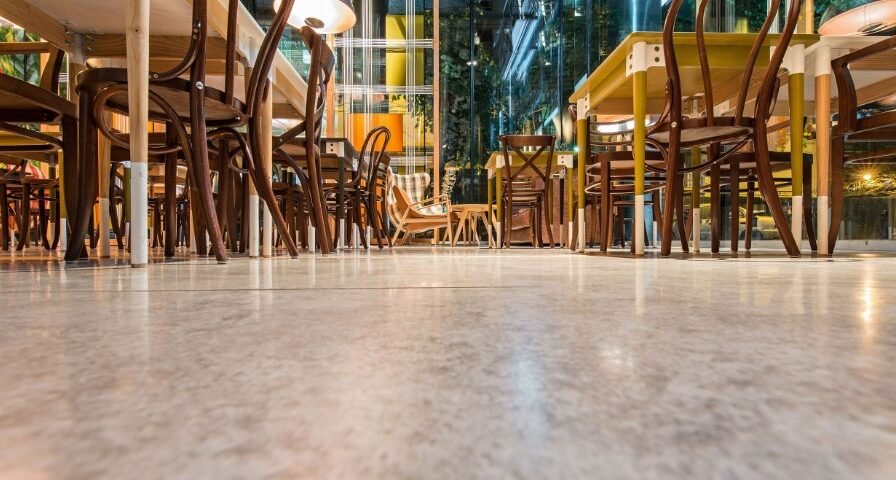
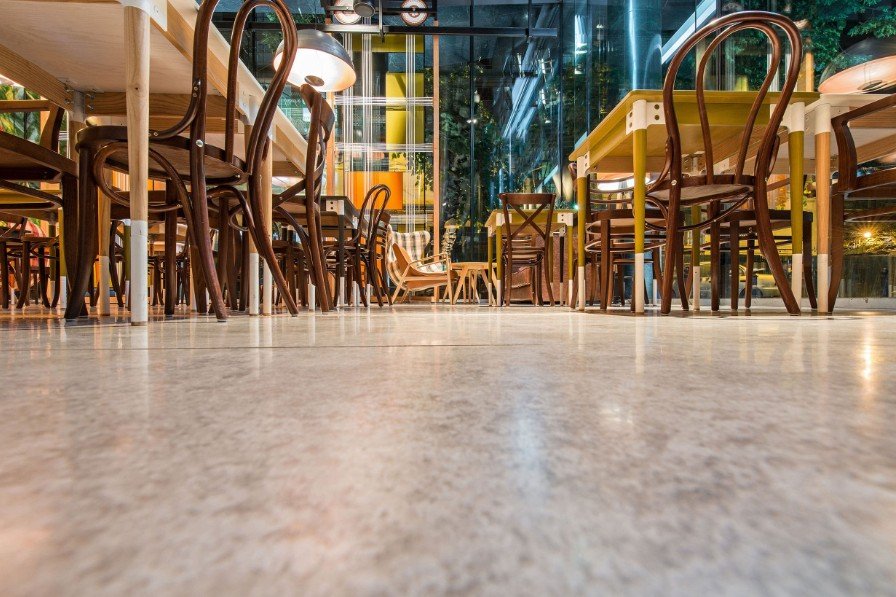
Decorative epoxy flooring can actually look surprisingly upscale in modern restaurants.
I visited a small brewery once with metallic epoxy flooring that looked almost like polished stone under soft lighting. Pretty impressive honestly.
How Restaurant Epoxy Flooring Is Installed
The Installation Process Is More Intense Than People Think
Good epoxy flooring installation isn’t just “painting the floor.”
There’s a lot involved.
Step 1: Concrete Grinding
The surface gets mechanically ground for proper adhesion.
This creates dust everywhere if containment isn’t handled correctly.
Step 2: Crack and Damage Repair
All imperfections need fixing first.
Step 3: Moisture Testing
Skipping this step can ruin the entire project later.
Step 4: Primer Application
Helps bonding strength.
Step 5: Epoxy Coating Installation
Multiple layers are often applied.
Step 6: Protective Topcoat
This adds:
- UV resistance
- Chemical resistance
- Extra durability
The curing process also takes time. Restaurants sometimes underestimate downtime requirements.
I’ve seen owners panic because they expected the floor to fully cure overnight. That’s usually not realistic for heavy commercial use.
How Long Restaurant Epoxy Floors Last
Quality Installation Makes a Massive Difference
A properly installed commercial epoxy floor can last:
- 10 years
- 15 years
- Sometimes longer
But poor installation cuts lifespan dramatically.
Heavy-use kitchen areas naturally wear faster than dining rooms too.
Factors That Affect Lifespan
- Floor prep quality
- Thickness of coating
- Cleaning practices
- Traffic levels
- Chemical exposure
- Moisture conditions
I’ve seen excellent epoxy floors still looking solid after years of abuse, while bargain installs started failing almost immediately.
Cheap bids usually hide shortcuts somewhere.
Cleaning and Maintaining Restaurant Epoxy Floors
Easier Cleaning Is a Huge Advantage
Restaurant staff already deal with enough cleaning duties.
One thing people love about epoxy flooring is how easy it is to maintain compared to tile grout.
Daily Maintenance Usually Includes
- Sweeping debris
- Degreasing
- Mopping
- Spot cleaning spills
No grout lines means fewer places for bacteria and grime to hide.
That matters big time during health inspections.
One kitchen manager told me they stopped fighting weird floor odors after replacing old tile with epoxy coating. Makes sense honestly.
Common Problems With Restaurant Epoxy Flooring
Even Good Floors Have Weaknesses
I like epoxy flooring a lot, but it’s not magic.
Hot Oil Damage
Extremely hot grease can damage certain coatings over time.
UV Exposure
Some epoxy products yellow in direct sunlight.
Improper Cleaning Chemicals
Harsh chemicals can dull finishes.
Moisture Vapor Issues
Concrete moisture problems underneath can still cause failures later.
That’s why product selection matters. Restaurant kitchens need industrial-grade systems, not garage floor kits from a home improvement store.
Those are very different things.
Epoxy Flooring vs Tile in Restaurants
My Honest Opinion After Seeing Both
Tile flooring dominated restaurants for years because it’s durable and familiar.
But grout lines become maintenance headaches eventually.
Epoxy Advantages
- Seamless surface
- Easier cleaning
- Better sanitation
- Slip-resistant options
- Faster maintenance
Tile Advantages
- Easier spot repairs
- Traditional appearance
- Heat resistance
Personally, I think epoxy wins for most commercial kitchens now.
Especially high-volume restaurants.
How Much Restaurant Epoxy Flooring Costs
Cheap Floors Usually Become Expensive Later
Restaurant epoxy flooring pricing varies a lot depending on:
- Floor condition
- Square footage
- Coating type
- Prep work
- Custom finishes
Basic systems may cost less upfront, but high-performance coatings often save money long-term through durability.
I’ve watched restaurant owners regret bargain flooring decisions more than almost any other renovation choice honestly.
Flooring problems affect daily operations constantly.
Is Restaurant Epoxy Flooring Worth It?
My Real-World Thoughts
For busy commercial kitchens? Absolutely.
The combination of:
- Durability
- Sanitation
- Moisture resistance
- Easy cleaning
- Slip resistance
Makes epoxy flooring hard to beat in restaurant environments.
But installation quality matters tremendously.
A properly installed epoxy floor feels like a long-term investment.
A rushed low-budget install feels like an expensive future repair bill waiting quietly in the background.
And unfortunately, you usually don’t know which one you got until months later.
Conclusion
Restaurant epoxy flooring has become one of the most practical flooring solutions for commercial kitchens, bars, cafés, breweries, and food service spaces. After seeing old tile floors crack, grout lines trap grease, and cheaper flooring systems fail under heavy use, I understand why so many restaurant owners switch to epoxy coatings.
The biggest lesson I’ve learned is that preparation and installation quality matter more than anything else. A properly prepared concrete surface combined with a commercial-grade epoxy system can create a floor that lasts for years while handling constant moisture, foot traffic, cleaning chemicals, and kitchen abuse.
It’s not the cheapest flooring option upfront, but it often becomes the cheaper option long-term because of reduced maintenance and longer lifespan. For restaurants trying to improve sanitation, durability, and overall appearance, epoxy flooring is honestly one of the smartest investments they can make.
FAQ About Restaurant Epoxy Flooring
What is restaurant epoxy flooring?
Restaurant epoxy flooring is a durable resin-based coating system applied over concrete floors to create a seamless, chemical-resistant, and easy-to-clean surface for commercial food service environments.
Why is epoxy flooring good for restaurants?
Epoxy flooring resists grease, moisture, chemicals, heavy foot traffic, and frequent cleaning. It also improves sanitation because there are fewer seams and grout lines where bacteria can collect.
Is epoxy flooring slippery in restaurant kitchens?
It can be if installed incorrectly. Most restaurant epoxy systems include slip-resistant additives like quartz or textured grit to improve safety in wet or greasy areas.
How long does restaurant epoxy flooring last?
A professionally installed commercial epoxy floor can last 10 to 15 years or longer depending on traffic levels, maintenance, and coating quality.
Can epoxy flooring handle hot grease and chemicals?
Yes, industrial-grade epoxy flooring systems are designed to resist many restaurant chemicals, oils, and grease exposure. However, extreme heat can damage lower-quality coatings.
How do you clean restaurant epoxy flooring?
Daily cleaning usually involves sweeping, degreasing, and damp mopping. Because epoxy floors are seamless, cleaning is often easier than tile flooring with grout lines.
Is epoxy flooring better than tile for restaurants?
In many commercial kitchens, yes. Epoxy flooring offers easier sanitation, fewer maintenance issues, and better moisture resistance compared to traditional tile flooring.
How long does epoxy flooring installation take?
Most restaurant epoxy flooring installations take several days including prep work, coating application, and curing time before heavy use is allowed.
Can epoxy flooring be installed over existing tile?
Sometimes, but proper surface preparation is critical. In many cases, damaged tile or unstable surfaces must be removed before installation.
Does restaurant epoxy flooring crack?
Properly installed epoxy flooring is highly durable, but underlying concrete movement or poor floor prep can eventually lead to cracking or coating failure.