YARD AND GARDEN: Discover the eerie wheel bug | Home & Garden

YARD AND GARDEN: Discover the eerie wheel bug | Home & Garden

Master Gardener Darla Chouinard introduces us to the eerie wheel bug.

Recently, a neighbor posted a picture of a big scary bug on social media inquiring what it was. I promptly identified it as an assassin bug or a wheel bug specifically an Arilus cristatus (Linnaeus). I am familiar with the wheel bug, as I found a dead one at my house not long before. There are about 160 species of assassin bugs in North America but the cristatus variety is found only in the United States.

Even though these bugs are terrifying, they are beneficial to the farmer and gardener. Their diet includes “pest insects” including insect eggs, leafhoppers, aphids, larvae, moths, and caterpillars, just to name a few. It is also one of the few bugs that eat the brown marmorated stink bug. Unfortunately, they eat beneficial bugs like lady beetles and honey bees.


YARD AND GARDEN: Interested in becoming a Master Gardener?

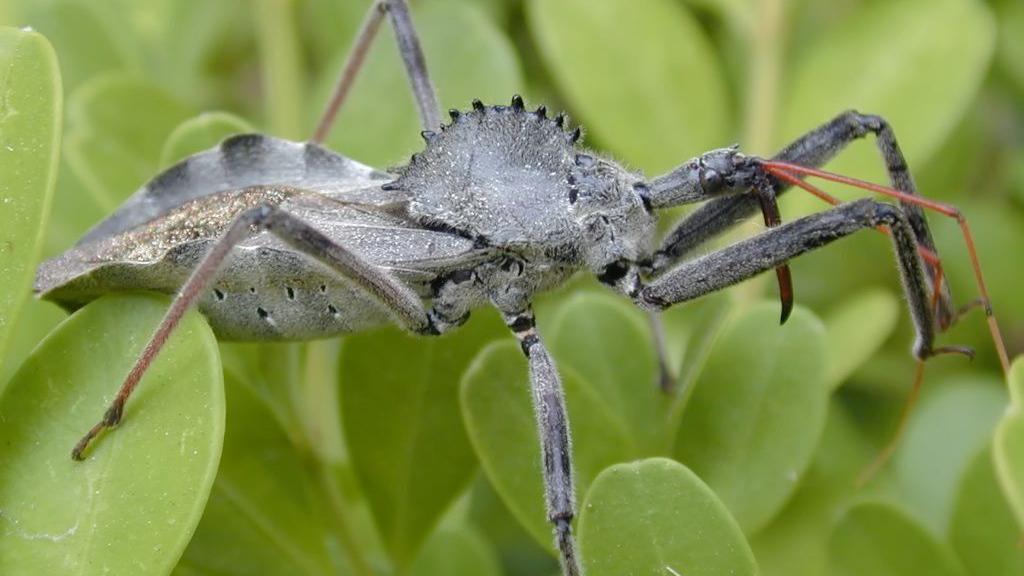
The adult wheel bug is approximately 1 to 1.25 inches long. Its coloring can be dark brown, grey, or black and they have a somewhat camouflaged appearance. It has a sturdy rigid body with long spooky spindly legs and antennae with a stout pointy beak.

They have large beady eyes on a slim head, and a prominent thoracic (the midsection on a bug body) with a semicircular crest that resembles a cogwheel or a half-circular saw blade that stands up on its back. The semicircle crest is present only on the cristatus species in the United States. The wheel bug gets its name from this semicircular crest.


YARD AND GARDEN: Canada Geese can be real pests!

Wheel bugs move and fly slowly and clumsy. While in flight, they sound like a grasshopper and make a loud buzzing sound. They stalk their prey or wait for them to cruise past, then quickly attack with their piercing beak. It then injects a toxic paralytic substance that instantly immobilizes, then kills its prey within 30 seconds of injection.

These insects should be avoided as they will easily inflict a painful bite on humans. It has been said that the bite feels as bad or worse than bees, hornets, and wasps. Initially, the bite is painful, followed by numbness for a few days. It becomes red and hot to touch and later may become white and hardened at the puncture. It usually takes two weeks to heal from a wheel bug bite. Therefore, it’s advisable to admire them and not handle them.

Wheel bugs lay their eggs on branches of trees and shrubs in late fall and the eggs resemble tiny brown bottles in a cluster. The eggs overwinter and hatch in spring. When they hatch the nymphs are bright yellow-orange. The nymphs or young have five stages to transition through before they molt into an adult. As they molt, their color changes too.

Even though these bugs are terrifying, they are few, and control measures are not recommended as they provide benefits to your garden by eating pests.

To learn more about these fascinating insects go to https://growingsmallfarms.ces.ncsu.edu

If you have questions about your garden or landscape, contact a master gardener at the University of Illinois Extension office in Mattoon at 217-345-7034 or through our online hotline at https://forms.illinois.edu/sec/1523725.

Be sure to visit U of I Extension’s horticulture website http://web.extension.illinois.edu/ccdms/ and like the Master Gardeners’ Facebook page www.facebook.com/ColesCountyMasterGardeners.

Haag: Give thanks for plants | Home & Garden

Haag: Give thanks for plants | Home & Garden

Everyone should add plants to their “thankful list” this year. Through photosynthesis, plants create oxygen in our atmosphere, which allows us to breathe fresh air. Also, directly, or indirectly, practically all food comes from plants. There are over 350,000 plant species in the world … we have a lot to be thankful for Benefit Group.

As a horticulturist, you can imagine I love and appreciate plants. My career revolves around plants, but my life has always revolved around plants too. Growing up on a Central Illinois farm, my parents instilled a love of plants and growing things at an early age. Many plants deserve my thanks this year.

I may not personally grow corn and soybeans, but they are two of the plants I am most thankful for. Corn and soybeans were some of the first plants I learned to grow and care for, and still to this day are my family’s livelihood and popular topic of discussion. If you can’t grow acres of corn and soybeans, try your hand at growing colorful varieties of Indian corn to decorate for Autumn, or edamame, the Japanese term for fresh, green soybeans that have been bred to be harvested and enjoyed in the green pod stage.

Tomatoes are probably the most grown vegetable in Central Illinois gardens. Who doesn’t love a freshly picked tomato from the garden? We can’t forget it is also the staple ingredient for many favorite foods including marinara (pizza and pasta!), ketchup and salsa. My Grandpa Bill grew the best tomatoes in town. His “secret,” was his perfected fertilization schedule. Apply a starter fertilizer when planting tomatoes to help them grow faster and develop flowers sooner. Get a soil test this spring to determine how much and what type of fertilizer you need to apply to your garden.

Trees provide shade, structure and height in our landscapes, but they give us so much more. Fruits, nuts, paper, chewing gum, hair products and chocolate, are just some of the things we have a tree to thank! They give the birds a place to nest, and they can even use used as firewood if they die. One of my favorite trees for fall color is black gum (Nyssa sylvatica) which turns a gorgeous scarlet red. Next spring, plant a tree in your yard. You will be forever grateful!

I am so thankful for flowering spring bulbs after a long, cold winter! While it seems like such a chore to plant them in the fall, it pays off in the spring when that first delicate, colorful bloom pops its way up in the brown landscape. Plant bulbs in October to allow time for a good root system to develop before winter. Spring bulbs will bloom starting in late February (snowdrops) and continue until late June (alliums). Bees will thank YOU for planting these early bloomers too!

Think about what you had for supper last night and how plants are connected to it. Or think about a plant that has made a positive impact on your life. What plants are you thankful for this year?

WRITER: Brittnay Haag Horticulture Educator, University of Illinois Extension

ABOUT EXTENSION: Illinois Extension leads public outreach for University of Illinois by translating research into action plans that allow Illinois families, businesses, and community leaders to solve problems, make informed decisions, and adapt to changes and opportunities.

Haag is a University of Illinois Extension horticulture educator in Livingston, McLean and Woodford counties.

Visit : https://benefitgroupltd.com/

E-commerce roll-up startup, 10club, acquires three D2C home-gardening brands

E-commerce roll-up startup, 10club, acquires three D2C home-gardening brands

E-commerce roll-up participant, 10club, has acquired a few immediate to customer (D2C) gardening brand names, Kraftseeds, Gate Back garden and Kriti Kalash. The makes specialise in seeds, soil, flower bulbs, manure, planters, equipment and each and every other form of products a purchaser might have to have for their household gardening demands. The corporation is also wanting to acquire six much more D2C models amid a heightened competitors in the Thrasio-model startup space with Mensa makes presently coming into the unicorn club in 6 months.
 
The startup said that the dwelling gardening class has witnessed an unprecedented spike throughout the pandemic, as men and women stayed dwelling and looked for strategies to make their residences truly feel clean, though cultivating hobbies that minimize anxiety.
 
10club believes that this development is listed here to stay and aims at focusing its energies on capitalising on the progress in this classification. The enterprise estimated that the existing group dimensions is about $900 million with a lot less than 10 for every cent online penetration, rising at more than 70 for every cent YOY in 2020-2021.
 
10club co-founder and COO Deepak Nair said that his startup is really bullish on the house class and the acquisition of 3 solid manufacturers in the garden and back garden section presents the e-commerce roll-up agency a potent foothold and a lot more importantly will complement the 6 new acquisitions that they will announce soon. “With these acquisitions, we will be clocking a revenue of around $50mn in the household category by yourself,” Nair additional.
 
D2C models in India which were being earlier promoting via platforms like Amazon, Flipkart had been lacking the funds and infrastructure to scale. The progress of e-commerce roll-up startups in India on the strains of the popular US-primarily based unicorn, Thrasio, has accelerated opportunities for models who would like to offer directly to customers on the web.
 
10club mentioned that the founders of the makes Kraftseeds, Gate Backyard garden and Kriti Kalash noticed assure and prospective in their business enterprise almost two a long time before. “Regardless of the troubles of a classification that wasn’t as profitable back again then, they used a appreciable volume of time knowing choices of the urban shopper and took this nascent organization on the net by way of Amazon.
 
They made an excellent skills in sourcing seeds and a strong network with farmers who could agreement farm for them, customised to satisfy their demands of seed versions, seasonality, volume, and distinct high quality requirements, enabling them to resource the very best top quality seeds at the most fair rates,” mentioned a 10club spokesperson.
 
The startup claimed that more than the decades, the brands  expanded their item traces to consist of other goods these types of as planters, soil, coco peat, gardening applications and flower bulbs. When COVID hit and the category noticed a boom, they were not only geared up to cater the need from a product or service combine perspective but the network they experienced spent several years to establish also compensated off, it included.

Also examine: Ex-Myntra CEO Ananth Narayanan’s Mensa Brand names is India’s first e-commerce rollup unicorn
Also go through: Thrasio-type venture Evenflow acquires Rusabl to fortify sustainable classification

Bronzes, burgundies, fall finery highlight this year’s Thanksgiving flowers | Home & Garden

Bronzes, burgundies, fall finery highlight this year’s Thanksgiving flowers | Home & Garden

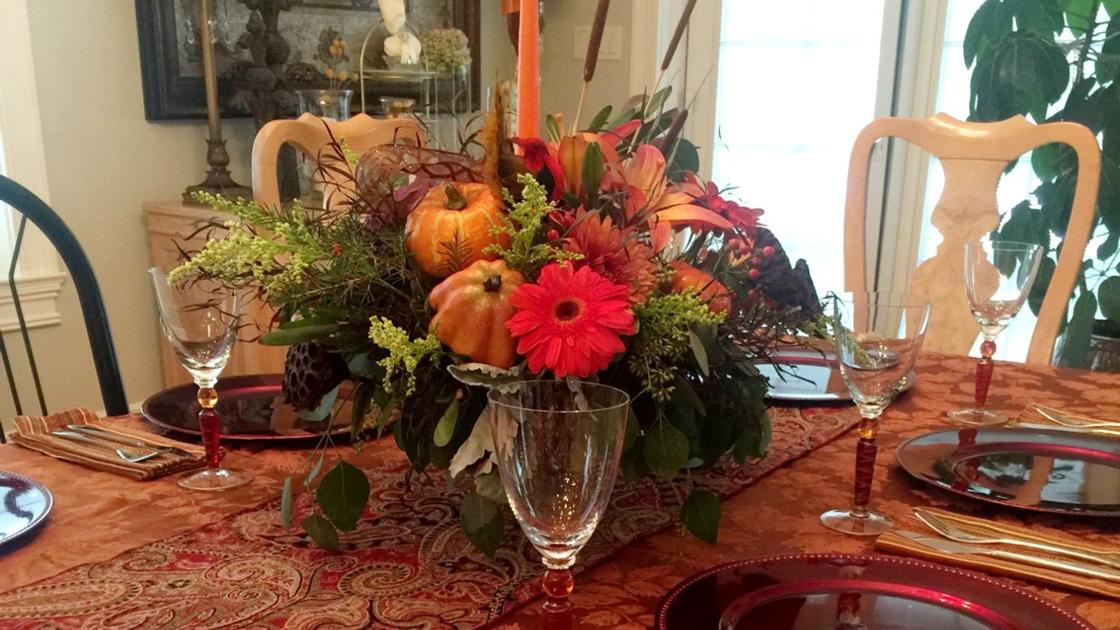
The Thanksgiving holiday is the jewel of autumn known for its hearty feast, the gathering of family and friends and as a time to express gratitude.

To add warmth and festive color to the celebration there’s nothing like bringing nature indoors. Fall flowers are perfect for decorating, sending or presenting to the holiday host, and the perfect centerpiece can be a beautiful focal point of a Thanksgiving table.

Denise Floral Designs creates a wide variety of Thanksgiving arrangements featuring a harvest of assorted autumn blooms. “Our young adult customers gravitate toward the rustic farmhouse look, while others prefer more traditional designs,” said owner Denise Golfis. “Consultations are by appointment only at our showroom in St. John. We offer delivery, and we’re on Facebook and Instagram.”

She incorporates pumpkins, wheat, gourds, pine cones, dried flowers, pampas grass and other natural elements into her eye-catching Thanksgiving bouquets and centerpieces for that fall flavor. Golfis, who does floral decoration for local businesses, offices and private homes for the holidays, said that these items usually trend at this time of year.

Monarch Florist & Events, also of St. John, offers consultation by appointment and takes orders online. Owner Jen Steliga said that this year’s signature autumn shade for florals is bronze. “I really like the bronze color and am using bronze upright Amaranthus to accent my arrangements.”

Barany in the Garden: Perennials in the cold | Explore Yakima

Barany in the Garden: Perennials in the cold | Explore Yakima

It’s funny how a person day you can be out gardening in your favored pair of shorts, and just a number of days later you are pulling on excess layers of polar fleece. Even however I do my best to mentally put together, I’m hardly ever really prepared to see a further gardening yr appear to an finish.

Over the final several weeks, I have discovered myself checking the extended weather forecast various occasions each day, exploring for borrowed time. But I’ve been a gardener long more than enough to know that Jack Frost will finally win the race.

If all I grew have been domestically native plants, I’d have no purpose to fret in excess of the climate forecast. These reliable stalwarts developed to shake off massive chills. But I’m a collector, incorporating peonies from China, sedges from New Zealand and maples from Japan. Will these transplants endure a deep freeze in Central Washington? Horticulturists at the U.S. Division of Agriculture can enable us make these predictions.

The USDA Plant Hardiness Zone Map is an vital information in analyzing which plants are most probable to thrive at any spot. The map is centered on the typical annual minimal winter temperature, divided into 10-degree F zones. It divides the United States into 13 zones, with Zone 1 marking the colder areas of Alaska and Canada, and Zone 13 which includes southern Mexico and Hawaii. Further divisions of “a” and “b” in a single zone point out a 5-degree variability.

My Yakima urban-location backyard is in USDA Zone 6b, and with some self-assurance I can pick out perennials that endure temperatures as very low as minus 5 to zero degrees. Some of my buddies in West Valley and Selah once in a while report even decreased readings and seem for crops hardy to Zone 5b (minus 15 to minus 10 degrees) or Zone 6a (minus 10 to minus 5 degrees). If you’ve very carefully decided on your plants, you will need the polar fleece extra than they do.

Recall that soil temperatures drop slower than air temperatures. Insulated by the soil, underground roots have a measure of security. Roots freeze even slower if the soil is perfectly mulched or snow-included, or if the soil was moist when it froze. Yet no matter how hardy a plant, couple of would endure even a moderate Yakima winter without having likely by seasonal improvements called “acclimation,” a procedure that sales opportunities to dormancy. Most vegetation are effectively on their way to their genetically determined winter season hardiness by now, and stand nicely-organized to face the freeze.

Hardiness zones are a guidebook and not the only aspect to weigh when deciding whether a plant will be perennial in Yakima. Gardens with south-facing brick partitions or courtyards, or around concrete parking tons or bodies of drinking water, could have microclimates that are substantially warmer than the bordering place. I frequently pay a visit to city gardens on the Buffalo, N.Y., where vegetation rated hardy to Zone 6b thrive, inspite of Buffalo’s all round Zone 5 score. Brick properties developed really shut together, just blocks from Lake Erie and the Niagara River, offer you defense to plants that will freeze to dying in gardens just a couple of miles absent.

Even devoid of a microclimate, what gardener has not gambled on zonal denial? (As you may well guess, zonal denial refers to trying to increase plants that are not hardy in your climate zone.) In consecutive yrs with delicate winters, crops with a tender pedigree might pull by, lulling us into believing we’ve fooled Mom Mother nature. It serves us ideal when, the extremely upcoming winter, weather conditions blows in straight from the Arctic, and May possibly finds us purchasing for replacements.

Just like crops, the birds that keep in Yakima for the winter are nicely-outfitted to face the temperature. Stored fat and fluffed feathers that trap warmth assist keep them heat through the prolonged, chilly evenings. A slowed nighttime metabolism aids with energy conservation until eventually they can come across food items in the morning.

A back garden filled with crops for food items and shelter results in being an oasis for these birds. Though most depend on wild food items, they will nutritional supplement with seed, suet and fruit from feeders when it is difficult to find normal sources, particularly soon after a snowfall. If that is not motive ample to maintain your feeders comprehensive, then the wonderful sights and seems of birds, just outdoors your window, really should do it. In addition to meals, try out to present as several various habitats as doable, irrespective of whether in birdhouses, natural tree cavities, copses of decorative grasses and dried perennials, or evergreens and shrubs.

Ballwin split-level combines midcentury aesthetic with artist’s works | Home & Garden

Ballwin split-level combines midcentury aesthetic with artist’s works | Home & Garden

When Janet and Kevin Muhm purchased their Ballwin home in 2016 they hadn’t previously considered living in a split-level home. “We always hated splits, but we loved this house,” Janet Muhm says. “When you come in, you just see the upstairs and it invites you in.”

The home, built in 1978, utilizes a split-foyer design. The entry door opens into a small foyer that leads to the two levels of living space. The plan maximizes the open feel of the upstairs, effectively separating it from the lower level for more privacy.


The Muhms moved into their split-level home a few years ago and have taken advantage of the natural light their home has to display family art. Video by Hillary Levin


Hillary Levin


The rightness of this particular home resonated with both of them.

“We’ve talked about why we bought this particular house a lot. We liked that there was a lot of light on both floors. We didn’t realize we would get two completely different living areas with this particular design.

“When we bought the house three of our four parents were still living. We wanted to let them know our home was their home and we would welcome them. We’ve got two grown kids who are always welcome back. Before he got his own apartment our son, Colin, lived on the lower level,” Janet Muhm says.

The Muhms both attended Washington University. “I’d just completed my freshman year, and Janet was just starting. We met before classes started at an informal event prior to orientation,” Kevin says.