This meticulously planned and planted Queen Anne garden changes for the seasons in colorful echoes of a restored Victorian home

This meticulously planned and planted Queen Anne garden changes for the seasons in colorful echoes of a restored Victorian home

BELIEVE IT OR NOT, this sultry Victorian on Queen Anne was once a humble 1906 house clad in white vinyl siding, with a “pretty” pink, yellow and blue garden skirting its foundation. Then Brian Coleman, a Seattle psychiatrist with a love for old houses, discovered a passion for historical restoration. “We added a turret, carvings of sunflowers and cast-iron griffins, along with new siding in a fall palette of deep greens, gold and burgundy,” he says. “The garden had to change!”

American poet Phyllis McGinley once wrote, “The trouble with gardening is that it does not remain an avocation. It becomes an obsession.” Coleman tells me his passion (obsession?) for tending was sown early, alongside his mother in the family’s garden in Olympia. My, how it’s grown.

Today, the ornate house and garden are a celebration of color and finely crafted detail. The shallow front yard is a mere 22 feet wide, with steeply sloping beds that meet up with the sidewalk on a busy residential street. Manicured box hedging and variegated holly columns provide year-round heft to the landscape, along with a windmill palm, topiary forms, yew hedges and a golden hinoki cypress. Then ready, set, plant. And by plant, I mean play, adorn and festoon the landscape with seasonal compositions that echo colorful detailing on the house.

The burgundy, copper, chartreuse and gold colors are consistent from year to year. “It’s an Aesthetic 19th-century palette inside and out,” Coleman says. Variegated foliage, along with turquoise and purple accents in the garden, leavens the darker hues.

Coleman’s garden is highly crafted and reflects the remarkable plantsmanship of a group of talented designers. Glenn Withey and Charles Price (witheyprice.com) laid out the initial plan for the landscape and unleashed their signature (and brilliant) color sense on early plantings. Over the years, Riz Reyes, Shayne Chandler and Sam Sacharoff also have contributed their design expertise and mad plant skills to the artful landscape. Coleman tends the garden on a day-to-day basis and stays busy keeping up with watering the containers, beds and borders.

The garden is a botanical work of art that’s constantly being re-imagined. Hardy perennials, including cabbage palm (Cordyline australis ‘Red Star’), purple-leaf heuchera and variegated ivy, anchor compositions engulfed by a seasonal infusion of tender plantings. A recent display of sun-tolerant coleus and dark-leaved dahlias greeted visitors at the front walk, while billowing containers filled with trailing million bells, petunias and fragrant heliotrope mounted the entry steps. Naturalized nasturtiums softened hard edges, and sunflowers made their annual appearance, echoing details found on the home’s front gable.

In fall, masses of winter pansies, ornamental kale and berried shrubs replace tender plantings in the massive window box and containers, while the trim boxwood hedges and clipped hollies carry the show throughout winter.

In addition to his medical practice and his work as editor at large for Old House Journal, Coleman is a prolific author of 22 books. His most recent title, “Private Gardens of the Pacific Northwest” (Gibbs Smith, 2021), profiles 20 personality-infused landscapes, beautifully captured by Seattle photographer William Wright. Coleman’s landscape is featured in the book, although, modestly, he doesn’t identify himself as the owner. The garden is simply a generous and lavish gift to readers and local passersby alike.

Winter brings new opportunities for plant care | Home & Garden

Winter brings new opportunities for plant care | Home & Garden

URBANA — Wednesdays just got merrier and brighter. Each week, University of Illinois Extension educators will share holiday plant and home landscape tips for winter.

The free online workshops begin Dec. 1 and include live, follow-along activities led by Extension educators Andrew Holsinger, Chris Enroth, Ken Johnson, and Katie Parker, Each hour-long session begins at 3 p.m. Register online at go.illinois.edu/GoodGrowingWinter21.


YARD AND GARDEN: Change up your holiday plant tradition with amaryllis

• Unique Plants for the Holidays — Wednesday, Dec. 1: Are you searching for the perfect holiday gift for that plant lover on your list, but don’t want to give them the typical poinsettia or Christmas cactus? Learn about some out-of-the-ordinary plants and how to grow them like plumeria, citrus, tea, coffee, and miracle fruit that can make great gifts for the plant enthusiast in your life, or yourself!

• Going Nuts Over Tree Nuts! — Wednesday, Dec 8: It’s just nuts! Yes, through the holiday season it can get a bit hectic but sit back and relax while you learn about the wonders of growing nuts in your own back yard. The nuts that will be covered fall into the traditional holiday fare of chestnuts, walnuts, pecans, and hazelnuts.

• Wonderful Winter Interest — Wednesday, Dec 15: The winter season can be a dreary time for your landscape. Learn what plants to use to add color, texture, and plant architecture to your winter landscape, such as red and yellow twig Dogwood, winterberry, witch hazel, serviceberry, and false cypress.

• Dealing with Winter Wildlife Damage — Wednesday, Jan 12: Wildlife can be fun to watch, but wild animals can also be very destructive to the home landscape. Learn how deer, rabbits, racoons, squirrels, voles, and mice may cause damage to your yard or garden this winter and some tips to help protect your landscape.


OVER THE COLES: Watering trees, shrubs in the fall and winter is a balancing act

If reasonable accommodation is needed to participate, or for more information, contact Katie Parker at keparkr2@illinois.edu. Early requests are strongly encouraged to allow sufficient time for meeting access needs.

For more information on University of Illinois Extension programming in Coles, Cumberland, Douglas, Moultrie and Shelby county, visit our website at http://web.extension.illinois.edu/ccdms/index.html or call us at 217-849-3931.


Katie Parker is Local Foods and Small Farms Educator with the University of Illinois Extension

Napa County Master Gardeners: Preparing for winter | Home and Garden

Napa County Master Gardeners: Preparing for winter | Home and Garden

The sky is blue, the hills are green, and we will certainly have some sunny days ahead. Now is a good time to get your yard prepared for the winter. The recent rains have softened the soil, which will make your garden chores easier.

First, take a good look at your plants. Remove plant debris, stalks, dead leaves and anything that looks diseased. It’s a little early to prune your roses, but you should remove any leaves or stems with fungus. You can chop up your dead plants and put them in your compost, but do not put any diseased material in the compost. The disease will just incubate.

If your perennial plants have seed heads, leave them for the birds to eat. You can cut them down when the seeds are gone.

Make time to weed. It is gratifying to pull weeds after a rain because they come up so easily. You can put them in the yard-waste bin. The hot compost process used by the City of Napa’s waste-management company will kill any seeds.

As long as the ground is soft, you can dig a few holes so they are ready for any planting you might want to do later in the spring.

After you weed, mulch. It will keep the weeds down. Mulch also insulates the ground, keeps it from drying out, and eventually rots, improving soil texture. You can buy mulch at a nursery or you can make your own with chopped-up yard waste, such as twigs, leaves, and grass. The larger bits of compost left behind after you sieve your compost can be used as mulch, too. So can shredded newspaper, brown paper bags, and cardboard.

People are also reading…

I am of two minds about raking leaves. Sometimes you just want your yard to look tidy, and you can put the leaves in the compost bin. However, I always leave several piles on the ground because eventually they rot and improve the soil. hey, are also a hiding place for insects and other creatures that are beneficial for your garden and a food source for birds. It’s fun to watch birds messing around in the leaves in winter.

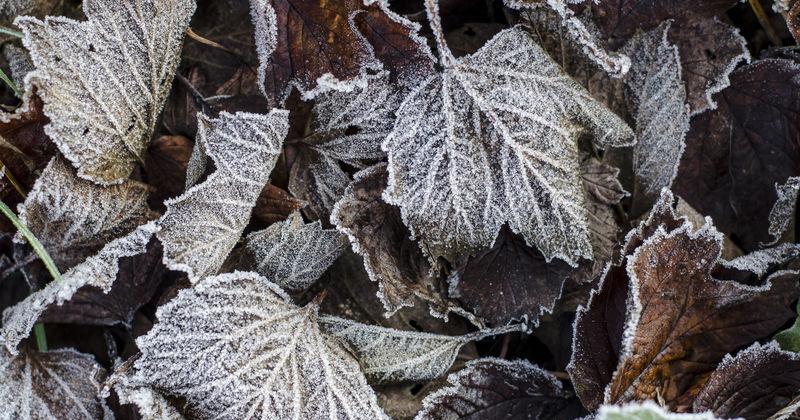
You should assume that we will have a couple of nights of frost, so get ready now. Pay attention to the weather reports. Identify which plants need protection. At my house, it’s brugmansia and daphne. Perhaps you have fuchsia, bougainvillea, young fruit trees, succulents, or avocados. Citrus trees are especially vulnerable.

Start collecting vinyl sheeting, towels, burlap, blankets, and sheets. You will also need something to support the material so it doesn’t touch the leaves, which can be damaged by frozen cloth. One gardener I know used two metal chairs to balance a ladder over which he folded a sheet, protecting a row of mandevilla. The cloth should touch the ground for better insulation. Be sure to remove the cloth the next day, when the air warms.

Some nurseries sell a nonwoven polyester fabric that can be draped directly over the plant. It won’t hurt the plant even if it touches it and can be left on all day. You can wrap burlap or blankets around the trunks of young fruit trees or around shrubs to keep them from freezing.

Boxes, baskets, and buckets can come in handy for frost protection. I used to be enchanted by the bell-shaped glass cloches in the old Smith and Hawken catalog. You were supposed to place them over a plant to protect it in winter. So French! So adorable! So expensive!

Instead, fill up old plastic milk bottles with water and surround the plant with them. The water insulates them, and you can drape a cloth over it all.

Temperatures can vary widely over a single property. Tree cover, exposure to the sun, and even the height of a bed can make a difference. The lower area of my yard, under a willow tree, is a few degrees cooler than the rest of the yard.

Frost-tender plants generally do better with southern exposure, so think about that. Perhaps you can move your succulents next to the house, so they will have shelter over the winter. You can take this precaution with any container plants that are small enough to move.

When you have your yard prepared for winter, clean your tools and put them away neatly. Because of our climate, we can garden almost year-round, so it’s good to have your tools rust-free and at the ready.

This is also a good time to take stock of what did well in your garden over the last growing year, what could be improved, and, perhaps, what wasn’t worth the effort. Gardening is a perpetual learning experience.

One of my brugmansias froze a few years ago because the weather took me by surprise. I left it alone to see what would happen and, sure enough, green sprouts appeared as spring approached. I trimmed off all the dead-looking limbs, and after a dose of organic fertilizer, it was more luxuriant than ever.

We have been living with drought and fire conditions in Napa Valley for a few years. Our landscape plants, not to mention Napa County flora in general, have been severely stressed. It is probably wise not to rely too much on their resilience and to be prepared for a freeze.

Food Growing Forum: Napa County Master Gardeners will present a discussion of “Cane Berries” on Sunday, November 14, from 3 p.m. to 4 p.m., via Zoom. Register here to receive the Zoom link.

Library Talk

Napa County Master Gardeners will present a talk on “Chasing Sun in Shaded Yards” on Thursday, December 2, from 7 p.m. to 8 p.m. via Zoom. Does your yard have a limited supply of sunny locations to grow vegetables? Learn about site selection and cultural requirements for the plants you want to grow. Register here to receive the Zoom link.

Workshop

Napa County Master Gardeners will lead a workshop on “The Art of Raising Succulents” on Sunday, December 5, from 1 pm to 3 pm, at the Yountville Community Center, 6516 Washington Street, Yountville. Discover how to care for and design with these colorful, unthirsty plants in your garden or on your patio. Attendees will get plant starts to take home. Yountville residents: $16; Non-residents: $18. Free to Golden Ticket members. To register, visit online registration or telephone the Parks & Recreation Department at 707-944-8712.

Got Garden Questions? Contact our Help Desk. The team is working remotely so please submit your questions through our diagnosis form, send any photos to mastergardeners@countyofnapa.org or leave a detailed message at 707- 253-4143. A Master Gardener will get back to you by phone or email. For more information visit napamg.ucanr.edu or find us on Facebook or Instagram, UC Master Gardeners of Napa County.


Check out Napa Valley’s most expensive home, a $25m estate located in Deer Park at 850 Sanitarium Road. “The warm modern design features an open floor plan connecting living, dining, cooking, and family rooms, a 2,000 bottle wine library, luxurious primary suite, massage room, gym, two offices, media/theatre room, infinity edge pool, outdoor kitchen, and a full two-suite guest apartment with its own living room and view deck.”


Midlands families seeking community’s help after home fires

Midlands families seeking community’s help after home fires

STATEWIDE, S.C. (WIS) – One family in Richland County, and another family in Kershaw County are seeking assistance by the American Red Cross after their homes were damaged by fires Thursday.

One family’s home is located in Watermark Place in Columbia, near Riverbanks Zoo and Garden off Greystone Boulevard, and after the fire they are in need of clothing, food, shelter, and referrals for resources. The American Red Cross says the family includes three people.

The other family, according to the American Red Cross disaster-trained volunteers, includes two people in Camden who experienced a home fire on Lyttleton Street, near Camden High School Thursday afternoon.

The American Red Cross also says the holiday season is a good time to prepare and brush up on fire safety. As the COVID-19 pandemic continues to impact communities, the American Red Cross says celebrations could be different this year, as well.

The Chief Executive Officer for the Red Cross of South Carolina, Rod Tolbert says home fires are a real threat to communities across the state over the Thanksgiving holiday.

“In particular, cooking fires are the number one cause of home fires, and year after year Thanksgiving is the peak day for these tragedies. We at the Red Cross are urging families to follow cooking safety steps to help prevent your holiday celebrations from going up in smoke,” Tolbert said.

The American Red Cross offers these safety tips to keep families safe this Thanksgiving and holiday season:

  • Keep an eye on what you fry. Never leave cooking food unattended. If you must leave the kitchen, even for a short period of time, turn off the stove.
  • Move items that can burn away from the stove. This includes dishtowels, bags, boxes, paper and curtains. Also keep children and pets at least three feet away.
  • Avoid wearing loose clothing or dangling sleeves while cooking.
  • Keep a pan lid or a cookie sheet nearby. Use it to cover the pan if it catches on fire. This will put out the fire. Leave the pan covered until it is completely cooled.
  • Turn pot handles to the back of the stove, so no one bumps them or pulls them over.
  • Use a timer to remind yourself that the stove or oven is on. Check the kitchen before going to bed or leaving home to ensure all stoves, ovens and small appliances are turned off.

The American Red Cross also says testing your smoke alarms monthly and practicing a home fire escape plan until everyone can get out in less than two minutes is imperative. Two minutes is the amount of time you may have to get out of a burning home before it’s too late, according to the Red Cross.

There are ways to help families in need through the American Red Cross Hometown Hero program.

According to the American Red Cross, Hometown Heroes provides assistance so families financially, so they can pay for food, clothes, personal care items, and a safe place to stay.

Become a Hometown Hero by clicking here or visiting www.redcross.org/HometownHero.

Copyright 2021 WIS. All rights reserved.

Notice a spelling or grammar error in this article? Click or tap here to report it. Please include the article’s headline.

Lorine Ann Denton Obituary – The Pueblo Chieftain

Lorine Ann Denton Obituary – The Pueblo Chieftain

Lorine Ann Denton

Chandler – Lorine Ann Denton (nee Dale), 80, of Chandler, Ariz., passed away on Nov. 11, 2021, with her loved ones by her side. Lorine was born April 25, 1941 to Marie Elizabeth Dale (nee Spiess) and Everett Dale in Pueblo, Colo., the youngest of three children. Lorine graduated from Centennial High School in 1959. In early 1960, she met Gerald “Jerry” Leo Denton and they wed on October 15, 1960. They went on to have two sons, Mark Lee Denton and Jerry Allen Denton. They raised their family in her hometown of Pueblo, Colo., before moving to Chandler, Ariz., in 2007 to be closer to their sons. When Lorine married Jerry, she decided to dedicate her life to being a fantastic and wonderful mother and member of her community. Lorine excelled at caring for those in need, whether that was by supporting her relatives through their final days, driving friends to appointments, picking up meals or cleaning homes. Through her commitment to serve, she made it her mission to improve the lives of others. Lorine was a passionate gardener with a green thumb that rivaled most. She was a seamstress who created beautiful quilts and clothing, repaired her granddaughter’s beloved stuffed animals and could mend any broken stitch. She loved trying new recipes in the kitchen, including her famous dinner rolls. She enjoyed exploring antique shops in search of trinkets to decorate her home and garden. She collected beautiful ceramics and her home was filled with pictures of her family on every possible open space. When she wasn’t on the phone chatting with her best friends, she enjoyed watching PBS shows such as “Downton Abbey” and “Are You Being Served,” romance movies and the Hallmark Channel’s Christmas specials. Lorine was preceded in death by her parents, Marie and Everett; her sister, Kay Buehler (nee Dale); and nephew, Bobby Dale. She leaves behind her husband ,Jerry ; their lovingly spoiled dog, Bella; son, Mark and his wife, Linda Denton, son, Jerry Allen and his partner, Nikki Janulewicz; daughter by love, Kathy Miranda (nee Jones) and husband, Jorge Miranda; granddaughters, Nicole Noelle Denton, Nicole Cherie Jastrab and husband, Alex, Kayla Carmen Miranda and Kelsey Rose Miranda; and many others who called her “Grandma,” great-grandchildren, Thomas and Natalie; brother, William Dale; nephew, Billy Dale Jr.; nieces, Bonnie Dale Stockman, Robin Wolverton, Patty Buehler and Virginia Buehler; sister-in-law, Beverly Dale; and many wonderful friends she thought of as family. The family requests that her memory be honored through acts of service in your community, just as she dedicated so much of her life to doing so. We will miss her greatly.

Posted online on November 23, 2021

La Crosse County building permits for Sunday, Nov. 21 | Home & Garden

La Crosse County building permits for Sunday, Nov. 21 | Home & Garden

CITY OF LA CROSSE

James Amundson, 122 Jackson St., roof, $11,000.

Leanne Humm 2315 Market St., alteration, $15,000.

Henderson Construction, 1519 Ninth St. S., new single-family home, $100,000.

Craig & Wolf LLC, 143 Causeway Blvd, fence, $26,638.

Great River Homes LLC, 6215 River Run Road, new single-family home, $165,000.

City of La Crosse, 1710 Losey Blvd. S., solar panel, $47,093.

Great River Homes LLC, 6217 River Run Road, new single-family home, $165,000.

Kwik Trip, 1626 Oak St., commercial addition, $25,000.

Gundersen Clinic LTD, 710 Denton St., commercial alteration, $1,750,000.

City of La Crosse, 400 Clinton St., solar panel, $82,652.

La Crosse County Solid Waste, 333 Vine St., roof, $74,000.

Hy-Vee Inc, 4200 State Road 16, demolition.

Stizo Development LLC, 1325 St. Andrew St., foundation, $1,263,000.

Reinhart Real Estate Group Inc., 1812 St. James St., garage, $20,360.

People are also reading…

Donald Gilles, 3424 28th St. S., roof, $8,970.

Daniel Fitzsimmons, 514 Johnson St., demolition.

Steve Schlicht, 624 Jackson St., foundation, $320,000.

JJAWC LLC, 401 Second St. N., sign, $4,000.

Barbara Wettstein, 737 24th St. N., fence, $4,800.

Adams Street Properties LLC, 2206 Adams St., alteration, $11,249.

Piece of Nine Properties LLC, 800 Monitor St. sign, $3,110.

MOAB Enterprises LLC, 500 Fourth St. S., demolition.

Ashley Santolin, 2110 Park Drive, roof, $9,600.

MOAB Enterprises LLC, 500 Fourth St. S., foundation, $1,256,163.

218 West Avenue LLC, 218 West Ave. N., roof, $18,072.

Paul Halter, 3013 Cliffside Drive, solar panel, $32,922.

Diane Gregory, 3003 25th St. S., fence, $5,759.

James Mannion, 2002 Cass St., alteration, $20,000.

Daniel Fitzsimmons, 514 Johnson St., new single-family home, $200,000.

Judith Schabert, 2133 Sunrise Drive, roof, $17,000.

Stephanie Frogel, 2315 Main St., roof, $8,125.

David Karl, 4535 El Camino Real new single-family home, $300,000.

LA CROSSE COUNTY

Patrick Cannon, W5839 County Road S, solar panel, $54,363.

Abraham and Christina Wengel, W7661 Fieldstone Court, alterations, $7,677.

Jason Shepard and Danielle Peeso-Shepard, W8065 Prairie Wood St., addition, $125,000.

Andrew and Margaret Minneker, W8056 Vermeer St., solar panel, $48,647.

Eric and Virginia Wheeler, W5251 Knobloch Road, deck, $10,000.

Jeffrey Durham and Kar Vongroven-Durham, W6903 Walden Place, alteration, $3,960.

Antal Family Revocable Trust, W4260 County Road Q, ag. structure, $25,000.

Kael and Jennifer Clemmerson, 2510 Shelby Road, deck, $7,500.

Benjamin Jarman Joint Revocable Trust and Annette Jarman Joint Revocable Trust, 3105 Ebner Coulee Road, garage, $180,000.

Laura and Daniel Dymond, N9110 Council Bay Road, new single-family home, $525,000.

US Cellular Operating Company of La Crosse Inc., W6639 Raptor Drive, antenna, $18,500.

Shopping Basket