Master Gardener: Asparagus for the home vegetable garden | Home and Garden

Master Gardener: Asparagus for the home vegetable garden | Home and Garden

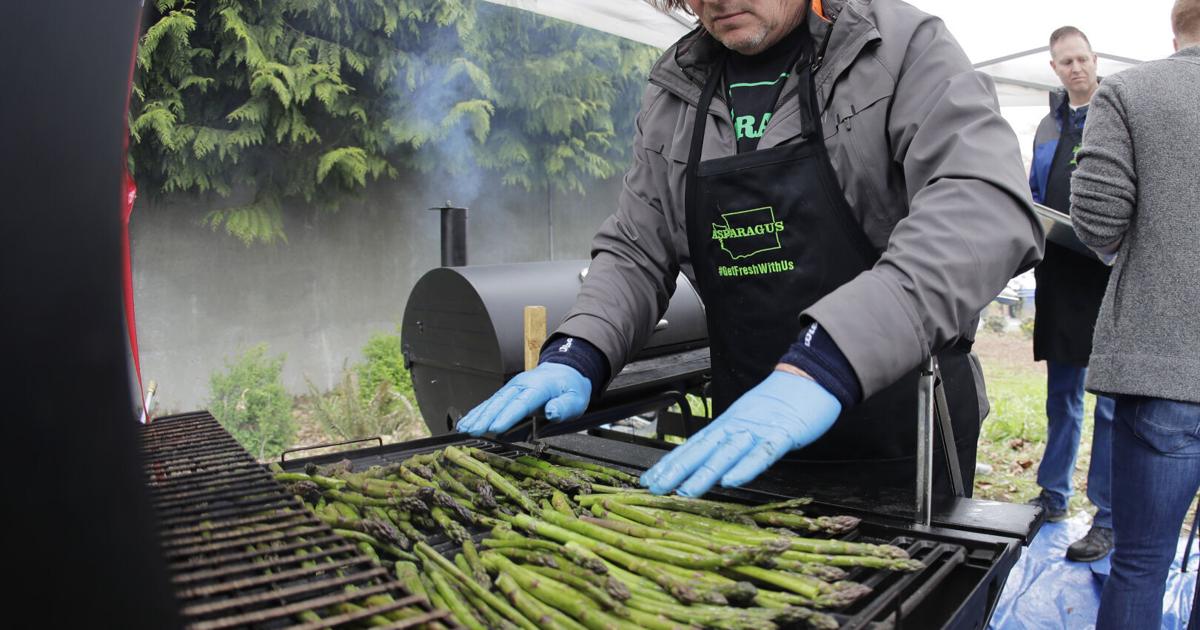
Asparagus is a perennial vegetable that is begun in the house backyard by environment out seedling transplants, or more typically by planting “crowns” in winter season.  Crowns are actually roots gathered from just one year outdated plants and are offered for purchase at regional nurseries.  Gardens founded with crown plantings are ready to harvest edible spears a person year previously than if the asparagus backyard garden was started with seeds.  Even with crowns, nevertheless, it will just take a several many years to build a strong bed of asparagus crops that can guidance a weekly harvest for 8-10 months in early spring.  The good information is that once founded, an asparagus backyard garden can final much more than 10 many years.   

Plant asparagus in spots that acquire total solar.  In order to mature an asparagus mattress that necessitates minimum treatment about the a long time, it is important to pick out a weed-free space in the lawn.  Keep absent from parts with nutsedge, bermudagrass and other perennial weed complications like johnsongrass or discipline bindweed.  Consider the time to properly prepare the soil.  Begin by doing work the soil a foot deep, mixing in significant amounts of compost, steer manure, peat moss or a similar natural product.  At this time, also mix in some 12-12-12 or 16-16-16 fertilizer.  Or, if you want, you may perhaps use an organic and natural fertilizer.   

Asparagus roots unfold commonly, so plant them in rows about 4 feet aside.  Dig a trench 9-10 inches deep and put big crowns about just one foot apart.  Make guaranteed that the crowns do not instantly touch fertilizer.  Include the crowns with two inches of soil, drinking water, and then enable the crowns settle and improve.  As new shoots arise, gradually fill in the trench with supplemental soil.  At some point, you will develop a a little elevated mattress of soil-covered asparagus vegetation.    

We recommend you plant types that have illness resistance, in particular to fungus like fusarium wilt.  Plant about 10 crowns for each person.   

Asparagus should be very well-irrigated through the first year.  In subsequent a long time, asparagus should be watered generally during the fern season in the summer months, not the harvest year in the spring.  Recall not to harvest the initially 12 months and only harvest for a number of weeks in the 2nd yr.  By calendar year three, the bed of asparagus plants really should sustain a 10-week harvest routine.   

Edible asparagus spears are young shoots that are reduce about 8 inches extended at the floor surface.  If remaining to expand, they acquire into fernlike leaves.  The plant continues to press new shoots till the weather conditions turns warm.  

Spears can mature at a rate of 3-to-6 inches a working day, depending on the spring temperature.  When spears achieve around 9-to -10 inches tall, they are hand-cut at floor amount with a knife.  Harvest spears each and every 2-3 times and right away shop them unwashed in the fridge within a vegetable crisper.  To reduce the spears from drying out as well fast, spot the butt ends on a wet pad.  If promptly cooled and held at 36 levels, asparagus could be saved for 2-3 weeks.  Commercially, spear dimensions array from Colossal (just one inch diameter), down to Compact (about one particular quarter inch diameter).  The Conventional dimension is five sixteenths (5/16) of an inch diameter.  Spear toughness is more related to postharvest managing and not spear dimensions.      

H2o and fertilize the plants in the course of the summer fern year, so plants can manufacture foodstuff to be saved by crown roots for future year’s shoot expansion.  To use fertilizer in a band, dig a furrow various inches deep alongside the side of the planting row, sprinkle the fertilizer evenly together the furrow, cover it with soil and then h2o it in.   

Ferns will change brown in the fall, indicating that carbs (long term foods reserves and power) have been transferred to the roots.  At this time, slice ferns back again and allow for plants to enter winter dormancy.  In spring, new shoots will appear, setting up the cycle once again.  

Whether or not you increase your individual asparagus or not, be absolutely sure to eat your veggies! 

Master Gardeners: Is it luffa or loofah? | Home And Garden

Master Gardeners: Is it luffa or loofah? | Home And Garden

Editor’s notice: Luffa vegetation will be sold at the VCMGA Spring Plant Sale on April 2.

Last September at Rockport’s Hummingbird Celebration, my close friend Janet pointed to a substantial vine with very long cucumber-shaped gourds. She mentioned they are luffas and our learn gardener colleague Noreen was growing them.

Noreen claimed she purchased a packet of luffa seeds as an experiment. She planted 4 seeds previous February just after the previous frost and didn’t see green shoots right up until late June.

Noreen planted the seeds in raised backyard garden beds from 8-foot PVC pipes. To secure the plants from squirrels, she protected them with fowl netting. Her yield was 20+ luffa.


Luffa seed packet

Luffa seed packet


Luffa (Luffa aegyptiaca and Luffa acutangula) generally called loofah, sponge gourd or dishcloth gourd, are grown for their fibrous skeleton. Youthful fruits fewer than 7-inches prolonged and inexperienced can be eaten like clean squash or cucumbers.

Luffa has escaped cultivation and grows planet-vast in tropical woodlands, thickets and grasslands. It is a quick-increasing, generations-aged, once-a-year vine that is indigenous to tropical Asia. Vines can be 30-50 ft prolonged and need to have to be spaced 2 to 3 ft aside.

Luffa’s sunshine yellow blooms can be 4 inches wide, when its leaves can arrive at 10-inches vast. The 1- to 2-foot-very long fruits are cylindrical, easy and eco-friendly with a lot of flat, spherical black seeds.

Right before planting luffa seeds, scrape the seed coat with a file or make it possible for seeds to soak for 24 hours. This treatment will facilitate germination. Seeds are incredibly sluggish to sprout and demand gardeners to be client.

Sow seeds 8 to 12 inches aside together a robust fence or trellis immediately after the past frost. Luffa plants thrive in organic and natural soil in total solar. Hold vegetation moist but not saturated. To keep soil dampness unfold mulch all-around the vegetation but absent from the stem.

As soon as the plant starts to increase, clear away the very first bouquets and the to start with 4 lateral branches. This practice will consequence in extra vines and sturdier stems for much better fruit. The vines do want to be experienced on a sturdy trellis or tall fence for assist.


Harvested luffa

A harvested luffa.


Whilst luffa do not need pruning, trimming them retains them at a manageable sizing and will make it less complicated to prepare the stems. Trimming youthful luffa crops allows the stems to develop in an orderly pattern and generate much more buds. In addition, pruning promotes air circulation and minimizes pests and health conditions.

Prune luffa with extremely sharp and thoroughly clean chopping tools. Hold out right until the plant has at minimum four stems and minimize all the first stems back to the major stem. Continue on education the stems to the trellis or fence and permit them mature. Pinch off the 1st flowers which are male. The woman flowers will acquire up coming and will kind the fruit.

Ahead of harvesting luffa, make sure the fruit is totally ripened on the vine. As the fruit matures, it loses drinking water fat and its color lightens. The shell hardens and begins to separate from inside fibers.


Luffa "infants"

Luffa “infants” developed from seeds.


A typical rule is to take out the luffa fruit from the vine prior to the initially frost. Gardeners ordinarily break off the fruits outer shell by slamming it on a tough area or crushing it with a hefty resource. Once in a while soaking the mature fruit in h2o will make it a lot easier to peel. The spongy fiber within the shell wants to be eliminated, washed and squeezed to take away excess h2o. To curtail mildew, set the sponge in the sun right until it is absolutely dry.

Loofah is the fibrous inside of absolutely created fruit and the scrubbing sponge. Although the youthful luffa gourd is harvested as a vegetable. Same plant, two employs.

The Gardeners’ Dust is written by associates of the Victoria County Grasp Gardener Affiliation, an educational outreach of Texas A&M AgriLife Extension – Victoria County. Mail your queries in care of the Advocate, P.O. Box 1518, Victoria, TX 77901 or vcmga@vicad.com, or remark on this column at VictoriaAdvocate.com.

Master Gardeners: Carolina jessamine | Home And Garden

Master Gardeners: Carolina jessamine | Home And Garden

Below in Texas, it is essential to know why indigenous vegetation play these a valuable function in our landscapes. As our inhabitants grows, land is created for housing, subdivisions, roadways and buying facilities. We see and truly feel the worth of drinking water and weather with these developments. We are not the only ones who are impacted by environmental modifications. Wildlife are pushed to unique places and their foodstuff sources and habitats are ruined.

The standard garden has a garden, shrubs and flowers that often require drinking water and from time to time fertilizer and insecticide. These chemical compounds can runoff into drinking water wells and poison our atmosphere and get rid of advantageous insects and animals.

The Carolina jessamine, Gelsemium sempervires, is also termed Yellow Jessamine, Bad Man’s Rope and Evening Trumpet flower. It is a gorgeous native vine located in the southeastern section of the United States, where there are moderate winters and incredibly hot summers. It grows all the way north to Virginia, south to Florida, east to Arkansas, down through east Texas and south to Mexico and Guatemala.

The vine is an adaptive, woody perennial that grows in USDA zone 6-9. Its indigenous habitat is dry to damp thickets. The leaves are waxy dim eco-friendly. The yellow horn or trumpet like bouquets develop 1 to 1 1/2 inches and are extremely aromatic. The vines have a tendency to entwine on their own in substantial shrubs and trees.

In wintertime, the dark eco-friendly leaves take on a slight yellow or purple solid. Carolina jessamine grows finest in a abundant fertile soil that drains nicely, but it is an adaptive plant. They actually want a soil that is a little bit acidic. They need to have moderate drinking water but are drought tolerant as perfectly as chilly hardy.

The vine can tolerate some partial shade, but blooms finest in a sunny location. Depending the place one particular lives, Carolina jessamine blooms in December and January by May.

Their stems can exceed 10 to 20 toes and have a distribute of 4 to 15 feet. The vine can be minimize back or pruned in the spring. A gardener can fertilize the plant two to 3 instances during its developing year with rose foods.

This vine has no major disorder or pests. Even so, all sections of the vine are toxic and potentially lethal to people, animals and livestock. If pores and skin arrives into get hold of with the sap of this plant, pores and skin can turn out to be irritated.

Carolina jessamine appeals to bees, hummingbirds and spicebush swallowtail butterflies. It may be harmful to bees if they eat as well substantially and the honey could be toxic to people if as well a lot is consumed. Gardeners are advised to plant this vine with warning.

Vines are a excellent way to suit in colour in a modest house. This vine presents the gardener a visible beauty and a sweet fragrance. Carolina jessamine is a colorful vigorous grower and can be grown on a fence, arbor, trellis or pergola.

Migratory paths and habitats can be restored to make a risk-free haven for bees, butterflies, birds, hummingbirds, lizards and squirrels with the use of native crops. Sally Wasowski, co-creator of “Native Texas Gardens,” said “A correct indigenous plant (tree, shrub, grass, wildflower, groundcover or vine) is 1 that has developed in a individual place devoid of obtaining been brought there by people, in no way had its genetics tampered with by people and can survive extremely wonderful devoid of any enable from us.”

As a chook and butterfly watcher, I have manufactured it my target to plant extra native crops in my lawn. This follow applies Wasowski’s advice for optimum backyard attractiveness with minimum amount repairs. Will not you sign up for me?

The Gardeners’ Grime is composed by members of the Victoria County Grasp Gardener Association, an academic outreach of Texas A&M AgriLife Extension – Victoria County. Mail your thoughts in care of the Advocate, P.O. Box 1518, Victoria, TX 77901 or vcmga@vicad.com, or comment on this column at VictoriaAdvocate.com.

YARD AND GARDEN: Get ready for spring with Master Gardeners | Home & Garden

YARD AND GARDEN: Get ready for spring with Master Gardeners | Home & Garden

Join Master Gardeners for a fun morning of door prizes and engaging speakers both beginning and expert gardeners will enjoy.

The new year seems to be going by fast and I realized this week that the 12th annual Spring into Gardening Conference is just around the corner.

The University of Illinois Extension Master Gardeners of Coles, Cumberland, Douglas, Moultrie, and Shelby Counties will present this conference from 8:30 a.m. to 12:30 p.m. Saturday, March 5, at Broadway Christian Church, 1205 S. Ninth St., in Mattoon. The doors will open at 8 a.m. for check-in. The cost for the workshop is $30 per person.


YARD AND GARDEN: A gardening project for February

This event is planned and presented each year by the master gardener volunteers in our area to serve two purposes.

First, the conference is designed to provide a continuing education opportunity for gardeners, homeowners, and landowners in East Central Illinois.

Secondly, the revenue from the event helps support the local outreach efforts of University of Illinois Extension Master Gardener volunteers, bringing you workshops and learning opportunities throughout the year.

Last year, master gardeners offered a fruit tree pruning workshop, a guided park walk series, a “How to Grow Potatoes in a Bucket” workshop, and much more.

At Spring into Gardening, educators from Extension will share their passion for growing plants, attracting pollinators, and composting how-tos. I think you will find the 2022 Spring into Gardening event topics very informative and entertaining.

Horticulture Educator Ken Johnson will present information on how to use raised beds to maximize your space and produce your favorite vegetables. Ken will discuss where to place your garden and proper plant selection. Horticulture Educator Jennifer Fishburn will explain pollinator plant options that will produce a beautiful and fruitful space important to creating a habitat for pollinators. Energy and Environmental Stewardship Educator Duane Friend will talk about how to produce high-quality, nutrient-rich compost by selecting the right mix of materials to add to your compost.

In addition to this great lineup of speakers, the Master Gardeners will be offering a silent auction and delicious refreshments throughout the morning. Garden novelties will be available for purchase and resources are included with admission.

If you are interested in attending the 2022 Spring into Gardening event, keep in mind that registration closes on February 21 or when available spaces have been filled. To register visit go.illinois.edu/SPRIG22.

For more information or for assistance registering for the event, call the extension office in Coles County at 217-345-7034. 

Master Gardeners: Going from lazy to seed | Home And Garden

Master Gardeners: Going from lazy to seed | Home And Garden

Over the years, I became lazy and acquired most of my vegetation in pots and packs from large-box suppliers and nurseries. Since of a very noticeable raise in price ranges, I am slowly and gradually drifting toward starting up my crops from seed.

Whilst this procedure does demand far more time and energy, I have been really joyful with the benefits. Looking at the seedlings come up and grow into maturity is really gratifying. The additional bonus is I have additional zinnias, much more hollyhocks and more herbs than when I was acquiring transplants. And we all know extra is superior.

Think about developing with seeds

If you’ve by no means experimented with expanding from seeds you should really take into account giving it a whirl. Don’t go crazy at the starting, I suggest starting with just one or two seed packets. For instance, if you have a few of huge containers and you want a colorful presentation, then plant zinnias. They are easy to increase, bloom from summer to frost and will reseed. They arrive in many types, measurements and colors. Some packets element stunning combined shades.

Factors to consider

Looking through the again of the seed packet is important. 1st of all, get notice of the stamped packing date right before invest in. It really should be for the recent 12 months mainly because more mature the seeds are, the poorer their germination amount.

The packet will include a brief description and illustration of the plant and if the plant is an annual, biennial or perennial. Also involved will be information on times to germination, depth to plant, spacing involving vegetation, peak and days to bloom. It could show when to slender, when to transplant soon after the past predicted frost, and could advise a hardening off period prior to transplanting exterior. Each seed packet has a shade-coded map indicating the advised interval for planting outdoors.

When acquiring seeds at a store or via a catalogs think about the USDA plant hardiness zone which for the Victoria place runs from 8 to 9b. The zones reveal the lowest winter season temperatures in the area based on historic file.

About these annuals

When obtaining once-a-year flower seeds be knowledgeable that only a handful of them expand efficiently when planted right into the ground. These include alyssum, bachelor buttons, larkspur, marigolds, periwinkle, poppy, sweet pea, sunflower and zinnia.

A speedy commence and preserving dollars

If you have a warm space with lots of light indoors, you can get a head begin on growing your plants. Later on you can transfer them to containers or into the ground.

To save funds, you can plant seeds in paper egg cartons, plastic jugs, paper cups, beforehand made use of plastic pots and handmade newspaper pots (go on the net to www.gardenbetty.com). Make sure the containers have sufficient drain holes.

You may use no matter what potting soil you now have or a seed starter blend. Gently h2o every single day until eventually seeds have germinated. You also can set the pots in trays of drinking water for a few of several hours and then eliminate them. Never make it possible for soggy soil.

If you have a location or two outdoor with correctly well prepared soil, you may well want to sow seeds there at the time the threat of frost has passed. Make sure the space is raked stage. Overplant to guarantee a very good stand, and yet again, gently water each day, but do not saturate the soil. As the plants expand you will have to water significantly less and a lot less, but constantly preserve a sharp eye out to make absolutely sure the soil does not crust in excess of.

In closing, study up on the crops you are going to expand and the facts of suitable soil preparation. Plenty of on-line information is out there at agrilifeextension.tamu.edu/library/gardening/soil-preparation and thespruce.com. Extra expertise can make a huge distinction among good effects and no results at all.

The Gardeners’ Grime is penned by associates of the Victoria County Grasp Gardener Affiliation, an educational outreach of Texas A&M AgriLife Extension – Victoria County. Mail your inquiries in care of the Advocate, P.O. Box 1518, Victoria, TX 77901 or vcmga@vicad.com, or remark on this column at VictoriaAdvocate.com.

Master Gardener: Garden tips for the New Year | Home and Garden

Master Gardener: Garden tips for the New Year | Home and Garden

Joyful New Calendar year! Hopefully this is a thirty day period of continuing snow, rain, fog and misty mornings. That is just what our local weather-adapted gardens want. Although expansion slows down in the cold soils of wintertime, some advancement proceeds, usually only underground. Our wintertime and early-spring blooming shrubs, bulbs and perennials appreciate all this frosty damp temperature. And what humidity is not utilized can be saved deep in the soil for afterwards use.

PLANTING: Despite the fact that we can plant 12 months-round, we typically hold off most planting until finally the (fairly) warmer times of mid to late February. The exception is bare root planting. Here are some tips:

  • Bare root fruit trees are now out there. Check their pollination requirements not all fruit trees are self-fertile, and some will need a cross pollinator. Discover the range of chill hrs expected. Our winters common 700-800 chilling hrs.
  • Bare root roses — Hybrid teas, floribundas, climbers, miniatures and shrubs are obtainable.  All do pretty properly in the San Joaquin valley.
  • Bare root berries and grapes — Plant grape vines, cane boysenberries, blackberries, raspberries, blueberries, and strawberries.

You can also plant beets, carrots, leek, lettuce, onion, parsley, radish, seed potatoes, onions, peas, radish, spinach, artichokes, and asparagus specifically in the backyard this thirty day period. Start sowing seeds for summer time annuals and veggies like tomatoes and peppers in a shielded location you can hold the seedlings heat and where by they will acquire plenty of gentle. I might also get in a last sowing of wildflower seeds in a weed-cost-free space. Wildflower seeds like my gravel driveway, so I check out to let volunteers along the edges and even now have a room for the automobiles.

Keeping: We have fewer to do in January, but there are a few of chores that are ideal to do this month. One particular of them is spraying roses, deciduous flowering trees and deciduous fruit trees with winter horticultural oil to smother overwintering insects like spider mites, scales, mealy bugs, and peach twig borers. Spray the branches, crotches, trunk, and the ground beneath the tree’s drip line. Maintain off spraying if rain is forecast, or if the temperature is underneath 45 levels. Hardly ever spray oil on walnut trees. If you failed to spray your peach or nectarine tree for peach leaf curl in November or December, spray now with a copper-based mostly or a synthetic fungicide. You really do not have to apply horticultural oil if you are lucky more than enough not to have these specific pests, but if you have had a dilemma each spring, summer season, or fall, be proactive now and hold your trees and roses healthier yr-spherical.

The other primary chore of January is pruning deciduous trees, shrubs, and roses. Continue to keep pruners & loppers sharp. Sterilize the pruners or loppers in among vegetation.  Use a 10{d4d1dfc03659490934346f23c59135b993ced5bc8cc26281e129c43fe68630c9} bleach solution or white vinegar. Take out all broken, diseased, or crossing branches first. Two essential slicing techniques are made use of in common pruning: thinning and heading. Thinning cuts take away whole branches, resulting in a additional pure search. Thinning cuts are also utilized to make it possible for far more air circulation and gentle into the interior of the tree and are the cuts to make first. You might want to just take a split halfway via and phase again to study the tree from a quick length. You want to finish up with a tree that seems balanced and nicely-composition. Heading cuts shorten branches and should only be utilised on little branches. Use heading cuts judiciously to shorten around-very long branches. You can consider off about a quarter of the former season’s growth on these newer smaller branches if you want to keep the tree smaller sized. Make certain to reduce back again to an outward dealing with bud to direct new growth absent from the inside of the tree. Prune from the bottom up and from the inside of of the plant to the outside the house. Do not be too nervous about it. Wholesome trees will recuperate and re-increase.

Implement pre-emergent herbicide for warm time weeds. Read through and follow the bundle instructions very carefully. If you really don’t decide on to use chemical weed handle, lightly until your younger seedling weeds routinely.

Monitor or transform off your irrigation controller if you have not now. You will want to deep h2o if we have an extended dry time period, but don’t waste drinking water and all the resources it normally takes for the water to get to the sprinkler or drip emitter if we do not will need it.

CONSERVING:  I enjoy a good foggy working day for chipping some of the brush we’ve been gathering all 12 months on our rural assets. Although we leave brush piles for wildlife, some branches, which includes the Xmas tree, are great replenishment mulch for our planting beds. Alternatively of sending leaves off your property, shred them and use them as mulch far too.

Yet another wintertime position is to make new bee nesting boxes or mend more mature types as desired. Often our more mature types have loaded tubes, this means they are “in use.” We also test to make absolutely sure spiders or earwigs are not hanging out nearby waiting around to eat the bee larvae within the tubes. To learn more about this good way to assist solitary nesting indigenous bees, visit the xerxes.org internet site.

A “new” trend is some thing referred to as “regenerative landscaping,” which is what a lot of of us have been accomplishing for many years: choosing approaches that increase soil, plant, and earth wellbeing for the generations to appear, even if it is often messy or doesn’t final result in instant bouquets. In all types and sizes of gardens, we can use “least harmful first” pest regulate techniques, tolerate a small wildness in components of the garden, improve some plants just for the birds, pollinators, lizards, toads or even tiny mammals, and tolerate some destruction in get to continue to keep the chain of everyday living healthy. Plants are resilient. They can tolerate a whole lot.

This year I will carry on to yard with a spirit of partnership with the vegetation, supporting them as desired, but also permitting them to build associations with the rest of the garden’s lifestyle. I’m an important portion of this backyard garden, but when I stage again (or get occupied and am compelled to go away the back garden alone), I am frequently astonished at how very well matters get on without the need of me.

The Tulare-Kings County Learn Gardeners will be accessible to response your inquiries:

Hurley Visalia Farmer’s Marketplace- initial and 3rd Saturdays, 8-11 a.m., 2100 W. Caldwell Ave (guiding Sears Developing) Yard Fruit Trees Pruning Demo – Sat., Jan 22, 1-3 p.m., Hurley Elementary University, Visalia

Public Rose Pruning Demonstrations:

Jan. 17, 2022, 10 a.m. to 1 p.m., Previous Grangeville Church, Hanford

Jan. 22, 2022, 10  to 11 a.m., Ralph Moore Rose Garden, Corridor and Main Road, Visalia

Jan. 22, 2022, 10 a.m. to 1 p.m., Woodlake Botanical Backyard

Phone us: Grasp Gardeners in Tulare County: (559) 684-3325, Tues & Thurs, 9:30-11:30

Instagram at: @mgtularekings