YARD AND GARDEN: Interested in becoming a Master Gardener? | Home & Garden

YARD AND GARDEN: Interested in becoming a Master Gardener? | Home & Garden

Interested in becoming a Master Gardener? This week, Kathy Hummel has the information to help you realize that you might already be qualified and not realize it.

When I retired from teaching 23 years ago, I had a list of activities I wanted to do: writing sparkling children’s books that would have all the publishers clamoring to represent me, taking piano lessons, finishing the cross stitch I’d started 18 years ago, organizing and labeling drawers full of photographs, volunteering at Lincoln Log Cabin and 5 Mile House and taking the Master Gardener training. Hey four out of seven ain’t too bad…


YARD AND GARDEN: Canada Geese can be real pests!

Partaking in the Master Gardener training and volunteering with University of Illinois Extension’s Master Gardener program has proved to be one of my most fulfilling leisure time activities. The group has a great, friendly can-do attitude, ready to pitch in for our projects. I’ve learned so much about gardening just by chatting with other Master Gardeners. To see if you meet the criteria, try taking this quiz.

1. Are you at least 18 years old? Never fear we won’t ask your actual age.

2. Do you enjoy puttering around with plants? Would you like to study research-based information to learn more about them?

3. Would you be interested in receiving 60 hours of training, incorporating the latest field research from University of Illinois professors on a myriad of gardening topics, including soil types and enrichment, landscaping and lawn care, pruning practices, vegetable and fruit growing, insect and disease management, flower and ornamental cultivation, composting and much more?

4. Would you enjoy interacting with other gardeners, swapping plants and ideas?

5. Are you available one day a week for 12 weeks during February, March and April for the training?

6. Do you have a strong internet connection? The classes will be a hybrid of on-line and in-person meetings.

7. Very important: After the training, are you able to give back 30 hours of volunteer time each year? This can take many forms: working in the Idea Garden, answering gardening questions phoned in to the Extension Office, giving talks to community groups, writing articles for the newspaper, judging 4-H entries for the fair, attending gardening conferences, attending monthly Master Gardener meetings, viewing online educational gardening seminars, working in the greenhouse and Mater Gardener gardens, etc.


YARD AND GARDEN: What do do before winter to prepare for springtime

If you answered affirmatively to all seven questions, you really ought to sign up. You fill out a brief application and go through a short, friendly interview process. Applications will be taken through Jan. 24.

To apply visit extension.illinois.edu/ccdms/become-master-gardener or stop by your local Extension office.

Cost for the training is $200 but includes a huge manual, which is yours to keep. That might seem like lots of moola, but you wouldn’t believe how chocked-full of up-to date research-based information it contains. Think of it as getting all that training plus a superb lifetime reference manual. I still refer to mine when I have questions. Financial assistance is available.

One thing Master Gardeners are not. We do not consider ourselves experts in all areas, nor are you expected to be. People often ask me questions out of the blue, and often I confess I don’t know the answer, but I can look it up (we have a superb reference library in the office).

If what I’ve described above appeals to you, why not give the Master Gardener program serious consideration this year? You’ll be glad you did!

If you have questions about your garden or landscape, contact a master gardener at the University of Illinois Extension office in Mattoon at 217-345-7034 or through our online hotline at https://forms.illinois.edu/sec/1523725. Be sure to visit U of I Extension’s horticulture website http://web.extension.illinois.edu/ccdms/ and like the Master Gardeners’ Facebook page www.facebook.com/ColesCountyMasterGardeners.

Master Gardeners: Herbs for the winter | Home and Garden

Master Gardeners: Herbs for the winter | Home and Garden

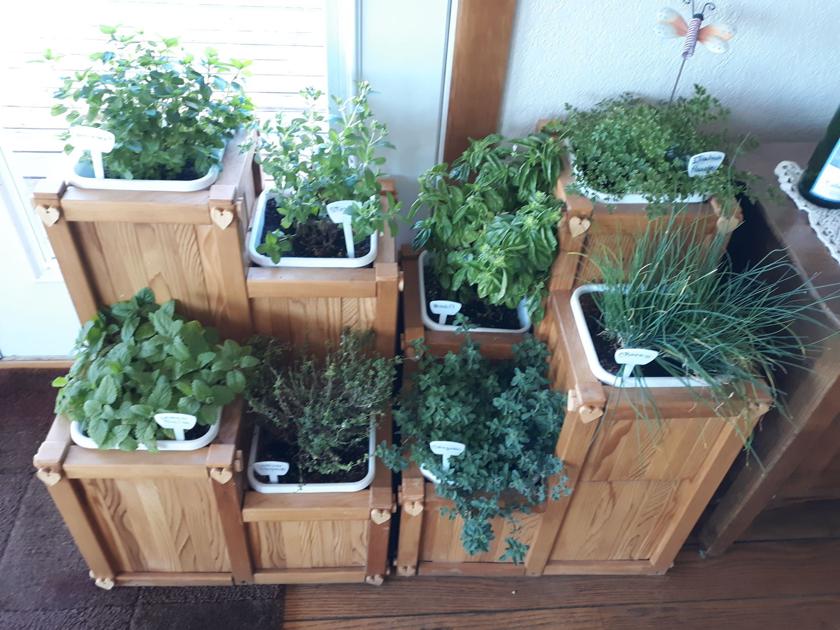
As we progress towards the previous number of months of slide and our thoughts switch to preserving our harvest, it follows that we want to add taste, spice and seasonings to our deliver. If you would like to grow your have herbs to enjoy contemporary and/or dried, here are some fundamentals with regards to how to progress to a thriving end result.

Herbs are frequently developed shut to the kitchen area so it’s helpful to snip a several as you put together your foods. Herbs insert elegance, fragrance and coloration. Their fascinating textures and forms, and loaded or delicate fragrances can be an vital part of your garden enjoyment.

In standard, herbs like a moderately wealthy soil. An extremely rich soil (or excessive fertilizing) can guide to vigorous progress, which can detract from the essence of the herb. This is due to a reduction of the important oil articles. Make confident the soil in your herb garden has outstanding drainage. If yours does not, take into account rising your herbs both in elevated beds or containers.

Most herbs prefer total sun with at least six hrs for every day. Herbs that will tolerate gentle shade include chives, cilantro, dill and mint. Most herbs will do well with about 1 inch of drinking water per 7 days, until it is during the heat of summertime. The moment founded, most herb crops are remarkably resistant to insect and disease attack. The oils that give them aroma and taste could add to their capability to repel pests.

Harvest herbs by slicing back a shoot to just above a leaf with a sharp scissor. This will present both your day’s harvest and motivate a great, bushy advancement on the remaining plant. In general, an herb’s taste is most pronounced when harvested just ahead of the plant begins to flower. Harvest in the early morning when the oils are most concentrated.

Perennial mints are ordinarily vigorous and can grow to be invasive. Somewhat than planting them immediately in the backyard, grow the plants in containers, then, if you want, sink the container into the backyard. This will contain the roots and restrict spreading.

Several herbs are annuals, the place you possibly seed or obtain bedding vegetation in the spring and plant in the back garden they die back again after the very first large frost. Perennials can overwinter by reducing the plant back again and surrounding it with mulch or leaves, or plant them in a sheltered location near the house.

But what if you want to enjoy these herbs in excess of the winter season?

What is the greatest process of maintaining these annuals more than the winter as perfectly as your most loved perennial herbs? The easiest way to do that is to mature them in containers and just take them into the home ahead of the initial frost. It is greatest to position them in or near a south- or west-facing window. Assure that watering, fertilizing periodically, and reducing back come about.

When harvesting herbs, clean them and carefully pat them dry on a paper towel, but do not crush them. Take away any dead or discolored leaves, and snip or pull leaves off the stem to be employed in cooking. Recall to use 2 times the amount of money of new more than dried herbs in recipes.

If you have an abundance of herbs and want to protect them, there are various selections. A smaller volume can be positioned in a green produce bag (to limit ethylene oxide production) and kept in the fridge. With an abundance of herbs, you can choose to dry them by hanging them in bunches in a warm airy area or lay them on the screen in a food items dryer. Guarantee they are crackly dry, then retail store in darkish glass containers. Be positive to label with the identify and date, as herbs are greatest utilized inside one 12 months.

A further decision is freezing your herbs. This will soften leaf tissue, but does not alter the taste, so they are superior in soups and stews. Chop or snip the herbs and location them into an ice cube tray. For chives, dill, mint and tarragon, it is finest to fill the slots with h2o. For oregano, thyme, basil and parsley, introducing oil this sort of as olive oil is best. Following they are frozen you can pop them out of the tray and place them into a labeled freezer bag.

Finally, yet another fun thing to do is to combine the chopped herbs (chives, parsley, marjoram or thyme) into softened butter, enable it harden in the fridge, and provide.

It is often enjoyable and gratifying to love the fruits of your labor.

HOME & GARDEN: Southside Master Gardeners offer Landscape for Life | County Life

HOME & GARDEN: Southside Master Gardeners offer Landscape for Life | County Life

Are you a gardener new to Southside? Have you at any time desired to just take the Learn Gardener system but are nonetheless functioning or never want to dedicate to the volunteer obligation?

The Southside Learn Gardener Association’s Landscape for Everyday living could be just what you need to have. Landscape for Lifetime is based on sustainable landscape tactics. Assume of it as a mini-Grasp Gardener schooling.

The six courses will get started on March 4 and be held on the each individual Friday in March and the initially and 2nd Friday in April from 11 a.m. to 2 p.m. at the South Boston – Halifax County Museum.

The Landscape for Lifetime collection begins off on March 4 with an introduction to soils by Kathy Conner Cornell. Most occasions folks really do not give soil any thought. But, Cornell suggests soils are every thing to the plant.

“It is via the conversation of roots and the soil that crops acquire their nutrition and drinking water. Balanced soils are the basis of a attractive backyard,” claimed Cornell.

Attendees are questioned to provide a compact baggie of soil from their garden to the course.

H2o quality will be mentioned on March 11. Leaders of the course come to feel storm drinking water management is extremely critical no make any difference in which an personal life. Attendees will learn exclusive techniques to correctly control rainwater in their landscape.

On March 18, Cornell will assessment how to decide the right plant for the appropriate location. It is significant to keep away from invasive alien vegetation that disrupt their natural habitats. Native plants can often be a good choice in the sustainable yard but not essentially the only option. Attendees will understand what to consider as they make the best plant selections for their backyard garden.

Southside Grasp Gardeners will have a specific take care of on March 25. A powerful layout is the spine of any landscape. An particular person shouldn’t place a shovel in the ground right up until he or she has assessed their room and determined what features a person desires their landscape to serve such as enjoy place, private location or entertaining region. The structure growth will be an ongoing task but to assist with the system Jean Blanton, Southside Grasp Gardener, will guide people today by the fundamental principles of landscape style and design concepts.

Elements, ordinarily imagined of as hardscape, will be talked about on April 1.

In the landscape, hardscapes are often employed for things these types of as fencing, arbors, trellises or pathways. This will be a entertaining session chock comprehensive of concepts on how to use repurposed/recycled resources to define areas in the garden. A key way an individual can recycle and repurpose is to compost. Attendees will be guided by means of the actions to produce black gold that is so essential to soils. Cornell will lead a presentation on Integrated Pest Management. Utilizing chemical pesticides must be the past resort for back garden pest problems. The IPM approach specifics the techniques to be taken ahead of at any time reaching for a pesticide and what incorrect pesticide use is undertaking to our wildlife especially bees.

The previous course on April 8 will be devoted to every member’s own style and design and their particular problems. Some patterns will be mentioned in the course and anyone will have the possibility for a own consultation. Attendees will go away the method emotion assured that he or she can have the landscape of their goals and enable defend the surroundings for enjoyment of foreseeable future generations.

There will be a $25 cost to cover the components for the 6 sessions. Contributors are encouraged to attend all sessions to get the highest benefit out of the lessons. Having said that, if this just does not get the job done into your timetable, person courses will have a $5 price. The cost is for a household – partner and spouse, parent and experienced little one or buddies. This would make a fantastic Xmas reward!

Progress registration and payment is demanded. Space is constrained. To register, go to the Halifax Extension Workplace to decide on up an application kind or e-mail inquire@ssmga.org to request an software form. Mail completed sort and check out produced out to SSMGA to Halifax County Extension Business office, PO Box 757, Halifax, VA 24558. The six lessons will be held on March 4, March 11, March 18, March 25, April 1 and April 8 from 11 a.m. to 2 p.m. at the South Boston – Halifax County Museum, 1540 Wilborn Avenue, South Boston. For far more data, email check with@ssmga.org or simply call the extension office environment at 434-476-2147, solution .