What you need to know about buying a home

What you need to know about buying a home

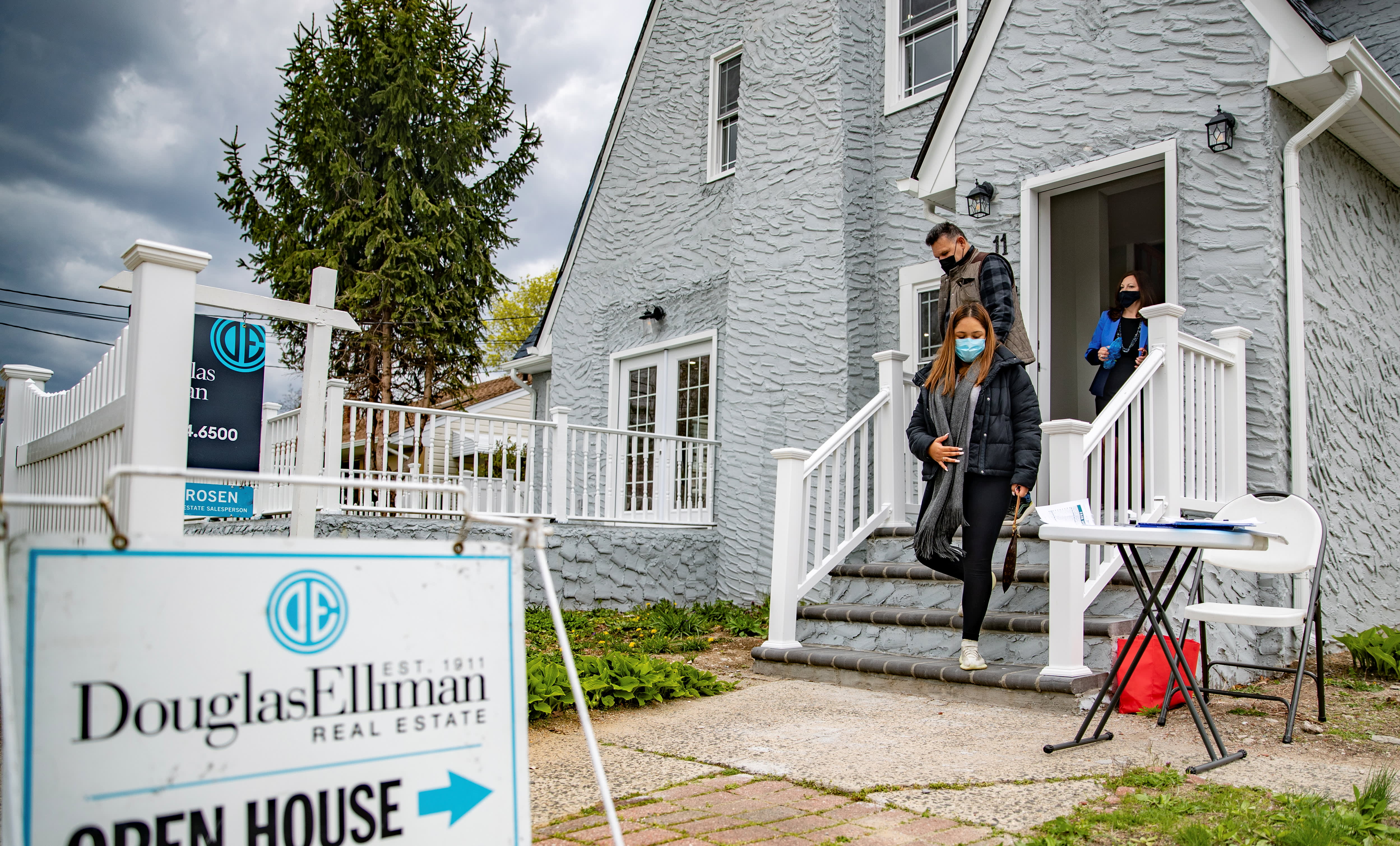
A real estate agent stands in the doorway as Giovani and Nicole Quiroz of Brooklyn, New York visit an open house in West Hempstead, New York.

Raychel Brightman | Newsday LLC | Newsday | Getty Images

Higher prices are almost everywhere.

Americans are paying more these days for products like food and gasoline, thanks to rising inflation.

Of course, this rising inflation will also impact the cost of buying a new home.

“With inflation rising so aggressively and the fact that people’s salaries and weekly income are not rising at the same rate, we end up with less discretionary money to spend each month,” said George Ratiu, manager of economic research at Realtor.com.

At the same time, home prices have also been rising. The consumer price index, which measures the cost of goods and services, shows that shelter rose 0.5{d4d1dfc03659490934346f23c59135b993ced5bc8cc26281e129c43fe68630c9} in October. It takes into account rent and owners’ equivalent rent, which is what owners would pay to rent their home.

Separately, home prices were up 19.8{d4d1dfc03659490934346f23c59135b993ced5bc8cc26281e129c43fe68630c9} year-over-year in August, according to the S&P CoreLogic Case-Shiller Indices.

More from Invest in You:
Half of Americans with retirement accounts have taken an early withdrawal
If you don’t get a 6{d4d1dfc03659490934346f23c59135b993ced5bc8cc26281e129c43fe68630c9} raise, are you taking a pay cut due to inflation?
Inflation is soaring. Here’s how to navigate higher consumer prices

So what does this all mean for home buyers?

For one, you may have to lower your budget, Ratiu said.

Not only will you have less money to spend every month, since you are paying higher prices elsewhere, mortgage rates are also climbing. Buyers of a median-priced home are spending $160 more on a monthly mortgage payment than a year ago, a Realtor.com analysis shows. Ratiu expects those rates to continue to climb.

“Generally as we see inflation go higher, we are going to see mortgage rates go higher,” he said.

An inflation hedge

Real estate has historically been viewed as a hedge against inflation.

Home values traditionally at least keep up with inflation, and when you have a mortgage, you lock in a fixed monthly payment for the length of the loan.

“Homes are expensive now … but for most people the comparison that is most important is how that cost of home ownership is going to compare to the cost of renting,” Zillow senior economist Jeff Tucker said.

Rent is more unpredictable than a mortgage and is more likely than not to go up, he said. He anticipates broader inflation will impact rent prices.

“If wages are rising or if the cost of building materials and appliances and light bulbs and paint is rising, all of these to some extent will flow into the cost of maintaining and building rental homes,” Tucker said.

Supply and demand also has an impact on rental prices, which already rose 10.2{d4d1dfc03659490934346f23c59135b993ced5bc8cc26281e129c43fe68630c9} nationally in September year over year, according to CoreLogic.

Advice to homebuyers

Roberto Westbrook | Tetra images | Getty Images

Real estate market will continue to move in ‘fast direction’ amid pent-up demand: Century 21 CEO

Real estate market will continue to move in ‘fast direction’ amid pent-up demand: Century 21 CEO

Century 21 President and CEO Michael Miedler argued on Monday that the real estate market is not “ready to taper right now” and will continue to move in a “fast direction” amid pent-up demand. 

Miedler told “Mornings with Maria” that the market is still currently hot because “a lot of buyers are trying to rush in and beat any more increases in the mortgage rate.”

He made the comments on “Mornings with Maria” shortly before it was revealed that existing-home sales rose 0.8{d4d1dfc03659490934346f23c59135b993ced5bc8cc26281e129c43fe68630c9} in October from the month before to a seasonally adjusted annual rate of 6.34 million, marking two straight months of growth, according to the National Association of realtors.

The association also noted that the median existing-home sales price increased 13.1{d4d1dfc03659490934346f23c59135b993ced5bc8cc26281e129c43fe68630c9} compared to the same time last year to $353,900 and that inventory of unsold homes decreased 12{d4d1dfc03659490934346f23c59135b993ced5bc8cc26281e129c43fe68630c9} to 1.25 million, which is equivalent to nearly 2 and a half months of the monthly sales pace. 

NAR’s chief economist Lawrence Yun said in a news release that Monday’s data proves that “home sales remain resilient, despite low inventory and increasing affordability challenges.” 

Miedler agreed with that sentiment on Monday telling host Maria Bartiromo that he continues “to see the market moving in a very kind of fast direction as folks have a lot of pent-up demand in trying to buy homes here in this country.” 

Lawrence also noted in Monday’s news release that “inflationary pressures, such as fast-rising rents and increasing consumer prices, may have some prospective buyers seeking the protection of a fixed, consistent mortgage payment.”

Earlier this month it was revealed, U.S. consumer prices accelerated at the fastest annual pace in more than 30 years as supply chain bottlenecks and materials shortages persisted. 

The consumer price index climbed 6.2{d4d1dfc03659490934346f23c59135b993ced5bc8cc26281e129c43fe68630c9} year over year in October, the Labor Department said. The increase marked the largest annual gain since November 1990. Prices rose 0.9{d4d1dfc03659490934346f23c59135b993ced5bc8cc26281e129c43fe68630c9} month over month. 

The cost of shelter ticked up 0.5{d4d1dfc03659490934346f23c59135b993ced5bc8cc26281e129c43fe68630c9} last month and was 3.5{d4d1dfc03659490934346f23c59135b993ced5bc8cc26281e129c43fe68630c9} above year-ago levels. 

Miedler also pointed out on Monday that “on the building front, we are way behind.” 

LITTLE ROCK, ARKANSAS REAL ESTATE: WHAT YOU CAN GET FOR $1.2 MILLION

“From the downturn that happened in 2008 to where we are at now, we are at historic lows on where folks are building,” he told Bartiromo.

“Here is the truth of the matter; Between 2012 and 2021 there were close to 12 million new household formations and we only put 7 million homes built in this country so we have to double the pace in the next five years to catch up with the demand that’s out there,” he argued. 

However, that may prove to be difficult if supply chain disruptions linger. Earlier this month, the National Association of Home Builders CEO Jerry Howard noted that those bottlenecks are creating unprecedented issues, telling “Varney & Co.” they are causing “unusual circumstances” as it pertains to new homes.

Howard acknowledged that the issues are not impacting sentiment, but did stress that the “supply chain is still a headwind.”  

He also told host Stuart Varney that “demand is so strong and the supply is so low” for new homes and argued if the supply chain can get “fixed” some “real good years” for the market are ahead.

Howard offered insight into the industry on the same day it was revealed homebuilder confidence rose in November as low inventories and strong buyer demand helped boost confidence despite the ongoing supply chain disruptions. 

GET FOX BUSINESS ON THE GO BY CLICKING HERE

The National Association of Home Builders/Wells Fargo Housing Market Index this month rose three points to 83. Analysts surveyed by Refinitiv were expecting homebuilder sentiment to hold at 80. 

The index can range between 0 and 100 with any print over 50 indicating positive sentiment. Any reading above 80 signals strong demand.

Miedler told Bartiromo that currently “all the regions across the marketplace” are seeing an increase in new construction, but noted that there is “a hot market in the south” where there is “a little bit more building” taking place in cities including Raleigh and Wilmington, North Carolina as well as Jacksonville, Florida and parts of Texas. 

CLICK HERE TO READ MORE ON FOX BUSINESS 

FOX Business’ Jonathan Garber contributed to this report. 

New normal? Seattle housing market shows signs of seasonal cooldown although inventory remains tight

New normal? Seattle housing market shows signs of seasonal cooldown although inventory remains tight

Seattle’s booming housing market continued to show minuscule signs of a seasonal slowdown last month, providing little, if any, relief to buyers according to Zillow’s latest market report which examined nationwide housing trends in October.

The seasonal reprieve in the hot housing market began in September as prices began to stabilize from last year’s record gains. For the Seattle metro, the new report found the typical home value was $695,058 in October, up 21.8{d4d1dfc03659490934346f23c59135b993ced5bc8cc26281e129c43fe68630c9} — or $124,712 — compared to the same time last year. The report also showed that home value appreciation has slowed since September and continued to slightly ease last month.

However, for-sale inventory remains historically low, and buyers have fewer options. Seattle experienced a 4.5{d4d1dfc03659490934346f23c59135b993ced5bc8cc26281e129c43fe68630c9} drop in inventory from September to October. Compared to this time last year, inventory is down 13.6{d4d1dfc03659490934346f23c59135b993ced5bc8cc26281e129c43fe68630c9} and many experts don’t see it rising to pre-pandemic levels soon.

“Home buyers shopping this fall shouldn’t expect the same frenzied demand that triggered bidding wars on listings this spring and summer,” said Zillow senior economist Jeff Tucker in a news release Thursday. “The normal seasonal slowdown of autumn has returned, when many families are busy with back-to-school activities and planning for the holidays. Buyers can expect less competition, meaning more time to decide on a house and the potential for prices to fall on listings.”

Seattle for-sale inventory.

Seattle for-sale inventory.

Zillow

Homes also remained on the market for slightly longer in October than previous months, showing a slight easing in competition that could continue into the winter months. The median time on the market for home listings in Seattle last month was seven days, up from six days in September. Nationwide, listings spent an average of 10 days on the market.

Zillow also noted that rent growth was slowing down across the country with only a 0.8{d4d1dfc03659490934346f23c59135b993ced5bc8cc26281e129c43fe68630c9} increase in price from September to October. In Seattle, typical rent reached $2,181 a month, up 13.9{d4d1dfc03659490934346f23c59135b993ced5bc8cc26281e129c43fe68630c9} from October 2020 but only a 0.2{d4d1dfc03659490934346f23c59135b993ced5bc8cc26281e129c43fe68630c9} increase from the previous month. While growth for rent appears to be decelerating, it is still “cooling off from an exceptionally hot starting temperature,” according to the report.


While the housing market is showing signs of a fall slowdown, other experts predict that inventory in the Puget Sound region will remain limited through the spring of next year. New listings in Western Washington shrunk by 19{d4d1dfc03659490934346f23c59135b993ced5bc8cc26281e129c43fe68630c9} in October compared to the previous month, and the region only had 0.66 months of inventory. The region has not seen over a one-month supply of inventory since July 2020.

Along with seasonal changes, brokers with the Northwest Multiple Listing Service (NWMLS) reported sensing indecisiveness in buyers last month as many regional employers waver on a return date for in-person work. 

“We are approaching our seasonal low in inventory. Each year, as the year closes out, potential home sellers wait until the new year to put their homes on the market,” said Frank Wilson, branch managing broker at John L. Scott Real Estate. “In reality, a home listed now will have higher viewership since the buyer pool has not gone down.”


Top Real Estate News for Friday, Nov. 19, 2021: 2 REITs and More Fed Spending

Top Real Estate News for Friday, Nov. 19, 2021: 2 REITs and More Fed Spending

A mall giant and a nursing home REIT could benefit from more public spending, two Fools parse out residential iBuying, why UWM stock surged today, outer space commercial real estate, and don’t sleep on the pandemic.

Two REITs that would benefit from the government putting more money into the economy

With an infrastructure bill now signed into law and a huge package addressing social spending and climate change passed by the House today, now might be a good time to look at real estate investment trusts (REITs) that could benefit from more government money going into the economy.

Motley Fool contributor Reuben Gregg Brewer picks out mall giant Simon Property Group (NYSE:SPG) and senior housing specialist Omega Healthcare Investors (NYSE:OHI) as beneficiaries of more cash flow to consumers in general and the hard-hit nursing home niche. There certainly could be more.

Two adults and two kids in a house.

(Image source: Getty Images.)

Two major red flags with Zillow’s iBuying failure

Zillow (NASDAQ:ZG)(NASDAQ:Z) recently surprised investors by announcing that it plans to exit the iBuying business entirely, despite having promoted it as the biggest future growth driver of the company. In this Fool Live clip, Fool.com contributors Matt Frankel and Tyler Crowe discuss two of the biggest red flags they see with this move.

Matt and Tyler parse out what happened, as the company with perhaps the most residential real estate data of all couldn’t do better with its number-crunching, and how rivals Opendoor and Offerpad could do better with this new way of buying.

Why shares of UWM stock surged today

Shares of mortgage originator UWM Holdings (NYSE:UWMC) had jumped more than 15{d4d1dfc03659490934346f23c59135b993ced5bc8cc26281e129c43fe68630c9} as of 2:40 p.m. ET after the company said it had decided not to go through with a planned secondary offering. UWM also said that it would “accelerate” its previously announced share repurchase program.

Motley Fool contributor Bram Berkowitz says it seems a bit wonky to announce a secondary offering and then reverse course two days later. But market conditions have not been easy this week, and at the end of the day the accelerated repurchase plan will make existing shares more valuable, so shareholders are not complaining.

Bezos planning “Space Business Park”: Is this the next real estate investing frontier?

Jeff Bezos’ Blue Origin has partnered with several aerospace interests to create the first commercial business park in space: Orbital Reef. They plan to have it up and running by the end of the 2020s, just in time to replace the soon-to-be decommissioned International Space Station (ISS).

Motley Fool contributor Kristi Waterworth also notes here that as futuristic and far-fetched as a business park in space may sound, Bezos’ team isn’t the only one determined to create the world’s longest commute. Lockheed Martin (NYSE:LMT) has teamed with other space hopefuls to race Blue Origins to space with its Starlab. 

Pandemic resurgence may be slipping under the radar here but shouldn’t be

Nations across Europe are ramping up their fight against COVID-19, up to full lockdowns, as the delta variant drives up cases and casualties. Bloomberg points out in a post today that the word “lockdown” doesn’t appear at all in Goldman Sachs’ (NYSE:GS) and Morgan Stanley‘s (NYSE:MS) outlooks for Europe now out for 2022, and a survey of fund managers by Bank of America (NYSE:BAC) places the virus fifth on its list of risks to markets.

The holidays and flu season are here, and COVID-19 doesn’t appear to be as threatening to many right now as inflation, but real estate investors need to be alert to changes that could send people back home from stores, restaurants, and offices.

This article represents the opinion of the writer, who may disagree with the “official” recommendation position of a Motley Fool premium advisory service. We’re motley! Questioning an investing thesis — even one of our own — helps us all think critically about investing and make decisions that help us become smarter, happier, and richer.

Oregon sued over law banning real estate ‘love letters’ in hot market

Oregon sued over law banning real estate ‘love letters’ in hot market

Why Did Jeff Bezos Pick This Particular Maui Compound?

Why Did Jeff Bezos Pick This Particular Maui Compound?

Amazon founder Jeff Bezos has accomplished a buying trip in Maui. The multibillionaire and his girlfriend, Lauren Sanchez, reportedly built a substantial land seize on the Valley Isle.

The off-market deal was stated to be at a price of $78 million, which would set a new file for actual estate on Maui.

So what led the suborbital place traveler to snap up the earthly delight? We spoke with neighborhood specialists for an within look at.

But to start with, some track record.

Known as the Carter estate, the house is situated on the island’s southern shore. Doug Schatz, co-founder of Colorado’s Innovative Power, formerly owned the distribute on La Perouse Bay.

He bought it with small business companions for $4.2 million in 1996. In 1998, he and his wife bought out the companions and proceeded to construct a compound.

The 14-acre supplying is claimed to include things like a 4,500-square-foot most important home, a 1,700-square-foot guesthouse, and a 700-square-foot pool. The ultraprivate and scarce keeping encompasses 7 parcels of land, a fish pond, and a non-public white-sand seashore.

The outside kitchen area incorporates a hearth pit, in accordance to Maui Journal. There was a tennis courtroom, which was taken off by the owner.

The acreage is largely wooded, with a person principal dwelling, notes David Richardson, an agent with Hawai’i Daily life, who represented the property in 1998.

“It’s a rather particular area, extremely private,” he suggests. “It’s a great tiny place.”

Even so, the offer caught Richardson by surprise.

“I didn’t imagine he would provide,” he states of the operator. “But $78 million would capture anyone’s eye.”

Non-public beach

All seashores in Hawaii are in essence public, notes Richardson. So this home, which features the aforementioned fish pond—which is basically a little private bay—is a unusual acquisition. The historic fish pond, which connects to the ocean, was ordinarily utilized to capture fish to feed a tribal main.

“You actually have the seashore and you own the pond. So it is extremely uncommon,” suggests Richardson. “To have your individual private beach front and bay that you can snorkel in and no one particular else can appear in is rather great.”

___

Check out: Just How Several Properties Could Jeff Bezos Afford to pay for in the Amazon HQ2 Candidate Towns?

___

Surrounded by character

Together with the personal seashore and beachfront land, the location provides even much more seclusion, courtesy of a character preserve. Thousands of acres of conservation land surround the internet site. A lava area is close by, and the rugged terrain provides coastal hiking galore.

Set on La Perouse Bay, the region is a mecca for snorkeling.

Golf club

The house is just a several miles from the members-only Makena Golfing & Beach Club. Coming out of a foreclosures, the superior-stop club has been taken over by the Discovery Land Firm, a developer that guarantees an unique experience.

Membership is granted to home owners on club property. Bezos has been spotted there, but it is unclear if he came as a guest or purchased a house there as nicely.

Maui current market

The Bezos transaction caps a significant-traveling yr for income on the tropical locale. This summer, the $45 million sale of Maui home appeared to be the second-highest sale in condition record, right after a $46 million sale of a Kauai home in 2018.

The Maui market has been hot even further than the banner profits.

“There’s no 12 months like this,” claims Matt Beall with Hawai’i Lifetime. Solitary-loved ones houses have found a whole lot of recent exercise, which he attributes to the COVID-19 pandemic.

“People for the most portion have wanted single-spouse and children homes,” he claims. “I don’t imagine demand from customers is heading absent.”

And for luxurious properties, “there’s not a whole lot of inventory,” Beall states.

Hawaii, which has never been affordable, has gotten only pricier during the pandemic. According to Real estate agent.com®, the median listing value on Maui is $878,500, with 760 active homes for sale.

Beall notes that, due to travel limitations, sales have mostly been from domestic customers. He expects pent-up desire from global purchasers to strike the islands tricky.

“On the demand facet, I assume we’re in fully new territory,” he claims.