A look back on the life of the first lady of Dallas real estate

A look back on the life of the first lady of Dallas real estate

Editor’s note: Take a look back into The Dallas Morning News Archives.

Imagine having one of the most ubiquitous names in not only North Texas, but also in real estate. Ebby Halliday (1911-2015) was a galvanizing businesswoman who built one of the largest residential real estate firms in Texas before it was sold to HomeServices of America in 2018. Since 1945, the woman behind the name was a part of her company until her death and proved to be a dynamo on and off the market.

From a single woman selling undesirable concrete homes to having almost 2,000 employees and handling billions of sales, Ebby Halliday remains a Dallas legend. Take a look back at The News archives for the headlines and highlights of Texas’ real estate queen.

The beginning

Photo of Ebby Halliday, published in The Dallas Morning News Dec. 11, 1957.
Photo of Ebby Halliday, published in The Dallas Morning News Dec. 11, 1957.(The Dallas Morning News)

Halliday moved to Dallas in 1938, originally selling hats from a department store and then her own shop before moving into real estate, starting her business in 1945. In just over a decade, The News billed her as “the national queen of her profession” on Dec. 11, 1957, to capture her growing reputation. That year alone, she “made 60 speeches and traveled over 70,000 miles” for engagements.

Two years later on Dec. 20, 1959, Halliday peered over the Dallas skyline, “which symbolically is ‘hers’” due to her prowess of running $12,000,000 in annual sales, which is roughly the equivalent to $107,000,000 in today’s dollars.

‘70s and ‘80s

Ebby Halliday photographed with her "computerized property listing" equipment. Published in The Dallas Morning News, Sept. 19, 1971.
Ebby Halliday photographed with her “computerized property listing” equipment. Published in The Dallas Morning News, Sept. 19, 1971.(The Dallas Morning News)

Never one to fall behind, Halliday used the best resources available to further improve her real estate services. On Sep. 19. 1971, Halliday showed off the latest technological equipment of Realtors Computer Service Inc., “a computerized property listing service offered to realtors across the nation.”

By the 1980s, Halliday became a bonafide real estate magnate with her billion-dollar corporation. In a feature published Sep. 9, 1983, the businesswoman spoke candidly to The News about her life and revealed that the iconic name Ebby Halliday was not her birth name, rather, it was Vera Lucille Koch.

Name change

Ebby Halliday pictured next to her husband, Maurice Acers. Published in The Dallas Morning News, Sept. 25, 1983.
Ebby Halliday pictured next to her husband, Maurice Acers. Published in The Dallas Morning News, Sept. 25, 1983.(The Dallas Morning News)

Born in Arkansas, the future multimillionaire caught the entrepreneurial bug at 10 years old by selling salves. She credits her stepfather for instilling a strict work ethic, which she carried throughout her career, and also passed along to her employees.

After graduating high school, she moved to Kansas City to sell hats at a department store, which was the last time she went by Vera Lucille. She recalled when “one of the buyers who I admired a great deal told me I had to get rid of Vera Lucille. She said it was the silliest name she’d ever heard. I needed something more sophisticated. I thought about it and came up with the name Ebby.”

By the early 1940s, Ebby had moved to Dallas and opened her own shop, Ebby’s Hats. She came across an opportunity in 1945 that would change her life and a whole industry. A customer who liked the decorations of her store asked Halliday if she could help her husband sell 52 concrete houses. She sold them all within 14 months.

The secret? “‘I just picked one of the houses and decorated it,’ she says. ‘I guess it was the first model home in Dallas. This really worked well. People liked the finished product.’”

Perfect success

Despite all her success, Halliday considered her biggest accomplishment “getting Maurice to marry [her].”

Maurice Acers, whom Halliday married in 1965, was a prominent attorney. She credited him as being an indisputable part of the story of her company’s growth. Maurice had a work ethic to match his wife’s, to the point where they brought their accountants and secretaries to their honeymoon in Mexico.

Ebby Halliday, real estate magnate. Published in the Dallas Morning News, Mar. 9, 2006.
Ebby Halliday, real estate magnate. Published in the Dallas Morning News, Mar. 9, 2006.(The Dallas Morning News)

Age could not stop Halliday from running the largest real estate firm in Texas by sales, and 23rd in the nation. In 2006, her 95th birthday party was the talk of the town, as were all the tributes for her 100th in 2011. For her 99th birthday, her favorite Dallas Mavericks’ player Dirk Nowitzki presented her with a signed basketball. In 2012 on her 101st birthday, she attended the dedication of Ebby Halliday Elementary in southeastern Dallas.

Halliday died on Sep. 8, 2015, in Dallas, where her legacy continues to prove the adage, “Everybody loves Ebby.”

Interested in learning more about local history? Become a Dallas Morning News subscriber at dallasnews.com/archives.
Reno, Nevada, real estate: What you can get for $2.5M

Reno, Nevada, real estate: What you can get for $2.5M

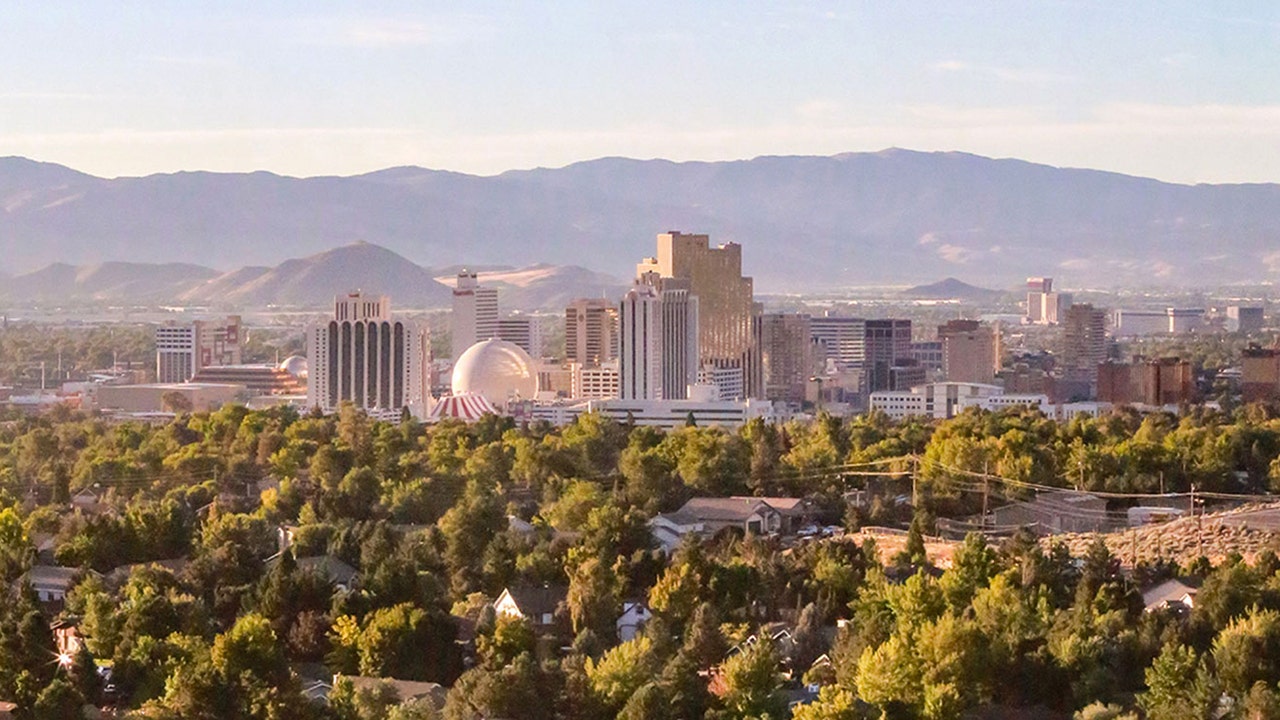
Reno is known as “The Biggest Little City in the World,” and sits in the High Sierra foothills near Nevada’s border with California.

Famed for its casino industry and tourism, Reno is also attractive to businesses and real estate buyers due to its favorable tax laws.

Reno Nevada

A recently updated “Biggest Little City in the World” sign March 3, 2020, in Reno, Nevada.  (George Rose/Getty Images / Getty Images)

There is also an array of recreational activities both year-round and seasonally. With Lake Tahoe, the Truckee River and Pyramid Lake all in the area, there are plenty of water activities in the summer, while skiers and snowboarders take to the mountains in the winter.

According to data from Realtor.com, there are around 1,330 active home listings in Reno, with a median listing price of $539,000.

Here’s what you can get in Reno with a $2.5 million budget:

Meadow Rock Court – $2,500,000

Reno home

This Reno home is listed for $2.5 million (MousePad Media)

This 3,357-square-foot home built in 2019 sits on nearly an acre and has extensive mountain views.

There are an array of custom features according to the listing by J.P. Menante with Dickson Realty, and all furnishings are in included.

Reno home

This Reno home is listed for $2.5 million (MousePad Media)

CLEVELAND, OHIO, REAL ESTATE: WHAT YOU CAN GET FOR $1.3 MILLION

The kitchen has a huge island with bar seating along with a breakfast nook, pantry and a separate formal dining room with high ceilings.

Reno home

This Reno home is listed for $2.5 million (MousePad Media)

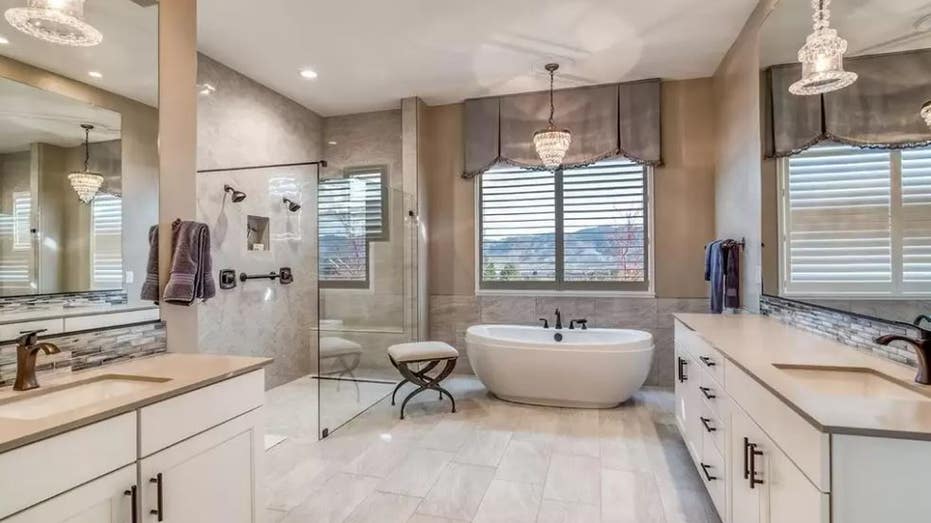
The home has three bedrooms and 3.5 bathrooms, and its master suite has a walk-in closet and bath with double sinks and a garden tub.

Reno home

This Reno home is listed for $2.5 million (MousePad Media)

BILOXI, MISSISSIPPI, REAL ESTATE: WHAT YOU CAN GET FOR $900K

The great room has a fireplace and so does the home’s central courtyard.

Reno home

This Reno home is listed for $2.5 million (MousePad Media)

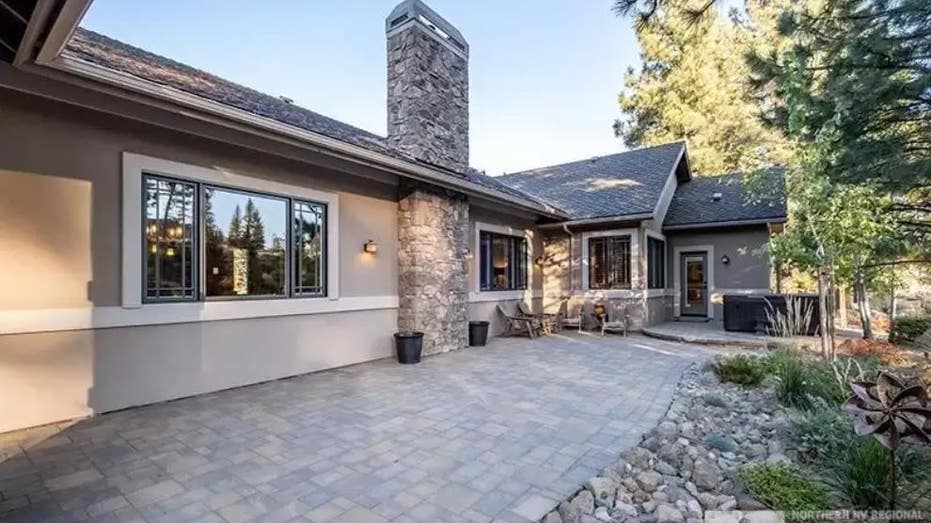
Outdoor features include the home’s 20-by-40-foot in-ground pool along with a spa and an outdoor kitchen, including a barbecue. The property is fully landscaped and also has a putting green.

The home has a three-car garage and room for RV parking.

Timbercreek Court – $1,999,000

Reno home

This Reno home is listed for $1,999,000. (Matthew Nelson)

This home sits in a private gated community just a 20-minute drive from Mt. Rose Ski Resort and roughly 30 minutes from the Reno-Tahoe International Airport – or to Lake Tahoe itself, according to the listing from Brooke Sullivan with Dickson Realty.

The house was built in 2005 on a 1.13-acre lot and underwent a substantial remodel in 2018. 

Reno home

This Reno home is listed for $1,999,000. (Matthew Nelson)

The home’s great room has vaulted beam ceilings, new wood floors and a fireplace.

The 4,010-square-foot home has three bedrooms, four bathrooms and a three-car garage. In the master suite there is a double-sided fireplace, dual vanities and a large walk-in closet.

Reno home

This Reno home is listed for $1,999,000. (Matthew Nelson)

SIOUX FALLS, SOUTH DAKOTA, REAL ESTATE: WHAT YOU CAN GET FOR $1.4 MILLION

The kitchen has a new backsplash, Alder cabinets, granite countertops and JennAir appliances along with two pantries.

Reno home

This Reno home is listed for $1,999,000. (Matthew Nelson)

There is also a wet bar in the home with custom woodwork, a refrigerator and a copper sink.

Reno home

This Reno home is listed for $1,999,000. (Matthew Nelson)

GET FOX BUSINESS ON THE GO BY CLICKING HERE

Outside, there is a 700-square-foot covered patio in addition to the open patio area, and the property was fully landscaped last year with nearly 100 new tree plantings.

The Alexanders Are Now Selling Metaverse Real Estate

The Alexanders Are Now Selling Metaverse Real Estate

Now selling luxury real estate in the metaverse.
Photo: Scott Roth/Invision/AP/Shutterstock

Tal and Oren Alexander, the brothers who became famous for closing megadeals in their early 20s then moved onto the biggest deals ever in their early 30s — they represented Ken Griffin when he bought that record-setting $238 million penthouse at 220 Central Park South in 2019 — recently announced that they’ll be developing and selling luxury real estate in the metaverse. That is, in virtual reality. It’s all imaginary construction; it can’t be lived in but exists only to be bought and sold and conspicuously consumed. Which sounds about right.

Like others in the moneyed Miami set, Oren already invests in crypto, and the brothers and everyone else with money and/or hustle seem to be trying to get rich(er) off NFTs and the metaverse right now. Mark Zuckerberg is falling all over himself to get in on and/or control every piece of metaverse action. And people are spending real money, or at least “real” “money,” to buy virtual yachts. Presumably, they will also spend upward of half a million dollars to own virtual mansions?

The Alexanders certainly seem to think so. The brothers have formed a partnership with Republic Realm, a metaverse developer that recently paid $4.3 million for virtual property in the Sandbox, one of the more popular metaverses. (It also owns a 259-parcel virtual estate in Decentraland that it bought for about $900,000.) “We want to just focus on trophy properties in the various metaverses,” Alexander told the Real Deal. This will take the form, according to Republic Realm, of an “architecturally significant master-planned community.” Which sounds a little (or very?) depressing.

Real estate has always been about status and shelter, skewing increasingly toward the former as one moves up the economic ladder. Speculators like Republic Realm and the Alexanders are banking (literally) on the fact that you can take the shelter piece out of the real-estate equation altogether, leaving just speculation and status. And the brothers, who have always made a point of living as their high-flying clients like Kanye West and Tommy Hilfiger do (a recent Instagram post shows Oren holding up a man-size tuna he spear-hunted in French Polynesia), seem to have a good read on the buzzy elite. “Oren and Tal have a knack for being at the right event during Art Basel, at the right camp at Burning Man, and at the right party at the Oscars,” Jay Parker, chief executive of Douglas Elliman’s Florida brokerage, once told the L.A. Times.

It’s also unclear what, if any, actual money the Alexanders are putting down to develop virtual properties with Republic Realm. So why not? It may all be a bubble of course, but people can make a lot of money off of bubbles before they burst. And while many have looked to the dream of the metaverse for its utopian potential over the years, the way things have gone with the internet has tamped down that idealism in favor of more practical considerations, like not letting Facebook, or Meta as it’s now called, control everything. The rosier visions generally involve people owning their own avatars and content such as, say, NFTs. “The thing I really care about is that you as an individual own objects. Property ownership is a tool. It works. It brings financial incentives,” Kayvon Tehranian, the founder of a marketplace for NFTs, told the New York Times earlier this year. That wasn’t dystopian, he maintained, just realistic. “We’re still talking about human nature, which is greedy and selfish.”

Metaverse real estate is now being sold for cryptocurrency

Metaverse real estate is now being sold for cryptocurrency

The metaverse is getting hotter. Not hot, like a delicious meal or a Finnish sauna. This mostly fictional, virtual world is getting hot like a real estate market. Because lately, it is one.

If you have enough money and courage, you can now buy up digital tracts of land in the metaverse. Of course, there isn’t just one metaverse. Much like a website is part of the larger World Wide Web, there are countless companies, including Meta (née Facebook), building their own virtual realms where they hope people will soon gather as their digital avatars to play games, buy things, and interact with ads. The emerging real estate market for these three-dimensional spaces in virtual reality — including everything from virtual concert venues and shopping malls to houses and monuments — anticipates a future in which digital property owners can work with brands that want a presence in the various iterations of the metaverse.

One of the first companies to get into the digital real estate business is Metaverse Group, which operates a virtual world called Decentraland. Last week, Metaverse Group’s parent company, Token.com, announced that a “116 parcel estate in the heart of the Fashion Street district within Decentraland” sold for the equivalent of about $2.5 million — a record! The new owner of this estate near Fashion Street could presumably profit if Louis Vuitton wants to open a store there: They could effectively be the brand’s virtual landlord.

This Decentraland deal did not, strictly speaking, involve real money. The digital estate sold for 618,000 mana, a type of cryptocurrency used in Decentraland. When you say it out loud, “mana” actually sounds a lot like the first couple syllables of “Monopoly money.”

“Imagine if you came to New York when it was farmland, and you had the option to get a block of SoHo,” Metaverse Group co-founder Michael Gord recently told the New York Times. “If someone wants to buy a block of real estate in SoHo today, it’s priceless, it’s not on the market. That same experience is going to happen in the metaverse.”

All this probably sounds a bit mind-bending. Who would pay real money for the rights to a piece of a virtual world that doesn’t entirely exist yet and will never exist in the real world? Well, if you’ve been paying any attention to the NFT craze or the cryptocurrency boom in recent years, plenty of people are pouring millions of dollars into digital assets with the expectation that others might be willing to pay even more for them in the future. This metaverse land grab is happening under a similar assumption. What makes the metaverse real estate boom all the more enticing, though, is the idea that once you own a piece of digital land, you might be able to make money by leasing it out or selling ads.

Users can wander around Decentraland to find stores and activities. They can also buy land and build their own.

Users can wander around Decentraland to find stores and activities. They can also buy land and build.
Decentraland

In its most basic form, the metaverse concept is not that different from the early days of the web. Starting in the late ‘80s, a common programming language for the web (HTML) enabled people to build websites that hosted content or offered services to users, and eventually, when websites attracted enough of these users, the site owners could sell ads or charge fees to make money off it all. The big difference, of course, is that the web was designed to be free while the metaverse seems destined to be owned by big companies. Just before announcing that Facebook would change its name to Meta, for example, Mark Zuckerberg told investors that the company expected to spend more than $10 billion on its metaverse projects this year alone. It’s hard for anyone to compete with that kind of cash.

Still, plenty of companies are trying. In addition to Decentraland, you can now buy digital land in metaverses with names like Somnium Space, the Sandbox, and Upland. One company called Spotselfie, which currently operates an augmented reality app, will soon let you buy virtual real estate that’s associated with GPS coordinates in the real world through a new feature called Spotland. The idea is that by using tokens issued by Spotselfie — these are effectively cryptocurrency that’s specific to this metaverse, much like the mana used in Decentraland — you’ll buy the rights to a radius around a GPS coordinate, and then if Spotselfie decides to sell ads at that location, you get a cut. The big difference here is that Spotselfie’s metaverse is designed for augmented reality, not virtual reality. To see the metaverse, you just point your phone’s camera at the real-world location, and the Spotland software overlays a digital world onto your screen, ads and all.

This could be the future. If and when mixed reality glasses become a thing — some analysts think that Apple will release a version of them in 2022 — we could be walking around looking at an overwhelming collision of real and digital worlds. And even though a lot of companies are scrambling to stake their claim, it’s unclear exactly who will own that space. Spotselfie co-founder Ray Shingler, for one, hopes that by offering users the option to buy now, his technology will bring some of that democratic, web 1.0 spirit to the nascent metaverse.

“I’m trying to figure out a way,” Shingler told Recode, “where the users are actually getting something out of being in the app, and they actually control the metaverse. Because if you don’t control it soon enough, it’ll be lost to Facebook, or be lost to the Gemini Brothers.” (He’s referring to Cameron and Tyler Winklevoss, who recently received $400 million in funding for metaverse projects.)

Then again, Mark Zuckerberg might be wrong about the metaverse. It’s entirely possible that not that many people actually want to wander around a virtual world, meeting other avatars and buying NFTs with cryptocurrency. Maybe we don’t want to inhabit some boundless digital space filled with ads and designed to track our behavior in ways we haven’t imagined yet.

But if indeed the metaverse is the 21st century’s answer to the web, you can buy your piece of it now. Hurry up, though. The market is virtually hot.

This story was first published in the Recode newsletter. Sign up here so you don’t miss the next one!

Investors Snap Up Metaverse Real Estate in a Virtual Land Boom

Investors Snap Up Metaverse Real Estate in a Virtual Land Boom

Justin Bieber performed at a live concert this month, but the show wasn’t in a stadium or an arena. Like recent performances from Ariana Grande, the Weeknd and Travis Scott, this concert was held in the metaverse, the online world that stretches the corners of the internet into immersive, four-dimensional experiences.

Fans from all over the globe watched Mr. Bieber’s avatar sing songs from his hit album “Justice.” Investors were watching, too. Preparing for a digital land boom that appears just months away, they are snapping up concert venues, shopping malls and other properties in the metaverse.

Interest in this digital universe skyrocketed last month when Mark Zuckerberg announced that Facebook would be known as Meta, an effort to capitalize on the digital frontier. The global market for goods and services in the metaverse will soon be worth $1 trillion, according to the digital currency investor Grayscale.

The metaverse comprises multiple digital realms. Each is like a 3-D virtual city where avatars live, work and play. Anyone who has been exposed to popular video games like Fortnite, Animal Crossing and the Roblox universe has had a taste of what these realms look like. In each, elements including virtual reality, streaming video, mobile gaming, avatars and artificial intelligence are combined into immersive digital experiences.

But real estate investing in the metaverse still is highly speculative, and no one knows for sure whether this boom is the next big thing or the next big bubble.

Technologists believe the metaverse will grow into a fully functioning economy in a few short years and offer a synchronous digital experience that will be as integrated into our lives as email and social networking are today.

Money in these digital worlds is cryptocurrency, as finance in the metaverse is powered by the blockchain — a digitally distributed public ledger that eliminates the need for a third party, like a bank. Anyone entering a virtual world can buy or trade art, music and even homes as nonfungible tokens, or NFTs, which are blockchain-based collectibles that are digital representations of real-world items. The NFT serves as proof of ownership and is not interchangeable.

And in recent months, the volume of transactions for commercial real estate in the metaverse has ramped up.

In October, Tokens.com, a blockchain technology company focused on NFTs and metaverse real estate, acquired 50 percent of Metaverse Group, one of the world’s first virtual real estate companies, for about $1.7 million. Metaverse Group is based in Toronto but has virtual headquarters in a world called Decentraland in Crypto Valley, which is the metaverse’s answer to Silicon Valley. Decentraland also has districts for gambling, shopping, fashion and the arts.

“Rather than try to create a universe like Facebook, I said, ‘Why don’t we go in and buy the parcels of land in these metaverses, and then we can become the landlords?’” said Andrew Kiguel, a co-founder and the chief executive of Tokens.com.

Since that acquisition, Tokens.com has broken digital ground on a tower in Decentraland. Louis Vuitton, Gucci, Burberry and other luxury brands have already entered the metaverse via NFTs, a move that makes company executives optimistic that the Tokens.com tower will soon generate revenue from leases and advertising for brands like these.

For those wondering why a company would want to invest in a virtual office in the metaverse, Michael Gord, a co-founder of the Metaverse Group, said skeptics should look at the trends catalyzed by the pandemic.

“As more people participate, it’s where you’re going with friends, where you’re having experiences like conferences and concerts,” he said. “It’s inevitable that the metaverse will be the No. 1 social network in the world.”

The Metaverse Group has a real estate investment trust, and it plans to build a portfolio of properties in Decentraland as well as other realms including Somnium Space, Sandbox and Upland. The internet may be infinite, but virtual real estate is not — Decentraland, for example, is 90,000 parcels of land, each roughly 50 feet by 50 feet. Among investors, there’s a sense that there’s gold in those pixelated hills, Mr. Gord said.

“Imagine if you came to New York when it was farmland, and you had the option to get a block of SoHo,” he said. “If someone wants to buy a block of real estate in SoHo today, it’s priceless, it’s not on the market. That same experience is going to happen in the metaverse.”

Last week, Tokens.com closed an even larger land deal in Decentraland’s fashion district for roughly $2.5 million. The company, which says the real estate transaction was the largest in metaverse history, plans to develop the area into a virtual commerce hub for luxury fashion brands, à la Rodeo Drive or Fifth Avenue.

Mr. Kiguel estimates his portfolio in the metaverse is valued at up to 10 times more than its purchase price, and much of the reasoning will sound similar to anyone who has ever bought or sold real estate.

“It’s location, location, location,” he said. “A parcel of land in the downtown core, which has a lot of visitor traffic, is worth more than a parcel of land in the suburbs. There’s a scarcity value.”

Many of these digital realms appear as cartoonish, gummy-colored fantasy worlds, while others are digital applications of the planet we already know and love. SuperWorld, a virtual real estate platform mapped over the entire face of the globe, offers 64.8 billion plots of land — each for sale as an NFT. The Taj Mahal is available, as is, most likely, your childhood home. Owners can buy plots for reasons sentimental or savvy, but either way, once they buy the NFT, they get a share of any of the commerce that happens on that piece of property.

“You can buy locations that you love, whether it’s Central Park or the pyramids in Egypt,” said Hrish Lotlikar, a co-founder and the chief executive of SuperWorld. “What you’re buying is the virtual land that covers the earth at those locations.”

And as the metaverse seeps more deeply into the everyday consciousness of our universe, there’s a new realm where the divide between them gets rubbed away: the omniverse.

The real world and the online world merge into one hybrid universe, where the fungible and the nonfungible intersect at multiple points, said Justin Banon, a co-founder and the chief executive of Boson Protocol, which enables the sale of physical products in the metaverse as NFTs. Real estate in the metaverse will house the commerce that will drive this transformation.

“It’s already happening, and it’s just a question of degree,” he said. “But I think in five years, my daughter will not allow me to pick her up from school if I’m not wearing a pair of sneakers that don’t also have an NFT.”

In June, Boson Protocol bought a an entire block of the Vegas City gambling district of Decentraland. The space, the company says, will become a commerce point where products from the real world can be exchanged for NFTs; those same NFTs, acting as digital representations of physical products, can also be traded for items in brick-and-mortar stores.

“Everybody recognizes that we’re very early and these things are going to be modern-day antiques,” Mr. Banon said. “So buying at this stage is hugely lucrative.”

There are only a handful of digital realms where investors can buy and sell real estate, and all of them use their own cryptocurrency. Decentraland’s is called MANA, for instance. Decentraland also has a marketplace where people can browse NFTs, including plots of land for sale. “It’s almost like a multiple listings service,” Mr. Kiguel said.

Wave, an entertainment company that stages interactive concerts, including Mr. Bieber’s, earns a profit from virtual merchandise and brand sponsorships for the shows, which are held in neutral zones rather than a digital arena. The company is not yet monetizing real estate, but Adam Arrigo, a co-founder and the chief executive, said he was researching possibilities.

“These platforms like Decentraland and Sandbox are pioneers in credentialing these plots of lands, these storefronts,” he said. “Over the next few years, what we do is going to become a lot more mainstream.”

Lessen, Property Services Startup, Scores Unicorn Valuation

Lessen, Property Services Startup, Scores Unicorn Valuation

Newest unicorn is property-services startup Lessen

Lessen CEO Jay McKee and Fifth Wall managing partner Brendan Wallace (LinkedIn, Fifth Wall, iStock)

A historic year for proptech fundraising has produced another unicorn.

Lessen, a real estate management platform that connects property owners and operators to electricians, cleaners and other service providers, raised $170 million in a Series B round, pushing its total funding so far to $214 million — nearly quadruple its previous fundraising — and valuing the two-and-a-half year-old company at more than $1 billion.

Proptech venture capital firm Fifth Wall, which led Lessen’s $35 million Series A round in June, returned to lead the new round. Khosla Ventures, General Catalyst and Navitas Capital were also repeat investors.

The Series B was oversubscribed, Lessen CEO Jay McKee said, and the company plans to detail additional investment from special purpose vehicle partners before the end of the year.

Lessen’s fundraise comes at a pivotal time for the U.S. housing market, with an unprecedented combination of high demand and low supply driving home prices to record highs as developers, owners and operators grapple with labor shortages and supply chain disruption.

“Lessen is seeing a difficult hiring environment, complicated materials procurement system, and increased appetite for portfolio scaling all at the same time,” McKee said by email.

McKee’s experience is not limited to tech. He previously founded the single-family rental company Colony American Homes, which merged with a Starwood Capital Group affiliate in 2015.

Scottsdale, Arizona-based Lessen’s client base, which spans 30 U.S. markets, includes large multifamily and single-family rental REITs, who use the platform to source more than 2,000 plumbers, electricians, cleaners and other servicers. Users can manage multiple work orders as well as bill and analyze data from previous jobs.

McKee said Lessen’s transparency, comprehensive data and ability to “optimize workflows” improve the “timing, quality and pricing of jobs,” and set the platform apart in a crowded field.

“We believe that we are approaching the property-services industry in a unique way that combines tech and field delivery in a way that no one has done before,” McKee said.

Lessen, which also has offices in Seattle and Miami, plans to launch its platform nationwide soon and triple its employee count in the coming months, McKee said. “Eventually, we believe there is opportunity for international expansion,” he said.

Proptech investors have produced a few unicorns over the last year. The most recent was Place, a technology and business services platform for agents, which achieved a $1 billion-plus valuation with its first funding round this month.