The Alexanders Are Now Selling Metaverse Real Estate

The Alexanders Are Now Selling Metaverse Real Estate

Now selling luxury real estate in the metaverse.
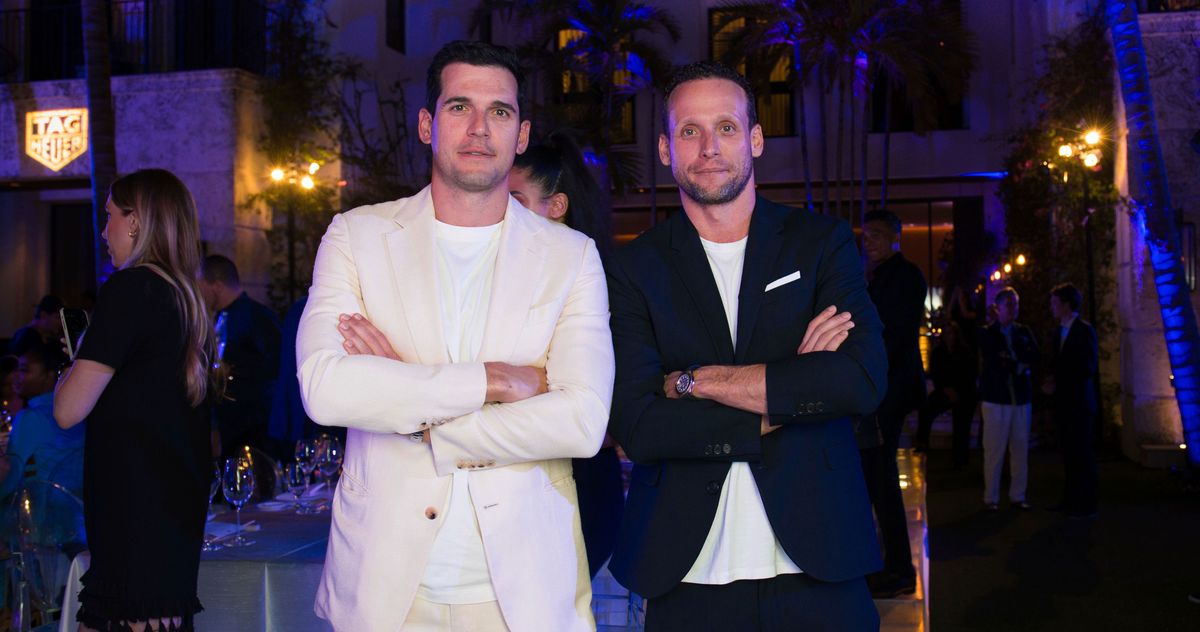
Photo: Scott Roth/Invision/AP/Shutterstock

Tal and Oren Alexander, the brothers who became famous for closing megadeals in their early 20s then moved onto the biggest deals ever in their early 30s — they represented Ken Griffin when he bought that record-setting $238 million penthouse at 220 Central Park South in 2019 — recently announced that they’ll be developing and selling luxury real estate in the metaverse. That is, in virtual reality. It’s all imaginary construction; it can’t be lived in but exists only to be bought and sold and conspicuously consumed. Which sounds about right.

Like others in the moneyed Miami set, Oren already invests in crypto, and the brothers and everyone else with money and/or hustle seem to be trying to get rich(er) off NFTs and the metaverse right now. Mark Zuckerberg is falling all over himself to get in on and/or control every piece of metaverse action. And people are spending real money, or at least “real” “money,” to buy virtual yachts. Presumably, they will also spend upward of half a million dollars to own virtual mansions?

The Alexanders certainly seem to think so. The brothers have formed a partnership with Republic Realm, a metaverse developer that recently paid $4.3 million for virtual property in the Sandbox, one of the more popular metaverses. (It also owns a 259-parcel virtual estate in Decentraland that it bought for about $900,000.) “We want to just focus on trophy properties in the various metaverses,” Alexander told the Real Deal. This will take the form, according to Republic Realm, of an “architecturally significant master-planned community.” Which sounds a little (or very?) depressing.

Real estate has always been about status and shelter, skewing increasingly toward the former as one moves up the economic ladder. Speculators like Republic Realm and the Alexanders are banking (literally) on the fact that you can take the shelter piece out of the real-estate equation altogether, leaving just speculation and status. And the brothers, who have always made a point of living as their high-flying clients like Kanye West and Tommy Hilfiger do (a recent Instagram post shows Oren holding up a man-size tuna he spear-hunted in French Polynesia), seem to have a good read on the buzzy elite. “Oren and Tal have a knack for being at the right event during Art Basel, at the right camp at Burning Man, and at the right party at the Oscars,” Jay Parker, chief executive of Douglas Elliman’s Florida brokerage, once told the L.A. Times.

It’s also unclear what, if any, actual money the Alexanders are putting down to develop virtual properties with Republic Realm. So why not? It may all be a bubble of course, but people can make a lot of money off of bubbles before they burst. And while many have looked to the dream of the metaverse for its utopian potential over the years, the way things have gone with the internet has tamped down that idealism in favor of more practical considerations, like not letting Facebook, or Meta as it’s now called, control everything. The rosier visions generally involve people owning their own avatars and content such as, say, NFTs. “The thing I really care about is that you as an individual own objects. Property ownership is a tool. It works. It brings financial incentives,” Kayvon Tehranian, the founder of a marketplace for NFTs, told the New York Times earlier this year. That wasn’t dystopian, he maintained, just realistic. “We’re still talking about human nature, which is greedy and selfish.”

Metaverse real estate is now being sold for cryptocurrency

Metaverse real estate is now being sold for cryptocurrency

The metaverse is getting hotter. Not hot, like a delicious meal or a Finnish sauna. This mostly fictional, virtual world is getting hot like a real estate market. Because lately, it is one.

If you have enough money and courage, you can now buy up digital tracts of land in the metaverse. Of course, there isn’t just one metaverse. Much like a website is part of the larger World Wide Web, there are countless companies, including Meta (née Facebook), building their own virtual realms where they hope people will soon gather as their digital avatars to play games, buy things, and interact with ads. The emerging real estate market for these three-dimensional spaces in virtual reality — including everything from virtual concert venues and shopping malls to houses and monuments — anticipates a future in which digital property owners can work with brands that want a presence in the various iterations of the metaverse.

One of the first companies to get into the digital real estate business is Metaverse Group, which operates a virtual world called Decentraland. Last week, Metaverse Group’s parent company, Token.com, announced that a “116 parcel estate in the heart of the Fashion Street district within Decentraland” sold for the equivalent of about $2.5 million — a record! The new owner of this estate near Fashion Street could presumably profit if Louis Vuitton wants to open a store there: They could effectively be the brand’s virtual landlord.

This Decentraland deal did not, strictly speaking, involve real money. The digital estate sold for 618,000 mana, a type of cryptocurrency used in Decentraland. When you say it out loud, “mana” actually sounds a lot like the first couple syllables of “Monopoly money.”

“Imagine if you came to New York when it was farmland, and you had the option to get a block of SoHo,” Metaverse Group co-founder Michael Gord recently told the New York Times. “If someone wants to buy a block of real estate in SoHo today, it’s priceless, it’s not on the market. That same experience is going to happen in the metaverse.”

All this probably sounds a bit mind-bending. Who would pay real money for the rights to a piece of a virtual world that doesn’t entirely exist yet and will never exist in the real world? Well, if you’ve been paying any attention to the NFT craze or the cryptocurrency boom in recent years, plenty of people are pouring millions of dollars into digital assets with the expectation that others might be willing to pay even more for them in the future. This metaverse land grab is happening under a similar assumption. What makes the metaverse real estate boom all the more enticing, though, is the idea that once you own a piece of digital land, you might be able to make money by leasing it out or selling ads.

Users can wander around Decentraland to find stores and activities. They can also buy land and build their own.

Users can wander around Decentraland to find stores and activities. They can also buy land and build.
Decentraland

In its most basic form, the metaverse concept is not that different from the early days of the web. Starting in the late ‘80s, a common programming language for the web (HTML) enabled people to build websites that hosted content or offered services to users, and eventually, when websites attracted enough of these users, the site owners could sell ads or charge fees to make money off it all. The big difference, of course, is that the web was designed to be free while the metaverse seems destined to be owned by big companies. Just before announcing that Facebook would change its name to Meta, for example, Mark Zuckerberg told investors that the company expected to spend more than $10 billion on its metaverse projects this year alone. It’s hard for anyone to compete with that kind of cash.

Still, plenty of companies are trying. In addition to Decentraland, you can now buy digital land in metaverses with names like Somnium Space, the Sandbox, and Upland. One company called Spotselfie, which currently operates an augmented reality app, will soon let you buy virtual real estate that’s associated with GPS coordinates in the real world through a new feature called Spotland. The idea is that by using tokens issued by Spotselfie — these are effectively cryptocurrency that’s specific to this metaverse, much like the mana used in Decentraland — you’ll buy the rights to a radius around a GPS coordinate, and then if Spotselfie decides to sell ads at that location, you get a cut. The big difference here is that Spotselfie’s metaverse is designed for augmented reality, not virtual reality. To see the metaverse, you just point your phone’s camera at the real-world location, and the Spotland software overlays a digital world onto your screen, ads and all.

This could be the future. If and when mixed reality glasses become a thing — some analysts think that Apple will release a version of them in 2022 — we could be walking around looking at an overwhelming collision of real and digital worlds. And even though a lot of companies are scrambling to stake their claim, it’s unclear exactly who will own that space. Spotselfie co-founder Ray Shingler, for one, hopes that by offering users the option to buy now, his technology will bring some of that democratic, web 1.0 spirit to the nascent metaverse.

“I’m trying to figure out a way,” Shingler told Recode, “where the users are actually getting something out of being in the app, and they actually control the metaverse. Because if you don’t control it soon enough, it’ll be lost to Facebook, or be lost to the Gemini Brothers.” (He’s referring to Cameron and Tyler Winklevoss, who recently received $400 million in funding for metaverse projects.)

Then again, Mark Zuckerberg might be wrong about the metaverse. It’s entirely possible that not that many people actually want to wander around a virtual world, meeting other avatars and buying NFTs with cryptocurrency. Maybe we don’t want to inhabit some boundless digital space filled with ads and designed to track our behavior in ways we haven’t imagined yet.

But if indeed the metaverse is the 21st century’s answer to the web, you can buy your piece of it now. Hurry up, though. The market is virtually hot.

This story was first published in the Recode newsletter. Sign up here so you don’t miss the next one!

Investors Snap Up Metaverse Real Estate in a Virtual Land Boom

Investors Snap Up Metaverse Real Estate in a Virtual Land Boom

Justin Bieber performed at a live concert this month, but the show wasn’t in a stadium or an arena. Like recent performances from Ariana Grande, the Weeknd and Travis Scott, this concert was held in the metaverse, the online world that stretches the corners of the internet into immersive, four-dimensional experiences.

Fans from all over the globe watched Mr. Bieber’s avatar sing songs from his hit album “Justice.” Investors were watching, too. Preparing for a digital land boom that appears just months away, they are snapping up concert venues, shopping malls and other properties in the metaverse.

Interest in this digital universe skyrocketed last month when Mark Zuckerberg announced that Facebook would be known as Meta, an effort to capitalize on the digital frontier. The global market for goods and services in the metaverse will soon be worth $1 trillion, according to the digital currency investor Grayscale.

The metaverse comprises multiple digital realms. Each is like a 3-D virtual city where avatars live, work and play. Anyone who has been exposed to popular video games like Fortnite, Animal Crossing and the Roblox universe has had a taste of what these realms look like. In each, elements including virtual reality, streaming video, mobile gaming, avatars and artificial intelligence are combined into immersive digital experiences.

But real estate investing in the metaverse still is highly speculative, and no one knows for sure whether this boom is the next big thing or the next big bubble.

Technologists believe the metaverse will grow into a fully functioning economy in a few short years and offer a synchronous digital experience that will be as integrated into our lives as email and social networking are today.

Money in these digital worlds is cryptocurrency, as finance in the metaverse is powered by the blockchain — a digitally distributed public ledger that eliminates the need for a third party, like a bank. Anyone entering a virtual world can buy or trade art, music and even homes as nonfungible tokens, or NFTs, which are blockchain-based collectibles that are digital representations of real-world items. The NFT serves as proof of ownership and is not interchangeable.

And in recent months, the volume of transactions for commercial real estate in the metaverse has ramped up.

In October, Tokens.com, a blockchain technology company focused on NFTs and metaverse real estate, acquired 50 percent of Metaverse Group, one of the world’s first virtual real estate companies, for about $1.7 million. Metaverse Group is based in Toronto but has virtual headquarters in a world called Decentraland in Crypto Valley, which is the metaverse’s answer to Silicon Valley. Decentraland also has districts for gambling, shopping, fashion and the arts.

“Rather than try to create a universe like Facebook, I said, ‘Why don’t we go in and buy the parcels of land in these metaverses, and then we can become the landlords?’” said Andrew Kiguel, a co-founder and the chief executive of Tokens.com.

Since that acquisition, Tokens.com has broken digital ground on a tower in Decentraland. Louis Vuitton, Gucci, Burberry and other luxury brands have already entered the metaverse via NFTs, a move that makes company executives optimistic that the Tokens.com tower will soon generate revenue from leases and advertising for brands like these.

For those wondering why a company would want to invest in a virtual office in the metaverse, Michael Gord, a co-founder of the Metaverse Group, said skeptics should look at the trends catalyzed by the pandemic.

“As more people participate, it’s where you’re going with friends, where you’re having experiences like conferences and concerts,” he said. “It’s inevitable that the metaverse will be the No. 1 social network in the world.”

The Metaverse Group has a real estate investment trust, and it plans to build a portfolio of properties in Decentraland as well as other realms including Somnium Space, Sandbox and Upland. The internet may be infinite, but virtual real estate is not — Decentraland, for example, is 90,000 parcels of land, each roughly 50 feet by 50 feet. Among investors, there’s a sense that there’s gold in those pixelated hills, Mr. Gord said.

“Imagine if you came to New York when it was farmland, and you had the option to get a block of SoHo,” he said. “If someone wants to buy a block of real estate in SoHo today, it’s priceless, it’s not on the market. That same experience is going to happen in the metaverse.”

Last week, Tokens.com closed an even larger land deal in Decentraland’s fashion district for roughly $2.5 million. The company, which says the real estate transaction was the largest in metaverse history, plans to develop the area into a virtual commerce hub for luxury fashion brands, à la Rodeo Drive or Fifth Avenue.

Mr. Kiguel estimates his portfolio in the metaverse is valued at up to 10 times more than its purchase price, and much of the reasoning will sound similar to anyone who has ever bought or sold real estate.

“It’s location, location, location,” he said. “A parcel of land in the downtown core, which has a lot of visitor traffic, is worth more than a parcel of land in the suburbs. There’s a scarcity value.”

Many of these digital realms appear as cartoonish, gummy-colored fantasy worlds, while others are digital applications of the planet we already know and love. SuperWorld, a virtual real estate platform mapped over the entire face of the globe, offers 64.8 billion plots of land — each for sale as an NFT. The Taj Mahal is available, as is, most likely, your childhood home. Owners can buy plots for reasons sentimental or savvy, but either way, once they buy the NFT, they get a share of any of the commerce that happens on that piece of property.

“You can buy locations that you love, whether it’s Central Park or the pyramids in Egypt,” said Hrish Lotlikar, a co-founder and the chief executive of SuperWorld. “What you’re buying is the virtual land that covers the earth at those locations.”

And as the metaverse seeps more deeply into the everyday consciousness of our universe, there’s a new realm where the divide between them gets rubbed away: the omniverse.

The real world and the online world merge into one hybrid universe, where the fungible and the nonfungible intersect at multiple points, said Justin Banon, a co-founder and the chief executive of Boson Protocol, which enables the sale of physical products in the metaverse as NFTs. Real estate in the metaverse will house the commerce that will drive this transformation.

“It’s already happening, and it’s just a question of degree,” he said. “But I think in five years, my daughter will not allow me to pick her up from school if I’m not wearing a pair of sneakers that don’t also have an NFT.”

In June, Boson Protocol bought a an entire block of the Vegas City gambling district of Decentraland. The space, the company says, will become a commerce point where products from the real world can be exchanged for NFTs; those same NFTs, acting as digital representations of physical products, can also be traded for items in brick-and-mortar stores.

“Everybody recognizes that we’re very early and these things are going to be modern-day antiques,” Mr. Banon said. “So buying at this stage is hugely lucrative.”

There are only a handful of digital realms where investors can buy and sell real estate, and all of them use their own cryptocurrency. Decentraland’s is called MANA, for instance. Decentraland also has a marketplace where people can browse NFTs, including plots of land for sale. “It’s almost like a multiple listings service,” Mr. Kiguel said.

Wave, an entertainment company that stages interactive concerts, including Mr. Bieber’s, earns a profit from virtual merchandise and brand sponsorships for the shows, which are held in neutral zones rather than a digital arena. The company is not yet monetizing real estate, but Adam Arrigo, a co-founder and the chief executive, said he was researching possibilities.

“These platforms like Decentraland and Sandbox are pioneers in credentialing these plots of lands, these storefronts,” he said. “Over the next few years, what we do is going to become a lot more mainstream.”

Metaverse universe: Realty and luxury brands wait for you to splash crypto cash

Metaverse universe: Realty and luxury brands wait for you to splash crypto cash

It is not real yet but things are moving along at a feverish pace. Metaverse, a dream sold to us most vocally by Mark Zuckerberg of Meta (formerly Facebook) and followed up by the world of tech and beyond, is at best described as a hypothetical evolution of the internet in its current form, and it may or may not happen, however, the number of believers is significantly higher.

If you thought only tech companies have ambitions for the metaverse future, that wouldn’t be true. Real estate, fashion, entertainment, and gaming companies are making a beeline for the next big upgrade to the internet, sending the digital real estate prices soaring

Real estate boom (or decline, depending on your luck) is something we are well versed with in the physical world around us. But the metaverse? Turns out, a plot of digital land has sold for $2.43 million. This is on the Decentraland Marketplace platform which sells digital/virtual land and collectibles for your metaverse life’s preparations.In fact, the metaverse is so much in vogue that the above piece of land sold for more than twice the previous high of $913,000 in June this year.

This purchase was made using cryptocurrency by the Metaverse Group, a subsidiary of Tokens.com. They paid 618,000 MANA, an Ethereum based token, for this real estate deal, in the heart of what is believed to be the fashion district of the Decentraland metaverse world. For the rest of us to get an idea of the space involved here, in real world that would translate into 6,090 square feet of land.

Also Read: Can you, and should you, make NFTs from artwork, collectibles and tweets?

“Fashion is the next massive area for growth in the metaverse. So it’s timely, and very exciting that Metaverse Group has made such a decisive commitment with this land purchase in the heart of Decentraland’s fashion precinct,” points out Sam Hamilton, head of content at the Decentraland Foundation.

That’s more money than the price tags slapped on most homes in San Francisco or New York City.

A quick browse through in the marketplace lead us to land listings such as the “Largest Metaverse Estate for Sale near Genesis Plaza” with a price tag of 277,777 Ethereum. The listing to bid for the “Virtual Reality Shopping District” even bid for buying land in District X, which is described as “Decentraland’s premier land, content, and service company providing land rentals/leases, prefab and custom content, and in-world services”. It is all getting very real world in the metaverse. With similar real estate prices too. Most require Ethereum coin payments.

Also Read: Should you fear the metaverse?

Metaversereit, which calls itself the world’s first virtual real estate firm, says, “Digital scarcity is a tenant of all virtual World’s. There is a limited amount of virtual real estate in these Metaverses and just like the physical realm, only a subset of that available real estate is considered desirable.”

High street comes to the metaverse universe

Nike has firm plans for a virtual space called NIKELAND. The company has partnered with Roblox, an online gaming platform that offers more than 24 million virtual experiences with focus on immersive content. NIKELAND will be inspired by the company’s global headquarters in the real world, interspersed with games and sports activities (Nike says these will take advantage of the accelerometers on your phones) and of course, a digital showroom.

“Nike created this bespoke world with the backdrop of its world headquarters and inside Roblox’s immersive 3D space, building on its goal to turn sport and play into a lifestyle,” the company says, in an official statement.

NFTs, or non-fungible tokens, are the route fashion labels are taking to enter the metaverse. It is all a big opportunity for dressing up avatars in the metaverse, with research suggesting that one in five metaverse gamers on Roblox change their avatars daily. Gucci sold a digital version of its Dionysus bag on Roblox for about $4,100. In fact, that’s more expensive than the real-life bag, which has a price tag of around $3,400.

Also Read | Facebook to Meta: The Metaverse contours go beyond just rebranding

Another luxury brand Dolce & Gabbana sold a nice-piece NFT collection last month for $5.7 million. This digital collection called Collezione Genesi was sold on UNXD, a digital luxury marketplace. One of the NFTs, called, The Dress From A Dream in gold colour, sold for $820,000. That’s 225.5 Ether coins, thank you very much.

Analysts at Morgan Stanley say that the virtual luxury market could be as large as $57 billion by the year 2030. That is a massive opportunity for the luxury brands, and NFTs are the easiest way forward.