How to know when housing bottom is in

How to know when housing bottom is in

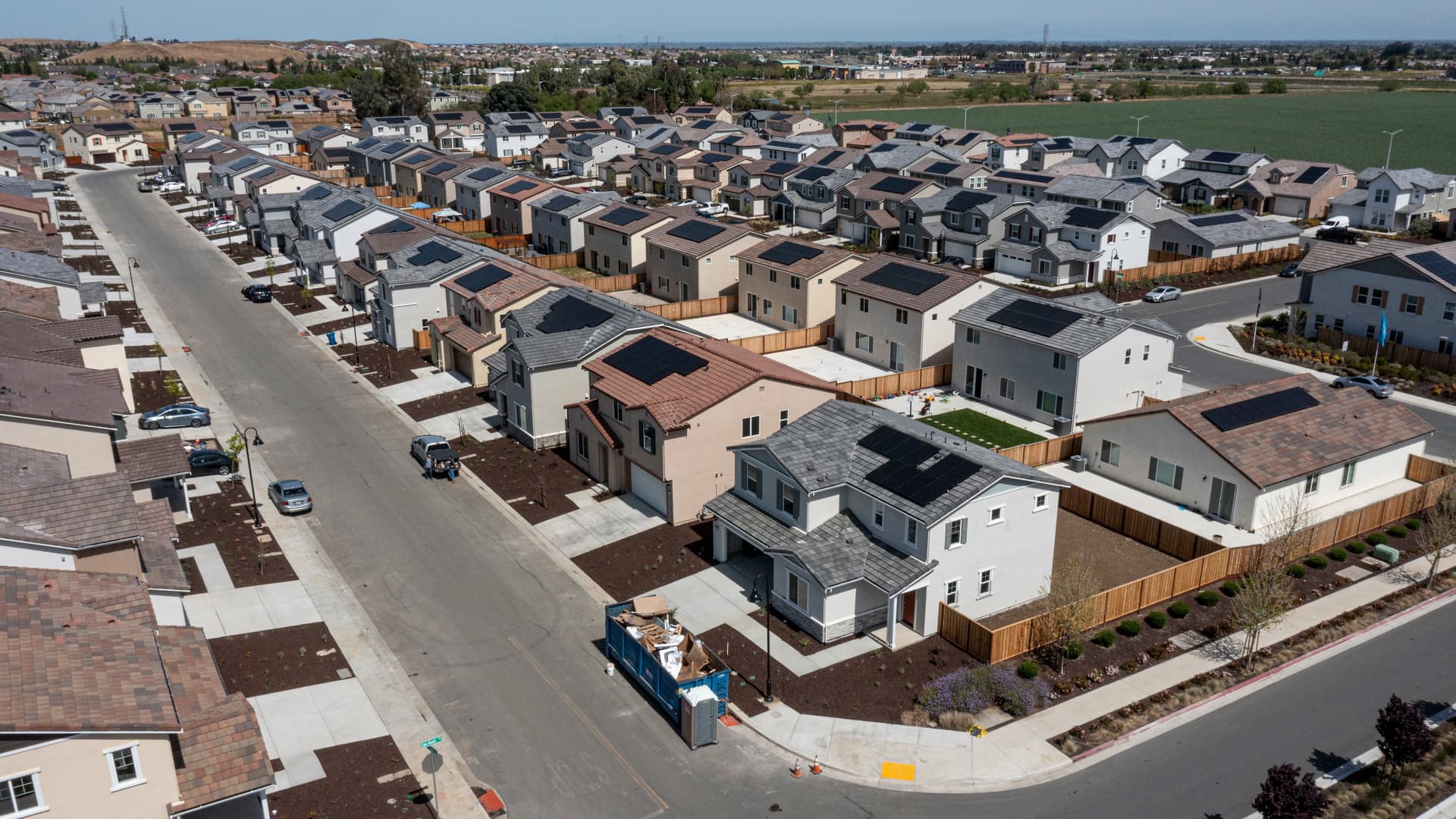
New homes at the Cielo at Sand Creek by Century Communities housing development in Antioch, California, U.S., on Thursday, March 31, 2022.

David Paul Morris | Bloomberg | Getty Images

Chicago realtor Jeremy Fisher headed to Florida after Christmas counting on five mostly-relaxed weeks, after a slow second half of 2022 left him with a bunch of unsold listings exiting the year.

Instead, the Compass broker ended up flying back to the Windy City three times during his low season, as seven homes went into contract and his husband ended up driving their baby home from Florida alone. The great real estate bust, it seems, has found something like a floor.

“For somebody, it’s always the right time to buy a house,” Fisher said. “People for the most part have come to terms with interest rates.”

After only a few months in the tank, is the U.S. housing market close enough to a bottom that it’s time for those on the sidelines to at least start thinking about buying as spring shopping season nears?

Signs are accumulating that the big price bust — and mortgage-rate relief — that buyers wanted isn’t materializing, at least not soon.

Goldman Sachs trimmed its estimate of peak-to-trough declines in nationwide home prices to 6 percent from 10 percent in late January. Online housing marketplace Zillow now expects prices to rise slightly in 2023. Existing home sales, which were running at a 6.5 million annual pace in early 2021, have begun to stabilize around 4 million, with the National Association of Realtors forecasting 4.8 million for the year. Meanwhile, mortgage rates, which dipped under a 6 percent national average on Feb. 2 after more than doubling since mid-2021 to almost 7.4 percent, have jumped back to 6.75 percent, driven by a scorching January jobs report.

No bust, but a standoff between buyers and sellers

Instead of a price bust a la the one after the mid-2000s housing bubble, what’s developing is a standoff, says Logan Mohtashami, lead analyst for HousingWire in Irvine, Calif. On the one hand are buyers who would like homes to be as affordable as in 2019. But a big share of them either have to move or can afford to despite higher prices and rates. On the other are sellers, under no pressure to move since they have cheap mortgages and plenty of equity for now. So far, sellers are hanging tough in most cities. Even small increases in demand can keep prices firm, or move them higher, because inventory is so tight, Mohtashami said.

The recipe for 2023’s housing market is shaping up as prices that are roughly stable nationally, but with ongoing drops in some regional markets, interest rates that decline but not hugely, and buyers’ incomes that rise. Experts think they will combine to make affordability improve, maybe to near-normal historical levels, but still fall well short of where home buyers stood when mortgage rates were 3 percent or even lower.

“Households have two incomes, and you have to earn about $100,000 to buy a house,” Mohtashami said. “There are lots of dual-income couples that can do that. It gives you more buying power than people know about.” 

No return of 2008, or 3{d4d1dfc03659490934346f23c59135b993ced5bc8cc26281e129c43fe68630c9} mortgage rate

The biggest reason why housing prices aren’t plunging like they did after 2008? Because the market isn’t being flooded with homes that drive down prices, as happened then.

Capital-rich banks aren’t under pressure as they were then, with foreclosure rates less than a tenth of those from the housing bust. Neither are households, with debt payment burdens near historic lows and few homeowners owing more on their mortgage than the house is worth. Serious delinquency rates, which skyrocketed after 2006 and led to 6 million foreclosures, have fallen by nearly half in the last year, to less than 0.7{d4d1dfc03659490934346f23c59135b993ced5bc8cc26281e129c43fe68630c9} of mortgages, according to Fannie Mae. Unemployment is the lowest in 54 years, letting homeowners either trade up or hang on to their current homes easily – and if they are among the 85 percent of owners whose mortgages carry interest rates below 5 percent, many will stay put rather than buy a more expensive house with a costlier loan. 

All that means the supply of homes for sale is likely to stay tight, which limits price declines.
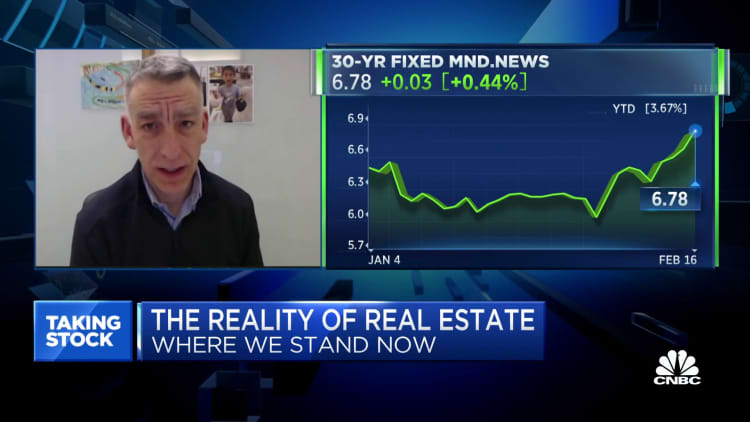
We're still at half the housing inventory of 2016 through 2019, says Redfin's Glenn Kelman

Affordability is bad now, after rate hikes and Covid-driven price increases, but it has been worse. And we’ve all been spoiled by recent history: After the financial crisis, housing affordability nationally literally doubled as interest rates collapsed and prices fell, reaching all-time highs. It had retained most of those gains up until the Covid price surge, even as home values recovered.

“Rates will be dropping in the second quarter, but we don’t see a drastic drop that should make people wait,” said Nadia Evangelou, director of real estate research at the NAR. She predicted that 30-year mortgages will decline to around 5.75 percent. “Buyers realize 3 percent rates are not coming back.”

Housing affordability is stretched

The NAR’s closely-watched affordability index, which considers prices, rates and buyers’ incomes, is much lower than in 2019, but is still in line with the late 1980s and early 1990s. At current levels, the Housing Affordability Index says the median buyer can afford the median U.S. home — but barely. In 2020, the median buyer could afford the median home with a 70 percent cushion, which was the product of 3{d4d1dfc03659490934346f23c59135b993ced5bc8cc26281e129c43fe68630c9} loans, Covid-driven income support and the residual impact of big home price drops between 2006 and 2011. Since 1980, the average is that median home buyers have about 20{d4d1dfc03659490934346f23c59135b993ced5bc8cc26281e129c43fe68630c9} more income than they need for the median home, Evangelou said.

So why is anyone buying homes that are suddenly less affordable?

For Maggie Neuder, a client of Fisher’s in Chicago, the answer boiled down to wanting a new place and being able to afford one. Having seen 6 percent interest rates when she bought her first place in 2007, she’s not daunted by today’s rates, she said. The 41-year old finance executive bought a bigger home than she needed during Covid to ride out quarantines, and now wants a smaller place in the city’s Lincoln Park neighborhood, so she executed a flip.

To calm her buyer’s interest rate fears, she is giving a closing credit big enough to buy down the mortgage rate on the buyer’s loan for the first two years, by two percentage points in year one and one percentage point in year two – a move many builders are also using to sell new homes. To make back the money, she extracted a similar concession from the seller of the home she expects to buy in April.

“People look at refinancing like it’s a bad thing,” she said, figuring she can likely lower her payment within a couple of years. “I don’t think we’re going back to the sub-threes, but somewhere in the fours. Even if rates don’t fall below 6, I’m in a comfortable place with my mortgage.” 
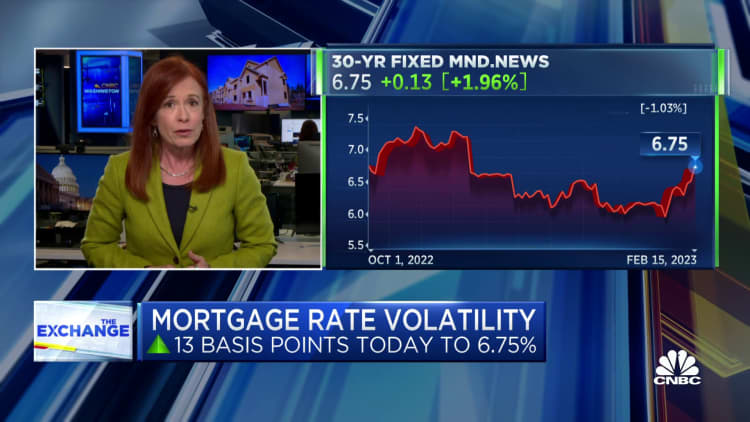
Mortgage rates move higher, along with homebuilder sentiment

Fisher says his recent buyers fall into three camps. At either end are first-time buyers who have never had a 3 percent loan, and older buyers who are paying cash. Neither is much bothered by rates around 6 percent, he said. In the middle are move-up buyers who initially worried about rates more. But they are making work-arounds like Neuder’s to get what they want, Fisher said. These buyers likely drove the increase in applications for new mortgages that happened as rates fell earlier this winter.

“People have wrapped their heads around where interest rates are, and they have adapted,” Fisher said. 

Indeed, combining the wage gains of the last few years with the deflation that has begun to show in market-based housing data in the last six months, and the most flagrant cases of distorted regional markets have begun to correct already. Another boost comes from solid rates of new household formation, said Daryl Fairweather, chief economist at Redfin.

Where home prices are now

The average house price is down 6 percent since the June peak, according to the S&P Case-Shiller index of prices in 20 major metro areas, and 3.5{d4d1dfc03659490934346f23c59135b993ced5bc8cc26281e129c43fe68630c9} in the index for the whole country. 

Recently-hot markets have taken bigger hits, as expected. In San Francisco, the Case-Shiller index is down 12 percent, in Phoenix 8 percent. In Sacramento, home prices have given back almost half of their Covid-era gains, said Ryan Lundquist, a local appraiser who blogs about the market in California’s capital. In metro Tampa, where prices rose 69 percent during Covid, according to Case-Shiller, prices are down only 3 percent.

Add in wage growth — wages rose about 5 percent last year, according to data from Zillow — and the effective price of housing has come down sharply in some places, while remaining well above pre-Covid levels, Zillow chief economist Skylar Olsen said. 

“Even with values down a bit since August, if you bought the average house in February 2020 you have annual gains of 11 percent,” Olsen said.

Wage growth is one reason why even in some recently-hot markets, buyers are still out there, said St. Petersburg, Fla. broker Jeffrey Clarke. Indeed, he recently talked one client with a home in another city out of selling their place in St. Petersburg, convincing them that the crash they feared was not coming.

By the NAR’s numbers, affordability is now poor in metro Tampa, with the median buyer only earning 80 percent of what’s needed to buy the median home. But Tampa is close enough to equilibrium that Clarke doesn’t see anything coming like 2008-2011, when the average Tampa house lost half of its value.

“With nothing falling yet, no one is freaking out,” he said. 

The math on mortgage rates and wage growth

The big flaw in the thesis that only minor price drops are coming is that so many large regional markets like Tampa remain out of line with local incomes, and many of them were in much better balance as recently as two years ago. Another is that San Francisco, Phoenix and Las Vegas all saw more than a 1{d4d1dfc03659490934346f23c59135b993ced5bc8cc26281e129c43fe68630c9} price drop in January alone, according to Zillow, making forecasts for relatively-stable prices look shakier.

Much of Florida and Texas, and markets like Asheville N.C. and Denver, had relatively-affordable housing until 2020 but median homes are now 20 percent to 30 percent too expensive for median local incomes, according to NAR data released in October. In much of California, NAR affordability indexes are at 50 or below, indicating homes cost twice as much as local incomes can support. But much of California has always been less affordable.

Nationally, to get back to the average affordability since 1980, meaning median houses are about 20 percent cheaper than the median family can afford, mortgage rates would have to come down to about 4.6 percent, while wages would need to rise 4{d4d1dfc03659490934346f23c59135b993ced5bc8cc26281e129c43fe68630c9} and prices stay stable, the NAR’s Evangelou said. Wage growth has recently cooled a little, but remains above 4{d4d1dfc03659490934346f23c59135b993ced5bc8cc26281e129c43fe68630c9} — in the recent nonfarm payrolls report, wages were up 4.4{d4d1dfc03659490934346f23c59135b993ced5bc8cc26281e129c43fe68630c9} from a year ago, though a bit below the December gain of 4.6{d4d1dfc03659490934346f23c59135b993ced5bc8cc26281e129c43fe68630c9}.

Mortgage rates remain volatile, and the market hopes that began 2023 — that the Fed would be cutting its benchmark interest rates before year-end — have recently dimmed as the labor market and consumer remain too strong to provide confidence that the current rates hikes are doing enough to slow inflation. After falling for five weeks, the average contract interest rate for 30-year fixed-rate mortgages increased to 6.39{d4d1dfc03659490934346f23c59135b993ced5bc8cc26281e129c43fe68630c9} from 6.18{d4d1dfc03659490934346f23c59135b993ced5bc8cc26281e129c43fe68630c9} last week, and was as high as 6.8{d4d1dfc03659490934346f23c59135b993ced5bc8cc26281e129c43fe68630c9} on Friday. The rate was 4.05{d4d1dfc03659490934346f23c59135b993ced5bc8cc26281e129c43fe68630c9} one year ago.

How fast could affordability get better? On a $300,000 loan, a drop in fixed rates to 4.5 percent from today’s 6.75 percent, with no change in prices, would change the monthly payment by about $425 on a 30-year loan, about a 23 percent drop. Going to 6 percent cuts a payment by about $150, or 8 percent. A 5 percent income gain this year for the median buyer would add about another $400 a month.

“If rates come down to 5 percent, it gets radically better very fast,” Olsen said.

In a place like Tampa where prices grew rapidly during Covid, the affordability fix will probably blend near-stagnant prices for a year or two, pay raises and lower interest rates, Clarke said. But hotter markets like Tampa may need more price cuts to get affordability all the way back to historical averages, Evangelou said.

The market’s standstill is likely to last for months, at least, because its main underpinnings aren’t going anywhere. Sellers will continue to have the advantage of being equity-rich and sitting on a low interest rate from 2021 or before, Mohtashami says. Some buyers will remain priced out of the market, or able to afford less house than they want. And some will use work-arounds like mortgage buydowns or parental support to buy houses until affordability recovers. Sellers of new homes will do buydowns and have been using incentives since last summer to limit cuts to list prices. 

“It has become kind of the norm,” Neuder said. 

In some markets, affordability is likely to remain a problem for long enough that policy solutions will be needed, Olsen said. She mentioned solutions like building more dense housing, or letting more homeowners add additional dwelling units such as basement or attic apartments to let families share costs. 

In most places, the likely outcome is affordability that falls somewhere between today’s market, where many prospective buyers are stretched and demand is light, and the buyer’s delight that prevailed for close to a decade. The path to that is rising wages, declining inflation that lets interest rates fall, and home prices that give back a still-to-be-determined chunk of the 2021-22 gains – a share that so far is small in most places.

“I want it to be flat the next two years,” said Clarke, the Florida broker. “You can’t rise 20 percent a year for a decade. You end up with a $5 million dollar two-bedroom, two-bath.”

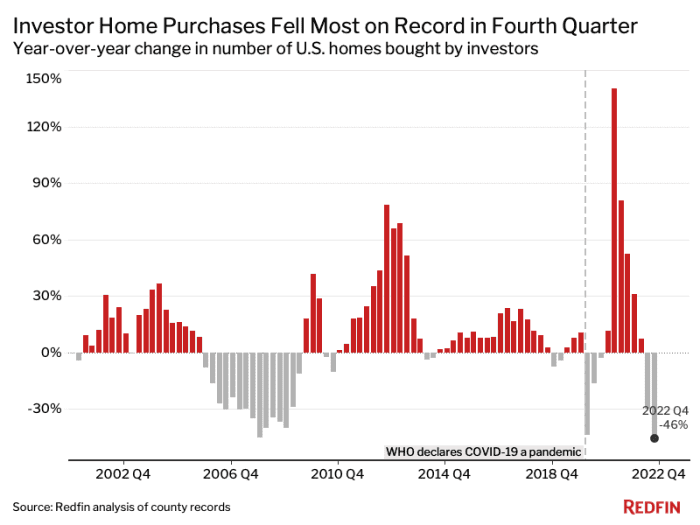
Investors are pulling back from the housing market, Redfin says

Investors are pulling back from the housing market, Redfin says

Traders are slinking away from the serious-estate current market as property-selling price growth slows and the possibility of value drops seems on the horizon.

The last time trader purchases dropped so considerably was in 2008, throughout the subprime house loan crisis, when they fell 45.1{d4d1dfc03659490934346f23c59135b993ced5bc8cc26281e129c43fe68630c9}, Redfin explained.

In the fourth quarter of 2021, buyers acquired 89,396 houses in metropolitan regions tracked by Redfin. In the fourth quarter of 2022, investors only acquired 48,445 properties in those regions.

The overall drop in mortgage charges and a feasible bottoming-out of home prices may lure investors back again into the industry, but “it’s unlikely that investors will return with the exact same vigor they had in 2021,” said Sheharyar Bokhari, senior economist at Redfin.

“That’s fantastic information for personal consumers, who are nevertheless grappling with high housing fees but no more time shedding bidding war soon after bidding war to traders,” he extra.

Throughout the pandemic, many property purchasers were being outbid and overshadowed by traders who were being equipped to scoop up houses with all-income features. The issue above the plight of initially-time household customers prompted Democratic lawmakers to convene a panel to seem into achievable predatory actions by institutional investors.

In its study, Redfin appeared at residence income amongst January 2000 and December 2022.

Residence purchases by investors fell in 2022. The last time such purchases dropped as drastically was in 2008.


Redfin

For the study, an investor was described as a purchaser whose identify incorporated at the very least a person of these search phrases: LLC, Inc., Have faith in or Houses. Buyers were being also viewed as to be buyers if their possession code on a house deed integrated key terms like “association,” “corporate trustee” or “company.”

Though buyers have pulled back on purchasing homes, it does not imply their market share has dropped, due to the fact person household prospective buyers have also slowed their action. Home loan costs are nevertheless elevated and house charges have not however dropped drastically, which means that lots of men and women are acquiring it challenging to find the money for to buy a dwelling ideal now.

According to Redfin, investors’ share of the industry in all the metropolitan places tracked by Redfin was 17.8{d4d1dfc03659490934346f23c59135b993ced5bc8cc26281e129c43fe68630c9} in the fourth quarter.

In other terms, traders acquired that proportion of all households bought in the 40 most populous U.S. metro locations, as tracked by Redfin. Past yr, buyers bought 19.4{d4d1dfc03659490934346f23c59135b993ced5bc8cc26281e129c43fe68630c9} of all homes in all those locations.

The cost of a usual property ordered by an investor was all around $425,926.

Investors flee pandemic boomtowns

In pandemic boomtowns like Las Vegas, Nev., and Phoenix, Ariz., buyers are operating for the hills, the info clearly show.

In accordance to Redfin, household purchases by buyers fell the most in Las Vegas, dropping 67{d4d1dfc03659490934346f23c59135b993ced5bc8cc26281e129c43fe68630c9} in the fourth quarter about the exact period of time of the past calendar year.

Las Vegas is also the metropolis that saw residence values fall the most amongst the prime 50 marketplaces tracked by Zillow Group
Z,
+.86{d4d1dfc03659490934346f23c59135b993ced5bc8cc26281e129c43fe68630c9},
another true-estate tech enterprise. Household values there fell 1.23{d4d1dfc03659490934346f23c59135b993ced5bc8cc26281e129c43fe68630c9} in January as opposed with December.

Traders also hit the brakes in Phoenix, in which house purchases by investors dropped 66.7{d4d1dfc03659490934346f23c59135b993ced5bc8cc26281e129c43fe68630c9} in Nassau County, N.Y., where they fell 63{d4d1dfc03659490934346f23c59135b993ced5bc8cc26281e129c43fe68630c9} Atlanta, where they fell 62.8{d4d1dfc03659490934346f23c59135b993ced5bc8cc26281e129c43fe68630c9} and Charlotte, N.C., exactly where they dropped 61.9{d4d1dfc03659490934346f23c59135b993ced5bc8cc26281e129c43fe68630c9}.

“A large amount of traders are on hold since they even now see residence costs declining,” claimed Elena Fleck, a Redfin agent based mostly in Palm Beach, Fla.

The only metro place amid these analyzed by Redfin that observed an boost in trader purchases was Baltimore, Md.

Buyers still experienced the highest sector share in Miami Jacksonville, Fla. Atlanta Anaheim, Calif. and Charlotte, Redfin noted.

Home loan costs have crept again up as the current market weighs extra fascination-rate hikes from the U.S. Federal Reserve, which proceeds its struggle against inflation. In consequence, potential buyers have also pulled back again.

Housing Market Crash Won’t Happen in 2023 for 3 Reasons: NAR

Housing Market Crash Won’t Happen in 2023 for 3 Reasons: NAR

  • You can find a rising consensus that US house costs will slide or crash in 2023.
  • But the director of real estate exploration at the Nationwide Association of Realtors would not imagine it.
  • Here are 3 explanations why there will not likely be a housing marketplace crisis this 12 months.

Renters hoping to get a home after the US housing sector collapses may well be ready a though.

Lots of pundits have warned lately that home prices are on skinny ice, but a report unveiled final 7 days by the National Affiliation of Realtors (NAR) showed the reverse: prices for current one-spouse and children properties in the US rose 4{d4d1dfc03659490934346f23c59135b993ced5bc8cc26281e129c43fe68630c9} yr-above-year in the fourth quarter of 2022.

Present home prices improved from the previous 12 months in an astounding 89{d4d1dfc03659490934346f23c59135b993ced5bc8cc26281e129c43fe68630c9} of the 186 metro places surveyed by the NAR. And 18{d4d1dfc03659490934346f23c59135b993ced5bc8cc26281e129c43fe68630c9} of metropolitan areas observed costs bounce by double digits in the fourth quarter, according to the report, even though that was down from 46{d4d1dfc03659490934346f23c59135b993ced5bc8cc26281e129c43fe68630c9} of markets in the prior quarter.

The toughness arrived as a shock considering how superior homebuyers’ borrowing expenditures are, reported Nadia Evangelou, the NAR’s director of actual estate research, in a new job interview with Insider. Her company found that the regular monthly mortgage loan payment on an current single-household home with a 20{d4d1dfc03659490934346f23c59135b993ced5bc8cc26281e129c43fe68630c9} down payment was $1,969, which is 58{d4d1dfc03659490934346f23c59135b993ced5bc8cc26281e129c43fe68630c9} increased than in the fourth quarter of 2021.

3 factors why house costs will never plummet

Most likely even a lot more astonishing than previous quarter’s house price advancement is Evangelou’s perception that US property price ranges will defy the consensus expectations by remaining elevated through the year.

There are three explanations why the US housing market place is unlikely to see popular selling price declines in 2023, Evangelou stated: property inventory remains reduced, property finance loan rates are slipping, and pending household sales are increasing.

Learners in Econ 101 could reveal the first level: a restricted offer of houses nationwide produces shortage that must continue to keep supporting selling prices, despite the reality that there are less homebuyers.

“The provide is not plenty of,” Evangelou advised Insider. “There are not more than enough homes that can make rates fall — even however there is certainly significantly less demand from customers.”

Need for houses has began to dry up mainly because borrowing expenditures continue to be uncomfortably superior, putting home ownership out of arrive at for millions of family members. 30-12 months fastened home finance loan prices rose to the greatest degree in two many years in late 2022 although the Federal Reserve rapidly elevated interest fees to test and get historically high inflation underneath command.

But mortgage prices have considering that fallen from their mid-November peak of 7.1{d4d1dfc03659490934346f23c59135b993ced5bc8cc26281e129c43fe68630c9}, and Evangelou expects borrowing expenses to continue to keep coming down even though the Fed shifts to scaled-down fee hikes.

Even a slight improvement in property affordability must promote need, Evangelou reported.

“As Us citizens can find the money for to obtain — the common relatives can pay for to obtain a medium-priced home — we are likely to have additional prospective buyers back to the sector,” Evangelou explained.

There is currently evidence that lower property finance loan fees are starting up to convey homebuyers back, Evangelou said: pending dwelling profits rose in December for the first time in seven months. She pointed out that the metric, which exhibits residence deal signings, foreshadows foreseeable future home revenue.

“Normally, the pending dwelling product sales is the indicator for the existing dwelling revenue,” Evangelou said. “There is a lag of about one to two months, which is the period that it will take for a deal to be shut. So we be expecting dwelling gross sales exercise to decide up in the pursuing months. Someday in the next few of months, we expect additional customers to be back again to the market place as prices are around 6{d4d1dfc03659490934346f23c59135b993ced5bc8cc26281e129c43fe68630c9}.”

Another close to-expression driver for the housing market is the seasonal development of desire buying up in hotter months, Evangelou mentioned. She thinks property finance loan apps will rise by the spring.

2 maps: inventory America’s 400 largest housing markets

2 maps: inventory America’s 400 largest housing markets

On the housing desire entrance, points remain sluggish with property finance loan invest in apps still down 37{d4d1dfc03659490934346f23c59135b993ced5bc8cc26281e129c43fe68630c9} on a yr-about-calendar year basis. That’ll occur when the U.S. housing marketplace absorbs a historic house loan amount shock just immediately after the Pandemic Housing Increase pushed nationwide house charges up extra than 40{d4d1dfc03659490934346f23c59135b993ced5bc8cc26281e129c43fe68630c9}.

On the housing supply front, items remain pretty restricted nationally. While spiked property finance loan rates saw housing need pull back sharply in 2022, it also saw sellers pull back again. According to Realtor.com, new residence listings in January had been down 5.5{d4d1dfc03659490934346f23c59135b993ced5bc8cc26281e129c43fe68630c9} on a year-more than-year basis. The plan of offering up a preset 3{d4d1dfc03659490934346f23c59135b993ced5bc8cc26281e129c43fe68630c9} house loan charge for a 6{d4d1dfc03659490934346f23c59135b993ced5bc8cc26281e129c43fe68630c9} amount has lots of go-up sellers/buyers staying on the sidelines.

So do buyers or sellers have the upper hand?

A person of the far better indicators could possibly be housing inventory—and its speed of improve. At first glance, it may well be simple to think that inventory (i.e., active listings for sale) is only a measurement of source, even so, it’s also pretty significantly a measurement of demand. See, if buyers pull back, and properties sit on the sector for a longer period, that can maximize inventory concentrations (presently up 65.5{d4d1dfc03659490934346f23c59135b993ced5bc8cc26281e129c43fe68630c9} on a yr-around-calendar year foundation) even if new listings (at the moment down 5.5{d4d1dfc03659490934346f23c59135b993ced5bc8cc26281e129c43fe68630c9} on a 12 months-in excess of-year foundation) drop.

Let us once yet again acquire a closer seem at inventory info in the nation’s 400 greatest marketplaces.

The trajectory of inventory over the past yr is crystal clear: Up.

Between the 400 biggest markets tracked by Real estate agent.com, 370 marketplaces observed inventory (i.e. active listings) bounce amongst January 2022 and January 2023. Nationally, full inventory concentrations spiked 65.5{d4d1dfc03659490934346f23c59135b993ced5bc8cc26281e129c43fe68630c9} from 378,189 lively listings in January 2022 to 625,875 lively listings in January 2023.

What does this stock soar suggest?

It suggests that the electric power dynamic has shifted, to a degree, from sellers (who essentially had all the power throughout the Pandemic Housing Increase) to customers. In places exactly where inventory spiked the most, in individual overheated marketplaces like Austin (up 260{d4d1dfc03659490934346f23c59135b993ced5bc8cc26281e129c43fe68630c9} more than the previous yr) and Salt Lake City (up 293{d4d1dfc03659490934346f23c59135b993ced5bc8cc26281e129c43fe68630c9}), that change of ability has been extraordinary.

Although purchasers have seen an enhance in electric power relative to the frenzied spring 2022 industry, it will not signify we have shifted into a buyers’ industry. A single of the factors remaining, right after all, this stock soar has not taken us back again to a well balanced industry.

In reality, we’re much below pre-pandemic inventory stages: Lively listings on Realtor.com in January 2023 have been 43.6{d4d1dfc03659490934346f23c59135b993ced5bc8cc26281e129c43fe68630c9} under the 1.1 million energetic listings in January 2019.

In concept, a marketplace with inventory above pre-pandemic levels has viewed the ability dynamic shift dramatically in buyers’ favor. Marketplaces with stock levels far down below pre-pandemic degrees, on the other hand, have observed significantly less of a spectacular change.

Among the the country’s 400 most significant housing marketplaces, just 15 are back to pre-pandemic (i.e., 2019) inventory levels. That includes overheated markets like Boise, Idaho, and Logan, Utah. The searchable chart (in alphabetical purchase) higher than shows all those 15 markets.

These 15 markets, in theory, are at greater danger of house rate declines in 2023. But, according to CoreLogic, that should not elevate an alarm.

“Some exurban locations that became increasingly well-liked through the COVID-19 pandemic noticed prices soar and affordability erode at the time, but these regions are now viewing significant corrections” wrote Selma Hepp, chief economist at CoreLogic, in her latest outlook. “The current market will probable see year-around-12 months declines in some [overheated] markets. Despite the fact that it may increase alarm bells for some pundits, the fall will basically be indicative of about-inflated household values returning to normal.”

Amid the country’s 400 most significant housing marketplaces, 385 markets continue to be down below pre-pandemic inventory concentrations. The searchable chart (in alphabetical order) earlier mentioned displays all those 385 markets.

Scientists at Morgan Stanley never assume restricted stock will avoid 2023 home costs declines. That reported, a lack of stock coming on line ought to prevent an actual housing crash.

“Despite the fact that source won’t maintain dwelling value advancement floored at zero, we do believe that it helps prevent house value declines from getting way too significant” wrote Morgan Stanley researchers in their November report.

Want to stay current on the U.S. housing marketplace? Observe me on Twitter at @NewsLambert.

Find out how to navigate and fortify have confidence in in your organization with The Believe in Element, a weekly e-newsletter analyzing what leaders need to have to triumph. Signal up listed here.

Real estate housing market in 2023 could lead to drop in home prices

Real estate housing market in 2023 could lead to drop in home prices

Goldman Sachs makes a bold housing market call

Goldman Sachs makes a bold housing market call

The U.S. housing market might finally be nearing the bottom. At least that’s according to Goldman Sachs.

Just two weeks after Goldman Sachs downgraded its outlook for the U.S. housing market in a paper titled Getting Worse Before Getting Better, the investment bank reversed course on Jan. 23 in a paper titled 2023 Housing Outlook: Finding a Trough.

Instead of U.S. home prices falling 6.1{d4d1dfc03659490934346f23c59135b993ced5bc8cc26281e129c43fe68630c9} in 2023, which was their Jan. 10 prediction, researchers at the investment bank now expect national home prices to end 2023 down just 2.6{d4d1dfc03659490934346f23c59135b993ced5bc8cc26281e129c43fe68630c9}.

By the time U.S. home prices bottom out this summer, Goldman Sachs says, national home prices will be down around 6{d4d1dfc03659490934346f23c59135b993ced5bc8cc26281e129c43fe68630c9} from its June 2022 peak. Previously, Goldman Sachs researchers were expecting that peak-to-trough decline to come in closer to 10{d4d1dfc03659490934346f23c59135b993ced5bc8cc26281e129c43fe68630c9}.

“We expect a peak-to-trough decline in national home prices of roughly 6{d4d1dfc03659490934346f23c59135b993ced5bc8cc26281e129c43fe68630c9} and for prices to stop declining around midyear. On a regional basis, we project larger declines across the Pacific Coast and Southwest regions—which have seen the largest increases in inventory on average—and more modest declines across the Mid-Atlantic and Midwest—which have maintained greater affordability over the past couple years,” wrote the researchers.

Why the upward revision? Recent data, Goldman Sachs says, points to an uptick in homebuyer demand.

“Home sales appear set to turn higher. Mortgage purchase applications have averaged 9{d4d1dfc03659490934346f23c59135b993ced5bc8cc26281e129c43fe68630c9} above their October trough so far in January, and survey-based measures of purchasing intentions have rebounded sharply,” wrote Goldman Sachs researchers.

To get a better idea of where both national and regional home prices might be headed, Fortune asked Goldman Sachs to provide us with its full forecast.

Let’s take a look.

Unlike KPMG, Goldman Sachs does not expect a double-digit home price correction. The investment bank says there are three reasons why a steeper correction won’t happen this cycle.

“First, the rapid buildup of untapped home equity over the last couple years means that even if prices declined more sharply than we expect, only a small share of mortgage borrowers would be underwater,” wrote Goldman Sachs researchers. “Second, over 90{d4d1dfc03659490934346f23c59135b993ced5bc8cc26281e129c43fe68630c9} of outstanding mortgages are fixed rate, meaning that the rise in interest rates will not lead to a spike in debt service costs for most homeowners. And third, household balance sheets remain strong, with low aggregate leverage and considerable remaining pent-up savings from the COVID-19 pandemic.”

Those three factors, Goldman Sachs says, should prevent the potential “for the cascading defaults that contributed to the post-GFC drawdown.” That previous correction—after the 2007–2008 Global Financial Crisis (GFC), which saw U.S. home prices fall 26{d4d1dfc03659490934346f23c59135b993ced5bc8cc26281e129c43fe68630c9} between 2007 and 2012—is four times greater than the 6{d4d1dfc03659490934346f23c59135b993ced5bc8cc26281e129c43fe68630c9} peak-to-trough decline Goldman Sachs is predicting this time around.

While Goldman Sachs expects national home prices to fall 2.6{d4d1dfc03659490934346f23c59135b993ced5bc8cc26281e129c43fe68630c9} in 2023, not every market will be so lucky.

In 2023, Goldman Sachs expects double-digit home price declines only in overheated markets like Austin (-16{d4d1dfc03659490934346f23c59135b993ced5bc8cc26281e129c43fe68630c9}), San Francisco (-14{d4d1dfc03659490934346f23c59135b993ced5bc8cc26281e129c43fe68630c9}), San Diego (-13{d4d1dfc03659490934346f23c59135b993ced5bc8cc26281e129c43fe68630c9}), Phoenix (-13{d4d1dfc03659490934346f23c59135b993ced5bc8cc26281e129c43fe68630c9}), Denver (-11{d4d1dfc03659490934346f23c59135b993ced5bc8cc26281e129c43fe68630c9}), Seattle (-11{d4d1dfc03659490934346f23c59135b993ced5bc8cc26281e129c43fe68630c9}), Tampa (-11{d4d1dfc03659490934346f23c59135b993ced5bc8cc26281e129c43fe68630c9}), and Las Vegas (-11{d4d1dfc03659490934346f23c59135b993ced5bc8cc26281e129c43fe68630c9}). On the positive side, Goldman Sachs expects home prices will rise in markets like Baltimore (+0.5{d4d1dfc03659490934346f23c59135b993ced5bc8cc26281e129c43fe68630c9}) and Miami (+0.8{d4d1dfc03659490934346f23c59135b993ced5bc8cc26281e129c43fe68630c9}).

“Metro-level trends will be dictated by a tug-of-war between housing demand and supply. MSAs [metros] with stronger affordability like Chicago and Philadelphia—for which payments on new mortgages only cost roughly a quarter of monthly income—should see smaller home price declines than metros with poor affordability like many cities in the West—some of which are seeing mortgage payments claim three-quarters of monthly income,” wrote Goldman Sachs researchers in their latest note.

On the mortgage rate front, Goldman Sachs says buyers shouldn’t expect much relief. By the end of 2023, the investment bank expects the average 30-year fixed mortgage rate will tick back up to 6.5{d4d1dfc03659490934346f23c59135b993ced5bc8cc26281e129c43fe68630c9}. As of Thursday, the average 30-year fixed mortgage rate sits at 6.09{d4d1dfc03659490934346f23c59135b993ced5bc8cc26281e129c43fe68630c9}.

Newsletter-Gold-Line

Looking for more housing predictions? Follow me on Twitter at @NewsLambert.

Learn how to navigate and strengthen trust in your business with The Trust Factor, a weekly newsletter examining what leaders need to succeed. Sign up here.