Commercial real estate faces .5 billion in flood damage in 2022: Report

Commercial real estate faces $13.5 billion in flood damage in 2022: Report

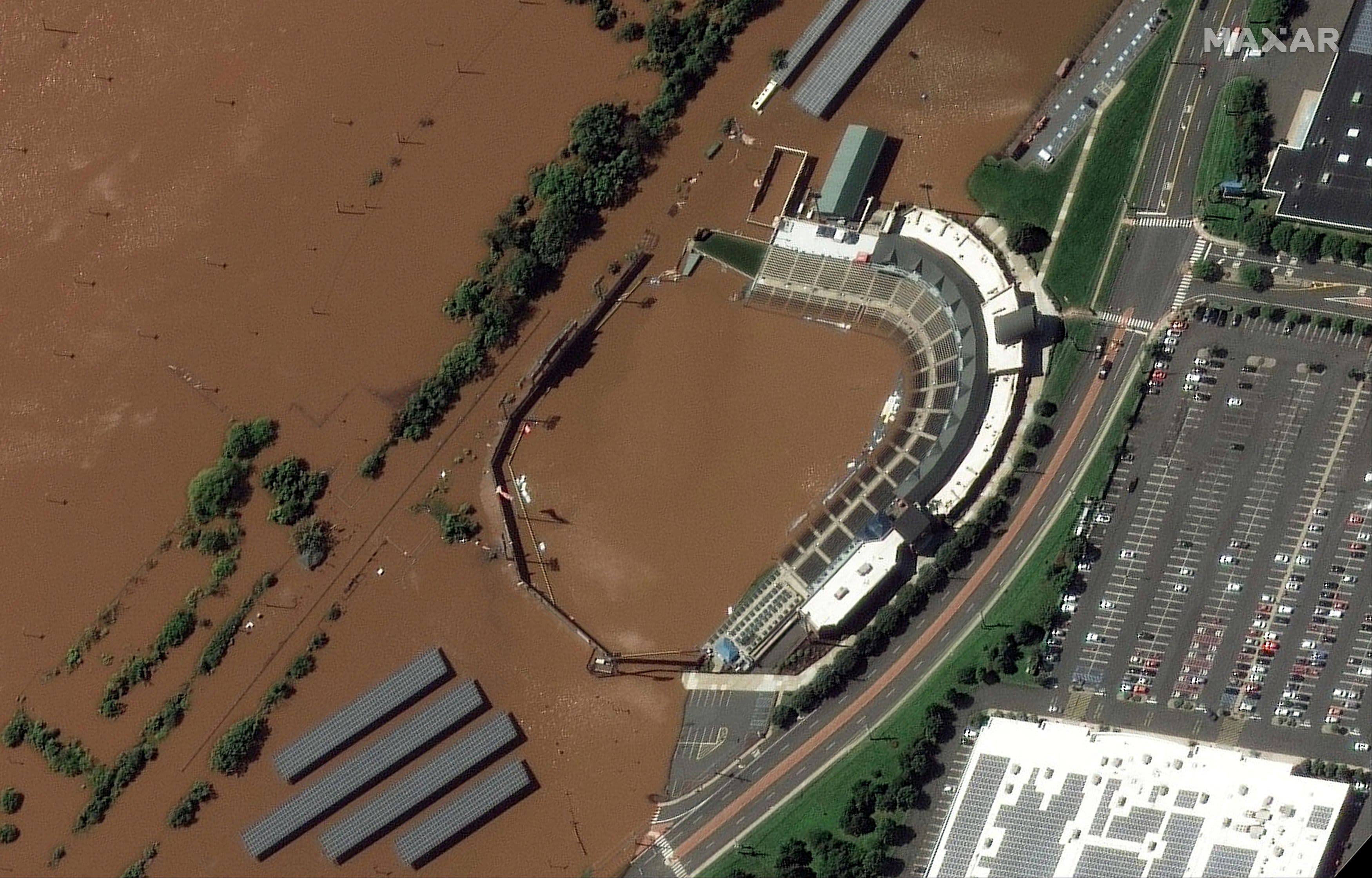
A satellite image shows TD Bank Ballpark submerged in flood, after Hurricane Ida swept through the Bridgewater Township in New Jersey, September 2, 2021.

Maxar Technologies | Handout via Reuters

The commercial real estate industry faces an intensifying threat from flooding, which is likely to lead to billions of dollars in increasing costs, a new study says.

Approximately 730,000 retail, office and multi-unit residential properties face an annualized risk of flood damage in the United States. The structural damage from flooding is projected to cost $13.5 billion in 2022, increasing to over $16.9 billion by 2052, according to the First Street Foundation, a nonprofit research and technology group, and global commercial engineering firm Arup.

The research incorporated sea-level rise, but focused more on flash floods, also known as pluvial flooding.

“It absolutely will have an impact on the value of these structures because you’re increasing the risk and the known risks to these buildings, which then has a negative impact on the value of them today,” said Matthew Eby, founder and of First Street Foundation.

“We have companies like Nuveen or Morningstar or these large institutional investors that are looking at our data to understand what’s at risk today and over that period of ownership,” Eby added. “How do you plan against these things or ensure that you’re buying into the right commercial real estate assets?” 

First Street partnered with Arup in order to go beyond simple flood risk, which it has already done for residential properties. By matching its flood modeling on commercial properties with Arup’s knowledge of structure and architecture, the two were able to understand the impact of flood risk on each specific type of commercial building in the country. Then they could determine the economic consequences of a flooding event given the specific building type.

“As climate change continues to accelerate, flood risk will pose an economic threat to commercial properties across the country,” said Ibbi Almufti, the leader of Arup’s risk and resilience team in San Francisco. “This new report will serve as a guidebook for understanding building-specific risk and for taking action to mitigate the effects of climate change.”

They also factored in the downtime damage estimate, as in how long the building would be inoperable after a flooding event, given the specific structure.

The researchers also put a price tag on potential damage to come that factors in the damage to local economies and productivity. The cost of that impact is expected to grow to $63.1 billion in 2052 from $49.9 billion in 2022 due to worsening flood risks associated with climate change, according to the report.

In total, local businesses in the United States stand to lose the equivalent of 3.1 million days of operation next year alone. By 2051, that could grow to 4 million. That would, in turn, increase the economic impact from lost productivity and lost output for all these properties.

Last year, First Street partnered with Realtor.com to put a flood score on every house in America. That score could warn homeowners who might not have flood insurance that they should consider getting it. Federal flood maps are often outdated, and until very recently did not factor in the effects of climate change.

The nation is seeing far heavier rainfall now, because as the atmosphere warms it holds more water. The remnants of Hurricane Ida unleashed unprecedented flooding in the Northeast, costing billions of dollars in damage and resulting in nearly 50 deaths.

The risk of flooding to commercial real estate affects not only the property owners and the tenants of the buildings, but the investors in those properties.

“The people that actually own these buildings are your average American in a 401k plan, or these commercial real estate investors that own these $100, $200 million buildings,” said Eby, who added that once they see that risk now and into the future they can better understand how to mitigate the risk and potential costs involved.
Real-estate brokers brace for ‘flood’ of wealthy buyers from overseas

Real-estate brokers brace for ‘flood’ of wealthy buyers from overseas

Wealthy true-estate potential buyers from overseas are envisioned to descend on the nation’s luxury housing markets Monday, offering a next enhance to desire for substantial-priced residences and mansions.

The U.S. will carry the travel ban on about 33 countries for vaccinated readers, easing limitations that prevented most international authentic-estate potential buyers from entering the nation to check out and purchase properties.

Buyers from Europe, China, Brazil, and India will now be ready to enter the U.S. for the to start with time in 20 months. Brokers in cities well-known with the abroad wealthy — New York, Miami, Los Angeles — say they have a very long record of showings scheduled in the coming months from purchasers who have been nervous to commit in U.S. assets.

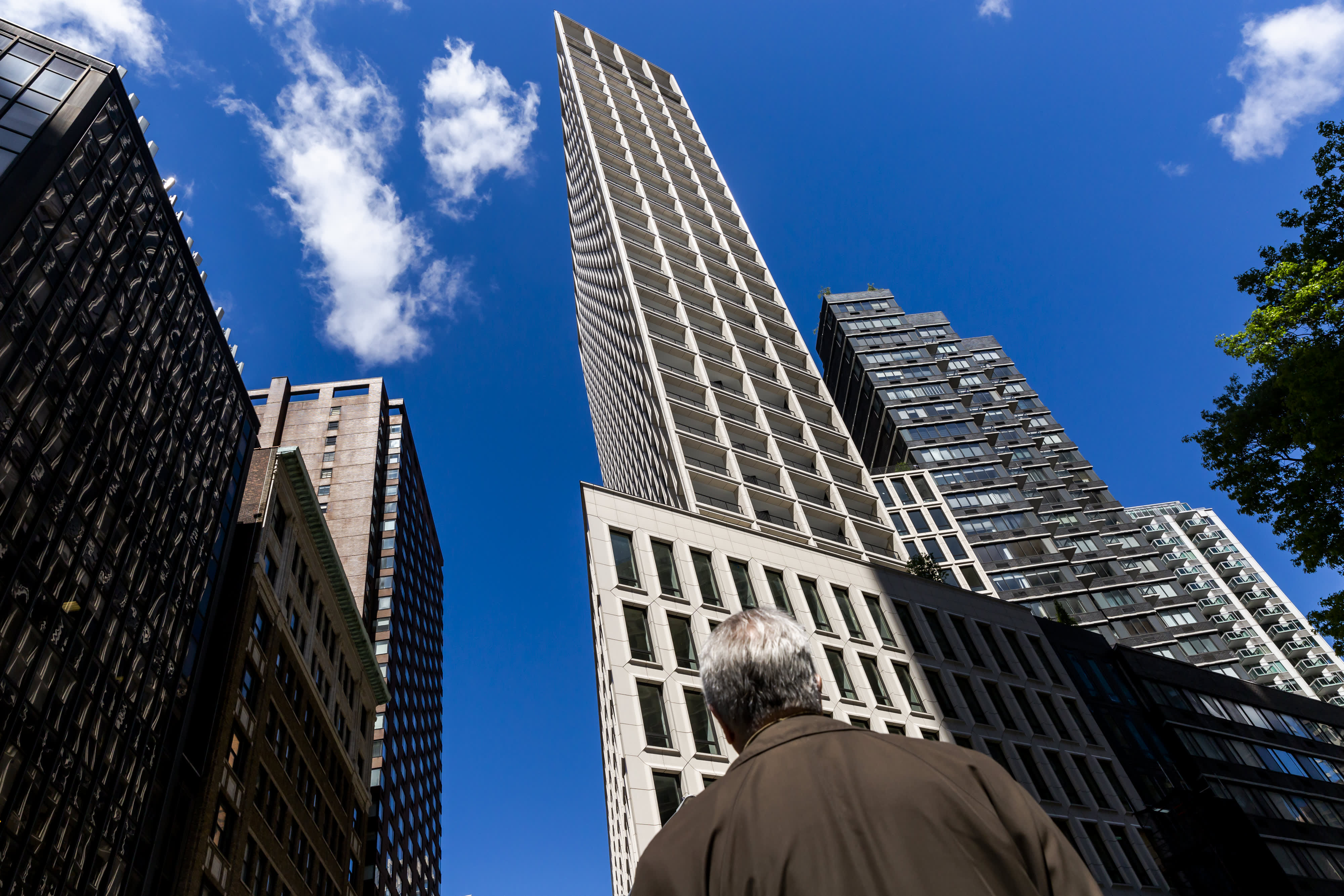
A pedestrian stands in front of a Manhattan condominium building in New York.

Mark Abramson | Bloomberg | Getty Photographs

“This represents another upside in demand from customers that just didn’t exist in excess of the final two decades,” stated Jonathan Miller, CEO of Miller Samuel. “It will be primarily helpful to the higher-stop and luxury market.”

Sales knowledge suggests the wave of abroad consumers could make tens of billions of pounds in added revenue. International consumers used $267 billion on U.S. authentic-estate in 2018 and $183 billion in 2019, right before the pandemic, according to the Nationwide Affiliation of Realtors. In 2021, their spending fell to $107 billion, suggesting substantial pent-up need as buyers were not in a position to tour or stop by homes.

Trophy property

Alongside with constraints remaining lifted, overseas buyers have benefitted from significant wealth development for the duration of the pandemic with soaring asset selling prices and stock markets. Flush with money, the international wealthy are now hunting for trophy property. Towns like New York, Los Angeles and Miami, which have always been hubs for the international prosperous, are however seen as secure investments inspite of the ups and downs of the pandemic.

“New York house buys are tremendous desirable to these prospective buyers because they can use it or rent it out,” stated Douglas Elliman CEO Scott Durkin. “But they can also cling on to it. It results in being one thing they’re proud of.”

With its partnership with Knight Frank, the U.K.-based mostly actual-estate giant that has listings and brokers close to the world, Elliman has been preparing for up coming week’s product sales rush by paring prospective abroad buyers with listings in New York, Florida and the West Coast. A Knight Frank agent has even moved to New York for a time to function as a “website traffic cop” for the likely offer circulation from abroad.

“We are expecting a flood of purchasers across all our marketplaces in the U.S.,” he said.

Brown Harris Stevens is launching a new partnership with a European on the net true-estate and life-style market, named 221 Listing, that will assist the company’s prospective buyers and sellers. Corcoran in June declared a cooperative settlement amongst Corcoran and Savills, the London-dependent actual estate advisory with offices in Europe, Asia, Africa and the Middle East. Savills has also opened a new North American desk at its London headquarters to support the circulation of consumers.

The significant question, specifically in Southern Florida, is no matter whether there are ample residences at the proper value for abroad potential buyers to get. In Miami and Palm Beach, price ranges have soared in the course of the pandemic and inventory is at historic lows — primarily for single-loved ones households. While inventory in Manhattan is still relatively higher, with about 7,600 listings, revenue and desire at the high conclusion has been robust. For the most prized penthouses and premier new condo residences, pandemic reductions are supplying way to bidding wars and quick profits.

New design preferred

Brokers say overseas potential buyers choose new development — regardless of whether it really is a recently designed mansion in Beverly Hills or a by no means-lived-in apartment in a new Manhattan significant-rise. “The new improvement and the larger conclusion qualities will be the most important beneficiaries of the international customers returning,” Miller stated.

Historically, China has been the most important source of abroad buyers for the U.S. But Chinese government’s crackdown on cash flight and prosperity was slowing the circulation of cash into U.S. genuine-estate even prior to the pandemic.

Chinese buys of U.S. authentic-estate totaled $32 billion in 2017, but fell to $11.5 billion by 2020. While China remained the biggest supply of abroad potential buyers in the U.S., measured by dollar quantity, ahead of the pandemic, Canada is a shut second, with $9.5 billion in 2020. Mexico ranked 3rd, adopted by India and the U.K.

Brokers say the purchasers expected in New York this thirty day period are largely from Europe — exclusively the U.K. and Germany. In Florida, brokers say Brazilians make up the most significant share of overseas prospective buyers returning. In Los Angeles, they say the Middle East wealthy make up the bulk of the expected buyers for the lavish mansions in Beverly Hills and Bel Air.

Before the pandemic, Florida was the greatest marketplace for overseas prospective buyers, accounting for 20{d4d1dfc03659490934346f23c59135b993ced5bc8cc26281e129c43fe68630c9} of the nation’s full. California ranked next at 16{d4d1dfc03659490934346f23c59135b993ced5bc8cc26281e129c43fe68630c9}, adopted by Texas, Arizona, New Jersey and New York.

Brokers say that wherever they invest in around the globe, the wealthy like to be around the h2o.

“The coastal towns will be the primary beneficiaries,” Miller explained.