If holiday shopping or worrying about the omicron variant kept you distracted this week, you may not have noticed some of the biggest real estate stories in Dallas-Fort Worth.
Developers disclosed their plans for the $750 million Four Seasons Hotel and condominium tower on Dallas’ Turtle Creek.
Designed by award-winning architect Pelli Clarke Pelli, the more than 30-story high-rise will include a glass-lined circular entry court architect Fred Clarke describes as “one of the most spectacular, Instagrammable places anywhere in the world.”
The lecture hall in the new 19-story Granite Park Six office tower under construction on S.H. 121 in Plano.
Up in Plano, developers are dusting off the groundbreaking hard hats and gold shovels to start work on new office projects.
Granite Properties has broken ground on the tallest building yet in its 90-acre, more than 20-year-old Granite Park campus at the southeast corner of the Dallas North Tollway and State Highway 121.
The 19-story Granite Park Six office tower will contain 420,000 square feet of first-class office space and will be ready for occupancy in mid-2023.
The Legacy Union Two office building planned next to Plano’s Shops at Legacy will be 13 stories and is planned by developers Cousins Properties and Lincoln Property Co.
In nearby Legacy business park, Cousins Properties of Atlanta and Dallas’ Lincoln Property Co. are teaming up to build two office towers in their Legacy Union project near the northeast corner of the Dallas North Tollway and Legacy Drive.
The two 13-story buildings will contain about 650,000 square feet of offices and will join an existing building Cousins Properties has on the site.
“We have what is really the last building site in the Shops of Legacy area,” said Lincoln Properties’ Matt Craft.
Not all the office action is in the ‘burbs.
Galderma’s U.S. headquarters is moving to the Trammell Crow Center on Ross Avenue in downtown Dallas.(Stream Realty Partners )
In downtown Dallas, the just-refurbished Trammell Crow Center office tower on Ross Avenue has landed a corporate move.
International dermatology company and skin care products firm Galderma is relocating its U.S. headquarters.
The consumer products and pharmaceutical firm best known for its Cetaphil brand now has its U.S. base in the AllianceTexas development in North Fort Worth.
But Galderma U.S. CEO Diane Gomez-Thinnes said the company wanted a more urban office setting for its 400 headquarters workers. “What better location than a downtown location that allows our people to be inspired by not just the building they are in but their surroundings,” Gomez-Thinnes said.
Vancouver-based City Office REIT Inc. paid $133.5 million — or $773 per square foot — for the Terraces office building in Preston Center. That s one of the highest prices ever paid for a Dallas office building.
Finally, a just-completed office building sale in North Dallas rang the bell for record pricing.
Vancouver-based City Office REIT Inc. paid $133.5 million — or $773 per square foot — for the 12-story Terraces office building in Preston Center.
Less than a handful of Dallas-area office buildings have sold for more than $700 a foot.
“The fully leased building provides cash flow stability with future growth in the center of one of Texas’ wealthiest neighborhoods,” James Farrar, City Office REIT CEO, said in a statement.
‘Million Dollar Listing Los Angeles’ star and luxury real estate agent Josh Flagg weighs in on the life cycle of the booming housing market.
The luxury real estate market is still experiencing exponential demand and “Million Dollar Listing Los Angeles” star Josh Flagg told “The Claman Countdown” that people having extra money to spend is to credit.
“The bottom line is this: There’s a lot of money available,” he said. “People have money and I don’t know where it came from all of a sudden… You think during a pandemic, you know, the last thing you would think that people would be doing is buying real estate. It’s totally counterintuitive.”
Flagg repeated that he does not know where extra cash flow is coming from, but it’s evident that buyers are willing to spend it.
HOUSES IN THE HAMPTONS: A LOOK INTO LONG ISLAND’S LUXURY REAL ESTATE
“It’s incredible,” he said. “And remember, for a minute, the market in New York was down. Remember, right before COVID, it was soft. And then it popped up like crazy.”
According to Flagg, the state of the real estate market is seemingly unpredictable and anyone who argues otherwise is “full of it.”
“There’s no answer,” he said. “I mean — this could stop tomorrow. This could go for another 10 years.”
Since earlier on in the pandemic when urban residents flocked to the suburbs and demand was blatantly urgent, Flagg expressed that not much has changed. Even in his primary market of Beverly Hills, inventory is still low.
GET FOX BUSINESS ON THE GO BY CLICKING HERE
In the last week, Flagg shared that he’s had four showings on a $30 million house which is practically unheard of in that high of a price range.
“I’ve never had four showings on the $30 million house before in my life,” he said. “Because there’s just not that many buyers at that price point… This is why people are having such a hard time getting houses because they’re being outbid left and right.”
‘Mansion Global’ explores Long Island’s luxury real estate listings.
Flagg promoted his new spinoff “Million Dollar Listings Los Angeles: Josh and Josh” which dives into the personal and professional lives of Flagg and real estate partner and former enemy Josh Altman.
“It took us a long time to get together. But now, you know, we’re best of friends,” he said. “We live a couple of blocks from each other. We’re on the phone three times a day. We do tons of business together. And this show is different, I guess, also, from “Million Dollar Listing” because it’s really focused on listings that are outside of Los Angeles.”
(STACKER) — Famous actors seem to have it all—looks, wealth, talent, and prime real estate in beautiful locations around the world. Their homes feature every amenity and luxury. For some actors, though, real estate is about more than an enviable estate or mega-mansion, it is an investment that marries their love for home and their entrepreneurial spirit. These actors have taken their passion for prime properties and turned it into a serious side hustle.
Whether they flip or renovate, love commercial or residential, or own property in this country or another, these actors have made an enviable living outside of their given trade by investing in real estate—and they have the portfolios to prove it.
1 / 10ROBYN BECK // Getty Images
Leonardo DiCaprio
The Oscar-winning actor is also a real estate giant with a diversified portfolio. DiCaprio purchased his first home in the late ’90s in the Los Angeles suburb of Silver Lake for $769,500, which he went on to list in 2018 for $1.7 million. The decorated performer also owns properties in New York, California, and abroad in Belize. A landlord of sorts, DiCaprio’s rental, 432 Hermosa located in Palm Springs, is a mid-century modern home previously owned by singer and actress Dinah Shore, with daily rates starting at $3,750 per night with a two-night minimum. One of DiCaprio’s most ambitious real estate endeavors, Blackadore Caye, an island in Belize, was purchased with business partner Jeff Gram in 2005, and the actor plans to turn it into an eco-resort.
2 / 10Steve Jennings // Getty Images
Oprah Winfrey
The multi-talented actress and media mogul is also a real estate tycoon who owns several homes. Her main residence, located in Montecito, California, is worth more than $100 million and features several properties on 70 acres. In 2019, Winfrey purchased actor Jeff Bridges’ property, which neighbors her own in Montecito. She owns homes in Maui, Colorado, and Washington state. According to Celebrity Net Worth, Winfrey’s real estate holdings are worth an estimated $200 million.
3 / 10Aurelien Meunier // Getty Images
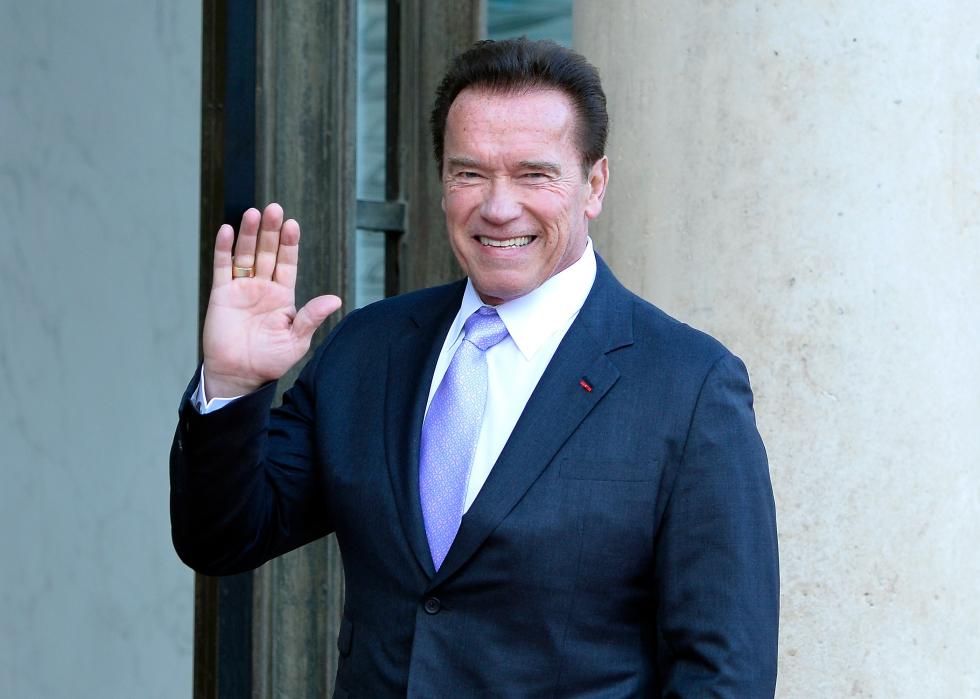
Arnold Schwarzenegger
The “Terminator” star made a bold real estate investment early on in his career when he purchased a multi-unit apartment building. Turning to real estate in the ’70s allowed Schwarzenegger to focus on his acting career and brought him his first million. The former governor of California still owns many of the commercial real estate properties that he purchased on Main Street in Santa Monica just after heavyweight real estate investor Albert Ehringer showed him the ropes. Today, he owns retail space, apartments, and office buildings. He has an estimated net worth of $400 million.https://4c13746be4ed1b25dacb2b6f746fab09.safeframe.googlesyndication.com/safeframe/1-0-38/html/container.html
4 / 10Emma McIntyre // Getty Images
David Charvet
The actor had success in the ’90s with roles on “Baywatch” and “Melrose Place.” Charvet continued his acting career but became interested in real estate while having a home built in Malibu for his family. In 2007, Charvet co-founded Jones Builders Group, a Los Angeles-based, full-service developer and builder of luxury homes with business partner Nathan Jones. Charvet also purchased several investment properties. The company allowed him the opportunity to develop his own line of homes, known as Charvet Estates.
5 / 10James Devaney // Getty Images
Ellen DeGeneres
Actor, comedian, and talk show host Ellen DeGeneres flips luxury properties and has acquired quite the real estate portfolio. Some of her most profitable flips include a Montecito, California, an estate she purchased in 2017 for over $7 million and sold for $11 million dollars less than a year later, and a 2014 flip that brought in $15 million. She and her wife, Portia de Rossi, have bought, flipped, and sold more than 20 properties since 2003. DeGeneres’ first flip was a West Hollywood Spanish bungalow. “The first thing I did when I made money was buy a house,” DeGeneres told Architectural Digest. She often buys other celebs’ homes, as she did in 2011 when she purchased Brad Pitt’s Malibu home for $11 million and sold it a year later for a cool $1 million profit.
6 / 10James Devaney // Getty Images
Jennifer Aniston
In 2018, Jennifer Aniston told Architectural Digest, “If I wasn’t an actress, I’d want to be a designer.” The “Friends” star doesn’t just purchase properties, she leaves her own mark on each one. Her marital home with Brad Pitt in Beverly Hills was purchased for $13.1 million and sold for $28 million with multiple additions to the property, including a screening room, tennis court, and a guest house. Ohana, another one of her Beverly Hills properties, was sold for $36 million, netting the actor a small fortune. Its original purchase price was $13.5 million. Aniston also owns properties in New York City, though she did sell two Manhattan condos for a loss in 2012, proving that real estate definitely has its highs and lows.https://4c13746be4ed1b25dacb2b6f746fab09.safeframe.googlesyndication.com/safeframe/1-0-38/html/container.html
7 / 10Amy Sussman// Getty Images
Brad Pitt
Brad Pitt and Angelina Jolie have owned several properties together, including a French chateau, a London estate, and a mansion in New Orleans. Pitt also invested in a Las Vegas casino with Rande Gerber (Cindy Crawford’s husband) and his pal and fellow actor, George Clooney. The project never came to fruition, but the trio managed to sell the 25-acre lot to Starwood Hotels and Resorts for $202 million after purchasing the land for $90 million. In 2016, Pitt was going to open a resort in the town of Zablace, Croatia. He planned to set up a planned community with a hotel, restaurant, and golf course that would be ecologically responsible, but things didn’t go as planned and the resort never came to fruition.
8 / 10Taylor Hill // Getty Images
Robert De Niro
Not only does Robert De Niro own residential properties in New York and London, but the accomplished actor has also invested in commercial properties as well. The industrious businessman is a co-owner of Nobu restaurant, which has locations in Dubai, Los Angeles, New York, Moscow, Monte Carlo, and London. Nobu is not De Niro’s only restaurant venture, as he also owns Tribeca Grill in New York City. De Niro is currently working on the Nobu Beach Inn on the small Caribbean island of Barbuda, which is expected to open in 2023 and feature one- to four-bedroom villas.
9 / 10Christopher Polk // Getty Images
Diane Keaton
Oscar-winning actress Diane Keaton has an acting career that spans many decades, but she’s also a serious real estate flipper who buys, renovates, and sells homes. Her father, a real estate broker and engineer, was also interested in home renovation, and she may have learned a thing or two from him. Keaton’s homes have often been featured in Architectural Digest, and the actor is known for selling homes to fellow celebrities. Among them being Ryan Murphy, who purchased a Beverly Hills Spanish-Colonial revival from Keaton, and actor Christina Ricci, who purchased the Samuel-Novarro House, a Los Feliz landmark.
10 / 10Michael Loccisano // Getty Images
Rupert Grint
No longer just Harry Potter’s sidekick and best friend Ron Weasley, Rupert Grint is worth millions. The actor has a real estate portfolio worth over $30 million, which can be accredited to his three properties in Hitchin, Luton, and others around England. Following his beloved role in the “Harry Potter” films, the actor hadn’t had the same level of success in the industry, but he’s since developed a knack for purchasing properties in the U.K. This story originally appeared on UpNest and was produced and distributed in partnership with Stacker Studio.
UpNest compiled a list of 10 actors with massive real estate portfolios using various news, entertainment, and real estate sites. Among them includes an Oscar-winning actor who rents his Palm Springs home for several thousand dollars a night to visitors wanting to experience a bit of glamour; a film star with commercial properties that include a well-known restaurant with several locations around the globe; and two actresses who have made a significant profit flipping several homes sold to fellow celebs.
NFPA urges added caution this holiday season, as Christmas Day and Christmas Eve are among the leading days of the year for U.S. home fires.
Many hallmarks of the holiday season, including Christmas trees, holiday decorations, cooking and baking, present potential fire hazards that contribute to an annual increase in U.S. home fires during the winter months. According to the National Fire Protection Association (NFPA), Christmas Day and Christmas Eve are among the leading days of the year for home fires (topped only by Thanksgiving Day).
“December is a leading month for home fires, in large part because many of the activities we engage in during the holiday season reflect leading causes of home fires year-round,” said Lorraine Carli, NFPA vice president of Outreach and Advocacy.
Fortunately, Carli notes, the majority of winter fires can be prevented with a little added awareness and planning.
“By knowing where potential fire hazards exist and taking some basic safety precautions to prevent them, people can enjoy a festive, fire-free holiday season,” said Carli.
The NFPA Winter Holidays page offers a wide variety of tips and resources to reduce the risk of fires, while the latest NFPA statistics underscore the increased risk of fire during the holiday season:
Christmas Trees
An estimated average of 160 home fires that began when Christmas trees caught fire caused an average of two civilian deaths, 12 civilian injuries, and $10 million in direct property damage per year between 2015 and 2019.
Some type of electrical distribution or lighting equipment, including decorative lights, was involved in almost half of these fires. Nearly one in five Christmas tree fires were started by decorative lights.
Eight percent of Christmas tree fires were started by candles.
In nearly one-fifth of Christmas tree fires, the tree was too close to a heat source, such as candle or heating or lighting equipment.
Decorations
An estimated average of 790 home fires that began when decorations (other than Christmas trees) caught fire caused an average of one civilian death, 26 civilian injuries and $13 million in direct property damage per year between 2015 and 2019.
One in five home decoration fires occurred in December.
Year-round, 35 percent of home decoration fires began with candles; in December, the number jumped to 45 percent.
In more than two of every five fires (44 percent) involving decorations, the decoration was too close to a heat source such as a candle, cooking or heating equipment.
Candles
An estimated average of 7,400 home fires (2 percent) started by candles caused an average of 90 civilian deaths (three percent), 670 civilian injuries (six percent), and $291 million (four percent) in direct property damage per year between 2015 and 2019.
Candle fires peak in December and January with 11 percent of candle fires in each of these months.
In three of every five candle fires, the candle was too close to something that could catch fire.
Christmas is the peak day for candle fires with roughly 2.5 times the daily average; Christmas Eve ranked second.
Falling asleep was a factor in 10 percent of the home candle fires and 12 percent of the associated deaths.
Cooking
Cooking is the leading cause of reported home fires (49 percent) and home fire injuries and the second-leading cause of home fire deaths.
Unattended cooking is the leading cause of home cooking fires.
Thanksgiving is the peak day for home cooking fires, followed by Christmas Day and Christmas Eve.
Fires caused by heating equipment, the second-leading cause of U.S. home fires year-round, peak during the winter months, when temperatures drop and more people use heating equipment to keep their homes warm. Put a Freeze on Winter Fires, an annual NFPA campaign with the U.S. Fire Administration (USFA), works to better educate the public about ways to stay safe during the colder months, offering tip sheets and other resources to help reduce the risk of heating fires and other winter hazards.
In the rush to cross everyone off our holiday gift lists and to select the most suitable decorations to create the perfect ambience within our homes, we may overlook the importance of the plants that make this time of year so cheerful. Let us look at three such winter-themed plants to see how they each contribute to the long-standing custom of using live greenery indoors.
Christmas Tree
Germany is credited with decorating trees as far back as the 16th century and later, bringing the tradition to Pennsylvania when they immigrated. It wasn’t until the early 20th century, however, that this custom of bringing living trees inside and adorning them with colorful ornaments and garlands of beads or popcorn, became a trend in the United States.
Early Christmas trees in this country were said to have been extreme fire hazards. Before electricity, candles were used to add light to the family tree.
Needless to say, many trees caught fire, as a result of many lit candles being left unattended overnight. Lack of regular watering was also caused the increase of Christmas tree-related fires.
Over time, this vital fact has not changed. Whether the chosen evergreen is a fir, pine, spruce or cedar, regular and sufficient watering is of the utmost importance to ensure the tree does not dry out.
Poinsettia
Apart from the Christmas tree, the poinsettia is the plant that most people associate with the holiday season. In 2020, more than 2 million poinsettia plants were sold. Thus, it became the most popular potted flower crop in the United States.
Native to Mexico and Central America, the poinsettia has primarily evolved into a symbol of Christmas because the shape of its colorful flowers is thought to resemble the Star of Bethlehem.
Poinsettias were first introduced to the United States by, and eventually named for, Joel Roberts Poinsett. Appointed by President John Quincy Adams, Poinsett was the first United States Ambassador to Mexico.
Mesmerized by the plant’s unique beauty and wide variety of colors, avid gardener Poinsett brought numerous poinsettia cuttings back to his greenhouse in Charleston, South Carolina. For 150 years, to honor the anniversary of Poinsett’s death, Dec. 12 has been considered National Poinsettia Day. It was made official by an Act of Congress in 2002.
Holly and Ivy
In pre-Christian times, holly and ivy were originally used during the celebration of the Winter Solstice Festival. During these times, it was believed that holly and ivy together, could not only ward off evil spirits, but also the pair was thought to represent new growth.
Today, unlike many European countries, the tradition of using holly and ivy to decorate inside the home is not as popular in the United States.
However, all over the world, where Christianity is practiced, holly and ivy continue to take on special meanings.
Holly’s prickly leaves represent the crown of thorns worn by Jesus at his crucifixion. Its poisonous red berries represent the drops of blood the thorns caused Jesus to shed.
Ivy needs something to attach to in order to support itself as it grows. In Christianity, this concept reminds us of the importance of looking to God for guidance and support in our lives.
Whether you have already decked out your home for the holiday season, or you still have that yet to do, I hope this article leaves you with a better knowledge and appreciation of how some of the most recognized and cherished traditions came to be celebrated as they are today.
The Gardeners’ Dirt is written by members of the Victoria County Master Gardener Association, an educational outreach of Texas A&M AgriLife Extension – Victoria County. Mail your questions in care of the Advocate, P.O. Box 1518, Victoria, TX 77901; or vcmga@vicad.com, or comment on this column at VictoriaAdvocate.com.
SAN MATEO — The family-owned Hillsdale Shopping Center in San Mateo has brought a big-time real estate investment firm on board as a partner in the busy Peninsula retail hub, the companies announced Tuesday.
The Bohannon family originally developed Hillsdale Shopping Center and opened it as an outdoor mall in 1954. Now, the family is bringing in Northwood Investors, a real estate private equity firm, as a partner in the 1.3 million square foot retail complex, which operates on 47 acres.
“We are committed to continuing our family’s relationship with this property and its service to the San Mateo community as we have done for the past 75 years,” said David Bohannon II, chief executive officer of the David D. Bohannon Organization.
Northwood Investors has completed equity investments totaling $7 billion in an array of retail centers in the United States and Europe, according to the company’s website.
“Northwood is grateful for the opportunity to partner with the Bohannon Companies on Hillsdale Shopping Center,” said Brady Thurman, a senior managing director with Northwood Investors.
Prior to the venture at Hillsdale mall, Northwood’s only investments in the Golden State were in Southern California retail centers, according to the company’s website.
“We are excited to bring our mixed-use capabilities to Hillsdale and look forward to a long relationship with the Bohannon family and the community of San Mateo,” Thurman said.
In 2016, spurred by the closure of a Sears store as a long-time anchor, the Bohannon firm launched a major upgrade to demolish the old Sears building and replace it with a modern wing known as the North Block.
Along the way, the mall’s principal owner obtained a $240 million construction loan from Pacific Life Insurance Co., according to documents filed with the San Mateo County Recorder’s Office in December 2016.
“This partnership with Northwood will preserve the family’s legacy and strengthen our ability to ensure Hillsdale can serve an even greater purpose for this community in the decades ahead,” Bohannon said.
Alarmed by the retail apocalypse ushered in by the dramatic shift to online shopping, the Bohannon family initiated Re:Imagine Hillsdale, an effort to sketch out a future for the shopping center.
The alarm bells only rang louder in the wake of wide-ranging retail dislocations and shutdowns unleashed by the coronavirus.
Executives with Bohannon and Northwood believe the retail estate investment firm can help spur a new approach to buoy Hillsdale mall’s future.
Northwood says it will craft a long-term strategy to benefit the community, mall customers and the San Mateo community.
“We are confident that Hillsdale Shopping Center will continue its meaningful presence in the city for years to come,” Thurman said.