Home-Decor Trends That Will Be Popular in 2022, According to Designers

Home-Decor Trends That Will Be Popular in 2022, According to Designers

Neutral furniture pieces will get a modern twist in 2022.

A red arrow points to a green couch in a room.

Neutrals will get a new meaning in 2022.

Bulgac/Getty Images


Alessandra Wood, the vice president of style for the interior designer Modsy, told Insider that people are turning toward alternatives to traditional neutrals in furniture.

“We’re seeing customers ditching white, cream, and ivory sofas and upholstered pieces for richer, earthy neutrals such as camel, taupe, cognac, rust, and sage,” she said.

She said these warmer colors can help people “create more cozy spaces that can really be lived in.”

Many people will be turning to color to warm up their homes in the new year.

A colorful sitting room in a home with mid-century modern furniture.

Homes will have more color.

imaginima/Getty Images


“I have had so many requests for color in my clients’ proposals for 2022,” said Maggie Griffin, the founder and lead designer of Maggie Griffin Design.

She’s anticipating people will embrace “bright, happy, citrus colors like a pop of true green, cheerful yellow, or punchy orange” to brighten their rooms.

Caron Woolsey, the founder and principal designer of CW Interiors, is also anticipating people will embrace color.

“Colored glass and unusually shaped tiles, such as scalloped, pentagonal, and triangular, will be popular in 2022,” she said.

American antiques could find their way into many people’s homes in the coming year.

An entryway full of antique furniture.

Antique furniture is becoming more and more popular.

Andreas von Einsiedel/Getty Images


Wood expects antiques to replace modern furniture in the coming year.

“For the past few years, I’ve been saying that we’re seeing a revival of antiques,” she said. “In 2022, I think we’ll see early American antiques start to take center stage.”

She added that she thinks the Americana Met Gala theme will influence this trend as well, with people filling their homes with staples like dark woods and Old World-looking patina pieces.

People will also embrace textured furniture.

A bedroom with arrows pointing to the wall, headboard, and a bench.

Texture gives furniture a dynamic look.

CreativaStudio/Getty Images


“Furniture pieces covered in textured, cozy fabrics that are super soft and aesthetically pleasing” are becoming popular, said Andi Morse, the founder and principal designer of Morse Design.

People are also turning to furniture made with performance fabrics, which are materials that are easy to clean and practical, Morse said.

Elevated home offices aren’t going away any time soon.

Stylish home office space with a wood desk, brown chair, and several plants

Home offices will still be a priority.

Followtheflow/Shuttershock


“Home offices will still be a priority in 2022 as many people are continuing to work from home — a trend that is here to stay,” Morse said.

Indeed, a Gallup poll found that as of April 2021, 72{d4d1dfc03659490934346f23c59135b993ced5bc8cc26281e129c43fe68630c9} of full-time workers in white-collar jobs are still working from home, making nice home offices a must.

“Making them beautiful yet functional is key,” Morse added of home offices.

People will start blending minimalism with other decor styles in their spaces in 2022.

A bedroom with a bed, chair, room divider, and nightstand.

Minimalism is evolving.

KatarzynaBialasiewicz/Getty Images


Rather than sticking to a totally minimalist aesthetic, Wood said, people will mix the style with more dynamic elements.

“Strict minimalism is waning these days in favor of pieces that are minimal, yet rustic,” she said. “This style of furniture will continue to allow the space to be clutter-free without feeling like a space station.”

HOME & GARDEN: DIY terrariums make great holiday gifts | Home & Garden

HOME & GARDEN: DIY terrariums make great holiday gifts | Home & Garden

A century-old trend of bringing nature inside during the winter, terrarium gardening has had a revival gardeners as of late and would make an excellent gift for the holidays.

The invention of terrariums is attributed to English Botanist, Dr. Nathanial Ward. He used a closed bottle filled with tiny ferns and grasses growing in soil in order to observe a hummingbird moth chrysalis. Once the moth emerged, he continued to watch how the ferns and grasses continued to grow for four years, during which time he never opened the bottle to add water.

Although most gardeners today are building an open system, without a lid, requiring some water but not as much as a normal houseplant. These open system ecosystems provide for ample creativity by building a mini landscape but also require minimal care.

Any transparent container can be used as a terrarium. Glass and plastic are the two most common mediums. Besides bottles, commonly used items are fish bowls, fish tanks, jugs, jars, or light bulbs.

Terrarium Supplies: Open glass container, soilless media (not the stuff in the backyard, but the stuff you buy in a bag), 2-3 small succulent or tropical plants, ornamental knick-knacks or trinkets.

  1. Fill soil at least ¼ the depth of the container or as deep as the root balls of the plants you have chosen.
  2. Add either all succulents, or all tropical—do not mix and match as each have different light, temperature, and moisture needs! You might need skewers, pipe cleaners, and long-handled tweezers depending on the size of the container’s opening. When placing plants, don’t let the foliage touch the sides of the container and wipe any debris off plants with a clean paintbrush.  
  3. Water with a mister or add small amounts of water at a time with a spoon. In the beginning, the roots are small and the entire media does not need to be saturated.
  4. Add whimsy! Reflect your gift-recipients interests with fun or meaningful trinkets placed among the plants. Clean any figures, toys, glass, pebbles, or ceramic structures with an alcohol or 10{d4d1dfc03659490934346f23c59135b993ced5bc8cc26281e129c43fe68630c9} bleach solution and allow them to dry. Dried flowers or wood may also add to the story.
ASEAN Home Improvement Market Trends to 2025:

ASEAN Home Improvement Market Trends to 2025:

Dublin, Dec. 06, 2021 (GLOBE NEWSWIRE) — The “ASEAN Home Improvement Market (Indonesia, Singapore, Philippines, Thailand & Malaysia): Insights & Forecast with Potential Impact of COVID-19 (2021-2025)” report has been added to ResearchAndMarkets.com’s offering.

The ASEAN home improvement market is forecast to reach US$10.90 billion in 2025, experiencing growth at a CAGR of 9.22{d4d1dfc03659490934346f23c59135b993ced5bc8cc26281e129c43fe68630c9} during the period spanning from 2021 to 2025.

Growth in the ASEAN home improvement market was supported by factors such as increasing population in ASEAN countries, skyrocketing house prices, rapid urbanization and favorable demographic structure. Rising e-commerce penetration and increase in work from home and freelancing jobs is likely to have a positive impact on the ASEAN home improvement market. However, the market growth is expected to be restrained by shortage of labor and economic slowdown.

The ASEAN home improvement market can be segmented into the following regions: Indonesia, Thailand, Malaysia, Philippines and Singapore. In 2020, the dominant share of ASEAN home improvement market was held by Indonesia, followed by Thailand.

The Singapore home improvement market by category can be segmented into the following categories: bathroom and sanitary ware, home paint, hardware, kitchen sinks, power tools, wall coverings, and hand tools. The largest share of the market was held by bathroom, followed by home paint and hardware.

The ASEAN home improvement market by retail space per capita can be segmented into the following regions: Indonesia, Thailand, Malaysia, Philippines and Singapore. In 2020, the dominant share of home improvement retail space per capita was held by Malaysia, followed by Thailand. Factors such as unaffordable home loans and rising disposable income in ASEAN countries helped in boosting the market growth.

Scope of the report

  • The report provides a comprehensive analysis of the ASEAN home improvement market.
  • The major regional markets (Indonesia, Thailand, Malaysia, Philippines and Singapore) have been analyzed.
  • The market dynamics such as growth drivers, market trends and challenges are analyzed in-depth.
  • The competitive landscape of the market, along with the company profiles of leading players (Ace Hardware Indonesia, Dairy Farm International Holding Limited, Siam Global House Public Company Limited, Home Product Center Public Company Limited, Mr D.I.Y. Group and AllHome Corp.) are also presented in detail.

Growth Drivers

  • Accelerating Population Growth
  • Skyrocketing House prices
  • Unaffordable Home Loans
  • Rapid Urbanization
  • Favorable Demographic Structure
  • Rising Disposable Income

Key Trends & Developments

  • Rising E-commerce Penetration
  • Rising Trend of Freelancing
  • Technologically Advanced Home Improvement Products
  • Increase in Work from Home Jobs
  • Popularization of Do-It-Yourself (DIY)

Challenges

  • Economic Slowdown
  • Shortage of Labor

Key Topics Covered:

Market Overview

  • Home Improvement
  • Types of Home Improvement
  • Products Used in the Home Improvement
  • Building and Remodeling
  • Home Decor
  • Tools and Hardware
  • Outdoor Living
  • Types of Home Improvement Projects
  • DIFM Home Improvement Project
  • DIY Home Improvement Project
  • Advantages of Home Improvement Projects
  • Disadvantages of Home Improvement Projects

Impact of COVID-19

  • Impact of COVID-19 on Home Improvement Market
  • Decline in GDP Growth
  • Decrease in Labor Supply
  • Growth in E-commerce Market
  • Shift to Work from Home
  • Post-COVID Scenario

ASEAN Market Analysis

  • ASEAN Home Improvement Market by Value
  • ASEAN Home Improvement Market Forecast by Value
  • ASEAN Home Improvement Market by Region
  • ASEAN Home Improvement Market by Spending Per Capita
  • ASEAN Home Improvement Market by Retail Space Per Capita
  • ASEAN Home Improvement Market by Stores Per Million People

Regional Analysis

Market Dynamics

Competitive Landscape

  • Revenue Comparison- Key Players
  • Market Capitalization Comparison- Key Players
  • Product Comparison- Key Players

Company Profiles

  • Ace Hardware Indonesia
  • Dairy Farm International Holding Limited
  • Siam Global House Public Company Limited
  • Home Product Center Public Company Limited
  • Mr D.I.Y. Group
  • AllHome Corp.

For more information about this report visit https://www.researchandmarkets.com/r/eb74qe

About ResearchAndMarkets.com
ResearchAndMarkets.com is the world’s leading source for international market research reports and market data. We provide you with the latest data on international and regional markets, key industries, the top companies, new products and the latest trends.


Apartment rent and occupancy hit record highs in November

Apartment rent and occupancy hit record highs in November

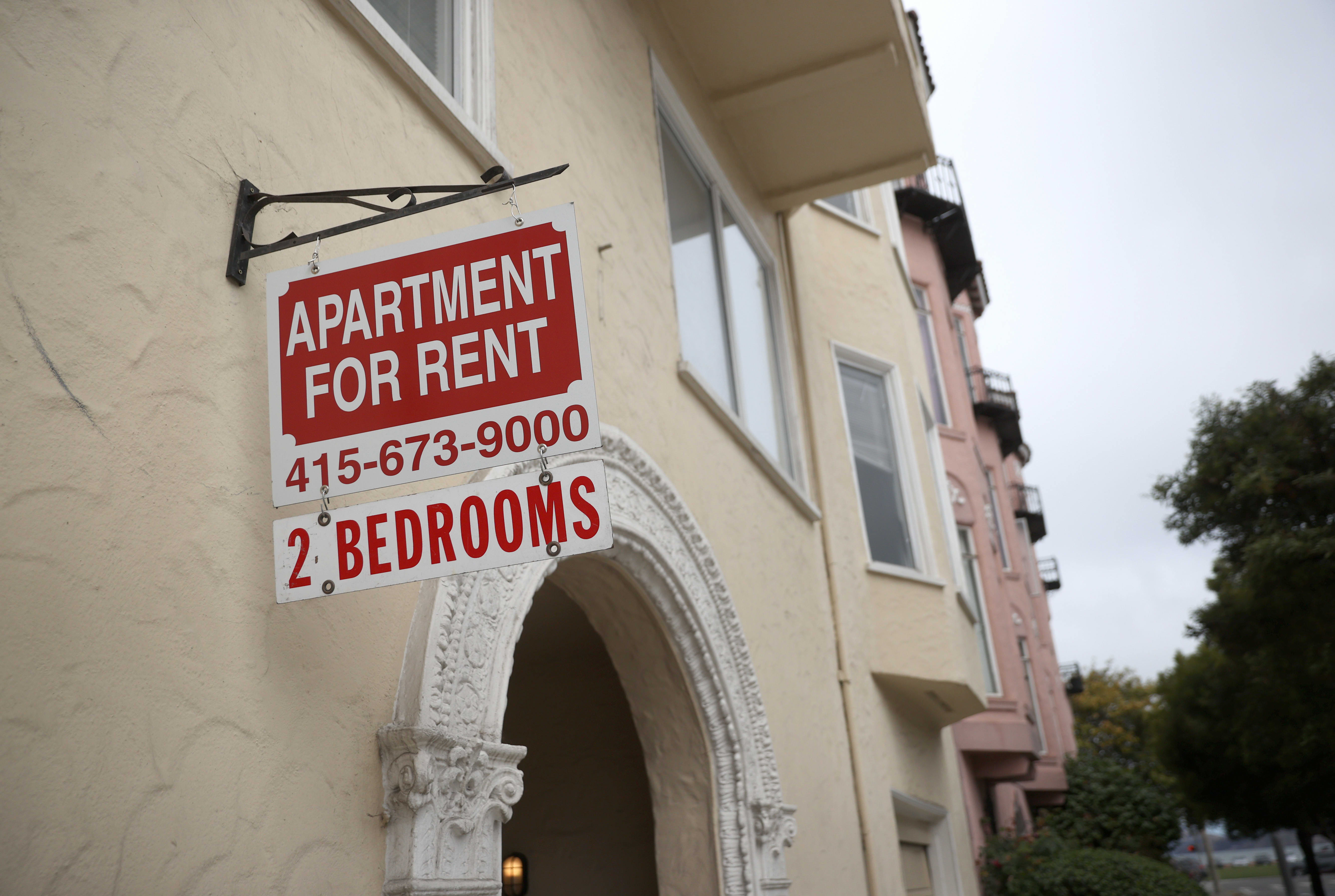
A “For Rent” sign posted in front of an apartment building on June 02, 2021 in San Francisco, California.

Justin Sullivan | Getty Images

Apartment rent growth and occupancy set new records in November, yet another sign that the nation’s housing market isn’t following seasonal patterns this year. Rent growth and occupancy usually cool heading into winter.

Apartment occupancy hit a new high of 97.5{d4d1dfc03659490934346f23c59135b993ced5bc8cc26281e129c43fe68630c9} in November, according to RealPage, a real estate technology platform. The rate is up roughly 250 basis points from the long-term norm of about 95{d4d1dfc03659490934346f23c59135b993ced5bc8cc26281e129c43fe68630c9} going back over the past three decades.

The annual increase in asking rents for new move-in leases hit 13.9{d4d1dfc03659490934346f23c59135b993ced5bc8cc26281e129c43fe68630c9} in November. Renewal lease rent growth usually climbs more slowly than when there’s turnover in a unit’s occupant, but it has still been growing at 8{d4d1dfc03659490934346f23c59135b993ced5bc8cc26281e129c43fe68630c9} even during the later part of the year.

“The demand from renters is really strong, especially for the luxury product. As the economy has recovered we’ve done a better job in high- paying employment than we have in the lower paying jobs,” said Greg Willett, chief economist at RealPage.

This is usually the time of year that landlords see lower occupancy and therefore offer incentives or cut lease prices. Demand, however, continues to outstrip supply in the rental market, as it is also in the for-sale housing market.

“The rental market is actually stronger than the for-sale market right now. The rent increases are something like I’ve never seen before in my life, so we are definitely pulling forward a lot of household formation,” said John Burns, CEO of John Burns Real Estate Consulting.

November rent prices were up 0.6{d4d1dfc03659490934346f23c59135b993ced5bc8cc26281e129c43fe68630c9} from October. While that is below the growth seen in the spring and summer months, it is notable because rent prices usually decrease in the fall months.

What’s driving demand

Rental demand is soaring due to the very high prices in the for-sale market, which are up nearly 20{d4d1dfc03659490934346f23c59135b993ced5bc8cc26281e129c43fe68630c9} year-over-year. Also, fewer people are choosing to live with roommates. In certain markets, owner-occupant homebuyers are being pushed out by usually all-cash investors.

“With this work-from-home and the stimulus and everything else – not enough WiFi, too noisy in the house – a lot of people are living on their own or they had two roommates and now they’ve got one, and that’s been the big reason for the surge in the apartment demand,” added Burns.

Household formation had been growing steadily before the pandemic, but then dropped off abruptly when Covid-19 hit the U.S., according to Census figures. Within a few months it began to climb again and has been accelerating in the last six months.

High prices in the for-sale housing market are also presenting an opportunity for older homeowners who might want to cash out at the top of the market. They, in turn, are moving into luxury rentals, taking up more supply and keeping rents inflated.

Regionally, rent growth is now strongest in West Palm Beach, Tampa and Phoenix, with annual gains of 26{d4d1dfc03659490934346f23c59135b993ced5bc8cc26281e129c43fe68630c9} to 28{d4d1dfc03659490934346f23c59135b993ced5bc8cc26281e129c43fe68630c9}. Austin, Orlando, Fort Lauderdale, Las Vegas, Jacksonville, Atlanta, Salt Lake City, Raleigh/Durham and Miami also saw rent growth above 20{d4d1dfc03659490934346f23c59135b993ced5bc8cc26281e129c43fe68630c9}.

Rent growth is now weakest in the Midwest. Out of the nation’s 50 largest metropolitan markets, Minneapolis saw the smallest rent increase of just over 4{d4d1dfc03659490934346f23c59135b993ced5bc8cc26281e129c43fe68630c9} from a year ago.

Luxury Portfolio International Releases State of Luxury

Luxury Portfolio International Releases State of Luxury

Number of Luxury Real Estate Sellers Increases Globally; Some Buyers Expressing FOMO (Strong Fear of Missing Out); Sustainability ‘Critically Important’ Among Affluent Buyers Worldwide

Latest Report Comprises Data from Top 1-5{d4d1dfc03659490934346f23c59135b993ced5bc8cc26281e129c43fe68630c9} Bracket Surveyed Across 20 Countries, Representing an Affluent Population of Almost 32 Million Households

NEW YORK, Dec. 01, 2021 (GLOBE NEWSWIRE) — Luxury Portfolio International® (LPI), the world’s premier network of luxury residential real estate brokerages, is pleased to share the results of its 2022 State of Luxury Real Estate Report (SOLRE). The study comprises data from individuals in the top 1{d4d1dfc03659490934346f23c59135b993ced5bc8cc26281e129c43fe68630c9} to 5{d4d1dfc03659490934346f23c59135b993ced5bc8cc26281e129c43fe68630c9} income bracket across 20 countries, and touches on a broad range of topics crucial to the global luxury residential real estate market.

Most notably, the LPI report reveals a continuation of dominating home purchasing-related trends that began during Q3 2020 and continued throughout all of 2021, showing that demand for luxury real estate remains high; price increases expected to continue; supply remains lower than demand; time-on-the-market for luxury single-family homes often continues to “last just hours”; and sustainability is ‘Critically Important’ (66 percent) when considering future home purchases.

The study also shows an increase in the number of affluent sellers of residential real estate worldwide; that among luxury homes buyers, the majority (74 percent) shared strong feelings of a personal economic confidence and still 75 percent are significantly concerned that their discretionary spending power could be tested soon.

And while 2022 is expected to continue at a fast pace, there are signs that the luxury residential real estate market will be increasingly stabilizing, a crucial step to avoid complications for a long-term, super-heated market.

With 75 percent of luxury home buyers choosing their next home with environmental sustainability headlining a broad range of findings from a study of the world’s affluent households by Luxury Portfolio International® (LPI), 2021 ends as one of the most robust luxury residential real estate markets in history.

“After a record-breaking year in luxury real estate, we anticipate that some balance will be restored to the market,” said Mickey Alam Khan, President of LPI. “It is important to view the luxury market over a trajectory of several years, noting that half of 2020 was in paralysis due to the pandemic. The red-hot market that began in the latter part of 2020 continued into 2021 and will continue a positive trajectory into 2022. The difference will be that there will be more luxury sellers in 2022 than in 2021, and while there will be fewer actual luxury buyers, it is still a seller’s market. The pandemic madness that drove us to an over-heated market is being normalized. Demand will remain strong, and a healthy, new normal in luxury real estate will start to take hold in 2022.”

Sustainability, according to the study, is now a major differentiator in luxury homes, and buyers are willing to pay a premium to have features and amenities that better prepare them for the future. 75 percent of those surveyed noted choosing their next home with sustainability in mind, with an unprecedented 90 percent noting “yes” as to factoring sustainability in relation to a Next Chapter in Life home search. According to the study, a “Next Chapter in Life” home search pertains to those moving to be closer to family, because of their children’s education, a career move, and other mitigating factors.

People interested in sustainability as a major factor of their home purchase are 71 percent more likely to view the purchase as a legacy home that will be passed on to their heirs. Further, as interest in sustainability grows, the quality of the buyer improves for the benefit of the seller, in that this buyer wants to transact sooner and for a relatively higher budget.

FOMO, or Fear of Missing Out is the feeling of anxiety that an exciting or interesting event may currently be happening elsewhere, often aroused by posts seen on social media. With a year at home and headlines touting the hot market, FOMO has become a significant concern for 26 percent of luxury buyers. FOMO manifests in different ways, first as a true “missed the boat” moment where prices extend beyond reach. A second concern – equally impactful – is arranging finances for major purchases.

While COVID-19 remains a significant concern, the study revealed that the market has already accounted for much of its effects. This compared to last year when the top trend in luxury real estate was finding a home that would accommodate the family that works from home.

That said, according to the study, working from home, is wearing on a substantial percentage of luxury home buyers. The Study revealed that 27 percent of luxury buyers cited working from home as a ‘significant concern.’ Remote work and the associated frustration and stress of being home continues to play a significant role in the purchase decision process.

Buyers concerned about de-stressing their work-from-home environment noted diversions such as entertainment at home, night life nearby, and relaxation-inducing amenities like a spa/hot tub, a specialty cocktail scale, and specialty rooms for media and gaming.

Additional key findings from the research include:

  • Globally, the affluent class remains highly interested in purchasing residential real estate at any price, with a 33 percent increase year-over-year. There is no doubt that 2021 will end with a backlog of buyers, setting up 2022 as another strong year for luxury real estate.
  • Over 14 million affluent households remain interested in buying a residence, of which 6.4 million are in the luxury category. An additional 1.2 million luxury homeowners have found an interest in selling in the next 3 years, up 32 percent from last year. Record valuations no doubt play a key role in this decision.
  • Working together, these factors indicate global price stabilization and market normalization is in store for 2022 and beyond. What once appeared to be a wide chasm between the number of potential buyers and sellers (10.3MM buyers and 4.0MM sellers) is moving appropriately towards equilibrium (6.4MM buyers and 5.2MM sellers).
  • The global trend for residential real estate demand will continue to grow in 2022. The percentage of individuals in the market to purchase residential real estate by the end of 2022 increased from 19 percent in 2021 to 39 percent in 2022 in Europe, and from 30 percent in 2021 to 37 percent in 2022 in Asia/Pacific. 46 percent of those surveyed from the Middle East, specifically consumers from Saudi Arabia and the UAE have the greatest interest in acquiring residential real estate, as those individuals continue to diversify their holdings. North America shows modest growth from 21 percent in 2021 to 25 percent in 2022.
  • Luxury homeowners are coming around to selling. With new construction experiencing delays due to the challenges with goods and services, there is a consistent interest in existing homes. However, owners were not necessarily in the market to sell last year, and consequently the lack of inventory has been a significant price driver in most luxury markets. Now, it seems that luxury owners are convinced that the iron is hot and their interest in selling has increased by more than double (to 28 percent from 11 percent). In fact, 71 percent of owners believe their home value will increase this year, creating a strong incentive to sell. The average luxury homeowner expects an increase of approximately 4–5 percent compared to 3–4 percent last year.
  • Psychologically it remains a seller’s market. In practice, we can expect a more balanced ratio of buyers and sellers in the years to come. As affluent consumers participate in the residential market, luxury-residence seekers are down 58 percent in 2021 (from 34 percent to 20 percent of the total affluent), while conversely, in this delicate balancing act, the number of luxury sellers is on the rise by 26 percent (up to 16 percent from 13 percent of the total affluent).
  • While the flight to suburbia has been a major COVID headline, the research reveals that city-center luxury residential real estate is alive-and-well. Over half of luxury buyers worldwide (55 percent) expect to buy their next residence in a city and 77 percent will be within commuting range. Notably, Asia-Pacific luxury buyers are significantly more likely to buy in the city center than their global counterparts.
  • Single-family home popularity surges beyond North America. The research revealed that the popularity of single-family homes is growing on a global scale, with 40 percent of Europe/Middle East buyers and 29 percent of Asia-Pacific buyers seeking the luxury of additional space and privacy. Year on year, demand for this type of housing is increasing as, collectively, shared living spaces are becoming less attractive to the luxury buyer. North America remains the top driver for demand of this type of residence.
  • A new class of entry-level luxury buyer enters the market. Across the full spectrum of affluent consumers, there is greater interest in purchasing real estate under $1 million. This signals a resurgence of upper-middle class buyers who delayed in purchasing due to the pandemic, or who are now willing and able to acquire. Consequently, this is creating an increase in the number of entry-level luxury buyers, up to 44 percent from 39 percent in the USD 1-1.9 million range. This democratic luxury-for-the-many effect is most pronounced in North America and less so in Asia Pacific and Europe/Middle East, where the wealthy class tends to skew toward relatively small groups of people with very high concentrations of wealth.

For additional information, and access to the report, click here: State of Luxury Real Estate 2022.

ABOUT LUXURY PORTFOLIO INTERNATIONAL® (LPI)
Luxury Portfolio International (luxuryportfolio.com) is the leading network of the world’s premier luxury real estate brokerages and their top agents, offering unparalleled marketing and intelligence services across the globe. It is the luxury arm of Leading Real Estate Companies of the World® the global network of top independent real estate firms, with 550 companies and 150,000 sales associates in 70 countries. Last year, network members participated in over 1.3 million global transactions. LPI attracts a global audience of visitors from over 200 countries/territories every month and markets more than 50,000 luxury homes annually. Well Connected.™ 

Source: Luxury Portfolio International®

A photo accompanying this announcement is available at https://www.globenewswire.com/NewsRoom/AttachmentNg/cc7a46a4-e6fd-43f9-91e6-834f31b75e8e

A PDF is available at http://ml.globenewswire.com/Resource/Download/3c08ae81-d703-4faf-8ea2-dc5c9c70ed7e


Northwestern Mutual: 5 Tips for Buying a First Investment Property

Northwestern Mutual: 5 Tips for Buying a First Investment Property

NEW YORK, Dec. 06, 2021 (GLOBE NEWSWIRE) — Real estate investing can be a smart financial move to diversify a financial portfolio. But buying a first investment property can be challenging, and there are many financial implications to consider beyond just how much the property will cost. That’s where these five tips for buying a first investment property come in to help make the process seamless. 

1. Keep Your Debt Manageable 

It’s normal to take on debt when purchasing a first investment property, but new investors will want to make sure their existing debt is under control before making the commitment. Having too much outstanding debt can make it harder to qualify for a mortgage, and you don’t want to take on loans that you’ll have trouble repaying. 

That means looking at all current debts, including car loans, student loans, credit cards, etc., and making an appropriate debt repayment plan if needed. If an investor is holding a lot of high-interest consumer debt, it may make sense to delay purchasing an investment property until the debt is in a more manageable place. 

2. Build a Rental Emergency Fund 

Many investors are savvy enough to know they’ll need to make a down payment and cover closing costs and other real estate fees. But something can go haywire and require a repair at the rental, just like something can go wrong at someone’s primary residence. That means establishing a new emergency fund is key. 

Many real estate investors recommend a rental property emergency fund that covers three to six months’ worth of expenses, including the mortgage payment, taxes, etc. That way, the account can cover cash flow if the place isn’t rented for a few months. 

3. Think Heavily About Location 

When it comes to real estate, location is king. Investors looking for a first property may be inclined to look at more “up and coming” areas, which is a great strategy for getting a place cheap. 

It’s worth spending time to find a great location as it can determine everything from how the property is run (Airbnb, long-term rental for college students, etc.) to what the investor can expect to sell for down the line. 

4. Get Insurance in Check 

There are several kinds of insurances someone should consider when they purchase a rental property. Of course, homeowner’s insurance tops the list as it’s required by many mortgage lenders. But other kinds of insurance like landlord insurance and life insurance are worth looking at too. 

A whole life insurance policy can provide a death benefit payout, which could help cover the remaining mortgage if the policyholder passes away before it’s paid off, and this type of policy can accumulate an accessible cash value amount. And at a time when a lot of money may be flowing out, extra savings are never a bad thing. 

5. Decide if Landlording Is on the Agenda 

Real estate investors have options when it comes to buying a first investment property. They can manage the rental property themselves as the landlord or pay a property management company to do it. 

It’s worth digging into what being a landlord entails and the legal responsibilities associated with doing so. The cost of hiring a property management company could dig into profits, but the benefit of not having to worry about day-to-day management may end up being priceless. 

The Bottom Line 

Buying a first investment property is an exciting time. And when done properly, it can prove to be a fruitful financial move. Tips like paying off debt, building a rental emergency fund, finding the right location, getting insurance in check, and making a property management decision can help put any new investor on the right track. 

***

Contact: carolina.darbellesv@iquanti.com

This content was issued through the press release distribution service at Newswire.com.


Primary Logo