“We the People” is this year’s White House holiday theme.
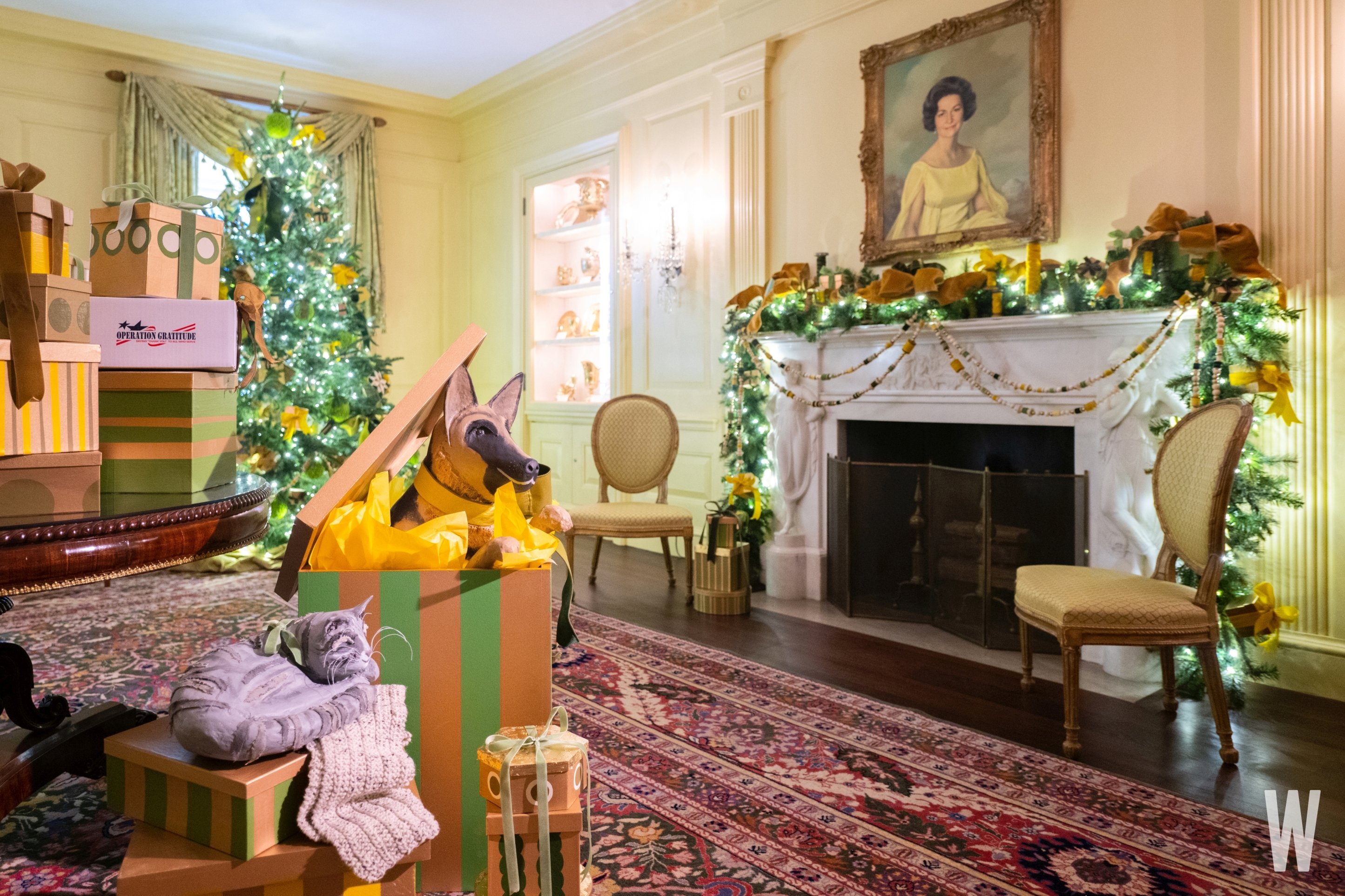
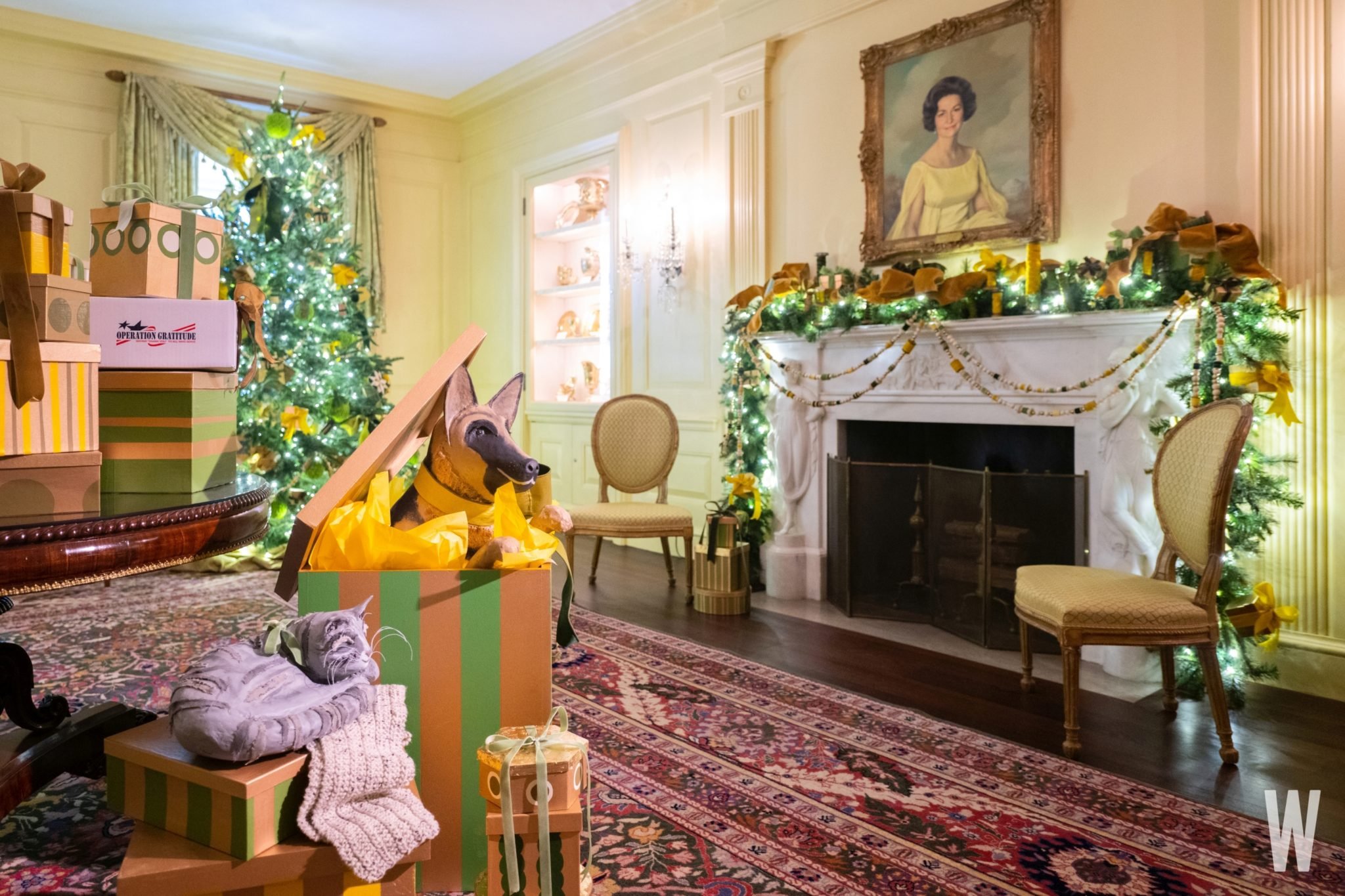
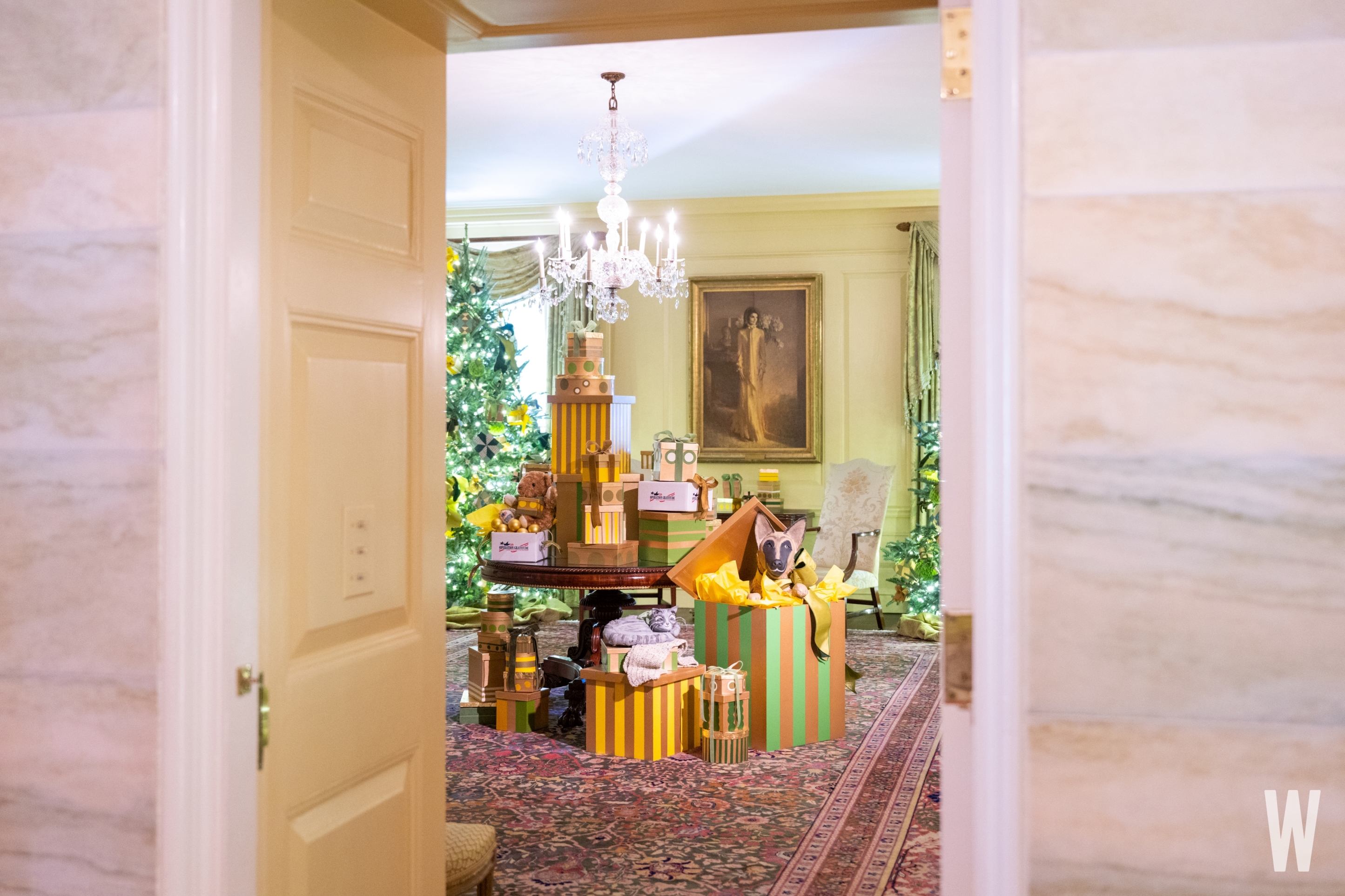
The Vermeil Room of the White House features illustrations of the Biden family’s pets, amid boxes from Operation Gratitude, which delivers care packages to deployed troops, first responders, and military families.
First Lady Jill Biden today revealed “We the People” as the theme for the 2022 White House holiday season. The “People’s House” will welcome an expected 50,000 visitors over the coming weeks, with a variety of digital viewing experiences available for those who wish to see the White House from home. It took more than 150 volunteers from across the country a full week to decorate the inside and outside, which now boasts over 83,615 holiday lights, 77 Christmas trees, 25 wreaths, and one very large gingerbread house (with 40 pounds of icing alone).
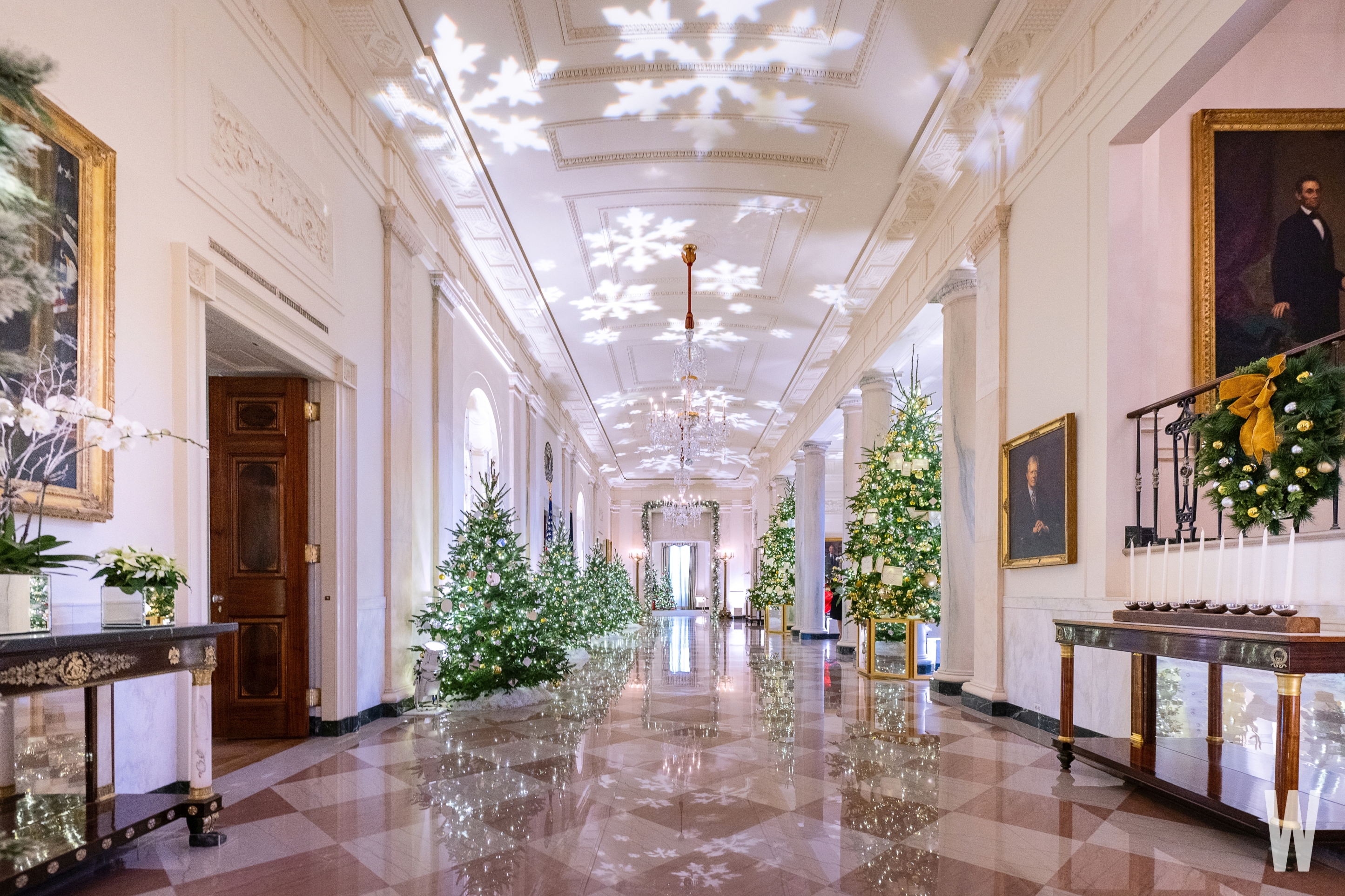
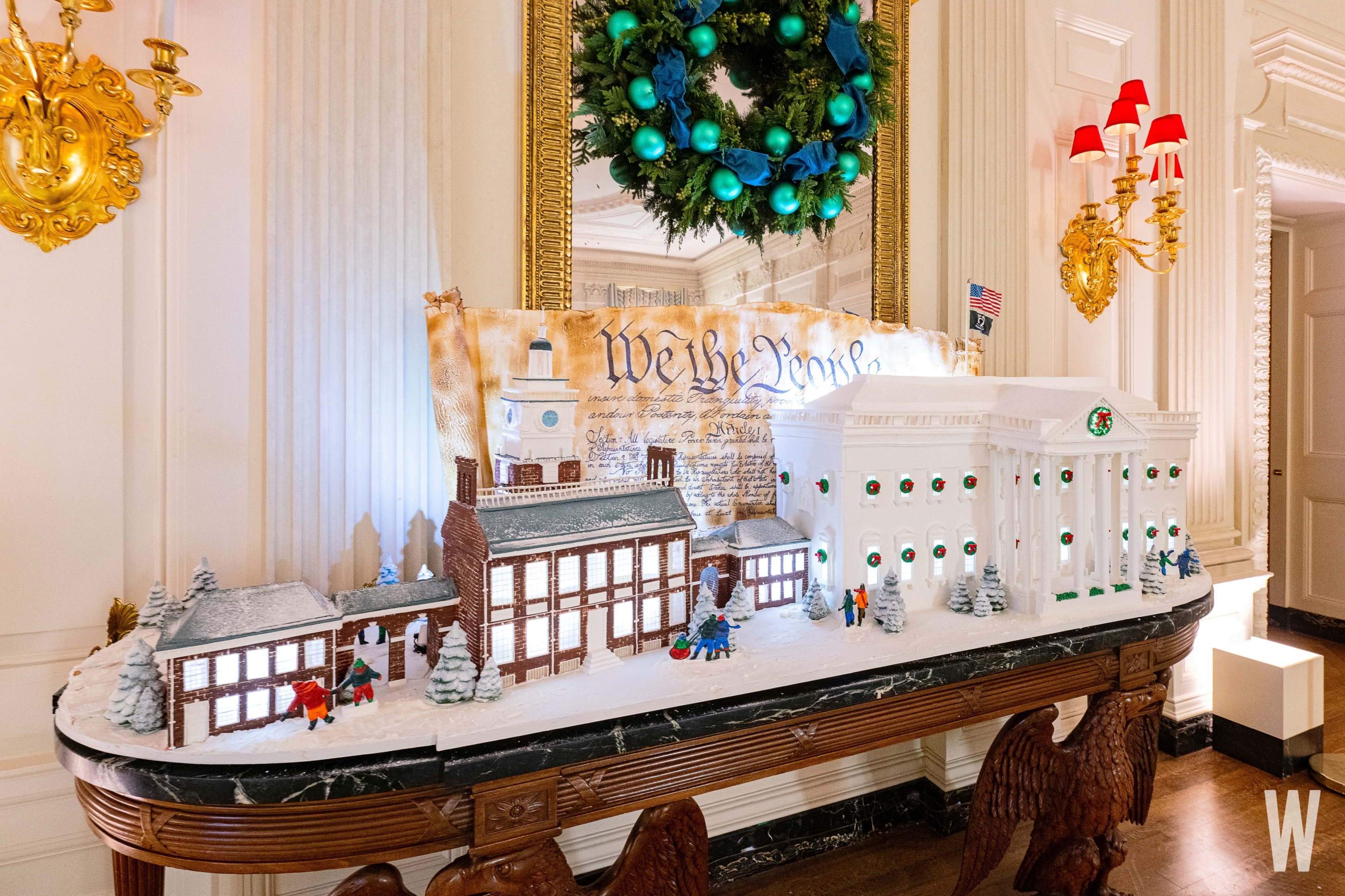
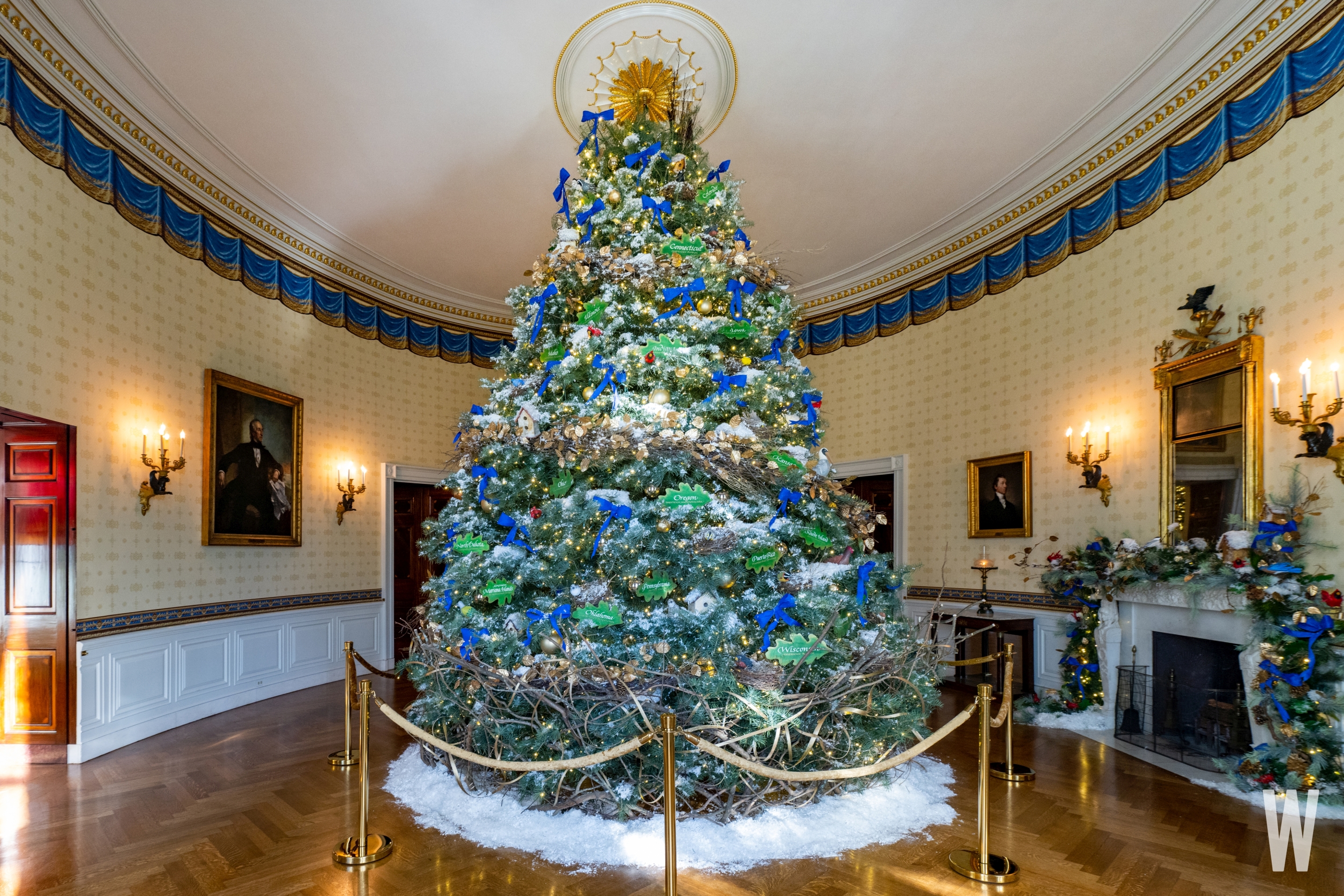
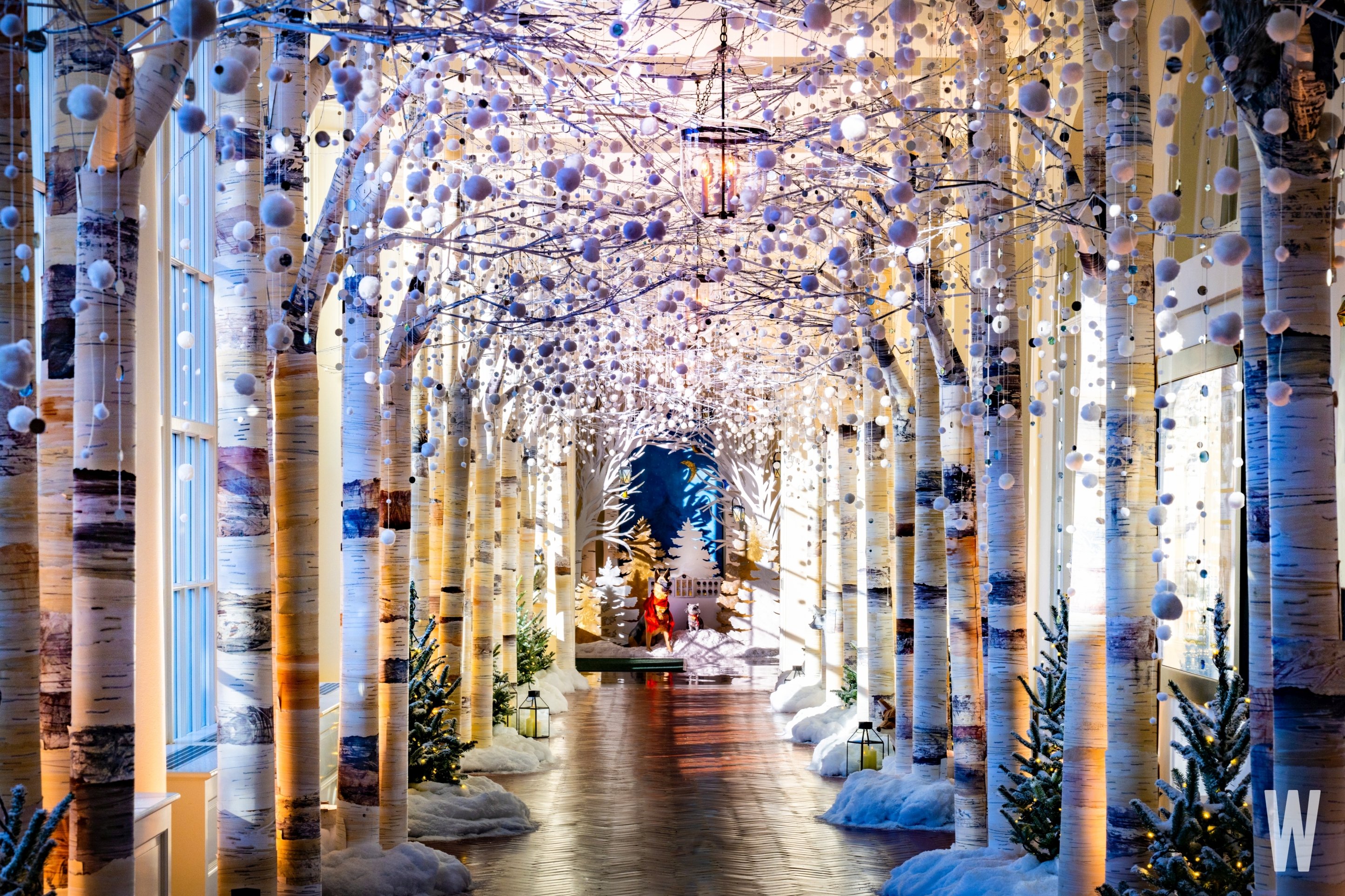
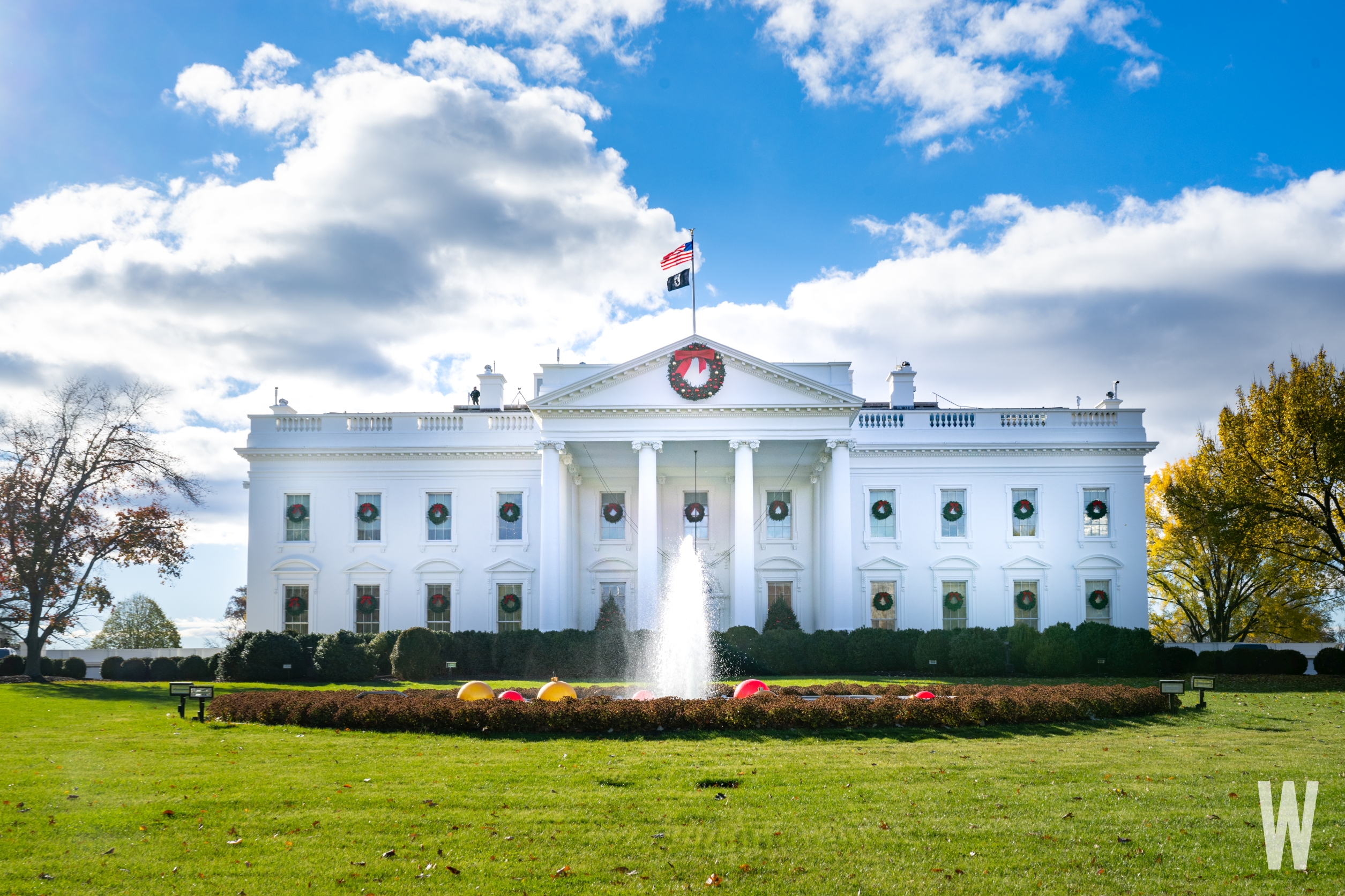
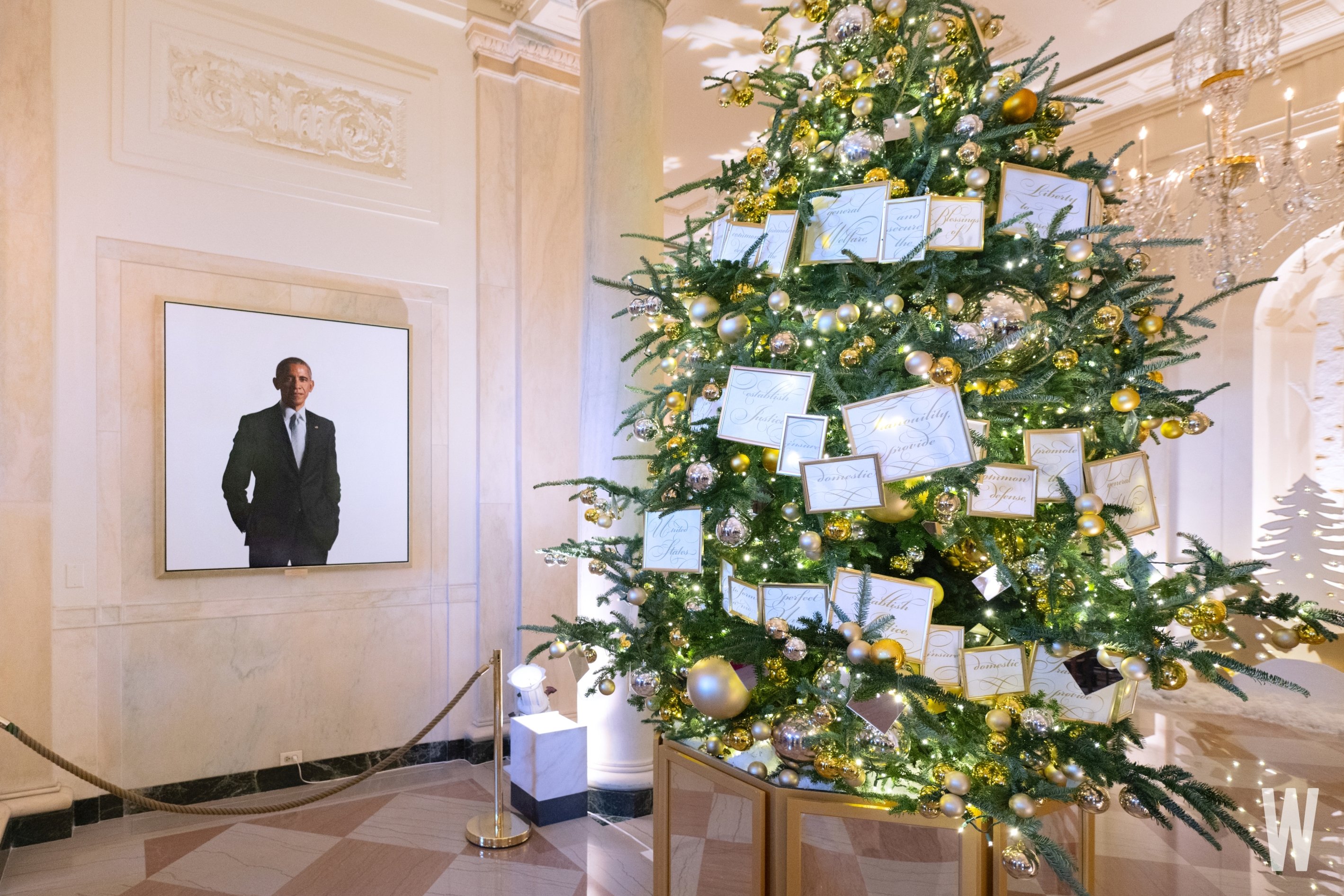
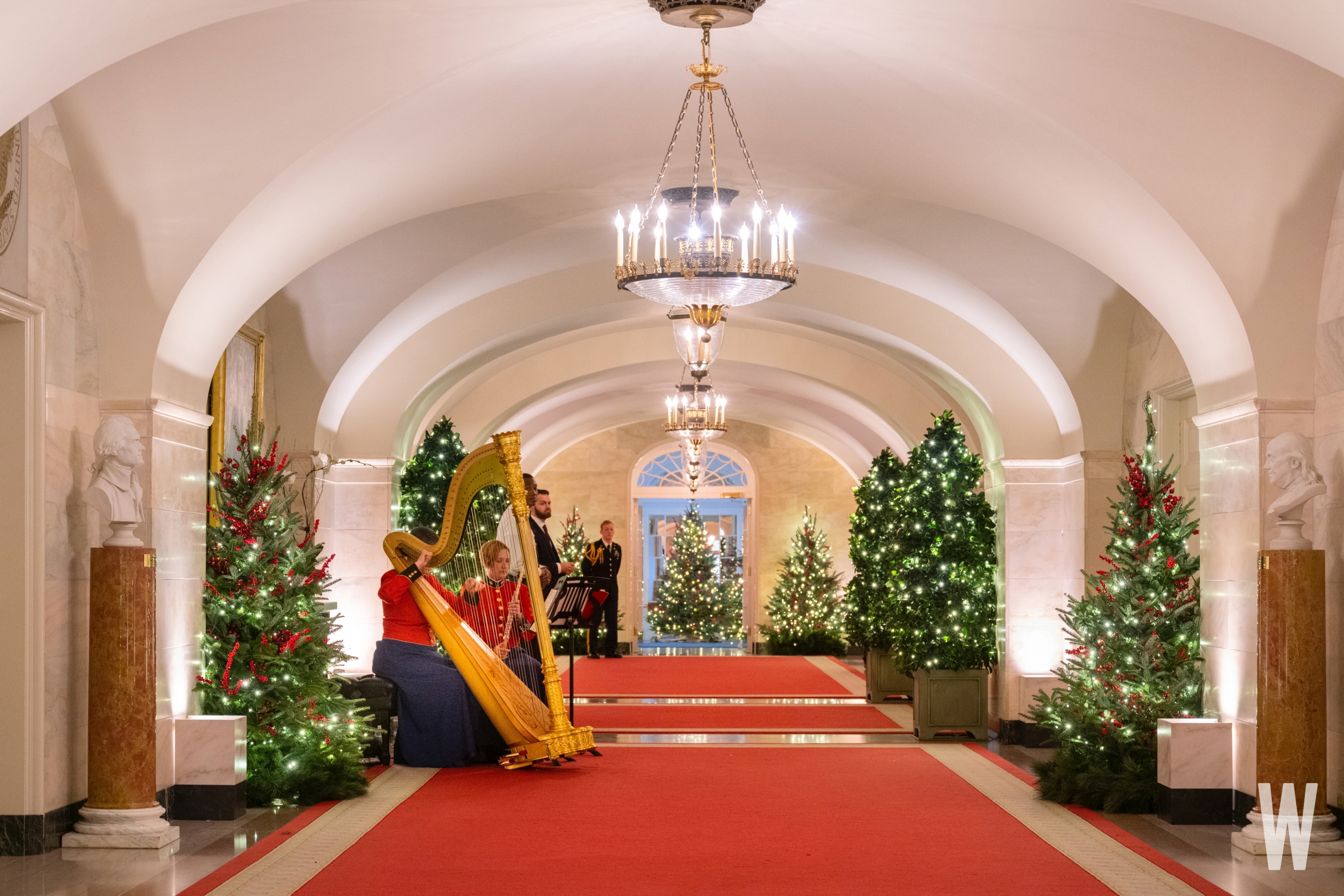
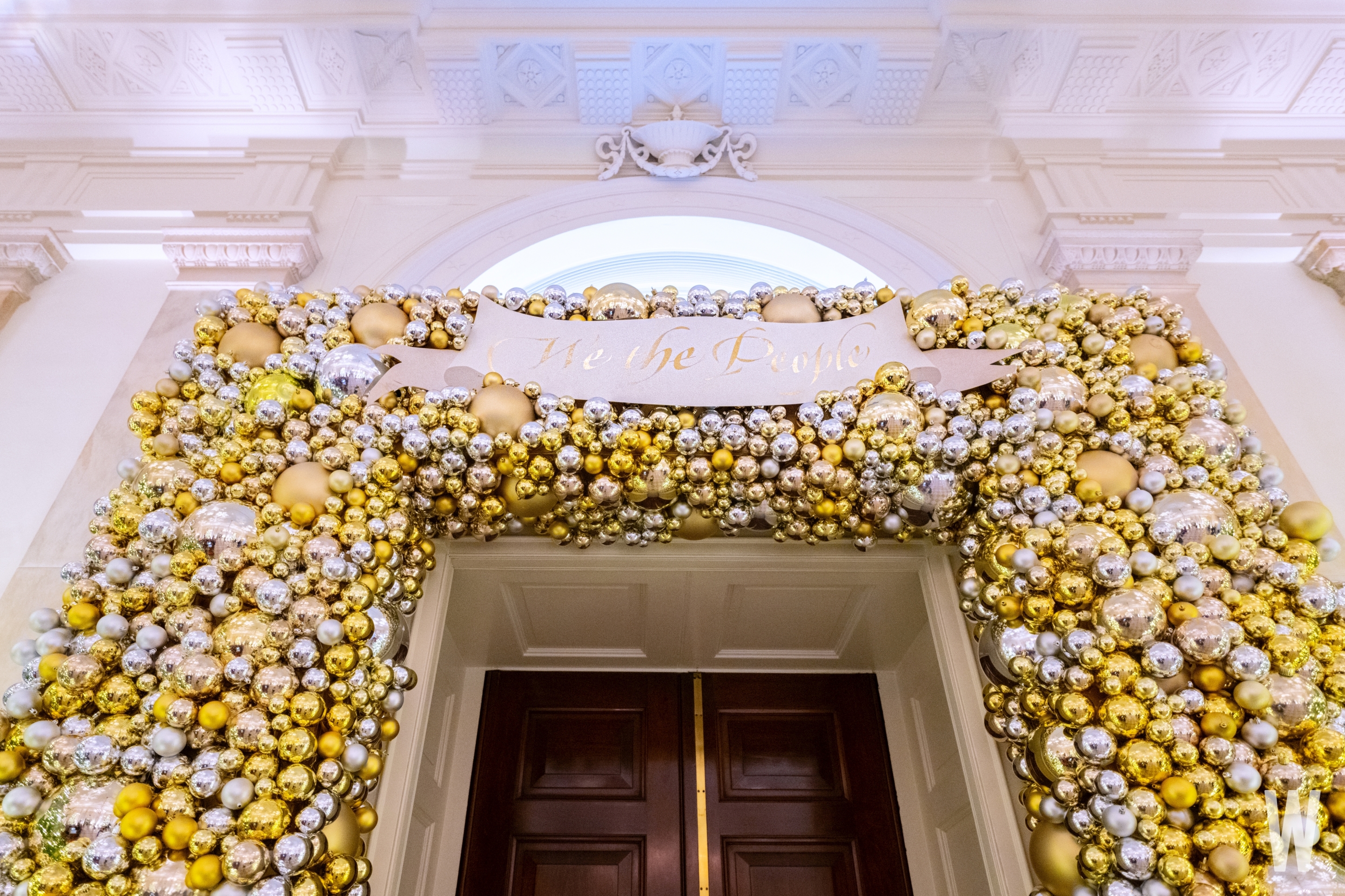
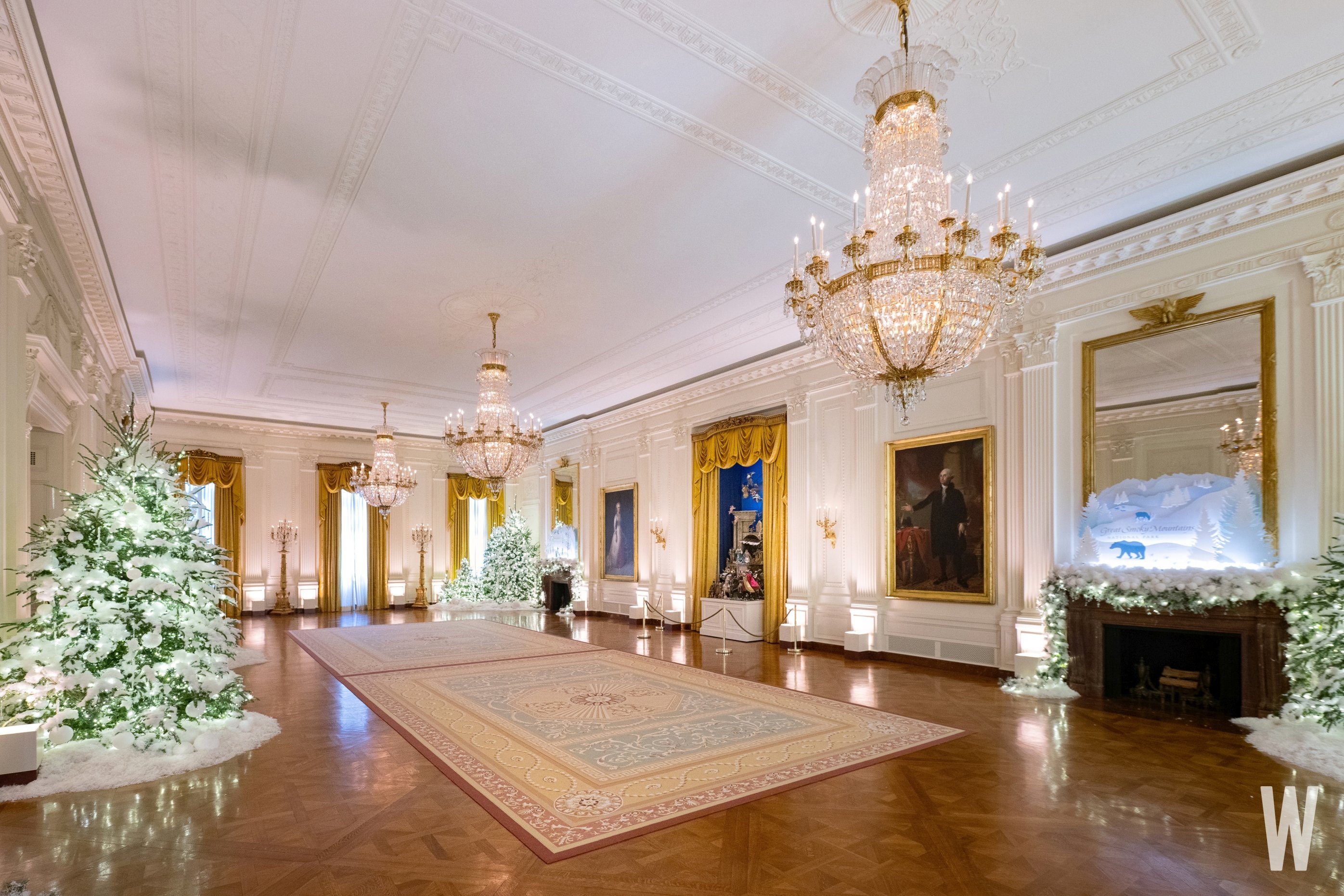
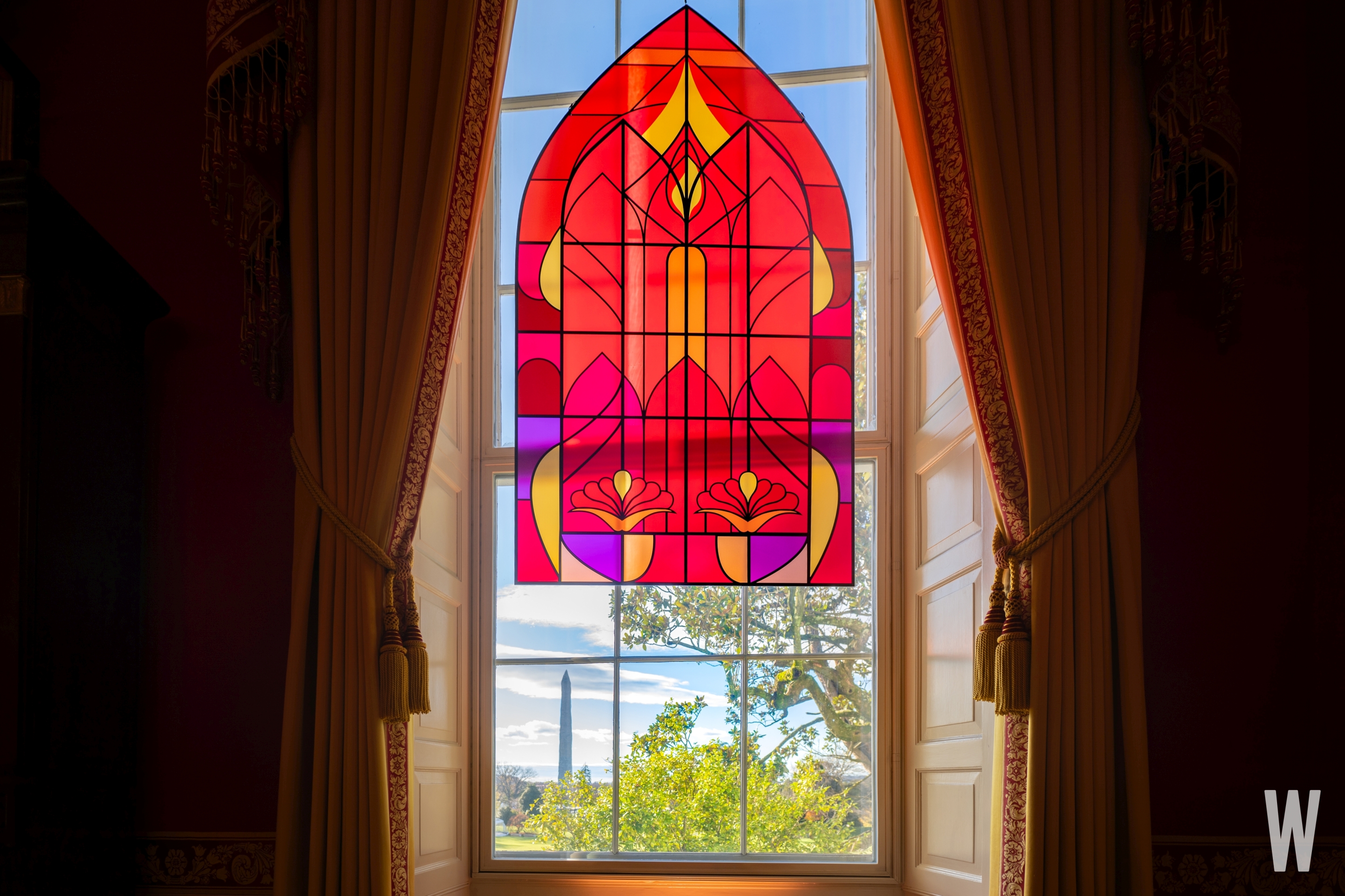
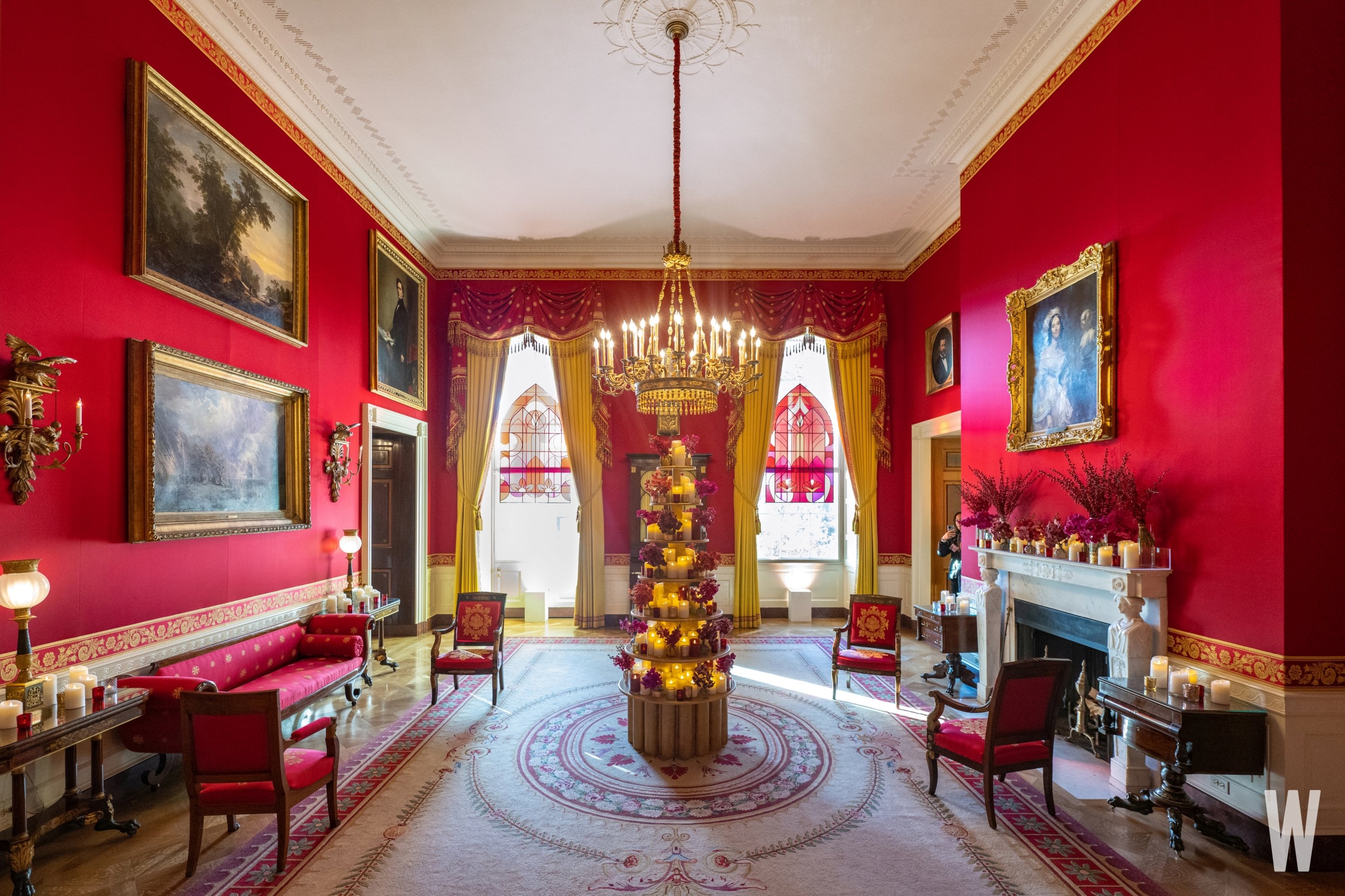
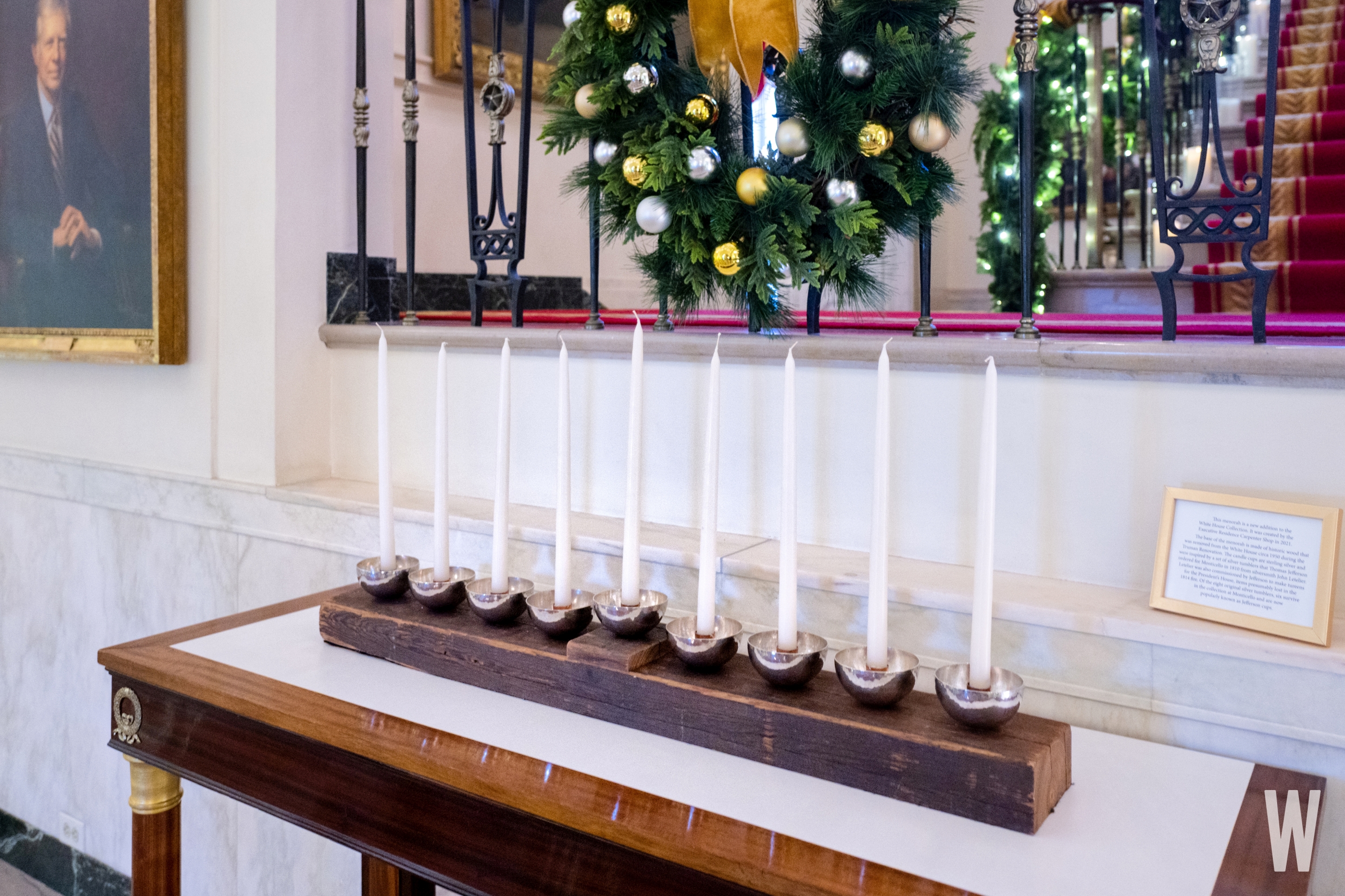
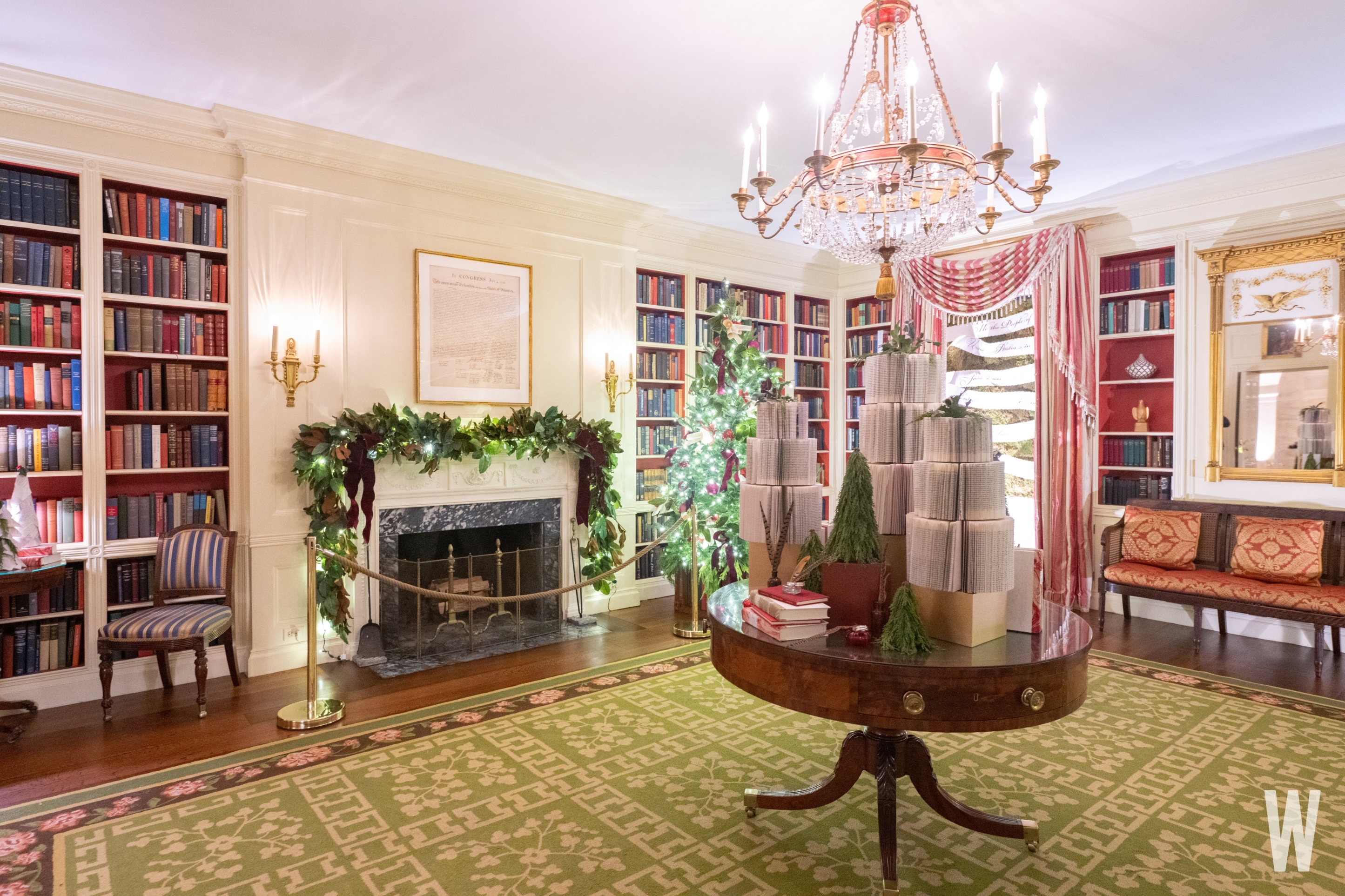
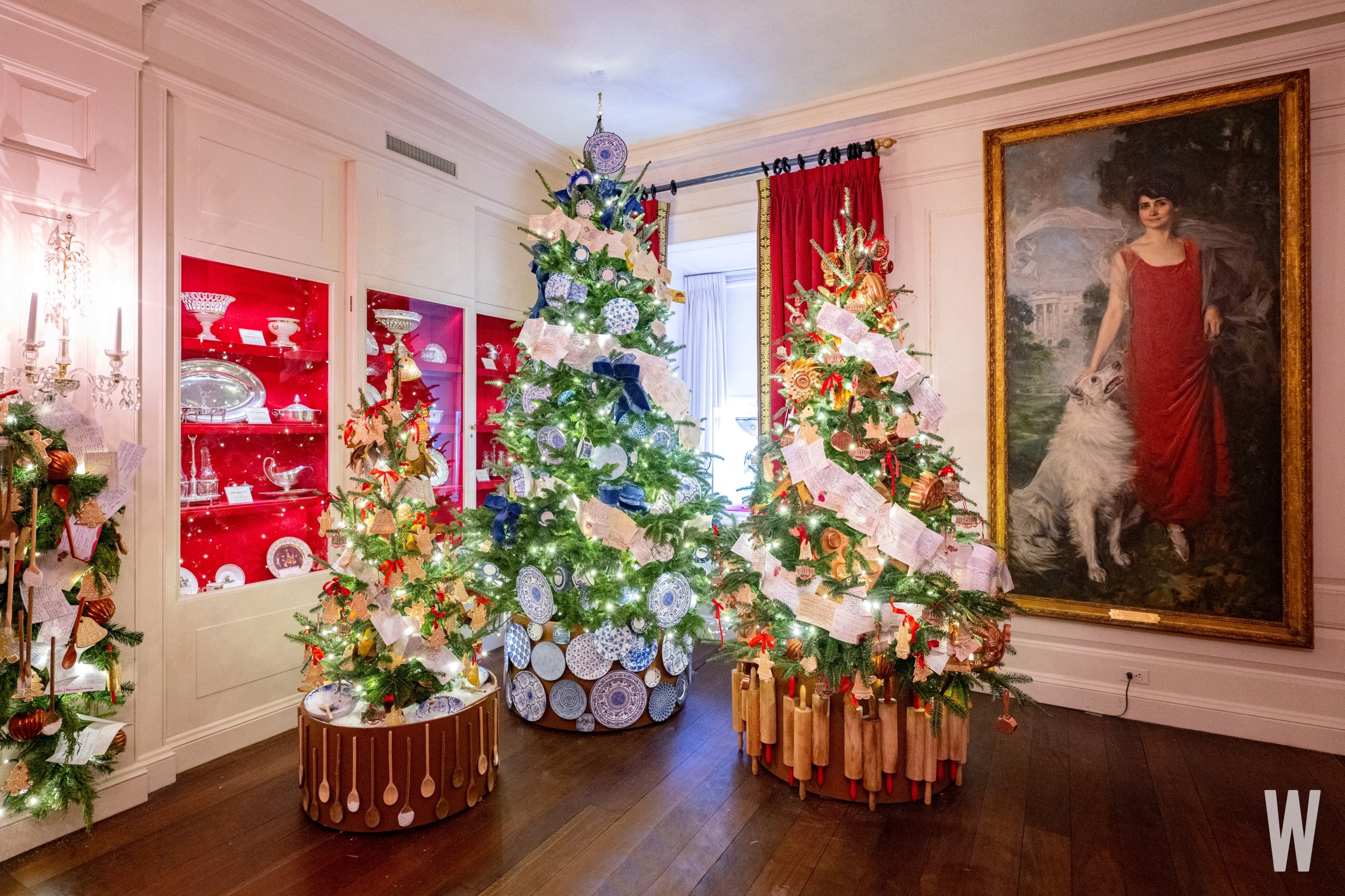
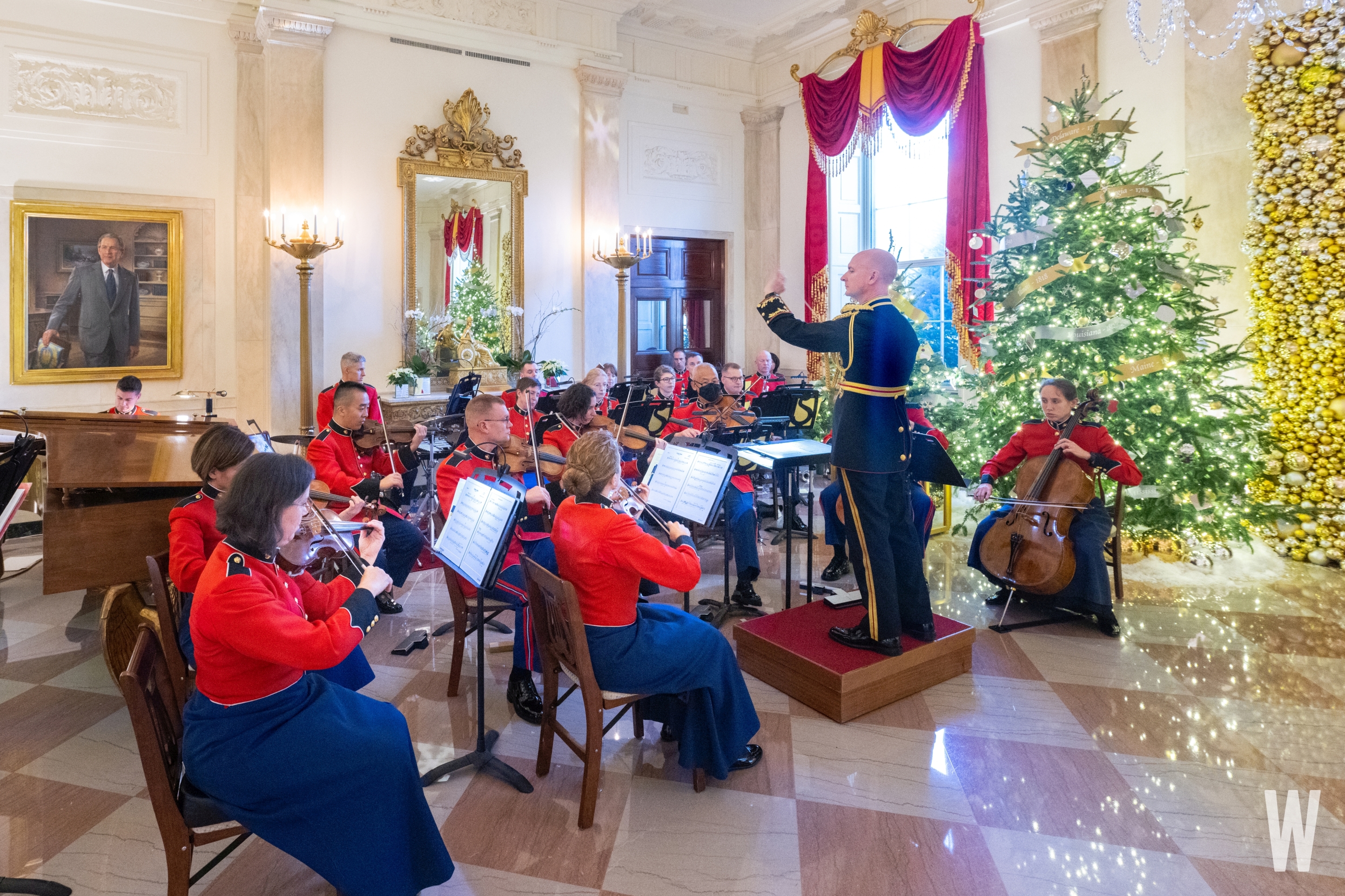
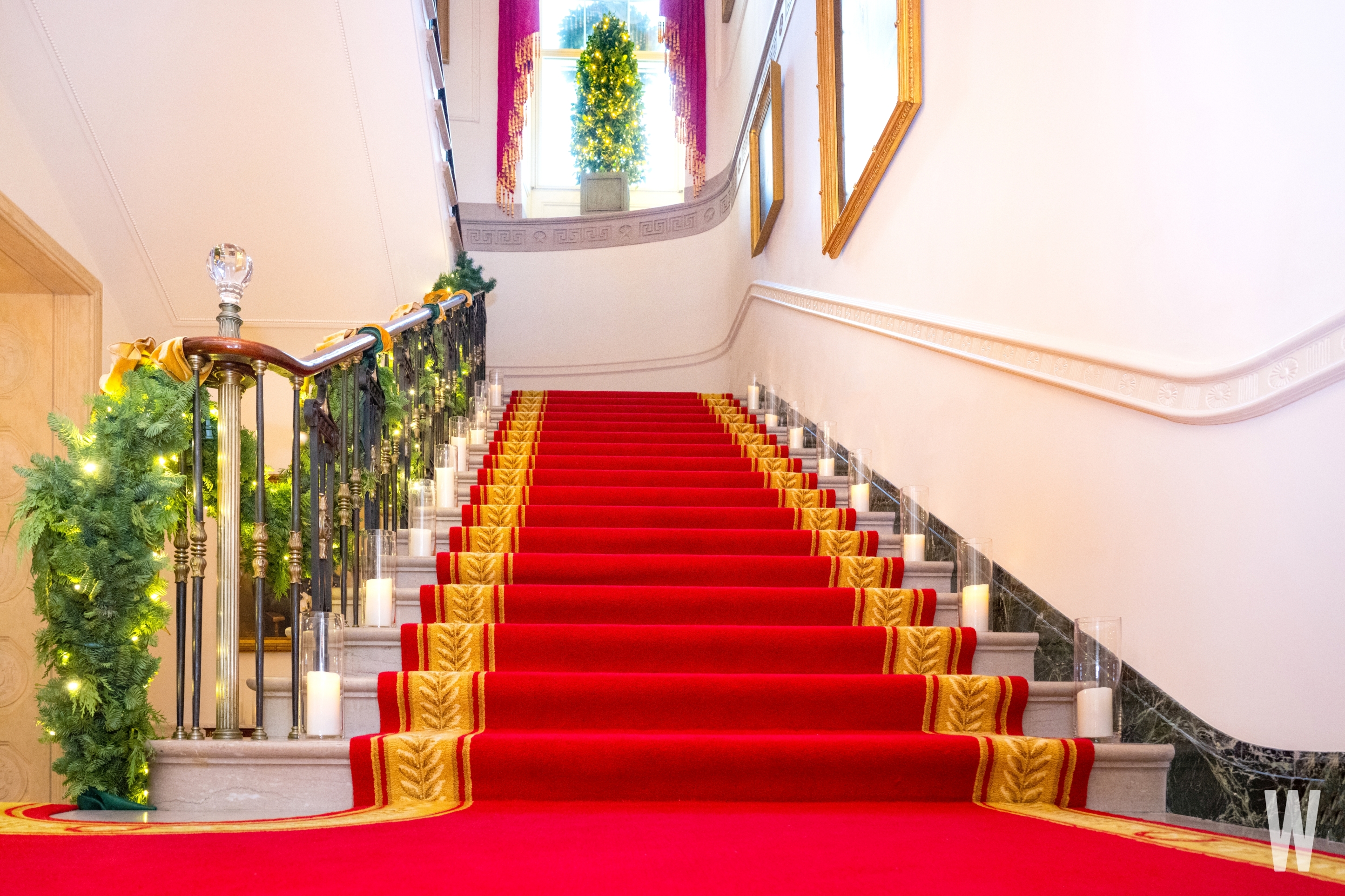
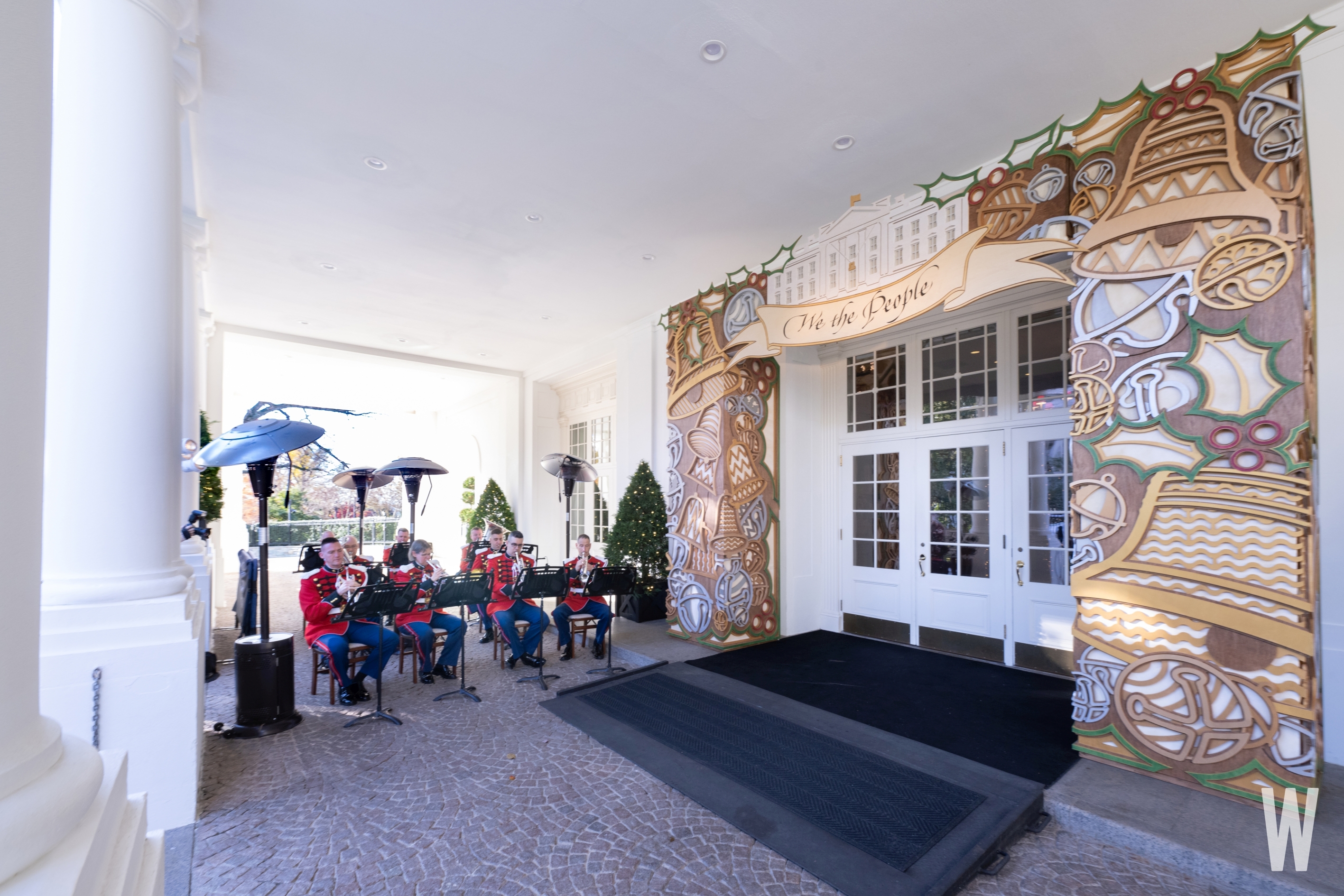
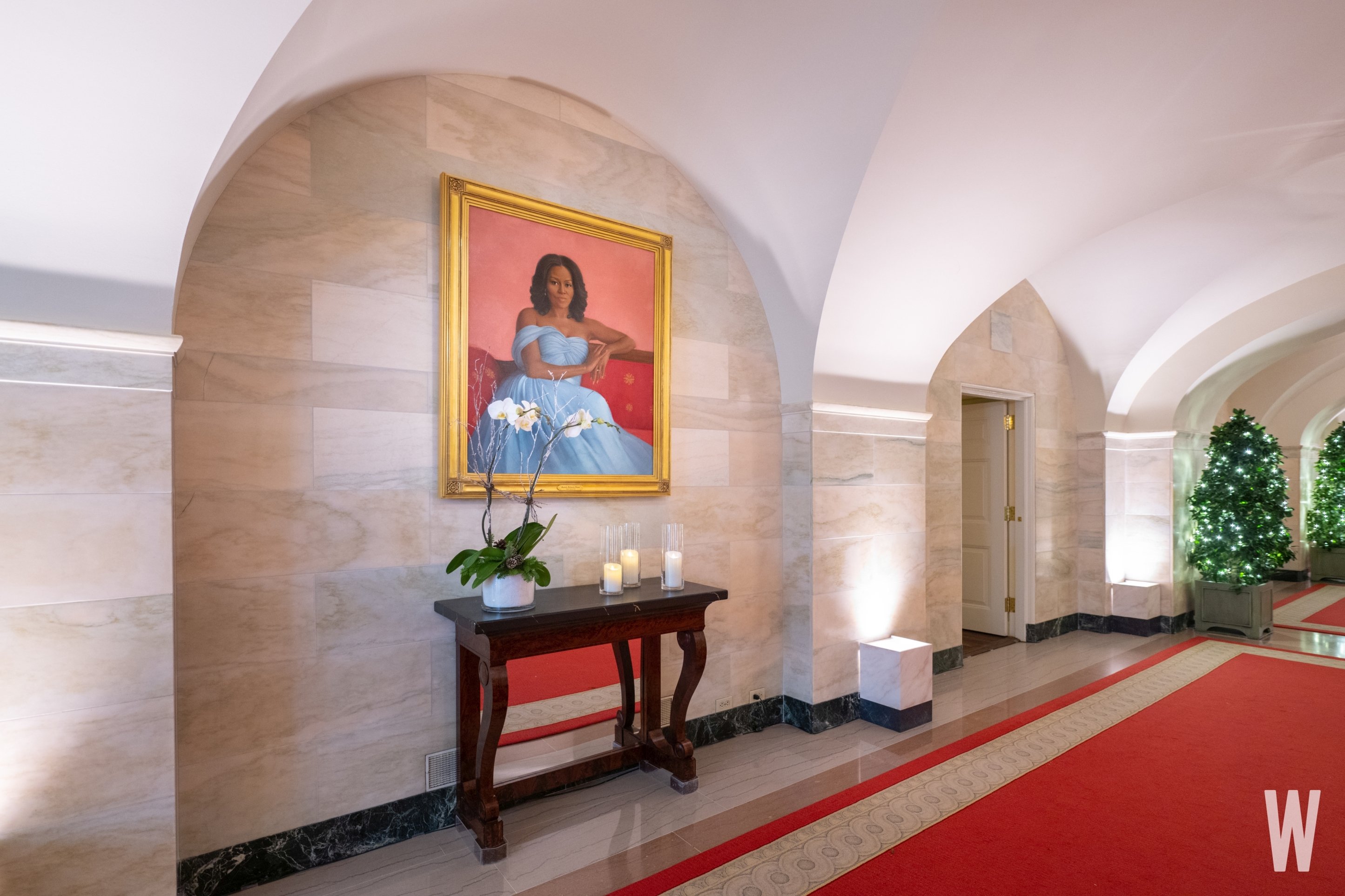
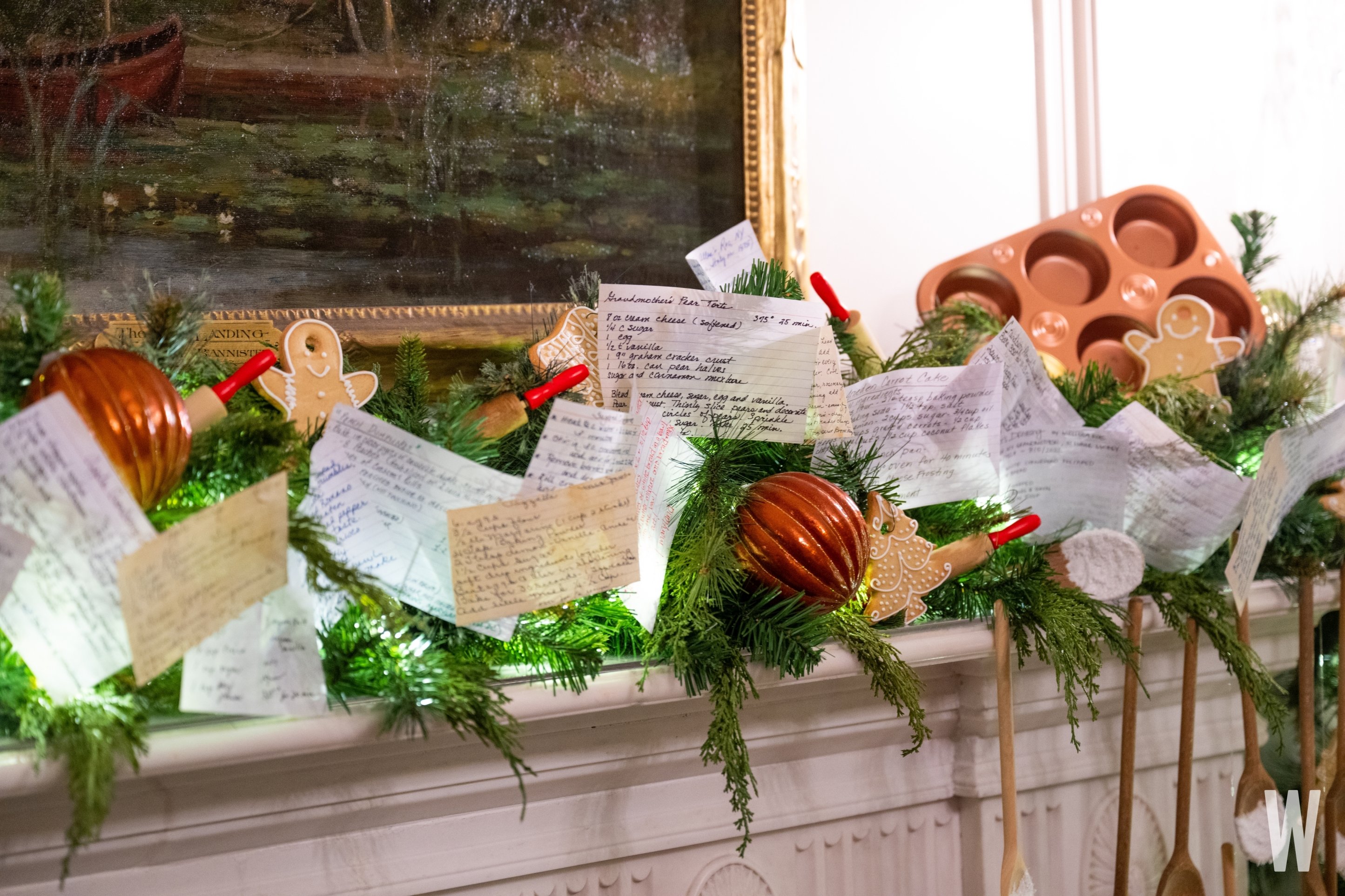
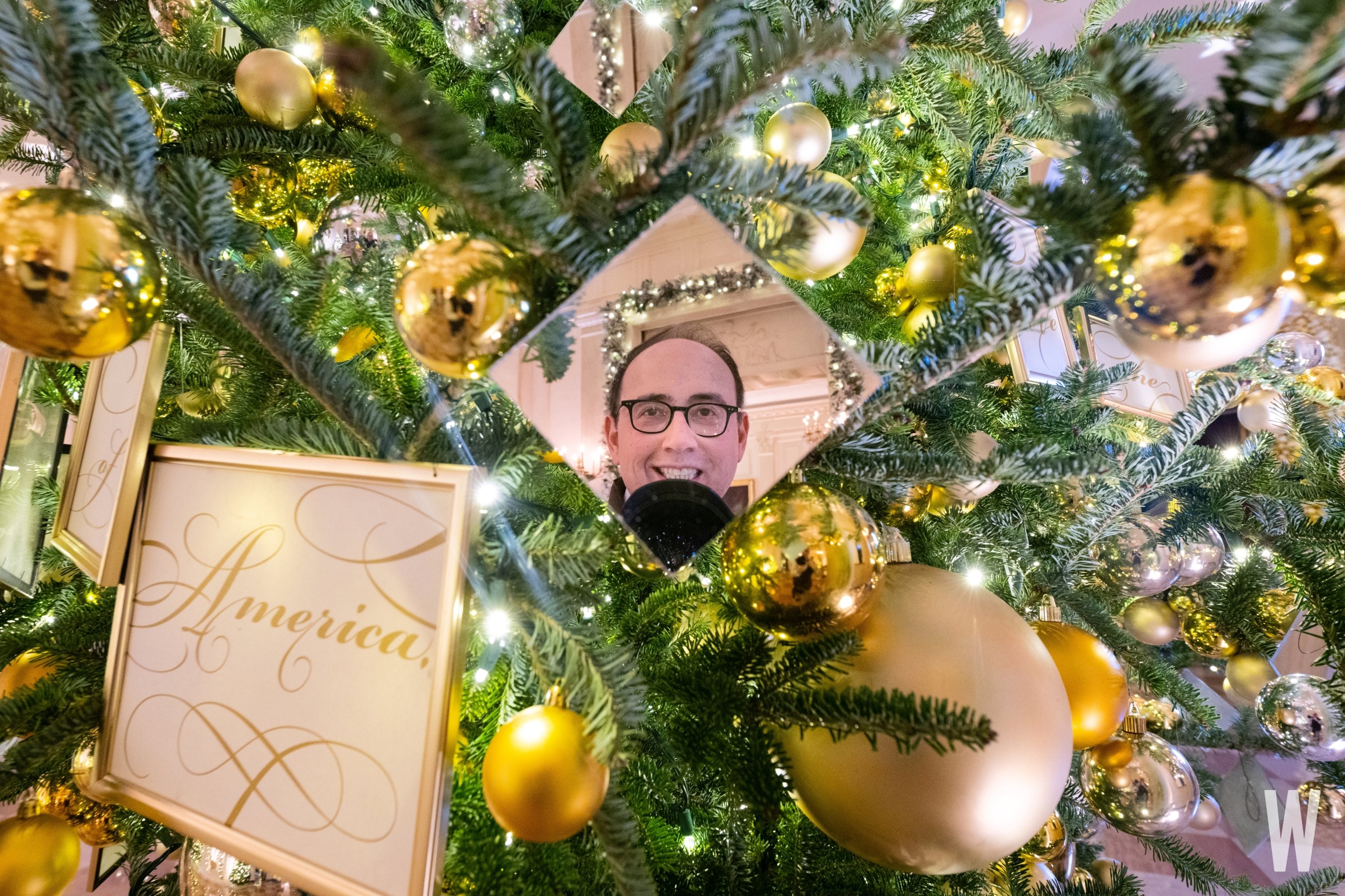
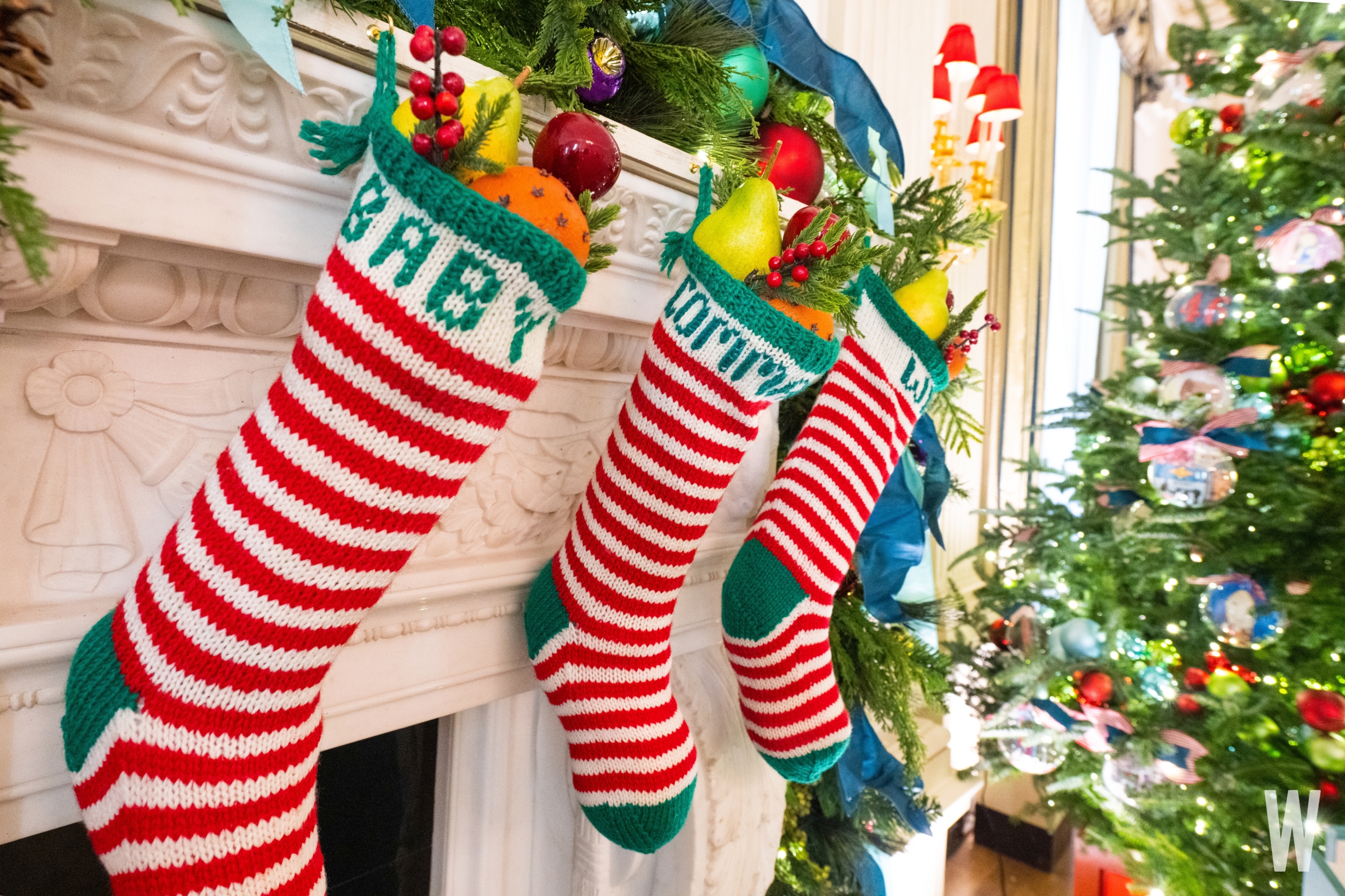
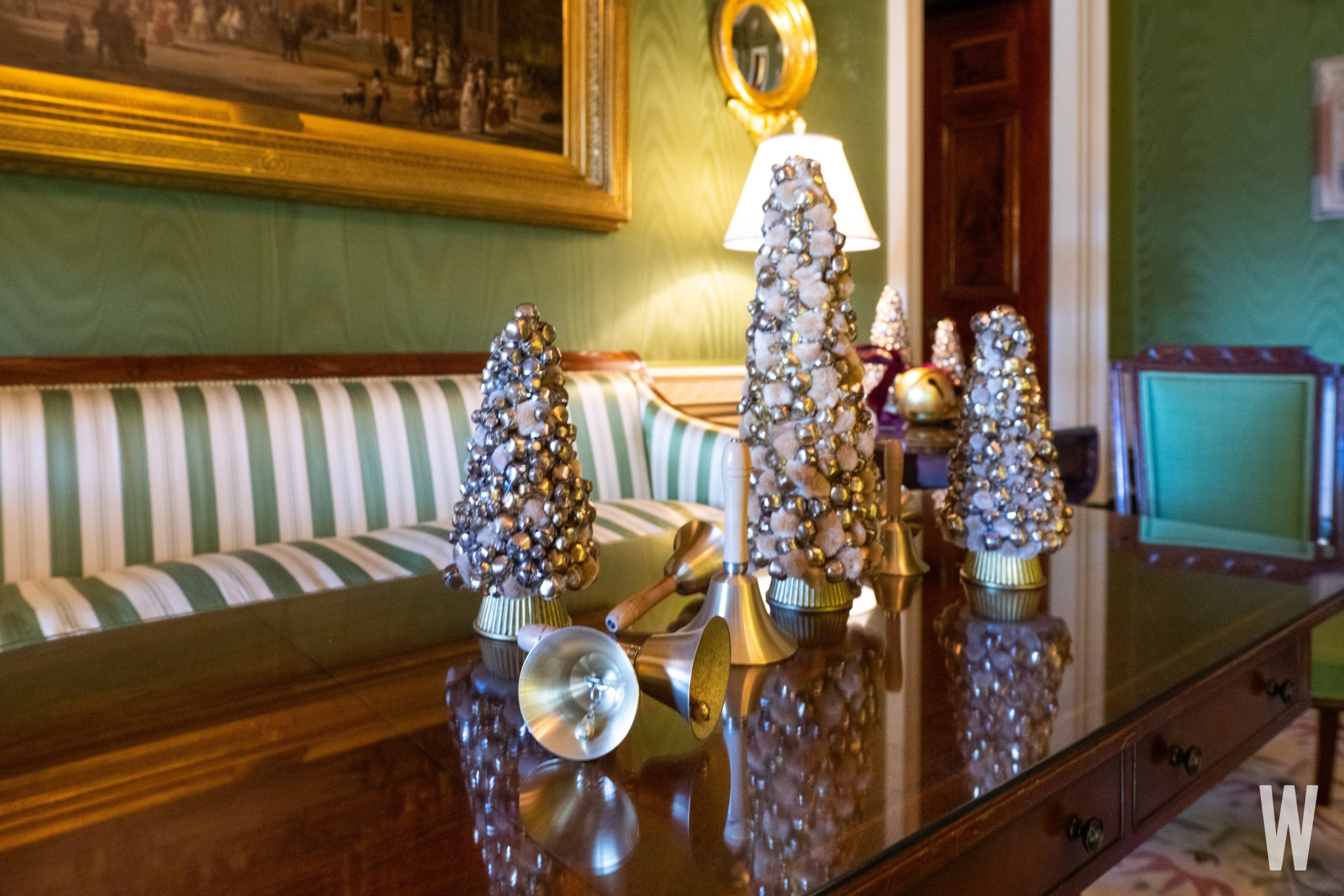
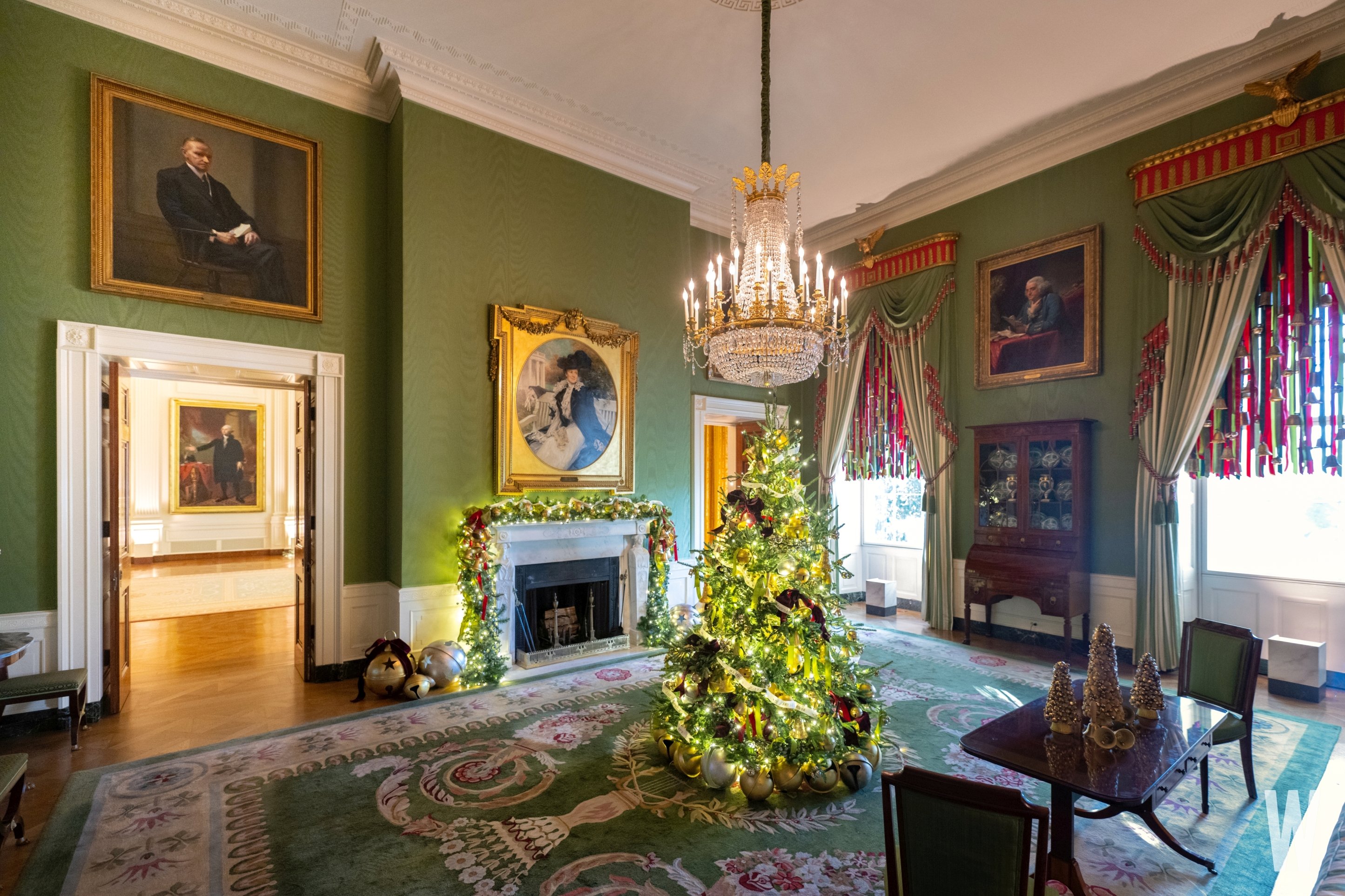
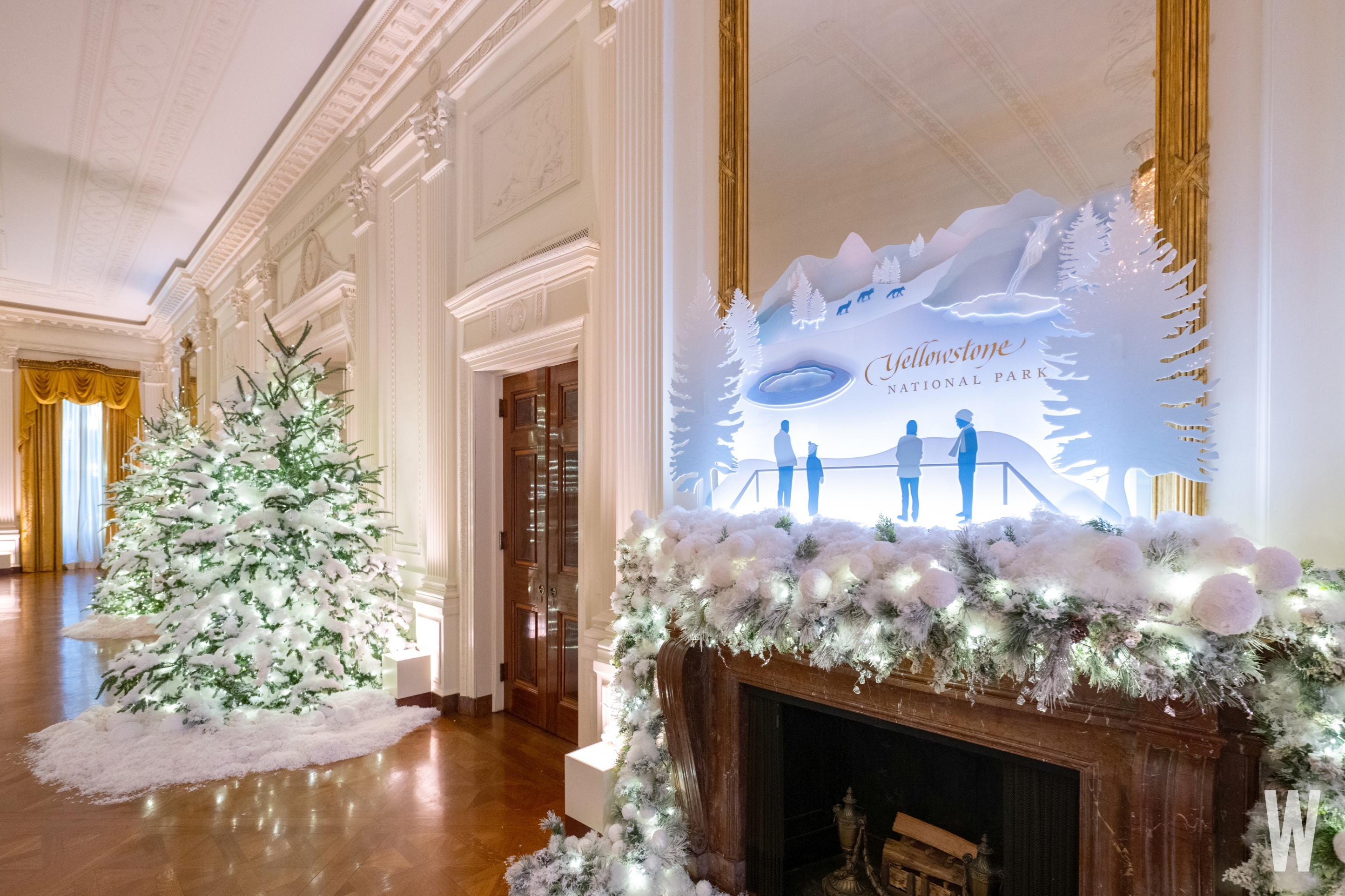
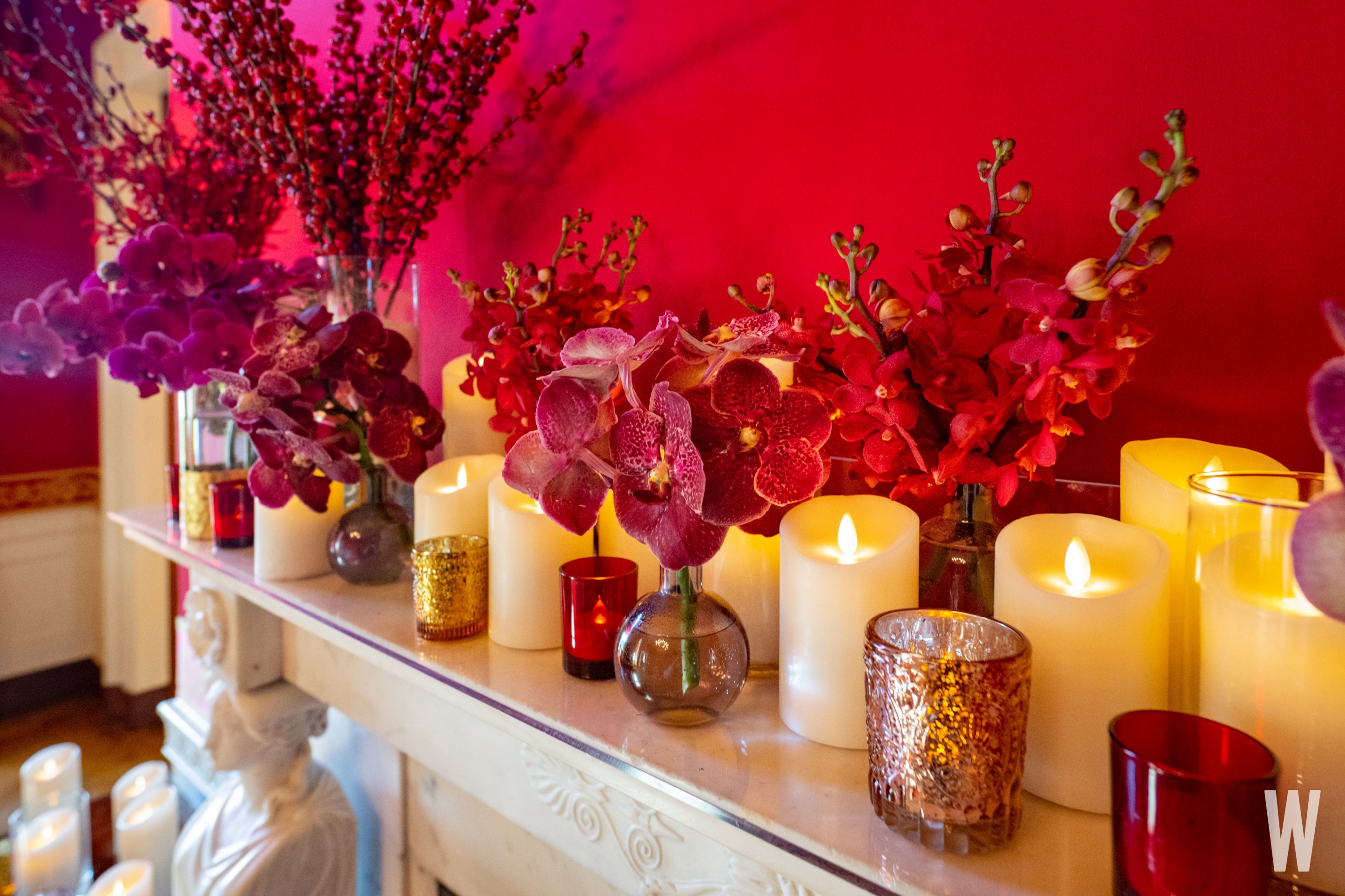
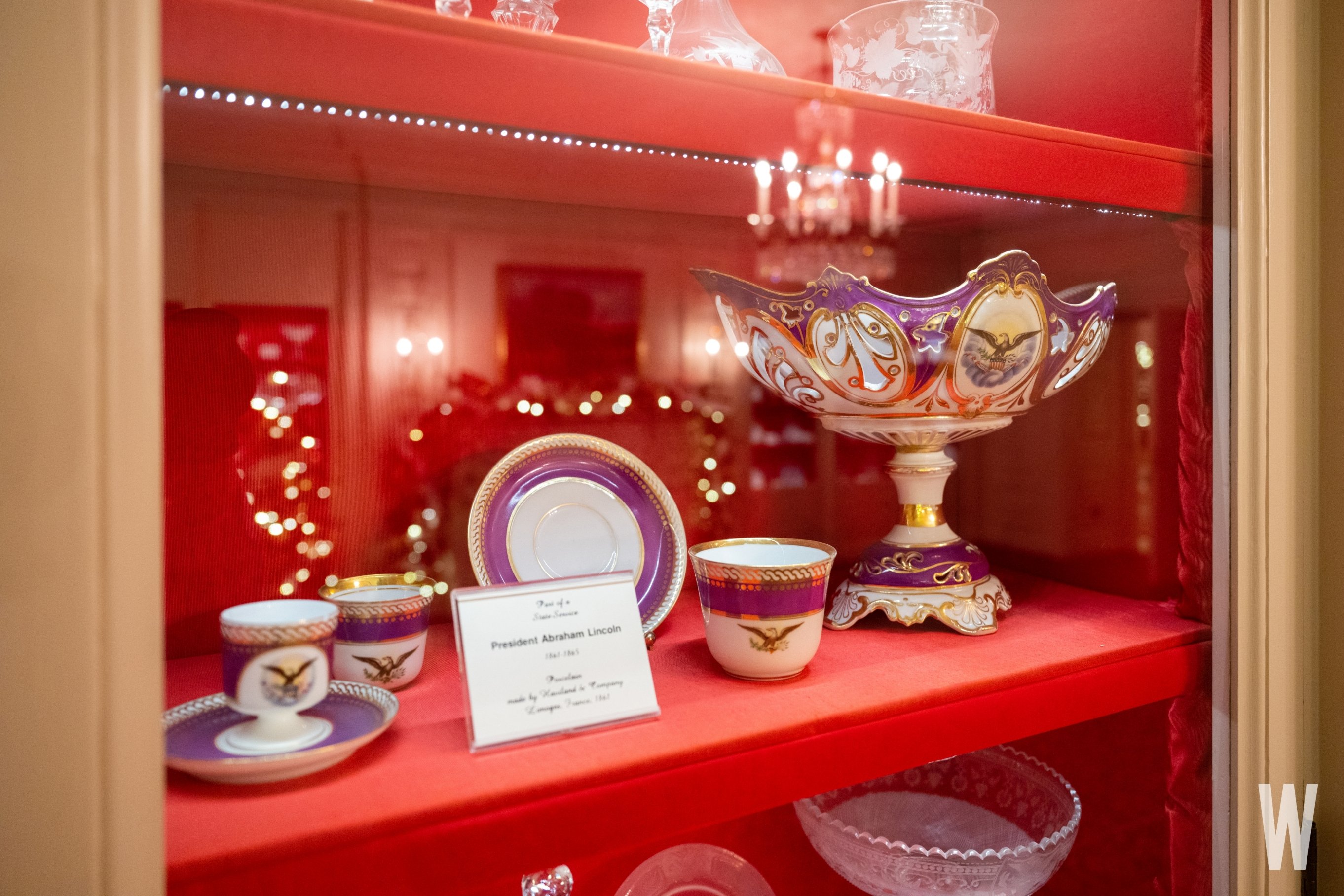
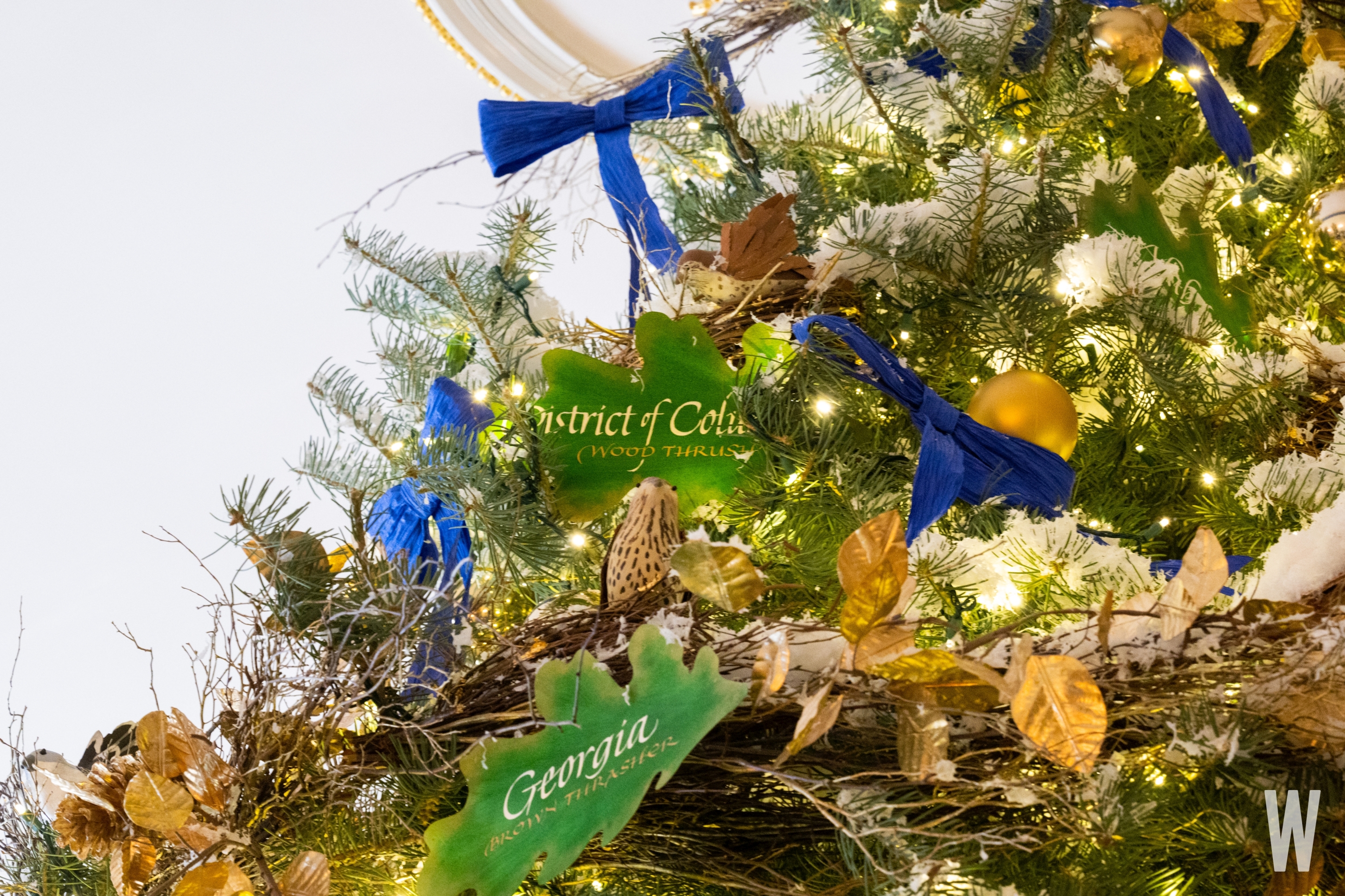
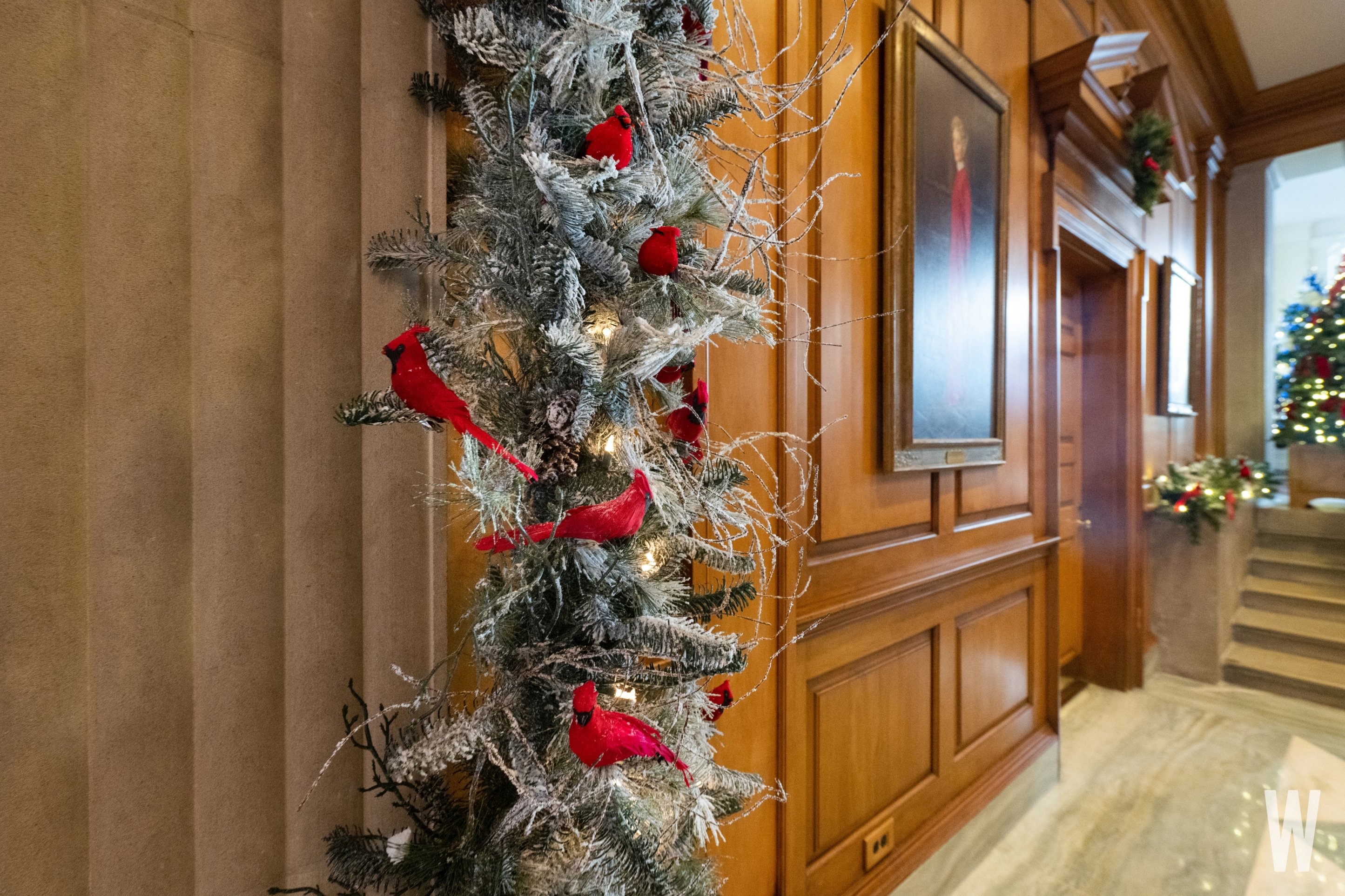
The Cross Hall of the White House connecting the State Dining Room and East Room with the Grand Foyer.This year’s gingerbread White House includes a sugar cookie replica of Independence Hall in Philadelphia.The official White House Christmas Tree, inside the Blue Room, features renderings of the official birds from all 57 states, territories, and the District of Columbia.Glowing lanterns, winter trees, and woodland animals line the journey down the East Colonnade.Floating ornaments have been added to the fountain on the White House’s north lawn.Artist Robert McCurdy’s official White House portrait of President Obama sits in the Grand Foyer.The White House’s ground-floor corridor.The “President’s Front Door,” which opens onto the North Portico of the White House.The East Room’s decor highlights America’s great outdoors and national parks.The entrance to the Blue Room, which hosts the official White House Christmas Tree, as seen from the Grand Foyer.The decorations of the State Dining Room are meant to embody the promise of the next generation—the tree ornaments are self-portraits crafted by students from across the country.A stained-glass window inside the Red Room shows how “faith can light the way forward.”A tradition since 1975, fresh cranberries form part of the Red Room’s holiday display and towers of candles reflect the “comfort, peace, and strength we find in faith.”Created by the Executive Residence Carpentry Shop, the White House Menorah is a new addition this year and was constructed using wood that was removed circa 1950 during a President Truman-era renovation.A copy of the Declaration of Independence, printed circa 1845, is on display above the fireplace inside the Library.The decor inside the State Dining Room celebrates children.Garlands of wooden spoons, measuring cups, rolling pins, and cookies adorn the branches of the China Room’s Christmas trees as a reminder of family traditions passed down through generations.The United States Marine Band plays inside the Grand Foyer.The Grand Staircase connects the State Floor and the second floor of the White House, which serves as the official home of the President.The entrance to the East Wing of the White House.The official White House portrait of former First Lady Michelle Obama sits just off the ground-floor corridor.Recipe cards contributed by the volunteers who helped decorate the White House for the holidays are scattered throughout the China Room.Mirrored ornaments and reflective surfaces throughout the Grand Foyer and Cross Hall ensure that visitors can see themselves in the decor—a nod to the fact that the strength of the United States is derived from its people.The Biden family’s traditional stockings hang above the fireplace inside the State Dining Room, always with an orange in the toe (a tradition originated by the First Lady’s grandmother).Sleigh bells, hand bells, and, yes, jingle bells decorate the Green Room, inspired by the music and carols that have defined the holidays for generations.The Green Room.Four iconic National Parks are represented in the East Room’s fireplace mantel displays, including Yellowstone National Park.Orchids, one of the First Lady’s favorite flowers, are a new addition to the Red Room’s decorations this year.Former First Lady Jacqueline Kennedy’s portrait peeks out above “Commander” inside the Vermeil Room.Holiday lights are reflected off the glass cabinets inside the China Room.The District of Columbia’s ornament on the Official White House Christmas Tree.Red cardinals and holiday greenery line the columns and beams of the East Wing lobby.Woodland birds and animals can be found both inside and outside the East Colonnade.
1st woman Jill Biden on Monday unveiled this year’s White Household getaway decorations, asserting the concept as “We the People.”
More than 150 volunteers from across the place put in a week aiding to adorn the within and exterior of the White Property with 25 wreaths, 77 Christmas trees and around 83,615 vacation lights. There is also a gingerbread White Property that was created out of 20 sheets of sugar cookie dough, 30sheets of gingerbread dough, 100 lbs of pastillage, 30 lbs of chocolate, and 40 kilos of royal icing, according to the office of the to start with girl.
Whilst formally revealing the holiday topic and seasonal decor, Biden offered a holiday break concept of unity and hope and thanked the volunteers who helped spruce up the White Property for the year.
“About the past two yrs, I have traveled to nearly 40 states — to rural counties and big cities. Once again and yet again, the Individuals I’ve met have revealed me the Soul of our Country,” the 1st girl reported Monday in well prepared remarks for the celebration at the White Household in Washington, D.C. “I’ve seen it almost everywhere I have long gone: When our country comes alongside one another, we are much better. What we share is so a lot higher than the issues that pull us apart. The Soul of our Nation is — and often has been — ‘We the People today.’ And that is what inspired this year’s White Household getaway decorations.”
Gold Star trees honor fallen U.S. armed service company associates, in this article which include U.S. Air Power Sergeant Marshal Roberts, as Christmas decorations on the theme “We the People” are unveiled all through a push tour in advance of holiday break receptions by U.S. President Joe Biden and initially lady Jill Biden, at the White Property in Washington, D.C., Nov. 28, 2022.
Jonathan Ernst/Reuters
Each individual home of the White Residence was adorned to “depict what brings us jointly throughout the holiday seasons and in the course of the 12 months,” according to Biden.
“The Gold Star trees honor and don’t forget those people who laid down their life for our country, and the family members who have on their legacies,” she mentioned. “In the Library, we rejoice how the tales we share deliver us nearer to each individual other, our heritage, and the earth all around us. In the Vermeil Home, we honor how the smallest functions of kindness and appreciation truly do matter. In the China Area, we try to remember spouse and children traditions handed down and evening meal tables full of laughter.”
“In the East Home, we emphasize the national treasures that belong to us all — our Nationwide Parks — and the communion we locate in nature,” she ongoing. “In the Environmentally friendly Home, bells of all types remind us of the therapeutic and unifying ability of tunes. In the Pink Area, we know that in moments of equally pleasure and grief, religion can mild the way. In the Point out Eating Room, we honor the assure of the upcoming technology and see the holiday seasons by means of the eyes of kids. And in the Blue Area, the official birds of all 57 states and territories — and our Nation’s Capital — are all woven collectively to rework the 18-foot Xmas Tree into a beautiful symbol of unity.”
Trees supposed to portray a first woodland snowfall line the East Colonnade as Xmas decorations on the topic “We the Persons” are unveiled for the duration of a push tour forward of holiday getaway receptions by U.S. President Joe Biden and initially girl Jill Biden, at the White Household in Washington, D.C., Nov. 28, 2022.
Jonathan Ernst/Reuters
As component of her White Household initiative to assistance and advertise the sacrifices and wants of military family members, termed Joining Forces, Biden was joined by members and leadership of the Nationwide Guard from additional than 30 U.S. states and territories together with their people. The initially woman, who retains a doctorate in training, was scheduled to partake in a roundtable dialogue on schooling for army-linked youngsters with Countrywide Guard family members and state adjutants generals later Monday, in accordance to her office.
“We needed them to be a aspect of this unique working day due to the fact they symbolize the coronary heart of our communities — adult males and women of all ages who pick to serve even as they pursue other professions, who remedy the phone of responsibility in our hometowns as immediately as disasters strike and wants crop up,” Biden mentioned. “While our nation depends on their courage, the company of our Guardsmen and gals, and of their family members, typically goes unseen — particularly little ones of Countrywide Guard members.”
Trees intended to portray a initially woodland snowfall line the East Colonnade as Xmas decorations on the concept “We the Persons” are unveiled in the course of a push tour ahead of holiday getaway receptions by U.S. President Joe Biden and to start with girl Jill Biden, at the White Property in Washington, D.C., Nov. 28, 2022.
Jonathan Ernst/Reuters
Holiday decorations adorn the South Portico of the White Dwelling in Washington, D.C., on Nov. 27, 2022.
Mandel Ngan/AFP by way of Getty Photographs
“As a fellow Nationwide Guard mom and grandmom, I desired to welcome Countrywide Guard family members to support us open up this holiday break period as my honored attendees. Your provider is the embodiment of We the Individuals,” she additional.
The White Home expects to welcome roughly 50,000 visitors through the getaway year, in accordance to the office environment of the first girl.
“During these halls, from the shining bells to the mirrored ornaments in the Grand Lobby driving me, you will see your own reflection — a reminder and a ask for to see you in this residence,” Biden stated. “And we are grateful to be able to welcome People in america household.”
Final year’s holiday break topic was “Gifts from the Heart,” intended to honor those who have persevered by way of hardships introduced on by the COVID-19 pandemic. Extra than 100 volunteers embellished the White House with close to 25 wreaths, 41 Christmas trees, 300 candles, 6,000 ft of ribbon,10,000 ornaments and just about 80,000 holiday getaway lights, in accordance to the place of work of the initially girl.
Anyone is common with these shiny glass mirror ball ornaments you can obtain at any large-box store, but this 12 months, to start with woman Jill Biden hung precise mirrors on the trees of the White House’s Grand Lobby. Round mirrors. Sq. mirrors. Lean in, and your experience will seem, clear as day.
“That’s quite purposeful, pretty intentional,” claimed Biden’s communications director, Elizabeth Alexander. “It’s significant for the initial girl that people today see by themselves in the decor.”
Very first girl Jill Biden discovered the White House’s holiday break decorations on Nov. 28, meant to make website visitors really feel heat and at household. (Video clip: Jackson Barton/The Washington Submit)
In other phrases, the People’s House will be loaded with reflections of the 50,000 site visitors anticipated to appear by way of the doorways in the next four months — some for tours, many others to go to the 20-moreover planned holiday receptions, ramping up for the initial time considering that the pandemic. The text “We the People” — the first lady’s topic this 12 months — hold over the entrance to the East Wing, and a copy of the Declaration of Independence, printed in 1845, is on display screen in the library.
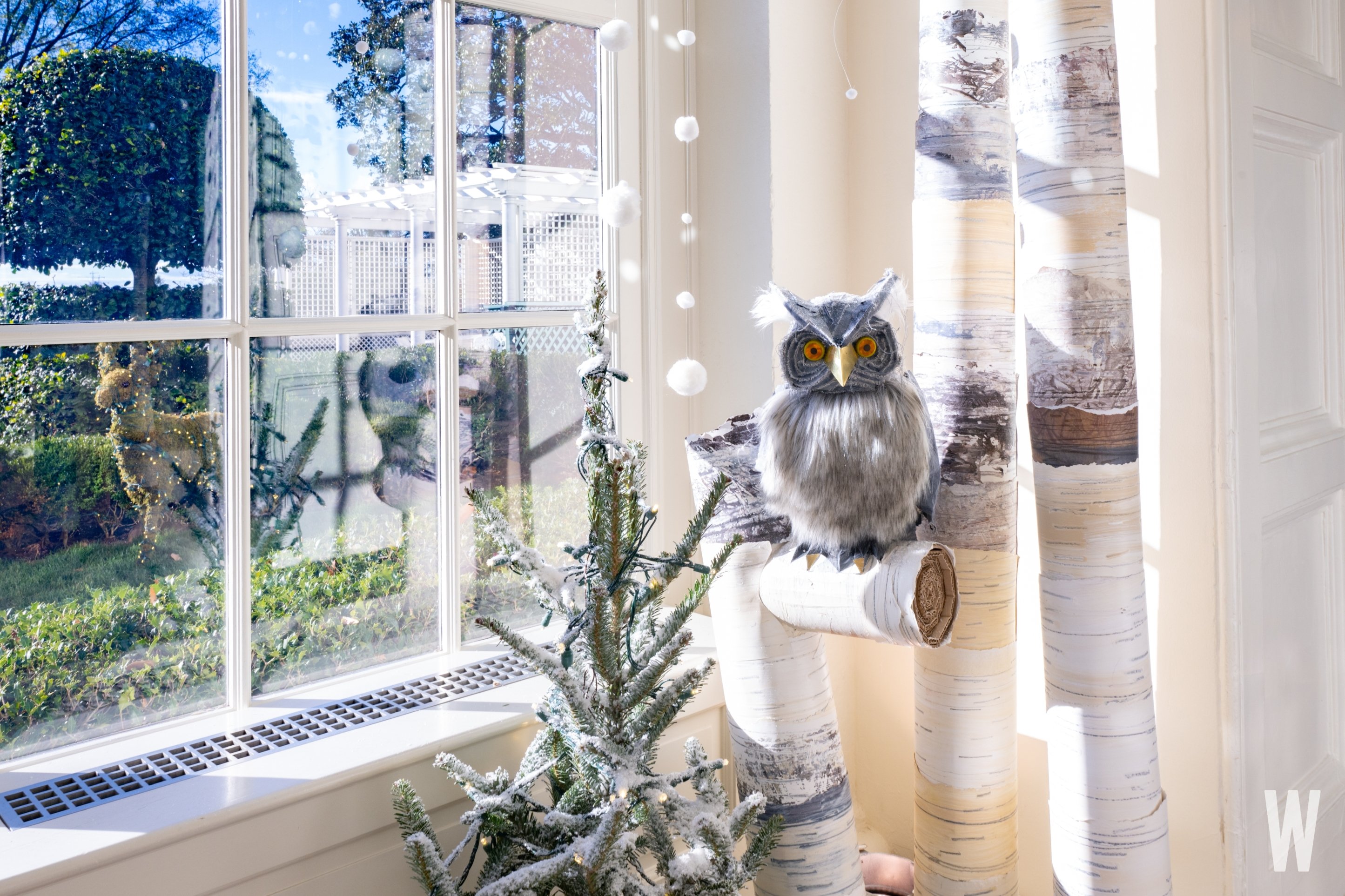
For their 2nd Christmas in the White Household, Biden continued her purpose for a homier, more approachable decoration style than her predecessor, Melania Trump. The East Colonnade, regarded all through Trump’s time as the spooky corridor of blood crimson trees, is decorated to glance like a wintry birch forest, with round white ornaments and crystal droplets hanging from the ceiling, and fresh (pretend) snow on the floor. Handmade woodland creatures — a fox, a deer and an owl made of recycled cardboard and fabric strips — pop out for a glimpse.
There are 77 Xmas trees, 25 wreaths and additional than 83,615 lights in this year’s display screen, the White Household noted. “The values that unite us can be discovered all close to you,” Biden reported at an afternoon reception thanking the 170 volunteers from throughout the state who worked nearly all over-the-clock for seven days to embellish the dwelling. “A belief in risk and optimism and unity. Home by area, we depict what provides us jointly all through the vacations, and throughout the calendar year.”
Just one incredibly personalized contact this calendar year is in the China Room. The mantel and trees characteristic grease-spattered, handwritten recipes contributed by volunteers. At the centre of the mantel are two of Jill Biden’s personal household playing cards, just one for apple crisp and just one for pizzelle, regular Italian waffle cookies. This 12 months, two of Biden’s sisters volunteered for the decorating marathon.
Jill Biden’s initially White Residence Christmas provides again a hotter, easier vibe
At the reception, Biden thanked volunteers for touring so far to operate so hard. “Now, some of you might nevertheless have a very little glue gun residue on your fingers or a sore back again from hanging up all that snow in the colonnade,” she said. “Yesterday, you might have believed, ‘If I have to tie just 1 far more bow, I’m outta here!’ Am I correct?”
White Dwelling social secretary Carlos Elizondo gave the Bidens a tour of the decorations Sunday when they returned from their Thanksgiving relatives vacation in Nantucket. “I search forward to this every single year,” Elizondo mentioned. “They were being ecstatic and blown absent by the splendor and how the home was reworked.”
The formal White Household tree, an 18½-foot concolor fir from a farm in Pennsylvania, reaches from flooring to ceiling in the Blue Area, decorated with handmade birds from all 50 states as very well as the 6 U.S. territories and D.C.
The accurate centerpiece this yr, although, is the “We the Children” show in the Condition Dining Room, reflecting Biden’s profession as an educator. Self-portraits made by pupils of the 2021 Academics of the Year from throughout the country have been fashioned into ornaments for the Christmas trees. “The to start with girl specifically required the undertaking to involve self-portraits for the reason that she wished youngsters to see by themselves in the holiday decor,” reported Alexander.“I necessarily mean, my tree at residence is covered with my kids’ art.” Crimson-and-white-striped knit stockings bearing the names, in inexperienced, of the Biden grandchildren dangle from the mantel.
Re-creations of To start with animals Commander (the doggy) and Willow (the cat), wrapped in pink scarves and sculpted from papier-mâché and recycled items these kinds of as burlap and fabrics, also greet attendees as they exit the East Colonnade. A cheekier model of the Bidens’ German shepherd seems in the “Kindness and Gratitude” themed Vermeil Room, peeking out of a wrapped present box whilst Willow rests close by. The space includes containers from Operation Gratitude, a nonprofit organization that delivers care offers to to start with responders, deployed troops and military family members.
The whole glance is intended “to sense approachable and obtainable for people today at house, so there is quite a few Diy elements,” Alexander stated. Amid them is a curtain of bells hanging from purple and environmentally friendly ribbons in the home windows of the Green Home. True bells intermingle with Diy versions made of plastic cups and the tops of plastic wine glasses, spray-painted gold and hung from shower curtain rings.
4 nationwide parks — Grand Canyon, Yellowstone, the Good Smoky Mountains, and Shenandoah — are highlighted in the East Home. The Red Place options stained-glass windows as well as a tower of candles, pink and red orchids (the initially lady’s favorite flower) and refreshing cranberries, a extended-standing tradition in this place. The formal gingerbread White Residence in the State Eating Area weighs 300 lbs and incorporates a sugar cookie replica of Philadelphia’s Independence Corridor.
A new menorah, built of wooden eradicated from the White Household all through the Truman-period renovation in the 1950s, now graces the Cross Hall, wherever the Maritime Band was participating in holiday favorites close to an arch of gold glass balls.
In late early morning, the initial girl held a spherical desk about education and learning with children from National Guard families in the Roosevelt Area, in which the mantel had Christmas lights and garlands. Biden talked about how a lot her late son Beau’s daughter, Natalie, experienced skipped him in excess of the holiday seasons when he was deployed to Iraq. They also mentioned favourite Xmas movies. The youngsters voted for “Home Alone” and “Elf.” “I like the Snoopy just one,” stated Biden.
Preparing for the Christmas decorations started final spring. (Picture obtaining to come up with 8 unique getaway themes for a two-term presidency!) For her initial go-round at the holiday getaway decoration gig last year, Jill Biden’s topic was “Gifts from the Heart” and there were being crackling fires all over the mansion. The rooms, which smelled like fresh evergreens, were being loaded with capturing stars and peace doves. The gingerbread home honored the country’s front-line workers, depicting a healthcare facility, police station and hearth station.
Every first lady places her have spin on the holidays with themes, greens, garlands and insider stories reflecting equally the times and their personalities.
Pat Nixon shown a dollhouse made for Rutherford B. Hayes’s daughter underneath one particular of the trees. Betty Ford introduced the conventional cranberry tree topiary in the Crimson Space in 1975, suggests previous White House main floral designer Laura Dowling.
Items are not often fantastic. Through Rosalynn Carter’s observe, main floral designer Dottie Temple made della Robbia style pyramids stacked with fresh new apples, lemons, limes and kumquats for the Point out Dining Place. When Washington had one of its normal mid-December warmth waves, fruit flies took in excess of the space, according to Temple’s memoir “Flowers White Property Design and style,” written with Stan Finegold.
And Nancy Reagan insisted on metallic snowflake ornaments produced by teens from a drug rehab method she supported, even however her decorator Ted Graber vetoed them, according to previous main flower designer Nancy Clarke’s ebook, “My 1st Women.”
Like quite a few of us, the Bidens are getting a chaotic holiday break season now that masks never feel to be the party accent of selection.
The White Household residence employees has been in overdrive, with Naomi Biden’s nuptials on the South Garden on Nov. 19, Joe Biden’s 80th birthday, the to start with woman and grandson Beau getting the official White Residence Xmas tree and President Biden pardoning two turkeys in the Rose Backyard. And on Thursday, Jon Batiste will execute for French President Emmanuel Macron and his spouse, Brigitte, and guests at the to start with official point out evening meal of this administration. The Bidens will also host a celebration for the Kennedy Middle Honors, celebrating George Clooney, Gladys Knight and U2, amid other people, on Sunday.
According to Elizondo, the Macron soiree is the to start with-ever point out supper throughout the getaway season. This stretch, from November to the end of the 12 months, Elizondo claimed, “is our Tremendous Bowl.”
Requested irrespective of whether he and the White Household personnel ended up exhausted, Elizondo replied, with pep, “No, we are not drained. We are whole of caffeine.”
The White Company has revealed its top Christmas decor shortcuts to easily transform your home with just a few finishing touches.
In a new video shared to its social media accounts, the brand revealed four ideas to instantly add a touch of festive style to a range of spaces.
This content is imported from Instagram. You may be able to find the same content in another format, or you may be able to find more information, at their web site.
Oversized baubles are a big trend this Christmas and they don’t have to stay confined to the tree. Hang over mantlepieces or in the centre of large windows to create an easy festive statement in any room.
Looking to create a centrepiece for the dining table this Christmas? Don’t overlook the humble candle. Arranged together on a decorative plate, serving dish or even cake stand, a selection of candles can create a sophisticated display and cast a gorgeous, flickering light in the process.
The White Company
Cassis Medium Botanical Candle
The White Company thewhitecompany.com
£31.00
Of course, no tablescape is complete without proper napkins and, folded inventively, they can be part of the decoration themselves. Stylish as well as functional.
The White Company’s video gives a few examples, such as a simple pocket fold which allows cutlery to sit neatly inside. Accessorise with a small touch such as a miniature bauble, pine cone or spring of rosemary or other herb.
The White Company
Fir-Green Napkins – Set of 4
The White Company thewhitecompany.com
US$2,022.00
One of the most obvious ways is with a classic Christmas garland. A long garland can be used year after year in a multitude of locations making it a versatile piece.
Wrap around the door frame to create a warming welcome, lace up the staircase to add festive cheer to the hallway or even, as The White Company demonstrates in its video, trail down the dinner table as a centrepiece.
Inspired to start decorating your home? Take a look at some of our favourite festive garlands below:
12ft Unlit Pine Cone Garland
M&S marksandspencer.com
£35.00
Pinecones and green foliage join forces in this traditional classic garland. It’s 12 foot in length making it perfect to run up the length of your bannister.
The White Company has long been coveted for its gorgeous Christmas range; and this garland showcases exactly why. It will add a feel of opulence and luxury to any space.
Holly Garland With Robins felt Christmas Decoration
Selfridges selfridges.com
£35.00
This gorgeous green holly garland is adorned with little red berries and robins and is made from 100{d4d1dfc03659490934346f23c59135b993ced5bc8cc26281e129c43fe68630c9} wool. It’s also part of Selfridge’s Project Earth, an edit of products that are better for people and the planet – so you can feel good about buying it and having it on display for years to come.
Jolly General Store Candy Cane Bauble Garland
Jolly General Store John Lewis
£30.00
We love how old school this bauble garland feels. In bright traditional candy cane colours it’ll add a festive feel to any mantlepiece or staircase.
Light Up Bauble Garland
M&S marksandspencer.com
£25.00
This vibrant bauble garland has a mix of sizes and glittery finishes in shades of magenta, teal and electric blue. It’s pre-lit to ensure plenty of sparkle and the timer lets you set them to come on automatically for a six-hour period.
Moon & Star Gold Wooden Bead Christmas Garland Large, £29.50
Oliver Bonas oliverbonas.com
Oliver Bonas’ unconventional Christmas garland is beautiful and would add a celestial touch to your living space with its cute hanging stars and moons. It can be used all year round and would look great hanging in the bedroom for a dreamy, starry theme every night. Make it extra special by pairing with another, pre-lit garland.
Glittery Garland
If you prefer a garland a little more understated, this glittery option is the one for you. The honeycombed paper decorations have a glittery edge and look just like baubles. It’s great for hanging anywhere around the home and is also available in a dark beige colour.
Fir Tree Garland, £135
The White Company thewhitecompany.com
A luxurious garland packed with a greenery, including fir branches, pinecones with frosted moss tips and white berries to create a full-looking display. It’s super long length means it’s ideal for styling over mantelpieces, doorframes or around staircases.
Glitter Leaf Pinecone Christmas Decoration 120cm
Selfridges selfridges.com
£34.00
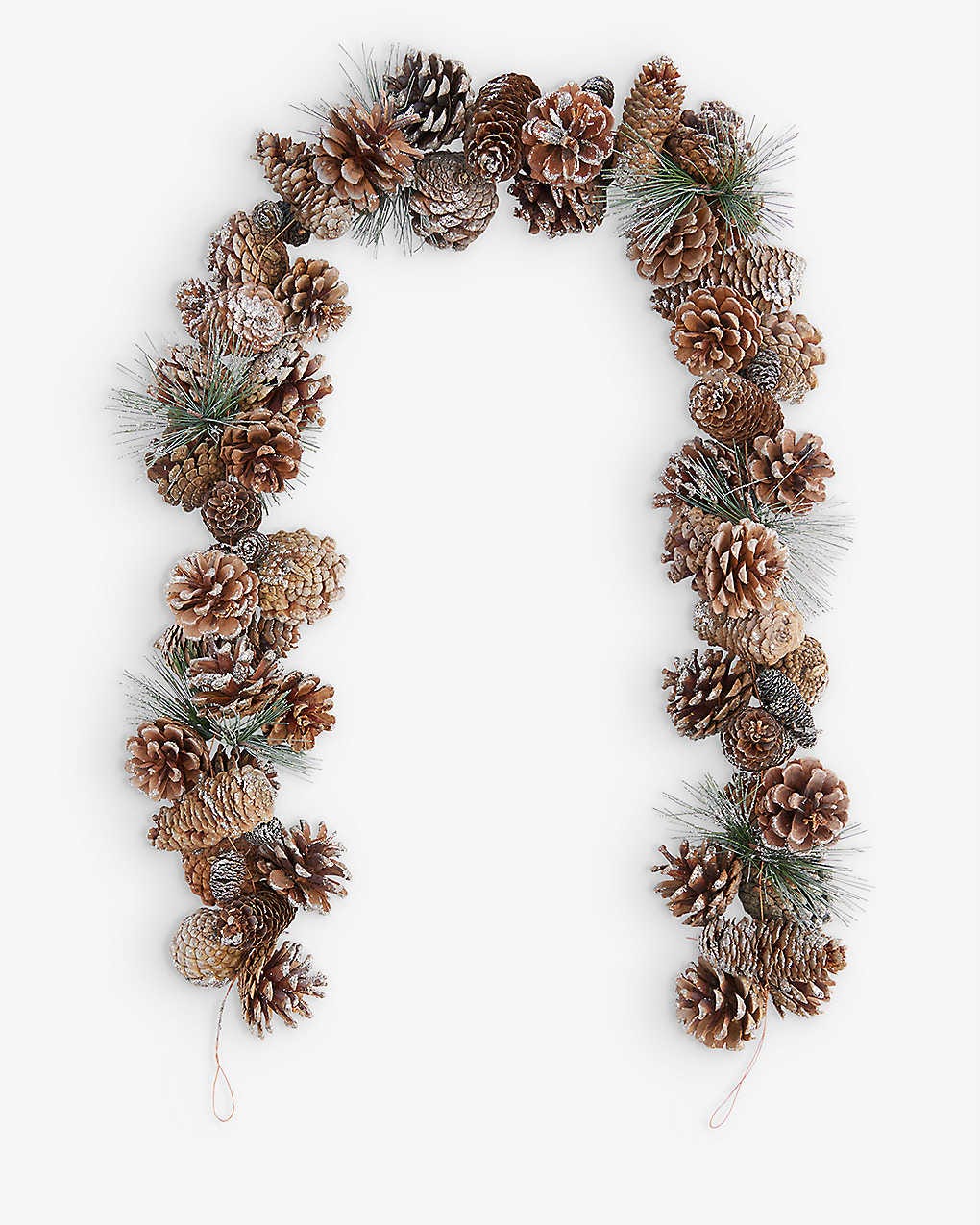
The pinecone design of this Christmas garlands gives it a rustic feel, while the glitter makes it feel special and celebratory. A chic design for anyone who wants their Christmas decorations to look stylish.
Candy Cane Felt Christmas Garland
Lights4fun lights4fun.co.uk
£18.99
It doesn’t get much sweeter than this candy cane Christmas garland! Use it to spruce up any space and it will delight kids and adults alike.
Lakeland Winter Berry Garland
Lakeland lakeland.co.uk
£49.99
Whether it’s draped over your mantelpiece, wrapped around a banister or mirror, or hung on a wall, this gorgeous winter berry garland will make your home look like you’ve been out gathering greenery in a winter wonderland this Christmas.
5ft Berry and Leaves Garland
Dunelm dunelm.com
£18.00
For those of us with smaller spaces, this pared back berry and leaf garland is the perfect option. It adds just the right amount of festivity to your room and also comes with a matching heart-shaped wreath if you want to go all out.
5ft White and Green Snowy Garland
Dunelm dunelm.com
£22.00
White and green is a classic colour combination for Christmas; and this garland showcases exactly why. The addition of pinecones give it a warm and rustic feel.
In the meantime, luxury dwelling listings go on to minimize like in all other classes. In advance of the pandemic, the sector was accustomed to an typical of 250 luxurious homes out there for sale at any just one time. That dropped to 124 in 2020 and 32 final calendar year.
“There’s really very little to choose from,” McDonald claims. “That’s what’s driving price ranges.”
Though the sector situations are barely exclusive to the Coachella Valley, the desert’s natural natural beauty and energetic way of life are particularly attractive to recently cellular gurus and affluent buyers of next and 3rd houses. Their merged demand has put relentless pressure on the offer, and bidding wars have develop into common even for homes that were deemed unwanted only a few several years in the past.
Speaking a couple of months into 2022, McDonald expects another calendar year of rising price ranges. “Unit revenue may well drop, but greenback gross sales need to keep on being significant,” he suggests. “Inventory and months-of-gross sales ratios are at all-time lows. We’re applied to having 3,000 or 4,000 models [available per month] we’re now at 615 units. The average advertising time [days on market] utilized to be 60 to 70 days. Now, it is 26.” Thus, he adds, very low stock will proceed to dominate above financial components this sort of as curiosity premiums, wages, inflation. “These factors may perhaps influence the range of customers,” he claims, “but not the upward cost strain.”
New-home building has doubled about the previous couple decades 1,890 new households had been designed in 2021, and the outlook for 2022 is the identical, in accordance to Current market Enjoy. But provide chain issues, prices for building resources, and labor shortages are hampering building. “New residence development will not offer the needed stock,” McDonald states.
Walter Neil of Franklin Personal loan Middle indicates inflation could maximize the amount of money of stock coming to the market. However, prospective buyers organizing to take out a home loan will want to act right before the Fed raises curiosity costs. “Inflation is out of handle,” he suggests, “and the drugs — mountaineering the Fed amount — will deliver us into a recession following calendar year for confident. Inventory marketplaces will correct 10 to 30 per cent, and extra inventory will appear to current market.”
Some agents, specially those people who stand for luxurious houses, say the curiosity level has little or no effect on their clientele.
In the meantime, McDonald indicates a nudge in the desire price could at least assist harness runaway property prices. “Prices will not decrease amid the ongoing limited inventory,” he says, noting they’re at present about 20 per cent greater than the pre-pandemic stages in virtually each individual town and sector. “However, the maximize [of prices] will level off.”
For now, the marketplace favors the seller and the nimble, quick-moving purchaser.
• Study Future: Tracy and Jerry Turco Have Made a Large Authentic Estate Splash in Palm Springs.
The High Victorian train station on what is now the National Mall was virtually empty when the president and his secretary of state walked inside to catch a train north. But on this steamy July day in 1881, the president would not make his train. Instead, James Garfield was shot twice by a disgruntled madman. He would spend the next two months in agony as inept doctors rummaged around his organs looking for the bullet and his insides became infected until he died. For weeks, the nation, the memory of Lincoln’s assassination still fresh, waited. Waiting was all they could do, and that went for Vice President Chester A. Arthur, too. Thanks to the gunman, Charles Guiteau, a shadow hung over a man who was a national afterthought. Upon completing his long fantasized revenge, Guiteau was reported to have joyfully declared, “Arthur will be president now.”
Arthur did become president, and shocked the nation with how seriously he took on reform. But official Washington was in for a more intimate shock. Upon arriving in the capital to assume the presidency, Arthur said of the White House, “I will not live in a house like this.” Instead, he hired the country’s star interior designer, Louis Comfort Tiffany, to transform the White House into an elaborate and over-the-top spectacle you needed to see to believe. There were disco-ball Islamic wall sconces, gold and silver splashed about, and a multicolored giant glass screen that glittered like a dragon’s hoard. Almost all of it, including an object now considered one of the most valuable in White House history, is completely lost.
This circa 1889 black and white photograph depicts the East Room of the White House after the Tiffany redecoration.
Library of Congress
In the long list of people who were never meant to be in charge but were put there by fate, Chester A. Arthur was really, truly, completely never supposed to be president. A machine-politics operator who had never been elected to public office, the only thing he was known for was being pushed out as head of the U.S. Custom House in New York when it was engulfed in a corruption scandal. In this era of weak presidents, Arthur was a lieutenant for one of its true powers–U.S. Sen. Roscoe Conkling of New York, who controlled a wing of the Republican Party known as the Stalwarts.
When Conkling and company failed to get former President Ulysses S. Grant the 1880 nomination (for a third term!), dark horse candidate James Garfield was selected, and to bring the party together his team’s second choice for Vice President was Arthur. Thinking Garfield would lose and damage the brand, Conkling opposed it. But Arthur, clearly more self-aware, had aspirations so low that when offered a job famously described as worth less than “a warm bucket of piss,” he told the vituperative senator, “The office of the vice president is a greater honor than I ever dreamed of obtaining.” The outrage within the party of somebody so tainted by corruption being named vice president was quelled by the reality that the vice president had no power, and it was impossible to imagine Arthur would ever advance beyond it.
But on Sept. 19, 1881, the man who was supposed to be the country’s most forgettable vice president became one of its most forgettable presidents.
Arthur was perhaps our most diva president. He had as many as 80 suits, all made custom by a New York tailor. They came in handy as this man who was born in a log cabin was known to have multiple outfit changes a day and wear a tuxedo to dinner. He worked only a few hours a day, and held parties and dinners until the wee hours of the morning. Arthur was heavy-set and got around D.C. on a leather-trimmed carriage adorned with his coat of arms painted in gilt, lamps of silverplate, gold lace curtains, and lap robe of otter fur lined with green silk. It was pulled by horses draped in blankets with the gold-thread monogram C.A.A. He brought to the capital a French chef, and his New York City townhouse had a sitting room decked out in white and gold. Upset that the elevator he had installed in the White House was too simple, he had it redone in tufted plush.
White House Historical Association
One need only look at his baronial presidential portrait to see that this was the Gilded Age president with all the airs to mirror those of the newly wealthy of New York, Philadelphia, Chicago, and San Francisco. Like any good New Yorker with pretensions, he was a customer of Tiffany & Co. and made his way to the Park Avenue Armory, to see the new Veterans Room designed in 1881 by Louis Comfort Tiffany (the son of Tiffany’s founder) and his team which included Stanford White, Francis Millet, Candance Wheeler, and Samuel Colman. When Arthur saw the state of the White House—after its decor had been ignored by staid party poopers like Hayes and then partially turned into a hospital for Garfield—he decided a redecoration reflecting the country’s status was required and there was really only one man for the job.
As urban American families in the 19th century accumulated large amounts of wealth, they looked for ways to spend it that would show off their lucre: clothes, jewels, art, and homes. The houses began to be designed by professional architects in a variety of styles rather than by builders in just a handful of aesthetics, and wealthy Americans clamored for interiors that made as much of a statement as the outside. By 1881, interior decoration in America was undergoing a revolution from which it would never return. For decades, the interiors of grand houses had been done up by furniture and cabinet makers, the most prestigious of which was Herter Bros. who designed the interior of the largest house in New York City history, Cornelius Vanderbilt II’s mansion. The craftsmanship was top notch, but the flair and artistic quality was uninspired. And with the advent of easily disseminated photographs and magazines showing how each house was one upping the other, an interior with flair was very much in need.
At the same time, says Jennifer Thalheimer of the Morse Museum (where I first came across images of Tiffany’s White House decor), “there’s a lot of infighting at the National Academy of Design,” and younger artists who no longer had access to the structural support of the academy started “looking for a way to supplement their lives … so they looked to interior design.” The most prominent of these frustrated artists-turned-decorators was Louis Comfort Tiffany.
He had traveled the world and tried his hand at painting and was well on his way to being one of the greatest glassmakers in history. He was a man of “dumbfounding versatility,” according to one critic, a phrase I wish would replace the overused Renaissance Man. Hugh McKean, author of Lost Treasures of Louis Comfort Tiffany, observed that Tiffany hated the phrase “fine art … [his] entire life was a revolt against this precious attitude,” and he was determined to show the lesser arts of design and decorative objects could be truly fine art.
The Blue Room as decorated by Tiffany.
Library of Congress
In 1879, after “he came to accept his shortcomings as a painter,” as Philippe Garner snidely noted, he launched a decorating company with the painter Samuel Colman and textile designer Candace Wheeler called Louis C. Tiffany and Associated Artists.
Associated Artists quickly became the designers, a status reflected in how many of the homes in that era’s design bible, Artistic Houses, were theirs. Tiffany was an “artistic decorator, not a regular interior decorator,” explains Thalheimer. “He’s going to put art in your home and surround you with beauty and new ideas and the most cutting edge stuff.” Today, there are only two places where you can experience their work largely intact: Mark Twain’s house in Connecticut and the aforementioned Veterans Room in the Park Avenue Armory. The Veterans Room is an orgy of materials and patterns so complex and detailed your eyes cannot rest. Intricately carved wood screens, a fireplace of blazing Silk Road blue, and elaborate stencil work cover every inch. At the southern end of the armory’s hall one finds a room done entirely by Herter Bros., which is lovely in a wood-paneled clubhouse sort of way but wilts in comparison to the “Art for Art’s Sake” tour de force that is Tiffany’s Veterans Room.
The Veterans Room also matters because Chester Arthur is believed to have visited it before making his decision to enlist Tiffany to redo the White House.
While hard to imagine now—indeed, to even acknowledge now that the People’s House is anything other than perfect is politically dangerous for presidents—the White House’s occupants often thought it was a dump with little to no privacy, filled with rats, poorly furnished, and in danger of collapsing. Mrs. Garfield had been appropriated some money for a redecoration, but it was never completed, which left the house in disarray with unfinished pipes laying around, half-done carpentry and paint jobs, and naked windows. When Arthur assumed the presidency he stayed at the house of his friend Sen. John P. Jones of Nevada rather than the White House and used the Garfield sums to finish the decoration they started. But he began visiting daily to inspect the space with the head of the government engineering office.
The report put together from these inspections was scandalous. Servants quarters were so dank they caused sickness, and the kitchen’s chipping whitewash often fell into pots of food. The White House was quite literally sitting on a pile of shit as the pipes for several of the toilets had decayed so the waste ended up under the basement. The State Dining Room of all places still had chamber pots. The report was submitted to Congress, and the Senate actually passed a bill for a few hundred thousand dollars for the White House to be torn down, replaced with a replica for executive offices, and a new residence built to its south. But that plan died, and Arthur realized if he was to have a grand home he’d have to work with the existing building.
In May of 1882, Louis Comfort Tiffany, then 34, met with Arthur at the White House and agreed to redo the East Room, Red Room, Blue Room, the State Dining Room, and the Transverse Hall. The Green Room would be left untouched. For this herculean task which needed to be completed in six months, Tiffany would be paid a flat fee of $15,000, which was three quarters what he made for the single room at the Armory. But as historian Wilson H. Faude explained, “few commissions as important as the White House existed,” and “any changes to its interiors would be noted and imitated by other decorators and clients.”
To ready the White House for Tiffany’s vision, Arthur went room by room deciding which furnishings would stay and which would go. A total of 24 wagons of what would be now priceless furnishings went out for auction, including Andrew Jackson’s stand-up writing desk. (Apparently none other than former President Rutherford B. Hayes was monitoring the auction lists and snatched up the mahogany State Dining Room carving tables.)
Tiffany brought a crew from New York that was willing to work day and night with only the president allowed to visit. Plenty of objects remained, however, and Tiffany had to incorporate or work around them. The thematic room colors also had to remain, and so while blue, and light blue in particular, were unpopular colors in 1882, “the Blue Room was suffered to remain a blue room,” sneered Artistic Houses. That undersells what Tiffany got away with—something that is hard to fathom even with photographic evidence and colored renderings.
This 2007 oil painting captures First Lady Frances Folsom Cleveland standing in the middle of the room looking through opened windows to the South Portico. Louis Comfort Tiffany’s 1882 redesign and redecoration of the room is represented in this painting with rich, bold colors.
Peter Waddell for the White House Historical Association
The Blue Room is where the president received the credentials of foreign diplomats and greeted guests. Oval in shape, Tiffany found it an ideal form to play off the idea of a robin’s egg. If you were to visit in the daytime, which few did, it would have seemed a sort of sickly green, but under gaslight at night, when most events were held, it was a brilliant blue. (As a protege of the painter George Inness, Tiffany was notable for his precision with the effects of different types of light.)
Tiffany was a “dye-in-the-wool Republican,” Robert Koch writes in Louis C. Tiffany: Rebel in Glass, “and proud of having decorated the White House for President Chester A Arthur.” So on the ceiling of the Blue Room he went full nationalist. A doily-like allover pattern with white and silver interlocking ovals covered the ceiling, and at the center of each oval was the red, white, and blue stars and stripes shield of the White House. Below the ceiling was an 8-foot-wide frieze of hand-embossed silver and gray patterns that resembled snowflakes. The color on the wall gradually darkened from the silvery frieze to robin’s egg blue to a dark blue wainscoting. The curtains were also dyed to have three separate bands of color to match the walls. On the existing fireplace Tiffany added squares of opalescent glass.
But the real shocker was hanging on the wall: four circular sconces influenced by Islamic design. Each was a 3-foot wide rosette of hundreds of pieces of mirrored and colored glass which provided a backdrop for seven unshaded gas jets the arms of which were dripping with pendants of iridescent glass. The sconces, writes Koch, “must have beamed like disco balls.” One journalist remarked in his coverage that these balls were “wrinkled in order to catch light from many angles.” Thus was a stately and dour room transformed into something scintillating and fun, and so overwhelming that you’d (hopefully) not notice the gilt Louis XV revival furniture and the circular divan.
If the Blue Room was a sparkling showpiece, it was the Red Room where Tiffany really flexed his colorist muscle. It’s a space in which the designer seems to say, “Oh, you want red? I’ll give you red!”
This painting by Peter Waddell depicts the Red Room in 1883 during the Chester A. Arthur administration, with President Arthur’s sisters, Mary and Malvine.
Peter Waddell for the White House Historical Association
“When first I had a chance to travel in the Near East and to paint where the people and the buildings are also clad in beautiful hues, the preeminence of color in the world was brought forcibly to my attention,” Tiffany would later say. “I returned to New York wondering why we made so little use of our eyes, why we refrained so obstinately from taking advantage of color in our architecture and our clothing when Nature indicates its mastership.”
For the Red Room, Tiffany continued with the idea of color gradation. The walls were painted a sumptuous Pompeiian red that verged on claret while the wainscoting was a darker almost currant color. The frieze was verging on pink and, in the words of White House historian William Seale, covered in an abstraction of stars and stripes. The wood trim was also covered in a dark red paint but rubbed until it was glossy.
The Tiffany furnishings and Red Room decor, including the copper and silver ceiling in a star motif and the Herter Brothers armchairs, are including in this composition.
Library of Congress
Already drowning in red, Tiffany added two more elements that would have left one gobsmacked. The first was the fireplace, and for that he had the pre-existing white marble one ripped out and replaced with one of cherry designed by Art Nouveau master Edward Colonna. Around the opening was a mosaic of glass tiles colored amber and red to enhance the flickering flames within. Around those were panels of Japanese leather tinted red set into the cherry. Above the actual mantel but below the existing mirror was another glass mosaic, this one with embedded glass gems. And the original gilt mirror was framed in red plush upholstery.
The ceiling was the other scene stealer, as Tiffany had it painted with circles of bronze and copper stars on a gold background, varnished such that any bit of light was reflected. Most of the furnishings were pieces that Tiffany repurposed, whether candlesticks from President James Monroe’s administration, a silk screen gifted by Austria to Grant, Lincoln’s office clock, or Sevres vases from France peculiarly decorated with scenes of the conviction and sentencing of Charlotte Corday (assassin of Jean-Paul Marat). As for the piano found there, one critic wrote: “For its presence I believe the decorators are not responsible.”
Tiffany wasn’t some whirling decorating dervish throwing sparkle everywhere. In the State Dining Room he understood that there would normally be lots of flowers, fancy dresses, and a shiny dining service so he kept things simple. The walls were painted yellow (fawn, to be specific) and a series of hammered silver reflectors were added to gas brackets to lighten the space. The ceiling and frieze were painted primrose and lemon with rosettes.
The largest of the state rooms is the East Room, and here Tiffany was also restrained as the walls had recently been redone in white and gold. He brought in new objects like Turkish chairs and circular divans as well as a sienna-colored Axminster rug. On the ceiling, William Seale writes, Tiffany decorated it with squares colored rust, gold, and brown to resemble old wallpaper and match the amber window hangings; Artistic Houses described it at the time as a “small mosaic pattern, in silver-leaf, which easily receives the reflection of the carpet.”
In 1882 Chester A. Arthur commissioned the interior designs and decorative arts of Louis Comfort Tiffany to make the Entrance Hall more welcoming.
White House Historical Association
While Tiffany’s designs for the rooms of the White House were a spectacle, one addition was undoubtedly the most famous: his glass screen separating the entrance hall from the transverse hall which ran along the Red, Blue, and Green Rooms and connected the East Room with the staircase. The screen, theoretically, gave the president and family some privacy from guests in the entrance. In the White House, the existing screen of smoked glass had been put in place in the 1850s, and before that it was a screen (unsexily named the “draft eliminator”) installed by White House architect James Hoban. Tiffany was already a prolific glassmaker and his kaleidoscopic leaded glass curtain was immediately seen as a masterpiece. A variety of shades of red, white, and blue were splashed between the four ionic columns. With walls painted a cream color and a ceiling “stenciled with a silvery network like a spiderweb,” writes William Seale, the “stained glass made the long hall continually iridescent.” It had an effect, Century Magazine declared, that was “rich and gorgeous.” Looking through photos of Tiffany’s theatrical White House designs, the screen is the sole element that looks like it truly belongs with its surroundings. It was especially spectacular during state dinners, as tables even through the McKinley era would be set up just underneath its gem-like array.
Illustration of a January 17, 1900 State Dinner hosted by President William McKinley and First Lady Ida Saxton McKinley in the White House Cross Hall. The famous Tiffany glass screen is seen in the background.
White House Historical Association
For months, the only outside person who had been able to see the work was Arthur, but on Dec. 19, 1882, a press preview was held. The reaction was mixed. One newspaper crowed, “No longer is the White House simply the home of a Republican president. Lo, it is the temple of high art.”
“Tiffany, a romantic,” another said, “had added whimsy, sparkle and surprise to a stately classic building.” One reporter, William Seale writes, said the Red Room was “overpowering” in “richness and antiquity.” Of the screen, most were effusive, with one declaring, “It is so much better than any glass which can be produced in Europe today that the typical American should point to it as one of our surest titles to respect when enumerating them for the benefit of the typical foreigner in Washington.”
Tiffany reportedly saved all the clippings, good and bad. One negative review he would likely have held onto was in The World: “[Tiffany’s decorations] are not ideally good by any means, not ‘monumental,’ not ‘high art’ at all. In spite of all the abuse that has been heaped upon it, the White House is a fine old mansion, extremely well-planned for its purpose—except as to staircases—and being capable of being made into a beautiful building. It ought to be decorated someday from end-to-end in a truly good style with the best products of the chisel and the brush.”
Perhaps the most cutting was in Artistic Houses, where the author damned by faint praise: “The beauty and artistic value of the Messr. Tiffany’s decorations are best appreciated by those guests who know how the White House used to look.”
As far as Washington society went, the rooms were by and large a hit. Even Mrs. Blaine, the trenchant wife of former Secretary of State and perpetual presidential aspirant James Blaine was forced to concede. What she referred to as “the White House taint” was gone and instead it showed “the latest style and an abandon in expense and care.”
But if Tiffany’s rise as a designer was rocket-like, his fall was even faster. Just a few years after the White House was completed, the heavy, busy, and crowded “Victorian clutter” that he enacted was out. While Louis Comfort Tiffany’s glass and decorative art are considered extremely valuable today, in the years before his death they were passé. Just 7 years after he finished his White House overhaul, First Lady Caroline Harrison was undoing some of his work and planning to build an entirely new residence.
While her plan was torpedoed by a vengeful congressman, it resurfaced at the turn of the century with proposals for an expansion or entirely new residence. “No little plans,” was Washington’s mantra in this period, an attitude best captured by palatial proposals for the president’s residence and the National Mall). After yet another assassination, this time President William McKinley, another accidental president dramatically reshaped the White House. Teddy Roosevelt and First Lady Edith turned to the senior partner in the world’s biggest architectural firm, Charles McKim of McKim, Mead & White. His restoration would be merciless to Tiffany’s work. When it came to the iconic glass screen, McKim famously sneered, “I would suggest dynamite.”
The glass screen was removed and auctioned off during the Roosevelt renovation, and reinstalled in a Maryland hotel. The surviving glass was destroyed in a fire in 1923. Note the electric light bulbs along the bottom of chandelier. The ornate wall decorations were designed by upholsterer Edgar Yergason.
Peter Waddell for the White House Historical Association
Beginning in 1902, McKim removed nearly all traces of Tiffany’s work and sold off the furniture. When he was tasked with the job, McKim proposed to “take [the White House] down stone by stone … and rebuild it; and not another architect in the country can make a finer or more appropriate residence for the President of the United States.” He turned the White House into the paragon of Colonial American decor we associate it with today, but with an elegance on par with European palaces. As to those who lamented the lost pizzazz of Tiffany, TheNew York Times went on the attack, declaring the critics were upset by “the simplicity and moderation, the chastity and good taste, which belong to the restoration of a Colonial Mansion” and just chafing at the “absence of that ‘palatial magnificence’ which is to be found in so many hotels and so many steamboats and so many barrooms.”
But in a morality play of what goes around comes around, McKim’s overhaul would also fail to stand the test of time. Yet another accidental president, this time Harry S. Truman after Franklin Delano Roosevelt’s death in 1945, would redo the White House. This time it was a full gut job down to just its shell. A decade later, First Lady Jacqueline Kennedy’s version of Colonial design (a “restoration” not redesign, she would emphasize) would ultimately win out.
As for that Tiffany glass screen? It reportedly ended up in a Baltimore hotel and disappeared for good when the hotel burned down in 1923.