Sarah Browning: Horseradish is a spicy addition to the garden | Home & Garden

Sarah Browning: Horseradish is a spicy addition to the garden | Home & Garden

If you’ve never tasted horseradish (Armoracia rusticana), then think wasabi (Wasabia japonica). These two foods have a nearly identical flavor, often described as peppery, spicy and pungent, however, the sharp taste of horseradish only lasts a short time and doesn’t sear your mouth like hot peppers do.

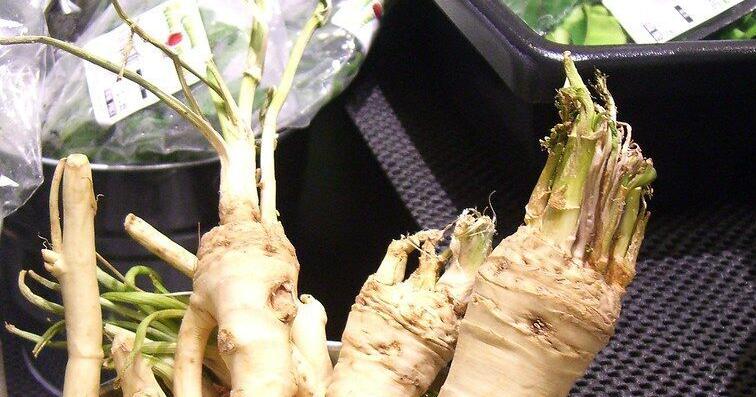
Both the leaves and roots of horseradish are edible, although most gardeners primarily focus on harvesting roots. Leaves have a sharp, bitter, peppery flavor similar to arugula or kale. They are best harvested young and can be eaten sauteed, boiled or steamed. Young tender leaves can be blended into other salad greens for fresh eating.

Horseradish plants are in the Brassica family, along with wasabi, broccoli and cabbage, and have been cultivated by humans for over 3,000 years.

Varieties

There are two broad categories of horseradish. Common or Maliner Kren horseradish has broad crinkled leaves and is considered to have superior eating quality, however, is it susceptible to white rust and turnip mosaic 1 virus. Bohemian-type horseradish has smooth narrow leaves, smaller roots, somewhat lower quality, but better disease resistance. Common Bohemian cultivars include Bohemian Giant, New Bohemian, Sass and Swiss.

People are also reading…

Big Top Western horseradish is a variety bred for disease resistance, especially to turnip mosaic 1 virus. It has large roots and wide smooth leaves.

Finally, Variegata is a cultivar offering ornamental coloring as well as tasty roots. Its dark green leaves with splashes of cream are large and wavy. Plant vigor is slightly lower than the standard green varieties, so it may take 2 to 3 years from planting to achieve a nice stand.

Plants can be purchased as root cuttings, crowns or as plants.

Planting

A small planting of horseradish is all that is needed in most gardens. Three to four plants will provide enough for family needs. And be advised – once established, horseradish can be difficult to eradicate. Even very small root sections will resprout and grow, so it may be advisable to plant it in a confined area.

Root cuttings should be 8 to 10 inches long. Plant the roots either vertically or slanted downward, but the top and bottom should not be reversed. Space plants 1 foot apart.

Care

Compared to other vegetables, horseradish tolerates considerable neglect, but plants will grow better if weeds are controlled and plants are mulched to conserve soil moisture.

A process called lifting and stripping it used to obtain large non-branching roots. This is best done when the leaves are first 8 to 10 inches long, then again six weeks later. Start by removing soil around the sides of the plant’s crown. Remove small roots from the sides (but not the bottom) of the crown. Remove soil carefully to avoid damage to roots at the base of the crown. Once the side roots have been removed, put the soil back in place.


leaves

Horseradish leaves have a bitter, peppery taste, a little like arugula.


Harvesting

Horseradish makes its greatest growth during late summer and early fall, so harvest is best delayed until October or early November. Dig a 12 to 24 inch-deep trench down one side of the plant providing access to the roots. Use a spading fork or shovel to remove the plant crown and roots.

Trim the foliage and stem to 1 inch above the roots. Trim off any small side roots. Store harvested roots under cool, 32 to 40 degrees, and humid conditions. Do not expose them to light or they will turn green.

Smaller root cuttings, 8 inches or longer, taken at this time may be replanted or stored for spring planting. Make a flat cut at the top of the root and a slanted cut at the bottom so roots can be oriented and planted correctly next year.

If a good location for storing the roots is not available, harvest roots in spring as soon as new growth begins to appear.

Roots left in the ground for two years or more will become woody and stringy.

Cooking

Fresh clean roots grated directly into 5{d4d1dfc03659490934346f23c59135b993ced5bc8cc26281e129c43fe68630c9} strength white wine or distilled vinegar provide a tasty condiment to accompany meat and fish dishes. Use of cider vinegar will result in prepared horseradish turning brown. Freshly grated horseradish will only keep for a few weeks in the refrigerator, so prepare a fresh batch as needed.

References

“Growing horseradish in home gardens.” (2018). UMN Extension. Retrieved July 5, 2022, from https://extension.umn.edu/vegetables/growing-horseradish-home-gardens

Neild, R. E., & Whitney, W. C. (1972, October 19). “Growing Asparagus, Rhubarb and Horseradish in Nebraska Gardens.” Nebraska Extension. Retrieved July 5, 2022, from https://digitalcommons.unl.edu/cgi/viewcontent.cgi?article=5117&context=extensionhist

Schoneweis, S, et al. (2003). “Vegetable Culture Guide. In The Nebraska Master Gardener Handbook” (pp. 443–444). University of Nebraska Cooperative Extension.


Sarah Browning: Stretching out those strawberries


Sarah Browning: Use care battling poison hemlock


Sarah Browning: How to nurse storm damaged trees, plants back to health


Sarah Browning: Most home gardeners don’t thin fruit trees enough. Here’s how

Sarah Browning: Blossoms and big winners | Home & Garden

Sarah Browning: Blossoms and big winners | Home & Garden

(This article is provided by All-America Selections, including pictures and plant information. Visit them at all-americaselections.org for additional information and pictures.)

All-America Selections has announced six flower award winners this year, including two Gold Medal winners and four National winners.

Gold Medal awards are reserved for breakthroughs in plant breeding, signaling a plant with a completely unique feature not previously found in similar plants. So Gold Medals are awarded very rarely.

National awards are given to plants with consistently great performance across the United States. To see pictures of these and other great plants visit the All-America Selection website, www.all-americaselections.org.

Begonia Viking Explorer Rose on Green is the first Gold Medal award winner.

Erase that sea-faring conqueror image and replace it with this garden-faring beauty that performs exceptionally well and has high impact color. This hybrid trailing begonia “explores” the garden by spreading and spilling its branches over the edges of hanging baskets and containers. Prolific rose-colored flowers stand out against the glossy green foliage and do so all season long. It has a strong tolerance to heat and many diseases, as well as both wet and  dry conditions.

People are also reading…

This annual begonia grows best in full or partial sun with well-drained soil. They are disease resistant and pollinator friendly. Plants reach approximately 16 inches tall, with trailing spreading stems. Rose flowers, each 2.6 inches in diameter, appear in late spring and continue through fall. One AAS judge states “The compact plants are covered in large flowers. The flowers are nicely held above the foliage.””

“Stellar performance for containers” states another AAS judge. “This begonia was awesome this year! Compared to the comparisons, it was more floriferous and had a nice, basket-like habit. Excellent variety!” says another. These new Vikings are sure to be a garden favorite.

Available from Select Seed, https://selectseeds.com/


Sarah Browning: Onions are good in kitchen, good in garden

Petunia “Bee’s Knees” is this year’s second Gold Medal winner and is the first petunia since 1950 to be awarded this distinction. Each Bee’s Knees petunia is filled with lush blooms that put on a colorful show of deep yellow, non-fading flowers all season long. The intense yellow petunia color contrasts beautifully against the deep green leaves. Bee’s Knees offers great garden performance in a variety of conditions and requires very little maintenance. Gardeners will love its deep, rich yellow color and its versatile mounding habit. Works great as an element in mixed containers or as a hanging basket but also thrives as a long-blooming groundcover.

Petunias are annuals, growing best in full sun with well-drained soil. Plants have a mounding or trailing growth habit, reaching 8 to 10 inches tall. The flowers are a solid, deep yellow color and 2 to 2.5 inches across. Plants bloom from early summer through fall. They are heat- and rain-tolerant once established and pollinator friendly. Fertilize regularly with a water-soluble product to keep plants blooming profusely or, if preferred, use a granular slow-release fertilizer product.

Judges commented, “Amazing eye-catching color, full cover with color. Bloom color does pop due to darker yellow veining and throat.” And “Yellow color didn’t fade, plants were a solid mound of yellow blooms all season. No disease, no deer problem, no breakage from the wind. Great plant!”

Available from Burpee Seed, burpee.com, and Ferry-Morse, ferrymorse.com.

National ornamental winners

Celosia “Flamma Orange” is coming in hot! Get ready to bring some fiery orange color to your garden with Flamma (“The Flame”) celosia. This compact variety has numerous branches, each with a strong flower plume, as well as secondary blooms, which give a long show of color in the garden. AAS judges were impressed with the superior garden performance and how well it stood up to hot, humid and rainy conditions during the trial season. Not only does Flamma have exceptional heat tolerance but also stuns with its early flowers that won’t fade. Whether you decide to grow this in beds or in containers (it was trialed in both) you will have a great show of orange color all season long.

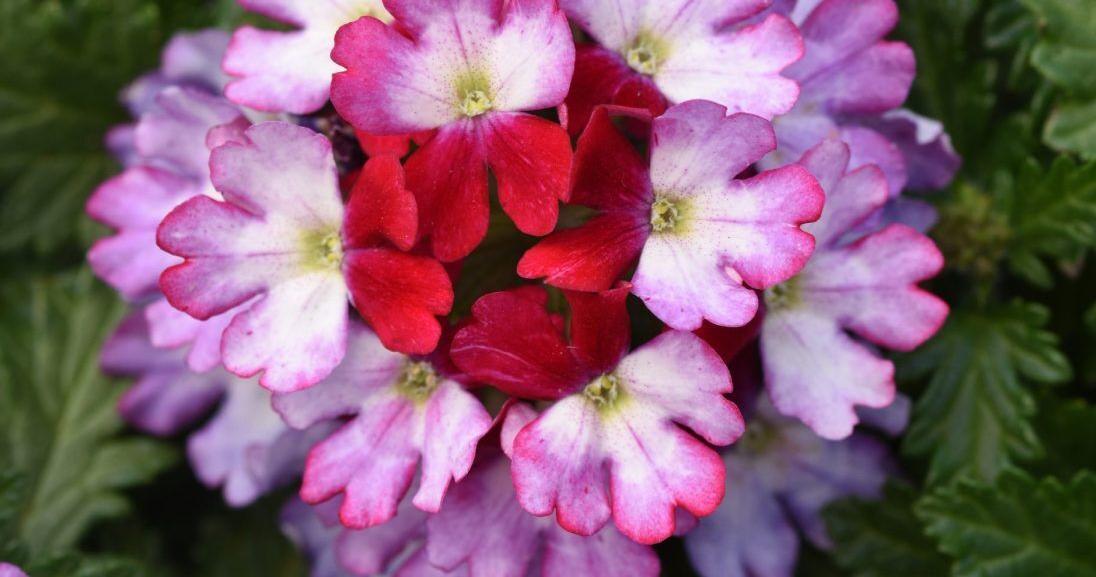
Verbena “Beats Purple+White” is an incredible new series of verbena which performs all summer long. The AAS judges raved about how early to flower Purple+White was, making it a pollinator magnet all season long. The unique purple and white bicolor blooms maintain a nice, attention-getting pattern and thrive even during severe heat stress. A bonus is how Verbena Beats Purple+White is resistant to powdery mildew, making it easier to grow and maintain for gardeners of all levels of experience.

Verbena bonariensis “Vanity” – It’s not every day we see a new variety of a classic cottage garden plant but Vanity is one to wow! Not only does this verbena create a pollinator paradise in your garden, but also the compact habit makes it sturdier and easier to maintain. Deep blue/purple flowers are 1 to 1.5 inches across and continue to attract butterflies day in and day out. Vanity prides itself on performing well in hot, dry conditions while remaining a showy garden plant. Once you try Vanity, you will feel the same as the AAS judge who stated: “This entry was my favorite in all of this season’s entries!”

Sunflower “Concert Bell” puts on quite a performance with a unique flower presentation of multiple clusters of 10 to 12 flowers on an erect columnar stem. Beautiful golden yellow blooms appear earlier than the comparisons. Each plant grows to a very uniform height of 5 to 6 feet and if used as a cut flower, makes an instant, ready-made bouquet from just one cut. Excellent seed germination makes this beauty very easy to grow and is perfect for continuous sowing to keep blooms going through the end of summer. Concert Bell was trialed in a year of adverse weather conditions and multiple judges commented on its durability and sturdiness even through strong storms and winds.

Unfortunately, AAS does not currently list seed or plant sources for any of the National Ornamental winners, which means it may be another year or two before they will be available at your local garden center. But keep them in mind for 2023!


Sarah Browning: 3 more plants to inspire gardeners


Sarah Browning: From gladiolas to greens


Sarah Browning: Make way for the winter harvest

Sarah Browning: Onions are good in kitchen, good in garden | Home & Garden

Sarah Browning: Onions are good in kitchen, good in garden | Home & Garden

&#13
&#13
&#13
&#13

These Kitchen area Leftovers , Are Wonderful for Your Backyard. Cleaning up immediately after making a home-cooked food usually entails tossing foods scraps or undesired leftovers. Instead of trashing these kitchen remnants, you could really use them to give your crops a valuable increase. . Listed here are 10 kitchen leftovers that your leafy companions will value. . 1. Eggshells. 2. Incredibly hot Peppers. 3. Coffee Grounds . 4. Overripe Fruit. 5. Vegetable Peels. 6. Banana Peels. 7. Nutshells. 8. Unsalted Cooking Drinking water. 9. Citrus Peels. 10. Employed Tea Baggage

&#13
&#13
&#13
&#13
&#13

&#13

Onions are a cooking staple and not challenging to mature in the residence back garden. So why not increase your possess this summer? But which to select? There are quite a few selections in the garden catalogs.

Day duration specifications

The to start with alternative to think about is whether or not to select quick-day, working day-neutral or extensive-working day onions. Onion cultivars are grouped in accordance to the range of daylight several hours or day duration expected to cause the starting of bulb improvement.

• Limited-working day: 11 to 12 several hours daylight

• Intermediate or working day-neutral: 12 to 14 hrs daylight

• Prolonged-working day: 14 or a lot more hours daylight

Small-day onions are generally utilised in the southern U.S. for wintertime onion generation. It looks like they would be a wonderful preference for increasing huge bulbs in Nebraska gardens, way too — the faster bulb enhancement starts the improved, proper? But when developed in northern areas like ours, short-working day onions start bulb enhancement too before long, ensuing in disappointingly smaller bulbs.

People are also reading…

This is simply because they do not have ample time for leaf advancement before bulb development starts off. Leaf development is vital, since just about every leaf translates into a person layer in the bulb. Gardeners want to have as several leaves as probable prior to bulb enhancement begins.

Lengthy-day onions are the ideal option for our spot. Crops have a lot of time for spring and early summertime leaf progress to happen just before bulb progress is activated by for a longer period times. Plant as early as probable, preferably starting with transplants, acquiring them in the floor as shortly as backyard garden soil is dry sufficient to work and daytime temperatures arrive at 50 degrees.


Sarah Browning: Make way for the wintertime harvest

Sets, seeds or transplants?

Planting onions from compact bulbs or “sets” is not the very best way to expand significant onions for storage. Plants developed from sets often start off blooming in mid-summertime and stubbornly refuse to end. At the time that takes place, bulbs will not enhance much in dimension.

This occurs because onions are biennials. They mature foliage and a bulb in the to start with time, then bloom and set seed in their next escalating period. Escalating the sets counts as one particular expanding year, though it is a short a single, and the plants are primed to reproduce by location flowers following development resumes in your back garden. This would make onion sets a terrific way to expand eco-friendly onions but not the most effective way to mature big onions for storage.

Escalating your onions from seed or transplants is a better choice considering the fact that they are not biologically primed to bloom the initial yr of progress. Escalating your individual transplants from seed is probable but time consuming so transplants are the most straightforward solution and lots of garden catalogs now provide bundles of the little grass-like transplants.


Sarah Browning: From gladiolas to greens

Onion transplants 

Get your transplants into the yard as before long as soil is dry adequate to get the job done totally, and daytime temperatures get to 50 degrees. Onion transplants will tolerate light frosts. Create a sleek workable soil floor right before planting. Onions mature best in perfectly-drained soil, 6.5 pH, with a large stage of natural and organic issue. Raised beds, 4 to 6 inches substantial, operate well to provide good soil drainage if the native soil is significant.

House vegetation 4 inches aside in large row planting. When working with “wide” rows, vegetation are not positioned solitary file in one very long row but are spaced during a row ranging from 6 to 36 inches throughout. Use a row width that is practical for you to arrive at from both of those sides, to make harvesting and weed control a lot easier. Position the transplants 1 to 1.5 inches deep in the soil.

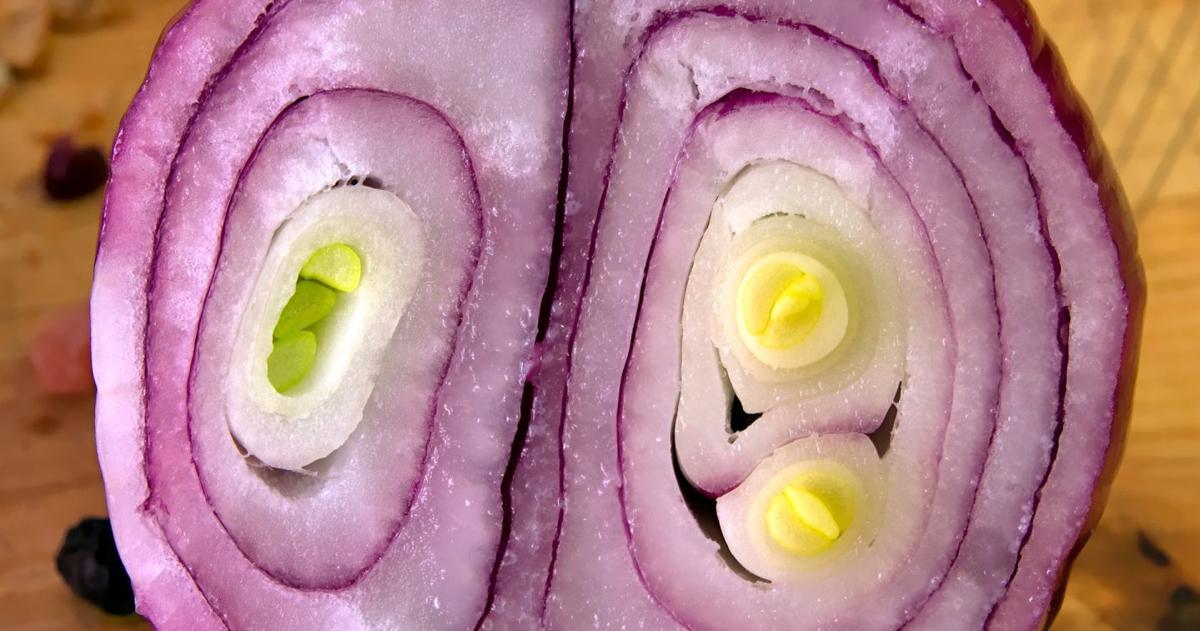
The form of the onion bulb is decided both by cultivar collection and the increasing depth of the basal plate, a part of compacted stem at the base of the onion from which the leaves and roots mature. If the basal plate is around the surface of the soil, as normally occurs when onions are immediate seeded, the onion bulbs will be a flat disc condition. Transplants established a bit further in the soil resulting in the bulbs to be a lot more globe-shaped.

Onions also need to have a great deal of daylight and common watering. The set up of drip irrigation the duration of the rows makes watering a lot easier and additional uniform. Gentle mulch will aid reduce the range of weeds, as well as conserve soil dampness. Hold onions evenly moist, but not waterlogged, in the course of the expanding time, specially immediately after bulbs commence enlarging. Even moisture is extremely crucial dampness anxiety can result in double and/or break up bulbs.

Owing to their shallow root units, onions compete inadequately with weeds. Shallow cultivation is required do not hill up soil on onions, as this can really encourage stem rot.


Sarah Browning: Dreaming of spring’s flower backyard garden


Sarah Browning: 3 more vegetation to inspire gardeners

Sarah Browning is an extension educator with Nebraska Extension. To check with a concern or arrive at her, phone 402-441-7180 or publish to her at sarah.browning@unl.edu or 444 Cherrycreek Street, Lincoln, NE 68528.