A Brief History of Cookies and Cookie Decorating | History

A Brief History of Cookies and Cookie Decorating | History

From the outside, the David Parr House looks like a typical terraced building in Cambridge, England. Inside, however, the walls of this seemingly unassuming home are adorned with friezes, stained glass, gilded molding and vibrant designs, all crafted by decorative artist David Parr between 1886 and 1927. A representative of the Arts and Crafts movement, which prized handcraftsmanship above mass-produced objects, Parr’s house-turned-heritage site opened to the public in 2019. Among its visitors was Ella Hawkins, a design historian and author with a unique hobby: creating biscuit art.

Inspired by her trip to the home, which she describes as “without question, the most beautiful house I’ve ever seen,” Hawkins, 29, decided to decorate a batch of biscuits (better known to Americans as cookies) with Parr’s designs. Flavored with orange, cardamon and vanilla, the rectangular treats served as a canvas for her petite paintings of twisting vines, flowers and Gothic script. She shared snapshots of the finished cookies on social media, where they elicited enthusiasm for both her work and Parr’s.

Cookie art inspired by the David Parr House

Cookie art inspired by the David Parr House

Courtesy of Ella Hawkins

“He’s this amazing Arts and Crafts working-class guy who went into stately homes and actually painted the walls with incredible designs,” Hawkins says. Artists like Parr have largely been “lost to history, because they’ve not been documented in as much detail as the people who owned the houses.” But now, because Parr applied the same decorative techniques to his own humble abode, he’s starting to gain recognition.

Reflecting on the response to her post, Hawkins adds, “The comments that came in were like, ‘I had never heard of this. Now I will go.’ Or ‘I had no idea this was in Cambridge.’ It’s a way of signposting something, celebrating it, saying, ‘Aren’t these beautiful? Go see them.’”

A scholar of Early Modern English at the University of Birmingham, Hawkins has always loved baking. “I’ve baked for as long as I can remember,” she says. “Everyone knows someone who bakes, and I’m that person.” But she only took this hobby to the next level during Britain’s Covid-19 lockdown, when she decided to send a set of cookies featuring intricate floral designs to her mother. Heartened by her mother’s reaction to the edible artwork, Hawkins started a new project based on textiles by 19th-century designer William Morris.

“I looked around my office and saw a calendar from the Victoria and Albert Museum of the patterns and thought, ‘Why not?’” she recalls. “It was the first time I realized I could create biscuits inspired by anything I wanted.”

Hawkins posted a photograph of the nature-inspired designs on Twitter on February 23, 2021. “If the academia plan doesn’t work out, I’m taking my material culture interests to the cookie industry,” she captioned the image. After going about her day, she returned to her computer to find the post had garnered thousands of likes. (Currently, it boasts just under 200,000 likes.)

In the two years since her viral tweet, Hawkins has developed a sizable social media following. Fans flock to her accounts for her stunning cookie designs, which emulate book covers, scalloped-edged Tiffany lamps, pottery shards, mosaic tiles, medieval manuscripts, Elizabethan fabrics and more. To make this “biscuit art,” Hawkins covers a gingerbread or sugar cookie-like base with royal icing. She uses food coloring gel and vodka (which acts as a thinning agent) to paint patterns onto the cookies, then adds raised elements by piping on royal icing. Most of her designs are rectangular or square, but she’s experimented with other shapes, too, creating an oval portrait of Jane Austen, a black-and-white fox head and randomly broken cookies patterned after Roman pottery fragments.

Ella Hawkins

Ella Hawkins

Photo by Rebecca Knowles

For Hawkins, decorating cookies offers a chance to combine her love of design with her love of history and her love of baking. “I’m a very visual person,” she says. “I think it was something to do with how different visual things like colors, shapes and styles come together to create something as a whole that just clicks with my brain. … I realized I can just look at things and turn them into biscuits, and I just sort of carried on experimenting to see what I could do with that.”


Hawkins’ creations are part of a lengthy tradition of baking and decorating cookies. Known by different names around the world, the sweet little treats run the gamut from filled cookies like Hamantaschen to cut-out cookies like gingerbread to commercially produced brands like Oreos. The word “cookie” was first used in 18th-century Scotland, but variations of the dessert date back hundreds of years.

Sharon Hudgins, an author and editor who’s written about cookies for The Oxford Companion to Sugar and Sweets, among other publications, suggests that “picture cookies” (specially shaped, decorated or stamped treats) now popular in Northern Europe trace their roots to the Julfest, a wintertime celebration held by pre-Christian Germanic tribes. Participants who were unable to spare an animal for the traditional Julfest sacrifice instead fashioned dough into animal shapes.

Lebkuchen on sale at the Nuremberg Christmas Market in Germany

Lebkuchen on sale at the Nuremberg Christmas Market in Germany

charley1965 via Wikimedia Commons under CC BY-SA 2.0

“These dough effigies have been found in archaeological digs,” Hudgins says. “People ate them just as they would the animal sacrifice. [It] was a continuation of the ritual without having the economic loss of a real farm animal.”

Another modern cookie predecessor originated in Persia, where the Sassanids enjoyed khushkananaj, a baked good made by kneading dough with sesame oil and filling it with sugar and almonds, and kulaija, a similar treat made with a mold, as early as the seventh century. At the time, sugar—a central component of many cookies—was a prized commodity introduced to the region by traders from India. Sugar wouldn’t arrive in Europe until the tenth century, when soldiers returning from the Crusades brought it back to their home countries.

Given sugar’s rarity in the Western world at the time, most early European cookies were unsweetened or flavored with alternative ingredients like honey. It was only during the Middle Ages that these treats were “eaten as a form of pleasure and celebration” rather than for the “largely utilitarian purpose” of alleviating hunger, writes Anastasia Edwards in Biscuits and Cookies: A Global History.

A wafer iron depicting the Annunication

A 16th-century wafer iron depicting the Annunication

© KIK-IRPA, Brussels

Wafers, for instance, evolved from unleavened matzo bread eaten by Jews during Passover. Originally unsweetened, these thin, crisp sheets were stamped with religious imagery and eaten during Christian communion. Medieval clergy used cast-iron tongs imprinted with patterns to hold the dough in place and quickly bake it over a fire. In 1270, a wafer-making guild was established in Paris to help meet the clerical need for wafers; guild members soon branched out, creating secular forms of the cookie that became popular accompaniments to hippocras, a sweet wine served at the end of meals.

It was in Germany, though, that sweet cookies truly came into their own. During the 16th century, spices flowed from Asia to Nuremberg, a crossroad of key European trade routes. Cooks in the German city combined sugar, cinnamon, nutmeg and other spices with locally produced honey to create lebkuchen, spiced honey cakes comparable to gingerbread. Around this same time, wooden, metal and ceramic cookie molds came into wider use, enabling bakers to imprint elaborate designs on anise-flavored springerle and other picture cookies. Initially decorated with religious images, these molds became increasingly secular in the 17th century, with artisans hand-carving depictions of knights, coats of arms, and activities like ice skating and hunting, among other scenes.

“The embossed designs made by molds”—including wafer irons—“were the first forms of actual decorating beyond just shaping a cookie into a form,” says Hudgins.

Springerle made with a 12 days of Christmas cookie mold

Springerle made with Christmas-themed cookie molds

Turku Gingerbread via Wikimedia Commons under CC BY 2.0

A springerle mold depicting a man on a horse

A springerle mold depicting a man on a horse

GodeNehler via Wikimedia Commons under CC BY-SA 4.0


As demand for sugar spiked in the 17th century and onward, European nations established sugar plantations in Brazil and the Caribbean, enslaving millions in their quest to produce so-called white gold. By the early 19th century, sugar was widely available and relatively cheap in both Europe and North America.

The growing middle class could now afford to use sugar as a sweetener instead of honey. It was a handy, versatile ingredient and could be used to make glazes that helped keep cakes moist longer. These glazes soon morphed into frosting, a concoction that became especially popular after it was used to decorate Queen Victoria’s 300-pound wedding cake in 1840. In addition to icing, cooks decorated their cakes and cookies with dried or candied fruits, nuts, and colored sugar.

Mass-produced metal cookie cutters similarly gained traction in the mid-19th century. Shaped like people, flowers, animals, hearts or holiday symbols, they presented a playful addition to the dessert menu and were less expensive than handcrafted wooden molds.

A vintage cookie cutter depicting a person on horseback

The front of a vintage cookie cutter depicting a person on horseback

GodeNehler via Wikimedia Commons under CC BY-SA 4.0

The back of a vintage cookie cutter depicting a person on horseback

The back of a vintage cookie cutter depicting a person on horseback

GodeNehler via Wikimedia Commons under CC BY-SA 4.0

“With cookie cutters, people could now make a large amount of something, such as heart-shaped cookies, and [they] wouldn’t have to do a lot of decorating because the shape of the cookie is the decoration itself,” says Hudgins.

As sugar became a pantry staple and ovens a fixture in kitchens, home cooks gained the ability to economically turn out a variety of sweets and desserts, including cookies. At the same time, advances in technology gave rise to mass-produced treats, with companies like Huntley & Palmers and Nabisco (which started making animal crackers in 1902) presenting their products as symbols of home and childhood innocence. Writing in Biscuits and Cookies, Edwards notes that the cookie was meant to be seen as “a quiet antithesis to the industrialization of modern life.”

By the 1940s, baking and decorating cut-out cookies had become a popular holiday tradition in the United States. Entrepreneurs like Nettie Williams McBirney, better known as Aunt Chick, crafted Christmas-themed plastic cookie cutters that now sell as vintage collectibles. The American public’s penchant for baking and decorating was further encouraged by the 1963 publication of Betty Crocker’s Cooky Book, which featured more than 450 recipes for treats ranging from satin-glazed date drops to chocolate refrigerator cookies.

A Christmas-themed Huntley & Palmers cookie tin

A Christmas-themed Huntley & Palmers cookie tin

Gryffindor via Wikimedia Commons under CC BY-SA 3.0

“In the 1970s and ’80s, making decorated cookies started coming back into fashion,” says Hudgins. “More women had gone into the workforce in the ’60s and ’70s, so in some families there was less cookie baking at Christmas time. Yet there was also an interest by the hippie generation to return to their roots with activities such as home baking.”


More recently, the internet has transformed the world of cookies, offering bakers a place to connect with each other and share recipes and inspiration alike. New technology has also helped cooks put a modern twist on their baked goods.

Small projectors allow artists like Hawkins to cast their designs onto edible canvases. Airbrushing yields dramatic effects, as do brush sets, stencils, piping bags and food coloring markers. And 3D printers allow decorators to create custom cookie cutters and molds.

“Cookie decorating never gets stale,” says Karen Summers, co-founder of CookieCon, the world’s largest gathering of cookie decorators. “There’s always some new technique, some new tool, some new thing [bakers are] implementing. Every time that I think I’ve seen it all, someone will pull out something new, and I think, ‘Whoa! How’d they do that?’”

Hawkins suggests that decorated cookies’ magic stems in part from their ephemerality.

“I think if they weren’t biscuits, if they were paintings or collages, they wouldn’t have the same reaction,” she says. “Part of what they are is temporary. There’s something really weird about it that’s provocative. I’m happy I have photos of them. They’re preserved in that sense. If I had just a drawer full of them, I don’t know what I’d do with them.”

Tiffany lamp biscuit art

Cookie art inspired by Tiffany lamp designs

Courtesy of Ella Hawkins

Summers agrees.

“There is some level where people want it to last forever, but I think a lot of people just find it a fun challenge to create this masterpiece that is very, very temporary,” she says. “A common theme is to just eat the cookie.”

“I’ll make another one,” says Summers.

Russ Lyon Sotheby’s International Realty closes most expensive home in state history at .1M in Scottsdale | Real Estate

Russ Lyon Sotheby’s International Realty closes most expensive home in state history at $28.1M in Scottsdale | Real Estate

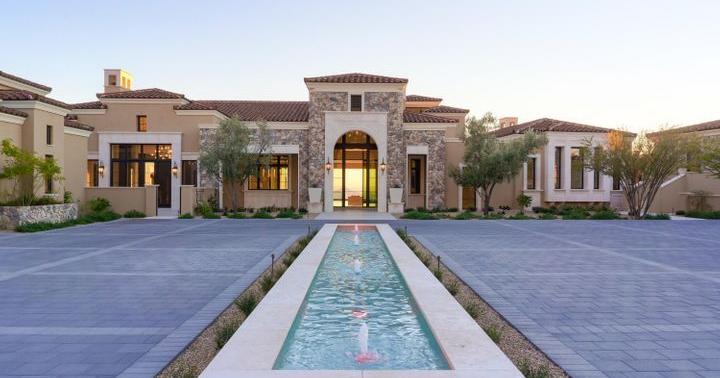
Russ Lyon Sotheby’s Intercontinental Realty has extended been synonymous with stunning, bespoke households, with an extended and storied history of lifetime-altering transactions to demonstrate for it. None are as large as this a single, however Russ Lyon Sotheby’s Global Realty is unbelievably very pleased to announce that is has shut on the most high priced dwelling in Arizona background. The assets positioned at 21264 N. 113th Place in Scottsdale’s Silverleaf local community closed for a record-breaking $28.1 million.

Russ Lyon Sotheby’s Intercontinental Realty Luxurious Agent Laura Briggs represented the consumer in this incredible transaction, which went below deal in considerably less than a month immediately after getting listed a genuinely remarkable feat presented the sales price.

“Silverleaf is continuing to catch the attention of the most discerning prospective buyers in the environment. Scottsdale has received a status for currently being a mecca of global buyers seeking for a area to invest in legacy attributes. This individual sale included an global purchaser of mine who has transacted many transactions with me around the earlier numerous several years. It’s an honor to be a part of the biggest household transaction in Arizona background and a single of the smoothest transactions of my job,” explained Briggs.

Having offered many large-finish properties in Silverleaf above the decades, Briggs characteristics the Silverleaf Nation Club, of which she is a member, and its discreet life-style as one attraction for consumers in the neighborhood. The non-public club functions a Tom Weiskopf intended, 18-hole winner golf course, alongside with other award-profitable amenities.

“While this could be a file-breaking sale for Arizona, it when yet again places Scottsdale on the map as an global spot for our climate, golfing courses, high-quality of existence and a risk-free harbor for taxes,” she stated. “As my peers and I are actively participating with buyers and sellers in this spectrum from across the world, we understand it is only a make any difference of time before we see even far more document-breaking income just like this one in Silverleaf.”

For that kind of price tag, one particular would moderately anticipate unimaginable luxury, but even then, the details of this intersection of desert attractiveness and modern-day opulence still control to surprise and delight. At 21,150 sq. toes, 8 bedrooms and 15 loos, the options are endless. Created by Mast Luxurious Households and made by Dale Gardon in 2021, it is found on the most well known peak in the prestigious Summit at Silverleaf neighborhood, with some of the very best mountain and McDowell Sonoran Maintain views in all of Scottsdale to match.

“I really feel extremely blessed to have been concerned in building historical past with the most sizeable gross sales cost in residential actual estate in Arizona,” Briggs explained. “Our luxurious current market carries on to thrive with countrywide and international buyers moving into the area every day and this is really excellent for the full serious estate sector as a full.”

And we would be remiss if we did not speak about Silverleaf’s site in Scottsdale. Beyond the non-public gates of this estate are some of the best alternatives for dining, purchasing and having in scenic views inside of only a several miles. Located approximately 20 minutes from the exceptional Scottsdale Airpark and just a brief generate down the 101 freeway to the art galleries and designer retailers in Aged City Scottsdale producing it an suitable area.

Women’s Beer History, Home and Garden Show, Joan Mitchell Exhibition and more

Women’s Beer History, Home and Garden Show, Joan Mitchell Exhibition and more

The Joan Mitchell exhibition opens to the community this weekend at the Baltimore Museum of Artwork. Image courtesy of Baltimore Museum of Artwork.

March celebrates Women’s Heritage Thirty day period, and will also provide St. Patrick’s Working day later this thirty day period. From talks about the vital position ladies have experienced in the brewing sector, to some early St. Paddy’s Day festivities, this weekend has us elevating a glass to Baltimore. With quite a few theatrical and musical performances all-around the city and the return of the Spring Maryland Residence and Garden Demonstrate, there is a good deal heading on.

Whilst Baltimore Metropolis has lifted its mask mandate, firms can even now require patrons to dress in a mask. Some venues also have to have evidence of vaccination and/or a destructive COVID-19 check. Verify demands just before attending any function.

Here’s the weekend lineup:

Violin Concerto, Thursday, March 3 by Sunday, March 6, Baltimore Symphony Orchestra. Violinist Ray Chen will accomplish the Sibelius Violin Concerto. Kevin John Edusei will carry out Ravel’s “La valse,” Schreker’s “Chamber Symphony,” and Braunfels’ Symphonic Versions on an Previous French Children’s Track.

Africa Unplugged, 7 p.m., Friday, March 4, An Die Musik Dwell! The multi-style band Africa Unplugged brings together classic, West African percussion devices with guitar and bass for a funky, soulful, bluesy sound. The band is led by founder, songwriter and djembe master Atiba Rorie.

Puffs Enjoy, Friday, March 4 via Sunday, March 6, Spotlighters Theatre. Even if you did not invest your childhood with your nose in Harry Potter books, you likely have a passing information of the story of the Boy Who Lived. But there was an additional tale brewing that you have probable never ever heard. The members of the Hufflepuff household, or the “Puffs,” have been there all along, even if they were being not often in the spotlight – till now. “Puffs, or Seven Increasingly Eventful A long time at a Particular University of Magic and Magic” retells the Potter tales from a new viewpoint. The enjoy, which started out Off-Broadway, will be executed in Baltimore. Spotlighters Theatre’s production will premiere Friday, March 4, and will operate via March 20.

House and Garden Show, Saturday, March 5 and Sunday, March 6, Maryland Point out Fairgrounds. Immediately after a 2021 hiatus, the Spring Maryland Property and Back garden Exhibit will return this weekend. The function, which spans this weekend and next, will aspect hundreds of residence and back garden exhibitors, numerous visitor speakers, giveaways, orchid product sales (second weekend only) and additional.

St. Patrick’s Bar Crawl, 1-9 p.m., Saturday, March 5, O’Donnell Square Park. St. Patrick’s Day isn’t right up until March 17, but some Canton bars are celebrating early. The establishments participating in the bar crawl incorporate Cowboy Row Saloon and Chophouse, Silks, Walt’s Inn, Southern Provisions, El Buffalo, Looney’s Pub, Lee’s Pint & Shell, and Claddagh Pub. Patrons can sign-up at O’Donnell Square Park to obtain a wristband, map and other objects. Then, journey to participating venues with no-cover admissions.

Women’s Beer-tale, 1-4 p.m., Saturday, March 5, Checkerspot Brewing Corporation. In celebration of Women’s History Month, Checkerspot has brewed up 4 beers from 200-calendar year-aged recipes from Mary Eaton’s 1822 guide on brewing quality beer, “The Cook dinner and Housekeeper’s Complete & Universal Dictionary.” Beer historian Maureen O’Prey will give two talks: one about the historical past of gals in brewing, and one more about Eaton’s beers. Some of the proceeds of the celebration will benefit The Very well, a nonprofit serving female.

Black Enterprise Pop Up, 2-6 p.m., Saturday, March 5, 311 North Warwick Ave. This pop-up store event will characteristic additional than 40 Black-owned companies. The party, which is totally free to go to, will also include things like dwell music, a picture booth, food, drinks and far more. RSVP to obtain a swag bag.

Iceage Band, doorway opens at 8 p.m., Saturday, March 5, Ottobar. Danish band Iceage will complete, with a visitor visual appearance by rock band Sloppy Jane fronted by Haley Dahl.

Joan Mitchell Exhibition, Sunday, March 6, Baltimore Museum of Art. The John Mitchell exhibition will open up to the public on Sunday at the Baltimore Museum of Art. The exhibition, co-structured by the BMA and the San Francisco Museum of Contemporary Artwork, explores the abstract artist’s additional than 40-year-prolonged job and options 70 pieces, which include acclaimed masterpieces and not often viewed works. The exhibition will open up to BMA associates March 4 and 5, and will be open up to the general public March 6 by way of Aug. 14.

Ministry Band, doors open up at 6 p.m., show begins at 7 p.m., Sunday, March 6, Baltimore Soundstage. The metal band Ministry will enjoy Baltimore Soundstage, with particular visitor bands Melvins and Corrosion of Conformity.

My Very first Love, 7 p.m., Sunday, March 6, La Familia Arts and Media. In the phase engage in “My Very first Love” by Cornelius Adams, two substantial university sweethearts realize they nonetheless have thoughts for every other. The catch: 1 of them is engaged to a dishonest fiance.

Taco Feeding on Contest, 7 p.m., Sunday, March 6, Papi’s Taco Joint. If you can be the 1st to take in 6 tacos and consume a beverage, you’ll win no cost tacos for a thirty day period. The contest is totally free to enter, but you need to be 21 or more mature. Registration is confined to 10 contestants.

Marcus Dieterle
Most up-to-date posts by Marcus Dieterle (see all)
A look at the history of Meredith Corporation in Des Moines, Iowa

A look at the history of Meredith Corporation in Des Moines, Iowa

Meredith, one particular of Des Moines’ oldest key companies and main corporate citizens, is set to turn into aspect of media mogul Barry Diller’s IAC/Interactive Corp. Here is a look at the company’s background:

1902

Edwin Thomas Meredith, who operates an agricultural newspaper, establishes the firm in Des Moines to publish Prosperous Farming magazine.

1922-24

Meredith commences publishing Fruit, Backyard and Home magazine, which becomes Better Households and Gardens.

More:Des Moines-based mostly Meredith Corp. offered, to turn into a section of Barry Diller’s IAC

The 1928 Meredith test kitchen.

1946

Meredith tends to make its initial general public stock giving.

1948

The corporation buys its first tv station, WHEN-Television set in Syracuse, New York

A $400,000 addition at the Meredith Publishing Co. plant nears completion in 1946.

1965

Meredith is stated on New York Stock Trade as MDP.

1969

Meredith/Burda printing partnership fashioned with the Burda family members of Germany.

1978-1992

Meredith launches a number of publications, including WOOD and Midwest Living and purchases KVVU-Television set in Las Vegas.


The 1950s Meredith Test Kitchen.

1996

Meredith breaks floor on a headquarters expansion at 1615 Locust St. in Des Moines.

1998

Headquarters building is accomplished. Meredith launches MORE magazine and sells its Better Houses and Gardens Authentic Estate Company.

2002

Firm marks it 100th anniversary.

2004

Stephen Lacy is elected president and main working officer.

2005

Acquires Loved ones Circle, Moms and dads, Kid, and Exercise launches Siempre Mujer magazine.

2007

Meredith announces an agreement with Walmart to produce and market Better Residences and Gardens-branded house goods.

“Plantoir” sculpture by Claes Oldenburg and Coosje van Bruggen at Meredith Corp. headquarters in Des Moines.

2011

Meredith acquires EatingWell and Every Working day with Rachael Ray magazines.

2012

Meredith acquires the FamilyFun brand name, Allrecipes.com and ShopNation. It enters talks with Time Warner about getting Time Inc., but Time Warner in its place spins off the enterprise.

2013

Meredith purchases the Parenting and Babytalk models launches Allrecipes magazine.

2014

Meredith acquires 4 Television set stations, like KMOV-Tv set in St. Louis secures licensing legal rights for Martha Stewart Dwelling Magazine and marthastewart.com and acquires Mywedding.com.

2015

Meredith announces a offer to be ordered by Richmond, Virginia-based mostly Media Basic. Media Basic later pays Meredith to walk away from the deal soon after agreeing to be obtained by Television set giant NexStar Broadcasting Group.

2017

Meredith announces it will purchase Time Inc. for $3.2 billion.

2018

Time Inc. deal is concluded. Meredith begins layoffs and prepares to provide off Time Inc. titles Time, Fortune, Funds and Sporting activities Illustrated while keeping magazines like Folks and Serious Simple that better fit its purchaser way of living aim.

2021

Meredith announces in May it will sell its Tv stations to Gray Television for $2.7 billion. On Oct. 6, it confirms it will be acquired by IAC/Interactive.