Napa County Master Gardeners: Preparing for winter | Home and Garden

Napa County Master Gardeners: Preparing for winter | Home and Garden

The sky is blue, the hills are green, and we will certainly have some sunny days ahead. Now is a good time to get your yard prepared for the winter. The recent rains have softened the soil, which will make your garden chores easier.

First, take a good look at your plants. Remove plant debris, stalks, dead leaves and anything that looks diseased. It’s a little early to prune your roses, but you should remove any leaves or stems with fungus. You can chop up your dead plants and put them in your compost, but do not put any diseased material in the compost. The disease will just incubate.

If your perennial plants have seed heads, leave them for the birds to eat. You can cut them down when the seeds are gone.

Make time to weed. It is gratifying to pull weeds after a rain because they come up so easily. You can put them in the yard-waste bin. The hot compost process used by the City of Napa’s waste-management company will kill any seeds.

As long as the ground is soft, you can dig a few holes so they are ready for any planting you might want to do later in the spring.

After you weed, mulch. It will keep the weeds down. Mulch also insulates the ground, keeps it from drying out, and eventually rots, improving soil texture. You can buy mulch at a nursery or you can make your own with chopped-up yard waste, such as twigs, leaves, and grass. The larger bits of compost left behind after you sieve your compost can be used as mulch, too. So can shredded newspaper, brown paper bags, and cardboard.

People are also reading…

I am of two minds about raking leaves. Sometimes you just want your yard to look tidy, and you can put the leaves in the compost bin. However, I always leave several piles on the ground because eventually they rot and improve the soil. hey, are also a hiding place for insects and other creatures that are beneficial for your garden and a food source for birds. It’s fun to watch birds messing around in the leaves in winter.

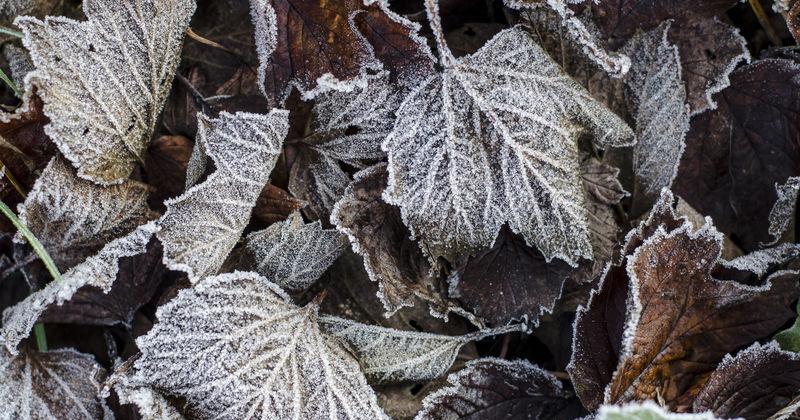
You should assume that we will have a couple of nights of frost, so get ready now. Pay attention to the weather reports. Identify which plants need protection. At my house, it’s brugmansia and daphne. Perhaps you have fuchsia, bougainvillea, young fruit trees, succulents, or avocados. Citrus trees are especially vulnerable.

Start collecting vinyl sheeting, towels, burlap, blankets, and sheets. You will also need something to support the material so it doesn’t touch the leaves, which can be damaged by frozen cloth. One gardener I know used two metal chairs to balance a ladder over which he folded a sheet, protecting a row of mandevilla. The cloth should touch the ground for better insulation. Be sure to remove the cloth the next day, when the air warms.

Some nurseries sell a nonwoven polyester fabric that can be draped directly over the plant. It won’t hurt the plant even if it touches it and can be left on all day. You can wrap burlap or blankets around the trunks of young fruit trees or around shrubs to keep them from freezing.

Boxes, baskets, and buckets can come in handy for frost protection. I used to be enchanted by the bell-shaped glass cloches in the old Smith and Hawken catalog. You were supposed to place them over a plant to protect it in winter. So French! So adorable! So expensive!

Instead, fill up old plastic milk bottles with water and surround the plant with them. The water insulates them, and you can drape a cloth over it all.

Temperatures can vary widely over a single property. Tree cover, exposure to the sun, and even the height of a bed can make a difference. The lower area of my yard, under a willow tree, is a few degrees cooler than the rest of the yard.

Frost-tender plants generally do better with southern exposure, so think about that. Perhaps you can move your succulents next to the house, so they will have shelter over the winter. You can take this precaution with any container plants that are small enough to move.

When you have your yard prepared for winter, clean your tools and put them away neatly. Because of our climate, we can garden almost year-round, so it’s good to have your tools rust-free and at the ready.

This is also a good time to take stock of what did well in your garden over the last growing year, what could be improved, and, perhaps, what wasn’t worth the effort. Gardening is a perpetual learning experience.

One of my brugmansias froze a few years ago because the weather took me by surprise. I left it alone to see what would happen and, sure enough, green sprouts appeared as spring approached. I trimmed off all the dead-looking limbs, and after a dose of organic fertilizer, it was more luxuriant than ever.

We have been living with drought and fire conditions in Napa Valley for a few years. Our landscape plants, not to mention Napa County flora in general, have been severely stressed. It is probably wise not to rely too much on their resilience and to be prepared for a freeze.

Food Growing Forum: Napa County Master Gardeners will present a discussion of “Cane Berries” on Sunday, November 14, from 3 p.m. to 4 p.m., via Zoom. Register here to receive the Zoom link.

Library Talk

Napa County Master Gardeners will present a talk on “Chasing Sun in Shaded Yards” on Thursday, December 2, from 7 p.m. to 8 p.m. via Zoom. Does your yard have a limited supply of sunny locations to grow vegetables? Learn about site selection and cultural requirements for the plants you want to grow. Register here to receive the Zoom link.

Workshop

Napa County Master Gardeners will lead a workshop on “The Art of Raising Succulents” on Sunday, December 5, from 1 pm to 3 pm, at the Yountville Community Center, 6516 Washington Street, Yountville. Discover how to care for and design with these colorful, unthirsty plants in your garden or on your patio. Attendees will get plant starts to take home. Yountville residents: $16; Non-residents: $18. Free to Golden Ticket members. To register, visit online registration or telephone the Parks & Recreation Department at 707-944-8712.

Got Garden Questions? Contact our Help Desk. The team is working remotely so please submit your questions through our diagnosis form, send any photos to mastergardeners@countyofnapa.org or leave a detailed message at 707- 253-4143. A Master Gardener will get back to you by phone or email. For more information visit napamg.ucanr.edu or find us on Facebook or Instagram, UC Master Gardeners of Napa County.


Check out Napa Valley’s most expensive home, a $25m estate located in Deer Park at 850 Sanitarium Road. “The warm modern design features an open floor plan connecting living, dining, cooking, and family rooms, a 2,000 bottle wine library, luxurious primary suite, massage room, gym, two offices, media/theatre room, infinity edge pool, outdoor kitchen, and a full two-suite guest apartment with its own living room and view deck.”


Gardeners’ Dirt: Learning, laughter and satisfaction | Home And Garden

Gardeners’ Dirt: Learning, laughter and satisfaction | Home And Garden

It’s almost time for the new class of trainees to start out the approach of getting certified learn gardeners and to just take gain of all the system presents. And there are many rewards that we will share Nov. 18 at a appear-and-go event from 4 to 7 p.m. at Victoria Instructional Gardens, 283 Bachelor Drive in Victoria.

“I wished to master far more about what I was growing in my very own lawn,” mentioned Tom Buller, a person of the present-day course users.

Like quite a few of us, he wished access to reputable means about what to improve and how to increase it. Buller uncovered all those resources in each the class and the master gardeners themselves, who freely explore their successes and failures with each and every other and the public.

The reason of the corporation is for volunteers to understand about scientifically-tested horticultural data and useful gardening practices, and to share what they have realized. But when you speak with the volunteers, you are struck by how a great deal pleasure and pleasurable they get from being learn gardeners.

Prospects for finding out happen in all sorts of approaches further than the formal schooling classes. There are organized and casual team excursions to neighborhood — and not so regional — vineyards, farms and gardens. Adventures are generally just all around the corner, and there is normally laughter. And there is usually foods, as well.

When you check with a volunteer about the benefits of staying in the organization, friendship, mastering and food are recurrent themes. Getting a crack from doing the job on a common challenge to share a snack is a likelihood for volunteers to get to know just about every other as perfectly as share best gardening methods.

Grasp gardeners share specific occasions like plant product sales, birthdays and vacations. Previous and new buddies bond more than doing the job together and sharing food items and superior dialogue — forming powerful and lasting friendships.

“I genuinely arrived into myself when I joined Learn Gardeners,” said Sandy Knief. “It’s exactly where most of my buddies are.”

The plan provides learn gardeners lots of possibilities to make on their passions and abilities to give back to the more substantial local community. Quite a few customers take pleasure in talking engagements with backyard garden golf equipment, universities and other companies. In little teams, they can share recent advances and tendencies in horticulture.

The Lunch and Understand application gives volunteers a prospect to share their skills in distinctive curiosity spots with the Crossroads community. A prevalent theme for grasp gardeners is the sense of pleasure and fulfillment users get from passing on what they have discovered to some others.

Users also have options to share the wonders of nature with youngsters and introduce them to the entire world of vegetation and critters. Volunteers perform backyard garden excursions with school teams, recommend academics and learners about gardening jobs at their educational facilities, conduct a youth project at the yearly Farm and Ranch Clearly show and sustain the butterfly property in the Victoria Instructional Gardens. A single volunteer famous that viewing character by a child’s eyes helps make the planet new once more.

Not all learn gardeners appreciate speaking in public, and there are a lot of other prospects to be a important element of the corporation. The demonstration gardens at the Victoria Regional Airport are open 12 months-round and want lots of hrs of setting up, planting and enhancing. They give volunteers a likelihood to place into practice what they have figured out and to appraise irrespective of whether it will work or not.

Numerous volunteers agreed that gardening is generally an experiment, and the end result is never sure.

“It’s just entertaining and fulfilling to plant some thing, see it improve and to view Mother Mother nature at do the job,” reported Betty Friedrichs.

We hope you will join us Nov. 18 to understand far more about Victoria County master gardeners and join the 2022 Victoria Grasp Gardener Class.

The Gardeners’ Grime is composed by members of the Victoria County Grasp Gardener Association, an educational outreach of Texas A&M AgriLife Extension – Victoria County. Mail your issues in treatment of the Advocate, P.O. Box 1518, Victoria, TX 77901 or vcmga@vicad.com, or remark on this column at VictoriaAdvocate.com.

Gardeners’ Dirt: American beautyberry shrub | Home And Garden

Gardeners’ Dirt: American beautyberry shrub | Home And Garden

Past thirty day period, my close friend Janet and I went to Rockport’s 33rd once-a-year HummerBird Celebration. Whilst the hummingbirds in migration ended up incredible, just one plant caught my attention. The American beautyberry shrub was in its drop regalia with chartreuse leaves and clusters of excellent purple berries.

The American beautyberry (Callicarpa Americana) is a big, deciduous shrub that is native to central and southeastern United States. They are likely to expand wild in wooded spots.

Native American tribes used its leaves, branches and roots to handle rheumatism and fevers. Roots were made use of to handle stomach challenges and dizziness. A combination of boiled roots and berries was made use of to address colic.

Early in the 20th century, farmers rubbed crushed refreshing beautyberry leaves on themselves to ward off biting bugs. They also positioned crushed leaves under horses’ harnesses to repel mosquitoes.

Neil Sperry lists American beautyberry as one particular of the most effective fruiting shrubs for East and South Central Texas. Little lilac bouquets in the summer are followed in September and October by tiny, spherical, iridescent purple berries that expand in clusters alongside stems. The berries can final into winter but ordinarily the birds devour them.

The berries are a preferred among wild birds like northern bobwhites, cardinals, finches, mockingbirds and other compact birds. The foliage is a most loved of white-tailed deer.

Beautyberry is incorporated in landscape models to draw in wildlife. Its berries feed them and the shrub by itself protects them. American beautyberry shrubs can be planted in borders, as nicely as in woodland gardens. Sperry suggests planting this gradual-expanding shrub among the shade perennials like ferns.

American beautyberry shrubs most often improve 3- to 5-toes tall and just as extensive. If the soil and dampness are favorable, it can expand 9-feet tall.

Plant American beautyberry shrubs in light-weight shade and nicely-drained soil. If the soil is lousy, blend some compost with the fill grime when planting it. If the soil is effectively-draining, wait around till spring to fertilize it for the initial time. One more apply is to skip the fertilizer but add 1 or two shovels of compost about the plant in the spring.

Beautyberry shrubs commonly reseed by themselves. Collect seeds from pretty ripe berries and improve them in personal containers. Protect them the initially 12 months and plant them in a semi-shaded or shaded place soon after the previous frost. Or if you are a extra casual gardener, you can scatter the seeds in a suitable region, frivolously go over them with soil and gently phase on them to press them into the soil.

Newly planted beautyberry shrubs need to have about an inch of rain for every week. When rainfall is not plenty of, give them a sluggish, deep watering. After they are proven, beautyberry shrubs are drought-tolerant.

It is ideal to prune American beautyberry in late winter or early spring. The vegetation bloom and fruit on new wooden. In quite chilly winters, beautyberry crops could freeze to the ground, but they occur back again from roots.

Two styles of pruning are advised for American beautyberry shrubs. The simplest is to reduce the complete shrub back to 6 inches higher than the floor. It grows back again with a neat, rounded condition. This process keeps the shrub compact and you do not need to have to prune it just about every yr.

One more pruning strategy is significantly less remarkable. Every year, get rid of 1-quarter to one particular-3rd of the oldest branches close to the floor. With this approach, the shrub grows up to 8 or 9-toes tall, and you will renew the plant each three to four yrs. Make sure you do not shear off the plant at the wished-for top mainly because this follow prospects to unattractive progress.

American beautyberry plants with white berries have been cultivated less than the name Callicarpa Americana var. lactea. Be aware of the variation if you buy this awesome shrub.

The Gardeners’ Filth is created by members of the Victoria County Master Gardener Association, an instructional outreach of Texas A&M AgriLife Extension – Victoria County. Mail your questions in care of the Advocate, P.O. Box 1518, Victoria, TX 77901.

Master Gardeners: Herbs for the winter | Home and Garden

Master Gardeners: Herbs for the winter | Home and Garden

As we progress towards the previous number of months of slide and our thoughts switch to preserving our harvest, it follows that we want to add taste, spice and seasonings to our deliver. If you would like to grow your have herbs to enjoy contemporary and/or dried, here are some fundamentals with regards to how to progress to a thriving end result.

Herbs are frequently developed shut to the kitchen area so it’s helpful to snip a several as you put together your foods. Herbs insert elegance, fragrance and coloration. Their fascinating textures and forms, and loaded or delicate fragrances can be an vital part of your garden enjoyment.

In standard, herbs like a moderately wealthy soil. An extremely rich soil (or excessive fertilizing) can guide to vigorous progress, which can detract from the essence of the herb. This is due to a reduction of the important oil articles. Make confident the soil in your herb garden has outstanding drainage. If yours does not, take into account rising your herbs both in elevated beds or containers.

Most herbs prefer total sun with at least six hrs for every day. Herbs that will tolerate gentle shade include chives, cilantro, dill and mint. Most herbs will do well with about 1 inch of drinking water per 7 days, until it is during the heat of summertime. The moment founded, most herb crops are remarkably resistant to insect and disease attack. The oils that give them aroma and taste could add to their capability to repel pests.

Harvest herbs by slicing back a shoot to just above a leaf with a sharp scissor. This will present both your day’s harvest and motivate a great, bushy advancement on the remaining plant. In general, an herb’s taste is most pronounced when harvested just ahead of the plant begins to flower. Harvest in the early morning when the oils are most concentrated.

Perennial mints are ordinarily vigorous and can grow to be invasive. Somewhat than planting them immediately in the backyard, grow the plants in containers, then, if you want, sink the container into the backyard. This will contain the roots and restrict spreading.

Several herbs are annuals, the place you possibly seed or obtain bedding vegetation in the spring and plant in the back garden they die back again after the very first large frost. Perennials can overwinter by reducing the plant back again and surrounding it with mulch or leaves, or plant them in a sheltered location near the house.

But what if you want to enjoy these herbs in excess of the winter season?

What is the greatest process of maintaining these annuals more than the winter as perfectly as your most loved perennial herbs? The easiest way to do that is to mature them in containers and just take them into the home ahead of the initial frost. It is greatest to position them in or near a south- or west-facing window. Assure that watering, fertilizing periodically, and reducing back come about.

When harvesting herbs, clean them and carefully pat them dry on a paper towel, but do not crush them. Take away any dead or discolored leaves, and snip or pull leaves off the stem to be employed in cooking. Recall to use 2 times the amount of money of new more than dried herbs in recipes.

If you have an abundance of herbs and want to protect them, there are various selections. A smaller volume can be positioned in a green produce bag (to limit ethylene oxide production) and kept in the fridge. With an abundance of herbs, you can choose to dry them by hanging them in bunches in a warm airy area or lay them on the screen in a food items dryer. Guarantee they are crackly dry, then retail store in darkish glass containers. Be positive to label with the identify and date, as herbs are greatest utilized inside one 12 months.

A further decision is freezing your herbs. This will soften leaf tissue, but does not alter the taste, so they are superior in soups and stews. Chop or snip the herbs and location them into an ice cube tray. For chives, dill, mint and tarragon, it is finest to fill the slots with h2o. For oregano, thyme, basil and parsley, introducing oil this sort of as olive oil is best. Following they are frozen you can pop them out of the tray and place them into a labeled freezer bag.

Finally, yet another fun thing to do is to combine the chopped herbs (chives, parsley, marjoram or thyme) into softened butter, enable it harden in the fridge, and provide.

It is often enjoyable and gratifying to love the fruits of your labor.

Gardeners’ Dirt: American beautyberry shrub | Home And Garden

Gardeners’ Dirt: Black plants equal terrific treats | Home And Garden

In this thirty day period of ghosts and goblins, October’s color of the thirty day period is black.

Black in the garden, you might talk to? Yes, considerably to my amazement, there are a myriad of black plants. Don’t be fearful. Let’s obtain out far more.

What is with the fascination of the coloration black? The Rolling Stones sang: “I see a purple door, and I want it painted black. No colours any longer, I want them to turn black.”

The popular designer, Coco Chanel is credited with the origins of the small black dress. Afterwards it was referred to as the “LBD.” Karl Lagerfeld said, “One is hardly ever in excess of- or- underdressed with a minor black gown.” Who could ever overlook Audrey Hepburn’s legendary fashion as Holly Golightly in “Breakfast at Tiffany’s”?

To quote interior designer Jan Showers, “Every home requirements a touch of black.” Black adds drama and attracts your consideration to a focal place. That philosophy ought to increase to your yard. No matter if it is inside or outside the house, you need to have to include black to your colour scheme.

Alright, now that you are convinced, let’s commence. In which do you start out? How substantially black do you want to use? Are you a shy wallflower or an all-out Goth supporter? When I may find an overall garden in black far too somber and tedious, you may well really like it.

I recommend using black accents to start with. This approach is kinder to your pocketbook. If you take pleasure in the look, keep heading.

When I was to start with questioned to compose about black plants, I panicked. I experienced really small encounter with any black crops with the exception of failures in my backyard — those people crops that died. I knew about black mulch, but that was about it.

In my research for this write-up, I located a lot of vegetation that are black, or that contained black, like the well-known black-eyed Susan. The online is a great resource for getting new crops.

If vegetables are your thing, take into consideration planting and expanding black splendor eggplants, black beans, black prince tomatoes or even black Aztec corn.

For foliage, this list contains black pussy willows, black fountain grass, black elephant ears and black mondo grass. Currently, I have seen new versions in our community stores like black diamond crape myrtles, black coleus and head-around-heels hibiscus.

In my investigate, I uncovered quite a few black trees like Texas ebony, black walnut and black gum. Although there are other black trees, be positive to examine that they develop in our location.

Now, let’s explore the star points of interest of a lot of yards, bouquets. Black flowers are unique and unique. Due to the fact they are unusual, black flowers symbolize class, thriller or unhappiness.

Quite a few flowers have a black edition. Roses, pansies, tulips, irises, day lilies, petunias, calla lilies and cannas are cultivars that come in black. Some may perhaps have black foliage whilst other people may perhaps be extremely darkish crimson or purple that show up black, like the substantial Texas Celebrity, black stocking napier grass.

Do consider the placement of black crops in your back garden. Look at your lawn with an open up eye. Is there an region that wants some pizzazz? Make a decision what style of plant you want dependent on its complete-grown sizing, and its gentle and drinking water needs.

You may perhaps need to special-order crops and this procedure can get quite a few months or even months. Delays occur mainly because some vegetation can only be shipped through a confined time. Planting from seeds is a lot less costly but can also extend the job.

Black plants can seem unusual at initial. You may possibly enjoy introducing this imaginative aptitude to your yard. Anxiety not. Black in the backyard may well be your best take care of but.

The Gardeners’ Grime is penned by users of the Victoria County Grasp Gardener Association, an educational outreach of Texas A&M AgriLife Extension – Victoria County. Mail your inquiries in treatment of the Advocate, P.O. Box 1518, Victoria, TX 77901 or vcmga@vicad.com, or remark on this column at VictoriaAdvocate.com.

HOME & GARDEN: Southside Master Gardeners offer Landscape for Life | County Life

HOME & GARDEN: Southside Master Gardeners offer Landscape for Life | County Life

Are you a gardener new to Southside? Have you at any time desired to just take the Learn Gardener system but are nonetheless functioning or never want to dedicate to the volunteer obligation?

The Southside Learn Gardener Association’s Landscape for Everyday living could be just what you need to have. Landscape for Lifetime is based on sustainable landscape tactics. Assume of it as a mini-Grasp Gardener schooling.

The six courses will get started on March 4 and be held on the each individual Friday in March and the initially and 2nd Friday in April from 11 a.m. to 2 p.m. at the South Boston – Halifax County Museum.

The Landscape for Lifetime collection begins off on March 4 with an introduction to soils by Kathy Conner Cornell. Most occasions folks really do not give soil any thought. But, Cornell suggests soils are every thing to the plant.

“It is via the conversation of roots and the soil that crops acquire their nutrition and drinking water. Balanced soils are the basis of a attractive backyard,” claimed Cornell.

Attendees are questioned to provide a compact baggie of soil from their garden to the course.

H2o quality will be mentioned on March 11. Leaders of the course come to feel storm drinking water management is extremely critical no make any difference in which an personal life. Attendees will learn exclusive techniques to correctly control rainwater in their landscape.

On March 18, Cornell will assessment how to decide the right plant for the appropriate location. It is significant to keep away from invasive alien vegetation that disrupt their natural habitats. Native plants can often be a good choice in the sustainable yard but not essentially the only option. Attendees will understand what to consider as they make the best plant selections for their backyard garden.

Southside Grasp Gardeners will have a specific take care of on March 25. A powerful layout is the spine of any landscape. An particular person shouldn’t place a shovel in the ground right up until he or she has assessed their room and determined what features a person desires their landscape to serve such as enjoy place, private location or entertaining region. The structure growth will be an ongoing task but to assist with the system Jean Blanton, Southside Grasp Gardener, will guide people today by the fundamental principles of landscape style and design concepts.

Elements, ordinarily imagined of as hardscape, will be talked about on April 1.

In the landscape, hardscapes are often employed for things these types of as fencing, arbors, trellises or pathways. This will be a entertaining session chock comprehensive of concepts on how to use repurposed/recycled resources to define areas in the garden. A key way an individual can recycle and repurpose is to compost. Attendees will be guided by means of the actions to produce black gold that is so essential to soils. Cornell will lead a presentation on Integrated Pest Management. Utilizing chemical pesticides must be the past resort for back garden pest problems. The IPM approach specifics the techniques to be taken ahead of at any time reaching for a pesticide and what incorrect pesticide use is undertaking to our wildlife especially bees.

The previous course on April 8 will be devoted to every member’s own style and design and their particular problems. Some patterns will be mentioned in the course and anyone will have the possibility for a own consultation. Attendees will go away the method emotion assured that he or she can have the landscape of their goals and enable defend the surroundings for enjoyment of foreseeable future generations.

There will be a $25 cost to cover the components for the 6 sessions. Contributors are encouraged to attend all sessions to get the highest benefit out of the lessons. Having said that, if this just does not get the job done into your timetable, person courses will have a $5 price. The cost is for a household – partner and spouse, parent and experienced little one or buddies. This would make a fantastic Xmas reward!

Progress registration and payment is demanded. Space is constrained. To register, go to the Halifax Extension Workplace to decide on up an application kind or e-mail inquire@ssmga.org to request an software form. Mail completed sort and check out produced out to SSMGA to Halifax County Extension Business office, PO Box 757, Halifax, VA 24558. The six lessons will be held on March 4, March 11, March 18, March 25, April 1 and April 8 from 11 a.m. to 2 p.m. at the South Boston – Halifax County Museum, 1540 Wilborn Avenue, South Boston. For far more data, email check with@ssmga.org or simply call the extension office environment at 434-476-2147, solution .