Where to recycle glass in Flagler Beach

Where to recycle glass in Flagler Beach

Starting Might 4, inhabitants in Flagler Seashore will be able to recycle their glass merchandise that would or else stop up in the landfill.”Glass is these kinds of a sustainable product or service and we’re now throwing it absent,” explained Ruth Younger, a Flagler Seashore resident.Residents were being throwing it away until eventually the arrival of Huge Blue.With a lot fanfare, town officials lower the ribbon on their newly obtained glass recycling equipment and confirmed locals how it operates. The equipment is the only just one working in the point out. It turns glass into sand and gravel-sized items that are no for a longer time sharp. They are also in a assortment of shades and come to be helpful and attractive. City officials will provide the by-merchandise of recycled glass. “We can use this products to produce sandbags, landscape mulch, glassphalt,” Flagler Seaside Mayor Suzie Johnston claimed. In accordance to town officers, throwing the glass away generates excess perform and employs added gas. The machine is expected to recycle much more than 12 tons of glass for every 7 days.”We are going to recycle it and make it into a usable products for the citizens, so it’s extremely considerably a win-gain for most people,” William Whitson, Flagler Beach’s metropolis manager, said in a statement.The price of the new glass recycling machine, Major Blue, was $200,000. The city added a $2 surcharge — with no objection from citizens — to address component of the value. Income of the pulverized glass will enable as properly.Citizens ended up amazed with the demonstration. Quite a few are now arranging on shopping for the merchandise and incorporating them into household decoration. “This is so important you know. You can find so many ways the solution can be made use of now,” Young explained.The unveiling coincides with Earth Working day. Around a ton of purely natural sources are saved for each and every ton of glass recycled.

Commencing May possibly 4, people in Flagler Beach front will be ready to recycle their glass solutions that would in any other case close up in the landfill.

“Glass is such a sustainable solution and we are now throwing it away,” reported Ruth Younger, a Flagler Seaside resident.

Residents were being throwing it absent until the arrival of Large Blue.

With substantially fanfare, town officers slash the ribbon on their recently obtained glass recycling machine and confirmed locals how it operates. The device is the only one particular working in the point out.

It turns glass into sand and gravel-sized items that are no longer sharp.

They are also in a selection of shades and turn out to be practical and ornamental.

City officials will market the by-items of recycled glass.

“We can use this product or service to make sandbags, landscape mulch, glassphalt,” Flagler Beach front Mayor Suzie Johnston stated.

According to town officials, throwing the glass absent results in excess get the job done and employs added fuel.

The device is envisioned to recycle extra than 12 tons of glass for each 7 days.

“We’re heading to recycle it and make it into a usable products for the citizens, so it really is incredibly significantly a gain-earn for everyone,” William Whitson, Flagler Beach’s city manager, said in a assertion.

The value of the new glass recycling equipment, Big Blue, was $200,000.

The city additional a $2 surcharge — with no objection from residents — to cover component of the value.

Revenue of the pulverized glass will support as nicely.

Residents have been impressed with the demonstration. Numerous are presently arranging on purchasing the products and incorporating them into house decoration.

“This is so vital you know. There is certainly so many means the item can be used now,” Younger mentioned.

The unveiling coincides with Earth Day.

Around a ton of pure assets are saved for just about every ton of glass recycled.

USD 52.43 Bn growth in Home Textile Retail Market | 35{d4d1dfc03659490934346f23c59135b993ced5bc8cc26281e129c43fe68630c9} growth to originate in APAC

USD 52.43 Bn growth in Home Textile Retail Market | 35{d4d1dfc03659490934346f23c59135b993ced5bc8cc26281e129c43fe68630c9} growth to originate in APAC

Explore intelligence tailored to your business needs. Identify major revenue-generating segments, regions, and key countries in the home textile retail market.
Download Our Sample Report Now

Market Dynamics

Factors such as increased consumer spending on home renovation and household furnishing, the growing construction industry globally, and innovation and portfolio extension leading to premiumization will drive the growth of the global home textile retail market. However, volatility of raw material prices might hamper market growth.

Company Profiles

The home textile retail market report includes information on the product launches, sustainability, and prospects of leading vendors including Amazon.com Inc., Ashley Furniture Industries Inc., Bed Bath and Beyond Inc., Inter IKEA Holding BV, Restoration Hardware Inc., Steinhoff International Holdings NV, Tesco Plc, The Home Depot Inc., and Wayfair Inc.

Competitive Analysis

The global home textile retail market is fragmented. The report covers vendors that manufacture carpets and rugs, bedroom linen, bath linen, upholstery, and other items for residential applications. The market is characterized by the presence of category-focused vendors, as well as other diversified categories of vendors. The market is highly competitive with the presence of several international and regional retailers. The threat of rivalry in the market is increasing owing to intense competition among vendors, significant fixed costs involved to operate in the home textile retail market, and the low product switching cost incurred by buyers. However, factors such as low product differentiation among vendor offerings are expected to neutralize the threat of rivalry in the market.

The competitive scenario provided in the home textile retail market report analyzes, evaluates, and positions companies based on various performance indicators. Some of the factors considered for this analysis include the financial performance of companies over the past few years, growth strategies, product innovations, new product launches, investments, growth in market share, etc.

Get more highlights on the vendor landscape. Request Our Sample Report

Market Segmentation by Product:

  • By product, the market is classified into BBO, bath linen, carpets and rugs, upholstery, and others.
  • The bed linen, bedspreads, and other bedroom textiles (BBO) segment will generate maximum revenue in the market over the forecast period.
  • Factors such as growing internet penetration and the number of people using smartphones for online shopping are driving the sales of bed linen, bedspreads, and other bedroom textiles.

Market Segmentation by Region:

  • By Geography, the market is analyzed across regions such as APAC, North America, Europe, MEA, and South America.
  • APAC will have the largest share of the market. The region currently occupies 35{d4d1dfc03659490934346f23c59135b993ced5bc8cc26281e129c43fe68630c9} of the global market share.
  • Factors such as rising urbanization, improving household disposable income, growing Internet and smartphone penetration, and rising fashion sensitivity towards home decoration are driving the growth of the regional market.

Identify other key revenue-generating segments in the market. Ask for a Sample Report Now

Related Reports:

Home textile Market in Europe by Product and Distribution channel – Forecast and Analysis 2022-2026

Smart Connected Clothing Market by Distribution Channel, End-user, and Geography – Forecast and Analysis 2022-2026

Home Textile Retail Market Scope

Report Coverage

Details

Page number

120

Base year

2020

Forecast period

2021-2025

Growth momentum & CAGR

Accelerate at a CAGR of 6{d4d1dfc03659490934346f23c59135b993ced5bc8cc26281e129c43fe68630c9}

Market growth 2021-2025

USD 52.43 billion

Market structure

Fragmented

YoY growth ({d4d1dfc03659490934346f23c59135b993ced5bc8cc26281e129c43fe68630c9})

4.72

Regional analysis

APAC, North America, Europe, MEA, and South America

Performing market contribution

APAC at 35{d4d1dfc03659490934346f23c59135b993ced5bc8cc26281e129c43fe68630c9}

Key consumer countries

US, China, India, Germany, and UK

Competitive landscape

Leading companies, competitive strategies, consumer engagement scope

Companies profiled

Amazon.com Inc., Ashley Furniture Industries Inc., Bed Bath and Beyond Inc., Inter IKEA Holding BV, Restoration Hardware Inc., Steinhoff International Holdings NV, Tesco Plc, The Home Depot Inc., and Wayfair Inc.

Market Dynamics

Parent market analysis, Market growth inducers and obstacles, Fast-growing and slow-growing segment analysis, COVID 19 impact and future consumer dynamics, market condition analysis for the forecast period.

Customization purview

If our report has not included the data that you are looking for, you can reach out to our analysts and get segments customized.

Table of Contents:

1. Executive Summary                           

2. Market Landscape                             

                2.1 Market ecosystem             

                                Exhibit 01:  Parent market

                2.2 Market Characteristics      

                                Exhibit 02:  Market Characteristics

                2.3 Value chain analysis           

                                Exhibit 03:  Textiles

                                2.3.1 Inputs 

                                2.3.2 Inbound logistics

                                2.3.3 Operations

                                2.3.4 Outbound logistics

                                2.3.5 End market

                                2.3.6 Marketing and sales 

                                2.3.7 Service 

                                Innovations 

3. Market Sizing                       

                3.1 Market definition

                                Exhibit 04:  Offerings of vendors included in the market definition

                3.2 Market segment analysis 

                                Exhibit 05:  Market segments

                3.3 Market size 2020 

                3.4 Market outlook: Forecast for 2020 – 2025 

                                3.4.1 Estimating growth rates for emerging and high-growth markets

                                3.4.2 Estimating growth rates for mature markets

                                Exhibit 06:  Global – Market size and forecast 2020 – 2025 ($ billion)

                                Exhibit 07:  Global market: Year-over-year growth 2020 – 2025 ({d4d1dfc03659490934346f23c59135b993ced5bc8cc26281e129c43fe68630c9})

4. Five Forces Analysis                          

                4.1 Five Forces Summary        

                                Exhibit 08: Five forces analysis 2020 & 2025

                4.2 Bargaining power of buyers           

                4.3 Bargaining power of suppliers       

                4.4 Threat of new entrants    

                4.5 Threat of substitutes         

                4.6 Threat of rivalry   

                4.7 Market condition

                                Market condition – Five forces 2020

5. Market Segmentation by Product               

                The segments covered in this chapter are: 

  • BBO
  • Bath linen
  • Carpets and rugs
  • Upholstery
  • Others

                5.1 Market segments

                                Exhibit 15: Product – Market share 2020-2025 ({d4d1dfc03659490934346f23c59135b993ced5bc8cc26281e129c43fe68630c9})

                5.2 Comparison by Product    

                                Exhibit 16: Comparison by Product

                5.3 BBO – Market size and forecast 2020-2025               

                                Exhibit 17: BBO – Market size and forecast 2020-2025 ($ billion)

                                Exhibit 18: BBO – Year-over-year growth 2020-2025 ({d4d1dfc03659490934346f23c59135b993ced5bc8cc26281e129c43fe68630c9})

                5.4 Bath linen – Market size and forecast 2020-2025    

                                Exhibit 19: Bath linen – Market size and forecast 2020-2025 ($ billion)

                                Exhibit 20: Bath linen – Year-over-year growth 2020-2025 ({d4d1dfc03659490934346f23c59135b993ced5bc8cc26281e129c43fe68630c9})

                5.5 Carpet and rugs – Market size and forecast 2020-2025         

                                Exhibit 21: Carpet and rugs – Market size and forecast 2020-2025 ($ billion)

                                Exhibit 22: Carpet and rugs – Year-over-year growth 2020-2025 ({d4d1dfc03659490934346f23c59135b993ced5bc8cc26281e129c43fe68630c9})

                5.6 Upholstery – Market size and forecast 2020-2025   

                                Exhibit 23: Upholstery – Market size and forecast 2020-2025 ($ billion)

                                Exhibit 24: Upholstery – Year-over-year growth 2020-2025 ({d4d1dfc03659490934346f23c59135b993ced5bc8cc26281e129c43fe68630c9})

                5.7 Others – Market size and forecast 2020-2025           

                                Exhibit 25: Others – Market size and forecast 2020-2025 ($ billion)

                                Exhibit 26: Others – Year-over-year growth 2020-2025 ({d4d1dfc03659490934346f23c59135b993ced5bc8cc26281e129c43fe68630c9})

                5.8 Market opportunity by Product    

                                Exhibit 27: Market opportunity by Product

6. Market Segmentation by Distribution channel                     

                The segments covered in this chapter are: 

                6.1 Market segments

                                Exhibit 28: Distribution channel – Market share 2020-2025 ({d4d1dfc03659490934346f23c59135b993ced5bc8cc26281e129c43fe68630c9})

                6.2 Comparison by Distribution channel           

                                Exhibit 29: Comparison by Distribution channel

                6.3 Offline – Market size and forecast 2020-2025           

                                Exhibit 30: Offline – Market size and forecast 2020-2025 ($ billion)

                                Exhibit 31: Offline – Year-over-year growth 2020-2025 ({d4d1dfc03659490934346f23c59135b993ced5bc8cc26281e129c43fe68630c9})

                6.4 Online – Market size and forecast 2020-2025          

                                Exhibit 32: Online – Market size and forecast 2020-2025 ($ billion)

                                Exhibit 33: Online – Year-over-year growth 2020-2025 ({d4d1dfc03659490934346f23c59135b993ced5bc8cc26281e129c43fe68630c9})

                6.5 Market opportunity by Distribution channel            

                                Exhibit 34: Market opportunity by Distribution channel

7. Customer landscape                         

Technavio’s customer landscape matrix comparing Drivers or price sensitivity, Adoption lifecycle, importance in customer price basket, Adoption rate and Key purchase criteria

                                Exhibit 35: Customer landscape

8. Geographic Landscape                     

                The regions covered in the report are: 

  • APAC
  • North America
  • Europe
  • MEA
  • South America 

                8.1 Geographic segmentation

                                Exhibit 36: Market share by geography 2020-2025 ({d4d1dfc03659490934346f23c59135b993ced5bc8cc26281e129c43fe68630c9})

                8.2 Geographic comparison   

                                Exhibit 37: Geographic comparison

                8.3 APAC – Market size and forecast 2020-2025             

                                Exhibit 38: APAC – Market size and forecast 2020-2025 ($ billion)

                                Exhibit 39: APAC – Year-over-year growth 2020-2025 ({d4d1dfc03659490934346f23c59135b993ced5bc8cc26281e129c43fe68630c9})

                8.4 North America – Market size and forecast 2020-2025           

                                Exhibit 40: North America – Market size and forecast 2020-2025 ($ billion)

                                Exhibit 41: North America – Year-over-year growth 2020-2025 ({d4d1dfc03659490934346f23c59135b993ced5bc8cc26281e129c43fe68630c9})

                8.5 Europe – Market size and forecast 2020-2025         

                                Exhibit 42: Europe – Market size and forecast 2020-2025 ($ billion)

                                Exhibit 43: Europe – Year-over-year growth 2020-2025 ({d4d1dfc03659490934346f23c59135b993ced5bc8cc26281e129c43fe68630c9})

                8.6 MEA – Market size and forecast 2020-2025               

                                Exhibit 44: MEA – Market size and forecast 2020-2025 ($ billion)

                                Exhibit 45: MEA – Year-over-year growth 2020-2025 ({d4d1dfc03659490934346f23c59135b993ced5bc8cc26281e129c43fe68630c9})

                8.7 South America – Market size and forecast 2020-2025          

                                Exhibit 46: South America – Market size and forecast 2020-2025 ($ billion)

                                Exhibit 47: South America – Year-over-year growth 2020-2025 ({d4d1dfc03659490934346f23c59135b993ced5bc8cc26281e129c43fe68630c9})

                8.8 Key leading countries        

                                Exhibit 48: Key leading countries

                8.9 Market opportunity by geography

                                Exhibit 49: Market opportunity by geography ($ billion)

9. Drivers, Challenges, and Trends                   

                9.1 Market drivers     

                                9.1.1 Innovation and portfolio extension leading to premiumization

                                9.1.2 Increased consumer spending on home renovation and household furnishing

                                9.1.3 Growing construction industry globally

                9.2 Market challenges              

                                9.2.1 Volatility of raw material prices

                                9.2.2 Rise in demand for floor coverings and other home furnishing products

                                9.2.3 Long product replacement cycle

                                9.2.4 Stringent regulatory compliance

                                Exhibit 50: Impact of drivers and challenges

                9.3 Market trends      

                                9.3.1 Distribution channel expansion strategy by vendors

                                9.3.2 Increase in demand for eco-friendly home textile products

                                9.3.3 Personalization and customization of home textile products

10. Vendor Landscape                           

                10.1 Competitive scenario      

                10.2 Vendor landscape            

                                Exhibit 51: Vendor landscape

                10.3 Landscape disruption      

The potential for the disruption of the market landscape was moderate in 2020, and its threat is expected to remain unchanged by 2025. 

                                Exhibit 52: Landscape disruption

                10.4 Industry risks      

                                Exhibit 53: Industry risks

11. Vendor Analysis               

                11.1 Vendors covered              

                                Exhibit 54: Vendors covered

                11.2 Market positioning of vendors    

                                Exhibit 55: Market positioning of vendors

                11.3 Amazon.com Inc.

                                Exhibit 56:  Amazon.com Inc. – Overview

                                Exhibit 57:  Amazon.com Inc. – Business segments

                                Exhibit 58:  Amazon.com Inc- Key news

                                Exhibit 59:  Amazon.com Inc. – Key offerings

                                Exhibit 60:  Amazon.com Inc. – Segment focus

                11.4 Ashley Furniture Industries Inc.  

                                Exhibit 61:  Ashley Furniture Industries Inc. – Overview

                                Exhibit 62:  Ashley Furniture Industries Inc. – Product and service

                                Exhibit 63:  Ashley Furniture Industries Inc. – Key offerings

                11.5 Bed Bath and Beyond Inc.             

                                Exhibit 64:  Bed Bath and Beyond Inc. – Overview

                                Exhibit 65:  Bed Bath and Beyond Inc. – Product and service

                                Exhibit 66:  Bed Bath and Beyond Inc.-Key news

                                Exhibit 67:  Bed Bath and Beyond Inc. – Key offerings

                11.6 Costco Wholesale Corp. 

                                Exhibit 68:  Costco Wholesale Corp. – Overview

                                Exhibit 69:  Costco Wholesale Corp. – Business segments

                                Exhibit 70:  Costco Wholesale Corp.-Key news

                                Exhibit 71:  Costco Wholesale Corp. – Key offerings

                                Exhibit 72:  Costco Wholesale Corp. – Segment focus

                11.7 Inter IKEA Holding BV     

                                Exhibit 73:  Inter IKEA Holding BV – Overview

                                Exhibit 74:  Inter IKEA Holding BV – Business segments

                                Exhibit 75:  Inter IKEA Holding BV – Key offerings

                11.8 Restoration Hardware Inc.            

                                Exhibit 76:  Restoration Hardware Inc. – Overview

                                Exhibit 77:  Restoration Hardware Inc. – Business segments

                                Exhibit 78:  Restoration Hardware Inc. – Key offerings

                                Exhibit 79:  Restoration Hardware Inc. – Segment focus

                11.9 Steinhoff International Holdings NV         

                                Exhibit 80:  Steinhoff International Holdings NV – Overview

                                Exhibit 81:  Steinhoff International Holdings NV – Business segments

                                Exhibit 82:  Steinhoff International Holdings NV – Key offerings

                                Exhibit 83:  Steinhoff International Holdings NV – Segment focus

                11.10 Tesco Plc            

                                Exhibit 84:  Tesco Plc – Overview

                                Exhibit 85:  Tesco Plc – Business segments

                                Exhibit 86:  Tesco Plc – Key offerings

                                Exhibit 87:  Tesco Plc – Segment focus

                11.11 The Home Depot Inc.    

                                Exhibit 88:  The Home Depot Inc. – Overview

                                Exhibit 89:  The Home Depot Inc. – Product and service

                                Exhibit 90:  The Home Depot Inc. -Key news

                                Exhibit 91:  The Home Depot Inc. – Key offerings

                11.12 Wayfair Inc.      

                                Exhibit 92:  Wayfair Inc. – Overview

                                Exhibit 93:  Wayfair Inc. – Business segments

                                Exhibit 94:  Wayfair Inc. – Key offerings

                                Exhibit 95:  Wayfair Inc. – Segment focus

12. Appendix                            

                12.1 Scope of the report         

                                12.1.1 Market definition

                                12.1.2 Objectives

                                12.1.3 Notes and caveats

                12.2 Currency conversion rates for US$            

                                Exhibit 967: Currency conversion rates for US$

                12.3 Research Methodology 

                                Exhibit 97: Research Methodology

                                Exhibit 98: Validation techniques employed for market sizing

                                Exhibit 99: Information sources

                12.4 List of abbreviations        

                                Exhibit 100: List of abbreviations

About Us

Technavio is a leading global technology research and advisory company. Their research and analysis focus on emerging market trends and provides actionable insights to help businesses identify market opportunities and develop effective strategies to optimize their market positions. With over 500 specialized analysts, Technavio’s report library consists of more than 17,000 reports and counting, covering 800 technologies, spanning across 50 countries. Their client base consists of enterprises of all sizes, including more than 100 Fortune 500 companies. This growing client base relies on Technavio’s comprehensive coverage, extensive research, and actionable market insights to identify opportunities in existing and potential markets and assess their competitive positions within changing market scenarios.

Contact

Technavio Research
Jesse Maida
Media & Marketing Executive
US: +1 844 364 1100
UK: +44 203 893 3200
Email: [email protected]
Website: www.technavio.com/

SOURCE Technavio

Spare bedroom ideas to update the decor of your home

Spare bedroom ideas to update the decor of your home

Spare bedroom ideas are often left to last when it comes to home decor. They’re not a priority…except by us. Making your home comfortable to others – as much as yourself – is what life is all about. A place for friends to relax in, a space for them to want to visit, is a wonderful luxury to be able to offer. We all want our guests to be welcomed into an elegant room with everything they need for a restful night’s sleep, so they can wake up refreshed and ready for the day ahead. 

It might also be nice to arrange a small seating area so they can have some private time if they are staying for a few days, somewhere to read or just relax.

Modern hallway paneling ideas: 10 practical but pretty looks

Modern hallway paneling ideas: 10 practical but pretty looks

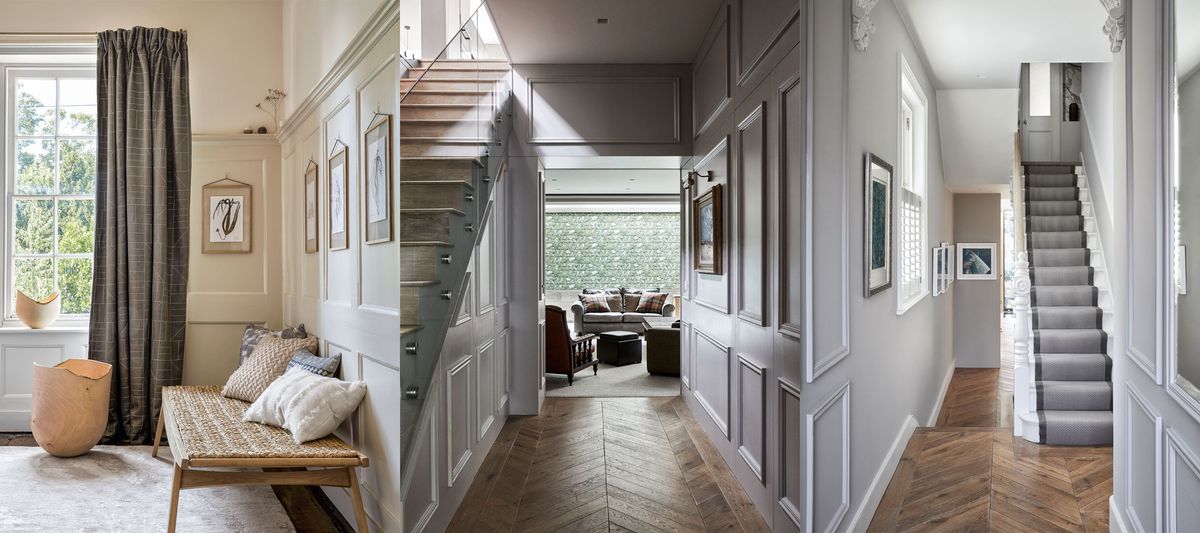
A twist on the conventional hallway paneling of common of period houses, modern day hallway paneling suggestions are a excellent way to increase depth and texture to these occupied areas.

Your hallways can established the scene for the relaxation of the coloration strategies all over your dwelling, and by utilizing paneling concepts for partitions you can build spaces wealthy with character and attraction.

America’s Most Diva President Had Tiffany Decorate the White House with ‘Wrinkled’ Disco Balls

America’s Most Diva President Had Tiffany Decorate the White House with ‘Wrinkled’ Disco Balls

The High Victorian train station on what is now the National Mall was virtually empty when the president and his secretary of state walked inside to catch a train north. But on this steamy July day in 1881, the president would not make his train. Instead, James Garfield was shot twice by a disgruntled madman. He would spend the next two months in agony as inept doctors rummaged around his organs looking for the bullet and his insides became infected until he died. For weeks, the nation, the memory of Lincoln’s assassination still fresh, waited. Waiting was all they could do, and that went for Vice President Chester A. Arthur, too. Thanks to the gunman, Charles Guiteau, a shadow hung over a man who was a national afterthought. Upon completing his long fantasized revenge, Guiteau was reported to have joyfully declared, “Arthur will be president now.”

Arthur did become president, and shocked the nation with how seriously he took on reform. But official Washington was in for a more intimate shock. Upon arriving in the capital to assume the presidency, Arthur said of the White House, “I will not live in a house like this.” Instead, he hired the country’s star interior designer, Louis Comfort Tiffany, to transform the White House into an elaborate and over-the-top spectacle you needed to see to believe. There were disco-ball Islamic wall sconces, gold and silver splashed about, and a multicolored giant glass screen that glittered like a dragon’s hoard. Almost all of it, including an object now considered one of the most valuable in White House history, is completely lost.

This circa 1889 black and white photograph depicts the East Room of the White House after the Tiffany redecoration.

Library of Congress

In the long list of people who were never meant to be in charge but were put there by fate, Chester A. Arthur was really, truly, completely never supposed to be president. A machine-politics operator who had never been elected to public office, the only thing he was known for was being pushed out as head of the U.S. Custom House in New York when it was engulfed in a corruption scandal. In this era of weak presidents, Arthur was a lieutenant for one of its true powers–U.S. Sen. Roscoe Conkling of New York, who controlled a wing of the Republican Party known as the Stalwarts.

When Conkling and company failed to get former President Ulysses S. Grant the 1880 nomination (for a third term!), dark horse candidate James Garfield was selected, and to bring the party together his team’s second choice for Vice President was Arthur. Thinking Garfield would lose and damage the brand, Conkling opposed it. But Arthur, clearly more self-aware, had aspirations so low that when offered a job famously described as worth less than “a warm bucket of piss,” he told the vituperative senator, “The office of the vice president is a greater honor than I ever dreamed of obtaining.” The outrage within the party of somebody so tainted by corruption being named vice president was quelled by the reality that the vice president had no power, and it was impossible to imagine Arthur would ever advance beyond it.

But on Sept. 19, 1881, the man who was supposed to be the country’s most forgettable vice president became one of its most forgettable presidents.

Arthur was perhaps our most diva president. He had as many as 80 suits, all made custom by a New York tailor. They came in handy as this man who was born in a log cabin was known to have multiple outfit changes a day and wear a tuxedo to dinner. He worked only a few hours a day, and held parties and dinners until the wee hours of the morning. Arthur was heavy-set and got around D.C. on a leather-trimmed carriage adorned with his coat of arms painted in gilt, lamps of silverplate, gold lace curtains, and lap robe of otter fur lined with green silk. It was pulled by horses draped in blankets with the gold-thread monogram C.A.A. He brought to the capital a French chef, and his New York City townhouse had a sitting room decked out in white and gold. Upset that the elevator he had installed in the White House was too simple, he had it redone in tufted plush.

White House Historical Association

One need only look at his baronial presidential portrait to see that this was the Gilded Age president with all the airs to mirror those of the newly wealthy of New York, Philadelphia, Chicago, and San Francisco. Like any good New Yorker with pretensions, he was a customer of Tiffany & Co. and made his way to the Park Avenue Armory, to see the new Veterans Room designed in 1881 by Louis Comfort Tiffany (the son of Tiffany’s founder) and his team which included Stanford White, Francis Millet, Candance Wheeler, and Samuel Colman. When Arthur saw the state of the White House—after its decor had been ignored by staid party poopers like Hayes and then partially turned into a hospital for Garfield—he decided a redecoration reflecting the country’s status was required and there was really only one man for the job.

As urban American families in the 19th century accumulated large amounts of wealth, they looked for ways to spend it that would show off their lucre: clothes, jewels, art, and homes. The houses began to be designed by professional architects in a variety of styles rather than by builders in just a handful of aesthetics, and wealthy Americans clamored for interiors that made as much of a statement as the outside. By 1881, interior decoration in America was undergoing a revolution from which it would never return. For decades, the interiors of grand houses had been done up by furniture and cabinet makers, the most prestigious of which was Herter Bros. who designed the interior of the largest house in New York City history, Cornelius Vanderbilt II’s mansion. The craftsmanship was top notch, but the flair and artistic quality was uninspired. And with the advent of easily disseminated photographs and magazines showing how each house was one upping the other, an interior with flair was very much in need.

At the same time, says Jennifer Thalheimer of the Morse Museum (where I first came across images of Tiffany’s White House decor), “there’s a lot of infighting at the National Academy of Design,” and younger artists who no longer had access to the structural support of the academy started “looking for a way to supplement their lives … so they looked to interior design.” The most prominent of these frustrated artists-turned-decorators was Louis Comfort Tiffany.

He had traveled the world and tried his hand at painting and was well on his way to being one of the greatest glassmakers in history. He was a man of “dumbfounding versatility,” according to one critic, a phrase I wish would replace the overused Renaissance Man. Hugh McKean, author of Lost Treasures of Louis Comfort Tiffany, observed that Tiffany hated the phrase “fine art … [his] entire life was a revolt against this precious attitude,” and he was determined to show the lesser arts of design and decorative objects could be truly fine art.

The Blue Room as decorated by Tiffany.

Library of Congress

In 1879, after “he came to accept his shortcomings as a painter,” as Philippe Garner snidely noted, he launched a decorating company with the painter Samuel Colman and textile designer Candace Wheeler called Louis C. Tiffany and Associated Artists.

Associated Artists quickly became the designers, a status reflected in how many of the homes in that era’s design bible, Artistic Houses, were theirs. Tiffany was an “artistic decorator, not a regular interior decorator,” explains Thalheimer. “He’s going to put art in your home and surround you with beauty and new ideas and the most cutting edge stuff.” Today, there are only two places where you can experience their work largely intact: Mark Twain’s house in Connecticut and the aforementioned Veterans Room in the Park Avenue Armory. The Veterans Room is an orgy of materials and patterns so complex and detailed your eyes cannot rest. Intricately carved wood screens, a fireplace of blazing Silk Road blue, and elaborate stencil work cover every inch. At the southern end of the armory’s hall one finds a room done entirely by Herter Bros., which is lovely in a wood-paneled clubhouse sort of way but wilts in comparison to the “Art for Art’s Sake” tour de force that is Tiffany’s Veterans Room.

The Veterans Room also matters because Chester Arthur is believed to have visited it before making his decision to enlist Tiffany to redo the White House.

While hard to imagine now—indeed, to even acknowledge now that the People’s House is anything other than perfect is politically dangerous for presidents—the White House’s occupants often thought it was a dump with little to no privacy, filled with rats, poorly furnished, and in danger of collapsing. Mrs. Garfield had been appropriated some money for a redecoration, but it was never completed, which left the house in disarray with unfinished pipes laying around, half-done carpentry and paint jobs, and naked windows. When Arthur assumed the presidency he stayed at the house of his friend Sen. John P. Jones of Nevada rather than the White House and used the Garfield sums to finish the decoration they started. But he began visiting daily to inspect the space with the head of the government engineering office.

The report put together from these inspections was scandalous. Servants quarters were so dank they caused sickness, and the kitchen’s chipping whitewash often fell into pots of food. The White House was quite literally sitting on a pile of shit as the pipes for several of the toilets had decayed so the waste ended up under the basement. The State Dining Room of all places still had chamber pots. The report was submitted to Congress, and the Senate actually passed a bill for a few hundred thousand dollars for the White House to be torn down, replaced with a replica for executive offices, and a new residence built to its south. But that plan died, and Arthur realized if he was to have a grand home he’d have to work with the existing building.

In May of 1882, Louis Comfort Tiffany, then 34, met with Arthur at the White House and agreed to redo the East Room, Red Room, Blue Room, the State Dining Room, and the Transverse Hall. The Green Room would be left untouched. For this herculean task which needed to be completed in six months, Tiffany would be paid a flat fee of $15,000, which was three quarters what he made for the single room at the Armory. But as historian Wilson H. Faude explained, “few commissions as important as the White House existed,” and “any changes to its interiors would be noted and imitated by other decorators and clients.”

To ready the White House for Tiffany’s vision, Arthur went room by room deciding which furnishings would stay and which would go. A total of 24 wagons of what would be now priceless furnishings went out for auction, including Andrew Jackson’s stand-up writing desk. (Apparently none other than former President Rutherford B. Hayes was monitoring the auction lists and snatched up the mahogany State Dining Room carving tables.)

Tiffany brought a crew from New York that was willing to work day and night with only the president allowed to visit. Plenty of objects remained, however, and Tiffany had to incorporate or work around them. The thematic room colors also had to remain, and so while blue, and light blue in particular, were unpopular colors in 1882, “the Blue Room was suffered to remain a blue room,” sneered Artistic Houses. That undersells what Tiffany got away with—something that is hard to fathom even with photographic evidence and colored renderings.

This 2007 oil painting captures First Lady Frances Folsom Cleveland standing in the middle of the room looking through opened windows to the South Portico. Louis Comfort Tiffany’s 1882 redesign and redecoration of the room is represented in this painting with rich, bold colors.

Peter Waddell for the White House Historical Association

The Blue Room is where the president received the credentials of foreign diplomats and greeted guests. Oval in shape, Tiffany found it an ideal form to play off the idea of a robin’s egg. If you were to visit in the daytime, which few did, it would have seemed a sort of sickly green, but under gaslight at night, when most events were held, it was a brilliant blue. (As a protege of the painter George Inness, Tiffany was notable for his precision with the effects of different types of light.)

Tiffany was a “dye-in-the-wool Republican,” Robert Koch writes in Louis C. Tiffany: Rebel in Glass, “and proud of having decorated the White House for President Chester A Arthur.” So on the ceiling of the Blue Room he went full nationalist. A doily-like allover pattern with white and silver interlocking ovals covered the ceiling, and at the center of each oval was the red, white, and blue stars and stripes shield of the White House. Below the ceiling was an 8-foot-wide frieze of hand-embossed silver and gray patterns that resembled snowflakes. The color on the wall gradually darkened from the silvery frieze to robin’s egg blue to a dark blue wainscoting. The curtains were also dyed to have three separate bands of color to match the walls. On the existing fireplace Tiffany added squares of opalescent glass.

But the real shocker was hanging on the wall: four circular sconces influenced by Islamic design. Each was a 3-foot wide rosette of hundreds of pieces of mirrored and colored glass which provided a backdrop for seven unshaded gas jets the arms of which were dripping with pendants of iridescent glass. The sconces, writes Koch, “must have beamed like disco balls.” One journalist remarked in his coverage that these balls were “wrinkled in order to catch light from many angles.” Thus was a stately and dour room transformed into something scintillating and fun, and so overwhelming that you’d (hopefully) not notice the gilt Louis XV revival furniture and the circular divan.

If the Blue Room was a sparkling showpiece, it was the Red Room where Tiffany really flexed his colorist muscle. It’s a space in which the designer seems to say, “Oh, you want red? I’ll give you red!”

This painting by Peter Waddell depicts the Red Room in 1883 during the Chester A. Arthur administration, with President Arthur’s sisters, Mary and Malvine.

Peter Waddell for the White House Historical Association

“When first I had a chance to travel in the Near East and to paint where the people and the buildings are also clad in beautiful hues, the preeminence of color in the world was brought forcibly to my attention,” Tiffany would later say. “I returned to New York wondering why we made so little use of our eyes, why we refrained so obstinately from taking advantage of color in our architecture and our clothing when Nature indicates its mastership.”

For the Red Room, Tiffany continued with the idea of color gradation. The walls were painted a sumptuous Pompeiian red that verged on claret while the wainscoting was a darker almost currant color. The frieze was verging on pink and, in the words of White House historian William Seale, covered in an abstraction of stars and stripes. The wood trim was also covered in a dark red paint but rubbed until it was glossy.

The Tiffany furnishings and Red Room decor, including the copper and silver ceiling in a star motif and the Herter Brothers armchairs, are including in this composition.

Library of Congress

Already drowning in red, Tiffany added two more elements that would have left one gobsmacked. The first was the fireplace, and for that he had the pre-existing white marble one ripped out and replaced with one of cherry designed by Art Nouveau master Edward Colonna. Around the opening was a mosaic of glass tiles colored amber and red to enhance the flickering flames within. Around those were panels of Japanese leather tinted red set into the cherry. Above the actual mantel but below the existing mirror was another glass mosaic, this one with embedded glass gems. And the original gilt mirror was framed in red plush upholstery.

The ceiling was the other scene stealer, as Tiffany had it painted with circles of bronze and copper stars on a gold background, varnished such that any bit of light was reflected. Most of the furnishings were pieces that Tiffany repurposed, whether candlesticks from President James Monroe’s administration, a silk screen gifted by Austria to Grant, Lincoln’s office clock, or Sevres vases from France peculiarly decorated with scenes of the conviction and sentencing of Charlotte Corday (assassin of Jean-Paul Marat). As for the piano found there, one critic wrote: “For its presence I believe the decorators are not responsible.”

Tiffany wasn’t some whirling decorating dervish throwing sparkle everywhere. In the State Dining Room he understood that there would normally be lots of flowers, fancy dresses, and a shiny dining service so he kept things simple. The walls were painted yellow (fawn, to be specific) and a series of hammered silver reflectors were added to gas brackets to lighten the space. The ceiling and frieze were painted primrose and lemon with rosettes.

The largest of the state rooms is the East Room, and here Tiffany was also restrained as the walls had recently been redone in white and gold. He brought in new objects like Turkish chairs and circular divans as well as a sienna-colored Axminster rug. On the ceiling, William Seale writes, Tiffany decorated it with squares colored rust, gold, and brown to resemble old wallpaper and match the amber window hangings; Artistic Houses described it at the time as a “small mosaic pattern, in silver-leaf, which easily receives the reflection of the carpet.”

In 1882 Chester A. Arthur commissioned the interior designs and decorative arts of Louis Comfort Tiffany to make the Entrance Hall more welcoming.

White House Historical Association

While Tiffany’s designs for the rooms of the White House were a spectacle, one addition was undoubtedly the most famous: his glass screen separating the entrance hall from the transverse hall which ran along the Red, Blue, and Green Rooms and connected the East Room with the staircase. The screen, theoretically, gave the president and family some privacy from guests in the entrance. In the White House, the existing screen of smoked glass had been put in place in the 1850s, and before that it was a screen (unsexily named the “draft eliminator”) installed by White House architect James Hoban. Tiffany was already a prolific glassmaker and his kaleidoscopic leaded glass curtain was immediately seen as a masterpiece. A variety of shades of red, white, and blue were splashed between the four ionic columns. With walls painted a cream color and a ceiling “stenciled with a silvery network like a spiderweb,” writes William Seale, the “stained glass made the long hall continually iridescent.” It had an effect, Century Magazine declared, that was “rich and gorgeous.” Looking through photos of Tiffany’s theatrical White House designs, the screen is the sole element that looks like it truly belongs with its surroundings. It was especially spectacular during state dinners, as tables even through the McKinley era would be set up just underneath its gem-like array.

Illustration of a January 17, 1900 State Dinner hosted by President William McKinley and First Lady Ida Saxton McKinley in the White House Cross Hall. The famous Tiffany glass screen is seen in the background.

White House Historical Association

For months, the only outside person who had been able to see the work was Arthur, but on Dec. 19, 1882, a press preview was held. The reaction was mixed. One newspaper crowed, “No longer is the White House simply the home of a Republican president. Lo, it is the temple of high art.”

“Tiffany, a romantic,” another said, “had added whimsy, sparkle and surprise to a stately classic building.” One reporter, William Seale writes, said the Red Room was “overpowering” in “richness and antiquity.” Of the screen, most were effusive, with one declaring, “It is so much better than any glass which can be produced in Europe today that the typical American should point to it as one of our surest titles to respect when enumerating them for the benefit of the typical foreigner in Washington.”

Tiffany reportedly saved all the clippings, good and bad. One negative review he would likely have held onto was in The World: “[Tiffany’s decorations] are not ideally good by any means, not ‘monumental,’ not ‘high art’ at all. In spite of all the abuse that has been heaped upon it, the White House is a fine old mansion, extremely well-planned for its purpose—except as to staircases—and being capable of being made into a beautiful building. It ought to be decorated someday from end-to-end in a truly good style with the best products of the chisel and the brush.”

Perhaps the most cutting was in Artistic Houses, where the author damned by faint praise: “The beauty and artistic value of the Messr. Tiffany’s decorations are best appreciated by those guests who know how the White House used to look.”

As far as Washington society went, the rooms were by and large a hit. Even Mrs. Blaine, the trenchant wife of former Secretary of State and perpetual presidential aspirant James Blaine was forced to concede. What she referred to as “the White House taint” was gone and instead it showed “the latest style and an abandon in expense and care.”

But if Tiffany’s rise as a designer was rocket-like, his fall was even faster. Just a few years after the White House was completed, the heavy, busy, and crowded “Victorian clutter” that he enacted was out. While Louis Comfort Tiffany’s glass and decorative art are considered extremely valuable today, in the years before his death they were passé. Just 7 years after he finished his White House overhaul, First Lady Caroline Harrison was undoing some of his work and planning to build an entirely new residence.

While her plan was torpedoed by a vengeful congressman, it resurfaced at the turn of the century with proposals for an expansion or entirely new residence. “No little plans,” was Washington’s mantra in this period, an attitude best captured by palatial proposals for the president’s residence and the National Mall). After yet another assassination, this time President William McKinley, another accidental president dramatically reshaped the White House. Teddy Roosevelt and First Lady Edith turned to the senior partner in the world’s biggest architectural firm, Charles McKim of McKim, Mead & White. His restoration would be merciless to Tiffany’s work. When it came to the iconic glass screen, McKim famously sneered, “I would suggest dynamite.”

The glass screen was removed and auctioned off during the Roosevelt renovation, and reinstalled in a Maryland hotel. The surviving glass was destroyed in a fire in 1923. Note the electric light bulbs along the bottom of chandelier. The ornate wall decorations were designed by upholsterer Edgar Yergason.

Peter Waddell for the White House Historical Association

Beginning in 1902, McKim removed nearly all traces of Tiffany’s work and sold off the furniture. When he was tasked with the job, McKim proposed to “take [the White House] down stone by stone … and rebuild it; and not another architect in the country can make a finer or more appropriate residence for the President of the United States.” He turned the White House into the paragon of Colonial American decor we associate it with today, but with an elegance on par with European palaces. As to those who lamented the lost pizzazz of Tiffany, The New York Times went on the attack, declaring the critics were upset by “the simplicity and moderation, the chastity and good taste, which belong to the restoration of a Colonial Mansion” and just chafing at the “absence of that ‘palatial magnificence’ which is to be found in so many hotels and so many steamboats and so many barrooms.”

But in a morality play of what goes around comes around, McKim’s overhaul would also fail to stand the test of time. Yet another accidental president, this time Harry S. Truman after Franklin Delano Roosevelt’s death in 1945, would redo the White House. This time it was a full gut job down to just its shell. A decade later, First Lady Jacqueline Kennedy’s version of Colonial design (a “restoration” not redesign, she would emphasize) would ultimately win out.

As for that Tiffany glass screen? It reportedly ended up in a Baltimore hotel and disappeared for good when the hotel burned down in 1923.

Home decor is a doodle right now

Home decor is a doodle right now

Welsh designer Bethan Grey did a little something she hadn’t done for some time for the duration of the enforced hiatus of 2020: she began to paint. Picking Chinese calligraphy brushes, she began to build freeform strains in ultramarine ink on a canvas laid on the flooring of her studio. It was a spontaneous act, but what emerged was development from an previously style she had envisaged for the marquetry on her Dhow cabinetry collection: a sample inspired by the sweeping sails of conventional Omani boats. 

Bethan Gray with her Inky Dhow collection: Large Triptych artwork, £11,900. Three-Door cabinet, £16,200. CC-Tapis rug, POA. Lustre coffee table, £8,220. Seven Sisters vessels, from £231. Ripple armchair, £9,000
Bethan Grey with her Inky Dhow assortment: Significant Triptych artwork, £11,900. A few-Door cupboard, £16,200. CC-Tapis rug, POA. Lustre espresso desk, £8,220. Seven Sisters vessels, from £231. Ripple armchair, £9,000 © Julian Abrams

The conception of her new Inky Dhow style has been a catalyst for myriad new jobs. London-based mostly leather-based qualified Bill Amberg saw the likely in Gray’s unique artworks for his 3rd selection of digitally printed leather hides. Gray recreated her paintings at a just one-to-just one scale to deliver them to daily life on leather. “They were 1.5m by 3m – the largest I’ve at any time finished – since I did not want to shed the excellent of the brushstrokes or the way the dark ink fades to gentle on the hide.”

This June, as aspect of Milan Structure Week, Inky Dhow will also characteristic in an immersive installation at the Rossana Orlandi Gallery, showing not only on the leather-based upholstery of Gray’s new Ripple couch and armchair but also as marquetry on her Shamsian home furnishings (the sideboard is made up of more than 500 separate items of veneer). There are flashes of the flowing strains on the major of the brass-based Lustre table, in her silk and wool rugs for the Milan-based professional CC-Tapis and on handblown Murano glass lighting in collaboration with Baroncelli. 

The stained-glass window based on an artwork by Annie Morris in the Painter’s Room bar at Claridge’s, London
The stained-glass window dependent on an artwork by Annie Morris in the Painter’s Place bar at Claridge’s, London

A vase from Bethan Gray’s Inky Dhow collection
A vase from Bethan Gray’s Inky Dhow selection
Balu checkmate placemat, £20, libertylondon.com

The design caught the eye of Emily Johnson, co-founder of 1882 Ltd, who requested Grey to transfer her sample on to 7 earthenware vases in the form of the first 7 Sisters pottery kilns in Stoke-on-Trent where the business is based. “I didn’t throw the pots but I went to Stoke to paint them. I definitely enjoyed staying so arms-on,” claims Grey.

The brushwork listed here provides to brain the expressive artistry of some of Gray’s heroes. “I’ve constantly been motivated by linear illustrative art. I appreciate Picasso, Jean Cocteau and Matisse,” she claims. “We have some parts all around the residence: a few of Picasso and Cocteau plates and a Matisse lithograph, as very well as a felt embroidered Cocteau tapestry. It’s inspiring that people artists weren’t confined to the canvas, they worked throughout numerous media and it is nice for me to do the identical.” 

Petra Borner at Partnership Editions Home hand-painted Candelabra and Chandelier 2, £450, partnershipeditions.com
Petra Borner at Partnership Editions Residence hand-painted Candelabra and Chandelier 2, £450, partnershipeditions.com © Christopher Horwood
Frances Costelloe at Partnership Editions Home hand-painted ceramic plates and bowls, £120, partnershipeditions.com
Frances Costelloe at Partnership Editions Property hand-painted ceramic plates and bowls, £120, partnershipeditions.com © Christopher Horwood

Past the canvas, figurative, illustrative art is featuring increasingly on household furniture, furnishings, ceramics and wall treatment plans. “We’re unquestionably seeing a trend in folks experimenting with their spaces with a switch to illustrative sample,” states Bryony Rae Sheridan, buying manager at Liberty, citing new models in the Liberty material collection such as the Delaney Dragon Tana Lawn cotton, decorative plates by Willemien Bardawil and the playful organic patterns in the handpainted ceramics of Popolo and Anna Vail’s Balu manufacturer.

Previous autumn, the online modern art gallery Partnership Editions launched its 1st “Home as Art” class: a curated assortment of functions in which “everything has a tale to tell”. Consequently, the freeline drawings of faces and flora by Frances Costelloe are transposed on to ceramics, the ethereal paintings of Julianna Byrne come across their way onto wall hangings, and the illustrative artwork of Petra Börner features on an ornate candelabra.

Annie Morris’s Sharpie pen illustrations in her house in France
Annie Morris’s Sharpie pen illustrations in her residence in France © Matthieu Salvaing

Willemien Bardawil angels delight plate, £52, libertylondon.com
Popolo fish carafe, £55, libertylondon.com

It’s a thought that has echoes in the Bloomsbury Group’s ambition to immerse anything in artwork, executed most famously in Vanessa Bell and Duncan Grant’s Sussex home Charleston. You can trace its influence, for case in point, in the work of British artist Annie Morris who, during the renovation of the French house she owns with her spouse Idris Khan, drew her unique figures and flowers immediately onto partitions utilizing a Sharpie. In 2021, Morris was commissioned to paint a mural for The Painter’s Place, a new bar in Claridge’s hotel, in which a stained-glass window also replicates one of her watercolour collages.

Clive Bell’s study at Charleston in Sussex
Clive Bell’s study at Charleston in Sussex © James Bellorini
Claire de Quénetain’s handpainted mural in her home

There are a range of artists who can be termed on to bring art into the dwelling: London’s Jan Erika results in handpainted wall art in daring, kaleidoscopic colours in both of those residences and general public areas, as does Claire de Quénetain, who lives in Brussels but also operates in the United kingdom. “It’s substantially much easier for me to work than it was a few or four years back when I begun,” suggests the artist, who grew up in the Normandy countryside and whose freehand brushstroke layouts are influenced by bouquets, crops, trees and gardens. “People are far more open to bringing people styles into their properties now.” 

Tess Newall’s commissioned mural in the style of illustrator Ludwig Bemelmans
Tess Newall’s commissioned mural in the design of illustrator Ludwig Bemelmans

De Quénetain’s small business took off shortly following she graduated from the Royal College of Art in 2014 and posted a photograph on Instagram of a mural she experienced painted in her home. “When something is popular on Instagram issues come about swiftly,” she laughs. “But I just savored the notion of bringing my possess mark into my house. I have my possess decorative language of shapes and being shut to character – the genuine motivation of my work.” In December 2021, she released a collection of 15 wallpaper layouts, introducing to her current fabrics.

East Sussex-based mostly Tess Newall is an additional artist in need, getting just lately been commissioned by Soho Property Design and style Group to paint a child’s bedroom for a consumer in the fashion of Ludwig Bemelmans, creator of the mural in the bar of New York’s Carlyle Resort. Two a long time back she produced a constrained assortment of handpainted chairs motivated by the Bloomsbury Team and Charleston for the young British furniture firm Ceraudo. This February, the brand name released new range Orpha, which co-founder Victoria Ceraudo describes as “phase two” of the Bloomsbury link. This capsule household furniture collection – armchairs, a slipper chair, dining chairs and a footstool – is decorated with a bold ink and brushwork print, a unique departure from the brand’s classic and geometric offerings. “We required to do a thing far more modern and summary that blurs the line between art and design and style,” Ceraudo points out. “You have what is basically a piece of artwork translated into diverse formats – it is a little something a few-dimensional in your inside area fairly than hanging on the wall.”

Ceraudo Orpha Elio armchair, £1,775
Hand-painting at Ceraudo
Hand-portray at Ceraudo

The print is influenced by the cutout work of Henri Matisse and the Orphism movement, spearheaded by Robert and Sonia Delaunay in the early 1900s. “We went down rather a rabbit hole with Sonia Delaunay,” claims Ceraudo. “She was a interesting character with these kinds of fluid movement in between artwork and layout. Robert was a purist, and so that he could be entirely devoted to portray, Sonia attempted heaps of distinctive function: costume structure, inside decoration – she even made a print on a automobile. She was ready to be industrial and monetised different media so that Robert did not have to. He obtained most of the recognition at the time but she was the powerhouse at the rear of it all.”

Couple of us have the inventive abilities of the Delaunays, and individuals seeking to dip into the trend without having employing an artist to paint their residence could possibly contemplate luxurious handpainted wallpaper. Just check with actor and Goop entrepreneur Gwyneth Paltrow, whose eating room in her Montecito house, shown just lately in Architectural Digest, is a vision of whimsical blue-gray skies and handpainted trees – a reverie captured with no a paintbrush or easel in sight.