Greensboro-High Point Saw a 10.0{d4d1dfc03659490934346f23c59135b993ced5bc8cc26281e129c43fe68630c9} Increase in Home Improvement Loans | Business

Greensboro-High Point Saw a 10.0{d4d1dfc03659490934346f23c59135b993ced5bc8cc26281e129c43fe68630c9} Increase in Home Improvement Loans | Business


Chart1_Home improvement investments have been steadily increasing since 2010.png

As People hunkered down in their households in the early days of the COVID-19 pandemic—with remote function and university continuing into the foreseeable future—many started tackling dwelling improvement assignments. Demand for residence places of work, far more residing space, and nicer out of doors parts boomed. Interest charges also dropped to document lows, spurring lots of to get out home advancement loans. In accordance to bank loan-level mortgage loan facts from the Home Home loan Disclosure Act (HMDA), there have been virtually 480,000 regular, single-household property enhancement loans taken out in 2020 with a complete benefit of $54.5 billion.

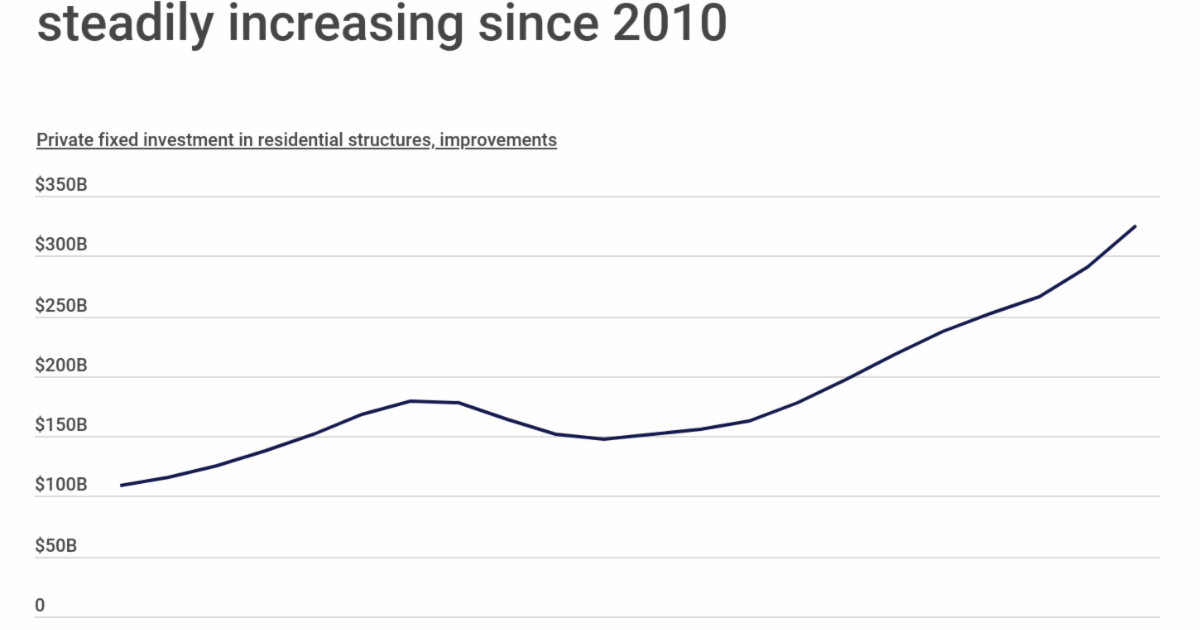
Investments in property improvements commenced to fall through the housing crisis—and starting of the Good Recession—that started out in late 2007. Factors did not convert about right up until 2010, but house advancement expending has steadily enhanced given that then. The most the latest recession—the COVID-19 recession—lasted just two months, from February to April 2020, and differed markedly from the Fantastic Recession. Most notably, dwelling prices did not fall, but instead speedily enhanced in the aftermath. The mixture of growing home prices and file low curiosity charges gave homeowners accessibility to extra cash, as perfectly as the confidence that they would be able to recoup dwelling enhancement investments if they were to provide. In simple fact, residence enhancement spending attained file degrees in 2020. 

Home owners that took out loans to finance their property enhancement jobs in 2020 tended to expend additional on residence advancements for second residences and expense homes than on improvements to main residences. The median household enhancement mortgage total for principal residences was $65,000 in 2020, when compared to a median sum of $105,000 for the two 2nd residences and financial commitment houses. Residence enhancement investments in second households and financial commitment qualities can yield a larger return as a result of rental earnings or sale revenue when when compared to advancements to proprietor-occupied properties in which the proprietor does not intend to market.


Chart2_Homeowners tend to spend more on investment property improvements.png

Both equally the complete amount and price of property advancement loans fluctuate on a geographic basis. At the state amount, South Dakota house owners had the most significant increase in property advancement loans from 2019 to 2020, at +62{d4d1dfc03659490934346f23c59135b993ced5bc8cc26281e129c43fe68630c9}. The median household improvement mortgage quantity in South Dakota in 2020 was $85,000, greater than the nationwide median of $75,000. Other states going through a sharp increase in home advancement loans include Idaho (+30.9{d4d1dfc03659490934346f23c59135b993ced5bc8cc26281e129c43fe68630c9}), Oregon (+30.6{d4d1dfc03659490934346f23c59135b993ced5bc8cc26281e129c43fe68630c9}), and Utah (+24.{d4d1dfc03659490934346f23c59135b993ced5bc8cc26281e129c43fe68630c9}).

Interestingly, about fifty percent of states noted a decrease in dwelling enhancement loans from 2019 to 2020, probable due to huge quantities of self-financed property advancement jobs or property owners refinancing their existing mortgages to pay out for upgrades. Middle- and higher-income householders benefited massively from the stock and true estate market place booms, letting them to additional quickly find the money for household enhancement tasks without having to consider out household enhancement loans.


Chart3_South Dakota had the largest increase in home improvement loans.png

To establish the metropolitan regions with the greatest improve in household enhancement loans considering the fact that the COVID-19 pandemic commenced, scientists at Design Protection analyzed the most recent facts from the Residence Home loan Disclosure Act. The researchers ranked metros according to the share adjust in the full home advancement bank loan price from 2019 to 2020. Scientists also calculated the median financial loan total, the median curiosity fee, the median bank loan term, and the median residence worth. To improve relevance, only metropolitan regions with at least 100,000 people today were being involved in the examination.

The assessment found a 10.{d4d1dfc03659490934346f23c59135b993ced5bc8cc26281e129c43fe68630c9} boost in the complete home improvement financial loan value of Greensboro-Significant Stage metro residence advancement financial loans from 2019 to 2020. Right here is a summary of the knowledge for the Greensboro-Large Issue, NC metro spot:

  • Share adjust in the overall property advancement bank loan worth: +10.{d4d1dfc03659490934346f23c59135b993ced5bc8cc26281e129c43fe68630c9}
  • Median loan quantity: $55,000
  • Median curiosity amount: 4.{d4d1dfc03659490934346f23c59135b993ced5bc8cc26281e129c43fe68630c9}
  • Median mortgage term: 30
  • Median property benefit: $215,000

For more info, a comprehensive methodology, and finish results, you can uncover the unique report on Design Coverage’s site: https://constructioncoverage.com/exploration/towns-with-largest-maximize-in-residence-advancement-financial loans-2022

Cities With the Biggest Increase in Home Improvement Loans Since COVID-19

Cities With the Biggest Increase in Home Improvement Loans Since COVID-19

Photo Credit: Jaruwan Jaiyangyuen / Shutterstock

As Americans hunkered down in their homes in the early days of the COVID-19 pandemic—with remote work and school continuing into the foreseeable future—many began tackling home improvement projects. Demand for home offices, more living space, and nicer outdoor areas boomed. Interest rates also dropped to record lows, spurring many to take out home improvement loans. According to loan-level mortgage data from the Home Mortgage Disclosure Act (HMDA), there were nearly 480,000 conventional, single-family home improvement loans taken out in 2020 with a total value of $54.5 billion.

Investments in home improvements began to fall during the housing crisis—and beginning of the Great Recession—that started in late 2007. Things didn’t turn around until 2010, but home improvement spending has steadily increased since then. The most recent recession—the COVID-19 recession—lasted just two months, from February to April 2020, and differed markedly from the Great Recession. Most notably, home prices didn’t drop, but instead rapidly increased in the aftermath. The combination of increasing home prices and record low interest rates gave owners access to more capital, as well as the confidence that they would be able to recoup home improvement investments if they were to sell. In fact, home improvement spending reached record levels in 2020.

Homeowners that took out loans to finance their home improvement projects in 2020 tended to spend more on home improvements for second residences and investment properties than on improvements to primary residences. The median home improvement loan amount for principal residences was $65,000 in 2020, compared to a median amount of $105,000 for both second residences and investment properties. Home improvement investments in second homes and investment properties can yield a bigger return through rental income or sale profits when compared to improvements to owner-occupied homes in which the owner does not intend to sell.

Both the total number and value of home improvement loans vary on a geographic basis. At the state level, South Dakota homeowners had the biggest increase in home improvement loans from 2019 to 2020, at +62{d4d1dfc03659490934346f23c59135b993ced5bc8cc26281e129c43fe68630c9}. The median home improvement loan amount in South Dakota in 2020 was $85,000, higher than the national median of $75,000. Other states experiencing a sharp rise in home improvement loans include Idaho (+30.9{d4d1dfc03659490934346f23c59135b993ced5bc8cc26281e129c43fe68630c9}), Oregon (+30.6{d4d1dfc03659490934346f23c59135b993ced5bc8cc26281e129c43fe68630c9}), and Utah (+24.0{d4d1dfc03659490934346f23c59135b993ced5bc8cc26281e129c43fe68630c9}).

Interestingly, about half of states reported a decline in home improvement loans from 2019 to 2020, likely due to large numbers of self-financed home improvement projects or homeowners refinancing their existing mortgages to pay for upgrades. Middle- and upper-income homeowners benefited massively from the stock and real estate market booms, allowing them to more easily afford home improvement projects without having to take out home improvement loans.

To determine the metropolitan areas with the biggest increase in home improvement loans since the COVID-19 pandemic began, researchers at Construction Coverage analyzed the latest data from the Home Mortgage Disclosure Act. The researchers ranked metros according to the percentage change in the total home improvement loan value from 2019 to 2020. Researchers also calculated the median loan amount, the median interest rate, the median loan term, and the median property value. To improve relevance, only metropolitan areas with at least 100,000 people were included in the analysis.

Here are the metros with the biggest increase in home improvement loans.

Large Metros With the Biggest Increase in Home Improvement Loans

Photo Credit: Songquan Deng / Shutterstock

15. Orlando-Kissimmee-Sanford, FL

  • Percentage change in the total home improvement loan value: +4.5{d4d1dfc03659490934346f23c59135b993ced5bc8cc26281e129c43fe68630c9}
  • Median loan amount: $85,000
  • Median interest rate: 4.2{d4d1dfc03659490934346f23c59135b993ced5bc8cc26281e129c43fe68630c9}
  • Median loan term: 30
  • Median property value: $335,000

Photo Credit: Henryk Sadura / Shutterstock

14. Grand Rapids-Kentwood, MI

  • Percentage change in the total home improvement loan value: +6.2{d4d1dfc03659490934346f23c59135b993ced5bc8cc26281e129c43fe68630c9}
  • Median loan amount: $55,000
  • Median interest rate: 4.0{d4d1dfc03659490934346f23c59135b993ced5bc8cc26281e129c43fe68630c9}
  • Median loan term: 25
  • Median property value: $265,000

Photo Credit: Paul Brady Photography / Shutterstock

13. Milwaukee-Waukesha, WI

  • Percentage change in the total home improvement loan value: +6.3{d4d1dfc03659490934346f23c59135b993ced5bc8cc26281e129c43fe68630c9}
  • Median loan amount: $55,000
  • Median interest rate: 3.0{d4d1dfc03659490934346f23c59135b993ced5bc8cc26281e129c43fe68630c9}
  • Median loan term: 25
  • Median property value: $305,000

Photo Credit: Sean Pavone / Shutterstock

12. San Antonio-New Braunfels, TX

  • Percentage change in the total home improvement loan value: +10.2{d4d1dfc03659490934346f23c59135b993ced5bc8cc26281e129c43fe68630c9}
  • Median loan amount: $65,000
  • Median interest rate: 3.8{d4d1dfc03659490934346f23c59135b993ced5bc8cc26281e129c43fe68630c9}
  • Median loan term: 15
  • Median property value: $285,000

Photo Credit: Farid Sani / Shutterstock

11. Raleigh-Cary, NC

  • Percentage change in the total home improvement loan value: +11.5{d4d1dfc03659490934346f23c59135b993ced5bc8cc26281e129c43fe68630c9}
  • Median loan amount: $65,000
  • Median interest rate: 4.0{d4d1dfc03659490934346f23c59135b993ced5bc8cc26281e129c43fe68630c9}
  • Median loan term: 25
  • Median property value: $365,000

Photo Credit: f11photo / Shutterstock

10. Dallas-Fort Worth-Arlington, TX

  • Percentage change in the total home improvement loan value: +11.9{d4d1dfc03659490934346f23c59135b993ced5bc8cc26281e129c43fe68630c9}
  • Median loan amount: $95,000
  • Median interest rate: 4.0{d4d1dfc03659490934346f23c59135b993ced5bc8cc26281e129c43fe68630c9}
  • Median loan term: 20
  • Median property value: $385,000

Photo Credit: Chones / Shutterstock

9. Los Angeles-Long Beach-Anaheim, CA

  • Percentage change in the total home improvement loan value: +12.6{d4d1dfc03659490934346f23c59135b993ced5bc8cc26281e129c43fe68630c9}
  • Median loan amount: $165,000
  • Median interest rate: 3.7{d4d1dfc03659490934346f23c59135b993ced5bc8cc26281e129c43fe68630c9}
  • Median loan term: 30
  • Median property value: $815,000

Photo Credit: photo.ua / Shutterstock

8. Salt Lake City, UT

  • Percentage change in the total home improvement loan value: +13.3{d4d1dfc03659490934346f23c59135b993ced5bc8cc26281e129c43fe68630c9}
  • Median loan amount: $65,000
  • Median interest rate: 4.0{d4d1dfc03659490934346f23c59135b993ced5bc8cc26281e129c43fe68630c9}
  • Median loan term: 20
  • Median property value: $435,000

Photo Credit: Lucky-photographer / Shutterstock

7. San Diego-Chula Vista-Carlsbad, CA

  • Percentage change in the total home improvement loan value: +13.6{d4d1dfc03659490934346f23c59135b993ced5bc8cc26281e129c43fe68630c9}
  • Median loan amount: $125,000
  • Median interest rate: 3.8{d4d1dfc03659490934346f23c59135b993ced5bc8cc26281e129c43fe68630c9}
  • Median loan term: 30
  • Median property value: $755,000

Photo Credit: Steve Minkler / Shutterstock

6. Riverside-San Bernardino-Ontario, CA

  • Percentage change in the total home improvement loan value: +13.8{d4d1dfc03659490934346f23c59135b993ced5bc8cc26281e129c43fe68630c9}
  • Median loan amount: $105,000
  • Median interest rate: 3.9{d4d1dfc03659490934346f23c59135b993ced5bc8cc26281e129c43fe68630c9}
  • Median loan term: 30
  • Median property value: $485,000

Photo Credit: Sean Pavone / Shutterstock

5. Phoenix-Mesa-Chandler, AZ

  • Percentage change in the total home improvement loan value: +17.7{d4d1dfc03659490934346f23c59135b993ced5bc8cc26281e129c43fe68630c9}
  • Median loan amount: $75,000
  • Median interest rate: 4.3{d4d1dfc03659490934346f23c59135b993ced5bc8cc26281e129c43fe68630c9}
  • Median loan term: 30
  • Median property value: $385,000

Photo Credit: Jon Bilous / Shutterstock

4. Charlotte-Concord-Gastonia, NC-SC

  • Percentage change in the total home improvement loan value: +19.8{d4d1dfc03659490934346f23c59135b993ced5bc8cc26281e129c43fe68630c9}
  • Median loan amount: $75,000
  • Median interest rate: 3.9{d4d1dfc03659490934346f23c59135b993ced5bc8cc26281e129c43fe68630c9}
  • Median loan term: 30
  • Median property value: $345,000

Photo Credit: LHBLLC / Shutterstock

3. Tucson, AZ

  • Percentage change in the total home improvement loan value: +23.2{d4d1dfc03659490934346f23c59135b993ced5bc8cc26281e129c43fe68630c9}
  • Median loan amount: $85,000
  • Median interest rate: 4.5{d4d1dfc03659490934346f23c59135b993ced5bc8cc26281e129c43fe68630c9}
  • Median loan term: 30
  • Median property value: $275,000

Photo Credit: Roschetzky Photography / Shutterstock

2. Austin-Round Rock-Georgetown, TX

  • Percentage change in the total home improvement loan value: +33.8{d4d1dfc03659490934346f23c59135b993ced5bc8cc26281e129c43fe68630c9}
  • Median loan amount: $95,000
  • Median interest rate: 3.7{d4d1dfc03659490934346f23c59135b993ced5bc8cc26281e129c43fe68630c9}
  • Median loan term: 20
  • Median property value: $455,000

Photo Credit: Bob Pool / Shutterstock

1. Portland-Vancouver-Hillsboro, OR-WA

  • Percentage change in the total home improvement loan value: +35.7{d4d1dfc03659490934346f23c59135b993ced5bc8cc26281e129c43fe68630c9}
  • Median loan amount: $105,000
  • Median interest rate: 3.6{d4d1dfc03659490934346f23c59135b993ced5bc8cc26281e129c43fe68630c9}
  • Median loan term: 30
  • Median property value: $465,000

Detailed Findings & Methodology

To determine the metropolitan areas with the biggest increase in home improvement loans since COVID-19 began, researchers at Construction Coverage analyzed the latest data from the Federal Financial Institutions Examination Council’s Home Mortgage Disclosure Act. The researchers ranked metros according to the percentage change in the total home improvement loan value from 2019 to 2020. In the event of a tie, the metro with the larger total number of home improvement loans in 2020 was ranked higher. Researchers also calculated the median loan amount, the median interest rate, the median loan term, and the median property value. To improve relevance, only metropolitan areas with at least 100,000 people were included in the analysis. Additionally, metro areas were grouped into the following cohorts based on population size: small metros: (100,000–349,999); midsize metros: (350,000–999,999); and large metros: (1,000,000 or more).


FOX28 Spokane©

Solved! What Are the 6 Different Types of Home Improvement Loans?

Solved! What Are the 6 Different Types of Home Improvement Loans?

Solved! What Are the 6 Different Types of Home Improvement Loans?

Photo: depositphotos.com

Q: I’ve heard that there is financing available for making repairs or additions to homes. But how do I know which types of home improvement loans are best for me?

A: There are six main types of home improvement loans: home equity loans, home equity line of credit (HELOC), personal loans, cash-out refinancing, credit cards, and the FHA 203(k) Rehab Loan. Each of these comes with its own benefits and drawbacks. For instance, some loans require that you use your house as collateral in the loan (more on that below), and some loans are better for smaller projects with fewer expenses, just for starters. Below we’ll cover each loan type in detail and when it makes sense to use that type of loan for home improvement (which are different from home loans).

Types of Home Improvement Loan

Photo: depositphotos.com

1. Home Equity Loan

Home equity loans are one of the most popular types of home improvement loans for financing a home project. A survey from LendingTree found that 48.59 percent of people seeking either a home equity loan or a home equity line of credit (more on that later) were using that financing for home improvements. A home equity loan is in addition to your mortgage, and the lender uses the home as collateral on the loan. This means you secure the financing with the value of your home, so if you don’t pay the loan, the lender will take your home as payment of the debt. This type of loan is often called a “second mortgage,” since people get the loan for a certain amount of money and must repay that money over a certain time period, usually in equal monthly payments. Keep in mind, that amount you borrow also comes with a certain interest rate you have to pay as well. The interest rate is determined in part by the borrower’s income, credit history, and even the value of the home. According to the Federal Trade Commission, many lenders don’t want people to borrow more than 80 percent of the equity in their home.

Homeowners secure this type of home renovation loan through lenders and brokers. There are also several key terms to know, and it’s important to know all parts of the deal before taking on a loan. If you don’t understand, ask a representative of the lender or broker about the terms of the loan so that you are fully aware of the responsibilities of paying off the loan. The most important part of the loan is the annual percentage rate (APR), which is the total cost people pay for credit, sometimes referred to as home improvement loan rates. Basically, it’s the fees you pay above and beyond repaying the loan amount. The APR includes the interest rate and other fees, such as broker fees. A lower APR can mean lower monthly payments. These are also typically fixed, meaning they don’t change over the life of the loan. People also pay interest on the entire loan amount.

So when does it make sense to get a home equity loan to use as a renovation loan? In general, home equity loans make the most sense for people who have been paying on their home for a long time or have their home completely paid off. These people have the most equity to borrow again without going over that 80 percent borrowing recommendation mentioned above. Also, if someone has their home paid off, they might be in a position to take on that additional monthly payment or “second mortgage.” Because that person would be paying interest on the entire amount available to them, it also makes sense to use this type of loan for one large expense, like a new roof.

2. Home Equity Line of Credit (HELOC)

Often spoken in the same breath as the term “home equity loan,” the home equity line of credit (HELOC) also uses the home as collateral in the terms of the loan. However, where the home equity line of credit differs is that it is not a one-time loan, but a revolving line of credit. It works much like a credit card, except the line of credit is secured by the home, similar to a home equity loan. How it works is the lenders approve people for a certain amount of credit. A benefit to this type of financing is that it means people can borrow what they need, whenever they need it, as long as they stay under their credit limit. Homeowners would access that line of credit by writing a check or using a credit card that is connected to their home equity line of credit account. However, that line of credit is not typically available forever. Many lines of credit that work this way have a draw period, where people can draw from that account within a certain time frame. In some cases, homeowners can renew the line of credit, but eventually, they have to start repaying the line of credit. Depending on the terms, that could mean paying the entire outstanding balance or making payments over a certain period.

Types of Home Improvement Loan

Photo: depositphotos.com

Another factor to keep in mind is that the interest rates or payments can be variable, meaning they can increase or decrease at any time. Also remember that since the home is considered collateral, if you can’t make payments or they’re late, the lender can repossess your home. Also, if you decide you sell your home, all your outstanding debts on the home equity line of credit may come due at the time that you sell your home.

All the details above might make it sound like a home equity line of credit isn’t such a good idea. However, there are circumstances in which such a type of financing can make sense as a loan for home improvement. One benefit to the home equity line of credit is that people are only paying interest on the money they use, not the entire amount that they can access, unlike a home equity loan. Some people consider it helpful to know they have access to a certain line of credit when they need it, but don’t feel like they have to use the whole amount. As such, the HELOC is one of the best types of home improvement loans for smaller ongoing home expenses or projects like replacing siding or maintaining landscaping.

3. Personal Loan

Another way to access funds for improvements is the personal loan. This can be one of the better types of home improvement loans if you’re uncomfortable with using your very own home as collateral against a loan. This type of loan is fairly straightforward: Someone borrows a set amount of money and then pays it back with interest on a set schedule. The main components of the loan, then, are the amount of money borrowed, the interest rate, the term of the loan (such as 6 months or 5 years), the amount of interest someone ends up paying, and the monthly payment they are then responsible for until the loan is paid off in full. Service Credit Union gives the example of a $20,000 loan with an APR of 8.24 percent. If the loan is paid over the course of 5 years, that person is paying a total of $4,552.00 in interest, and their monthly payment is $407.93 for those 5 years. This type of loan is what’s known as an unsecured loan, which means the individual is not offering up any personal assets as collateral on the loan. The amount of money can be used for anything, meaning it’s one available option for those home improvement goals.

It’s very important to shop around for personal loans, as it’s easy to find a wide array of interest rates and terms during which someone would pay back the loan. You can find personal loans through online lenders, credit unions, or banks, and you can even compare rates side by side online. You should also keep in mind your credit history, since the company offering you the loan will pull a credit report. The financial institution then uses that information to help determine rates and the amount of money it will lend you.

Personal renovation loans work for many people and have a wide array of benefits. They’re especially a good option for someone who has a good credit score, as they could secure higher borrowing limits with lower interest rates with that good credit history. The money can be used for any purpose, so someone could use part of it to pay for home improvements and then use any remaining to consolidate debt or even pay for a wedding, for example. As mentioned, you are also not risking your home if you cannot pay or you make a late payment. However, it’s important to note that if you do not make your payments on a personal loan, it can have disastrous consequences for your credit score and the loan is typically turned over to a debt collection agency. As a final note, personal loans can often be easier to secure and require less paperwork than some of the other options on the list.

Types of Home Improvement Loan

Photo: depositphotos.com

4. Cash-Out Refinancing

Cash-out refinancing is actually an option in which you get a whole new mortgage. It can come across as one of the most drastic loans for home improvements options on the list, but for people considering refinancing their home anyway, this can be a powerful tool for accessing extra funds for those home improvement projects. Basically, someone would trade equity in their home for a cash payout, but this option does count as a type of loan. People typically use this type of loan for cash at closing, debt payoff, paying off liens, and, yes, making home improvements. In this case, you would actually get a whole new mortgage that lets you borrow extra money as part of the terms of that new mortgage. In the new mortgage, the cash you take out and the the balance owed on your home loan make up your new loan principal.This means that your payments now “reset” and are almost entirely interest at the beginning. It’s worth noting that this option can result in a higher monthly payment or may extend the length of the mortgage to pay off both the loan amount and the cash borrowed.Additionally, this type of loan may involve closing costs.

You would access this type of financing by checking with either your current mortgage lender or looking at new ones. Mortgage companies can help homeowners understand what their refinancing options are, what their payments would end up being, how term lengths on their mortgage might change, how much money they can borrow, and what their interest rates would be. Homeowners might also be able to find specific loans for their unique situations, such as cash-out refinance loans through The Department of Veterans Affairs.

This is one of the home remodel loans options you need to consider very carefully. For instance, if someone is 40 years old and they end up renewing a 30-year mortgage so that they can refinance and get cash out of their equity, they’re now looking at paying a mortgage until they’re 70 years old. However, if they plan on taking a late retirement anyway, that might not be such a bad option. Especially if that cash out of their home’s equity can consolidate debt, they can get that dream pool area they’ve always wanted and they may be able to negotiate a lower monthly payment because interest rates may be lower at the time. Alternatively, they could also choose a 15-year mortgage. There are also some other hidden perks. For instance, homeowners can deduct home mortgage interest up to the first $750,000 of indebtedness. Higher limitations of up to $1 million also exist for indebtedness incurred before December 16, 2017, according to the IRS.

Types of Home Improvement Loan

Photo: depositphotos.com

5. Credit Cards

One of the most common and no-fuss ways to get that financing for a home project is by accessing credit cards. Credit cards are easy to find and apply for, making this the simplest option on the list of types of home improvement loans. And people can get a wide variety of perks on them depending on the program, like cash-back amounts for gas purchases or travel rewards. A nice perk is that home improvement stores also have their own credit cards, meaning homeowners can see what their credit options are at the same time as planning that new home project. Some of these cards can even help people access in-store discounts while shopping, such as a certain percentage off purchases. That way, that project gets financed and homeowners can save on materials for the project. Even better, if you have a credit card already open, you don’t have to go through the hassle of applying for a new loan.

It’s important to keep in mind, however, that this can be a good option if renovations don’t require a massive amount of expense, such as putting in a stretch of fence or paying for those cans of paint. Interest rates on credit cards can be higher than loan amounts, so someone would technically be paying more for their renovation this way than with other certain types of loans for home improvement. If someone has a larger project, they might end up pushing their total available credit ratio too high, and that can negatively affect their credit score, according to Scott Credit Union. Homeowners also should keep an eye on their spending on their credit card so that the payments don’t get too large and unwieldy. This is also another option that is best for those with good credit scores. Higher credit scores can mean better interest rates on credit cards, especially if someone needs to apply for a new card to fund this particular project. With credit cards, be sure to look at those that offer introductory or no-interest terms. Some cards allow people to not pay any interest as long as they pay down the amount within a certain period, such as 6 months. Also, some cards may have completely interest-free introductory periods, eliminating the higher interest problem with credit cards, as long as you can pay off the balance in that no-interest period. You might also look into cards with no fees to set up and no annual fees, making credit cards an even more cost-effective option for loans for home renovation.

Types of Home Improvement Loan

Photo: depositphotos.com

6. FHA 203(k) Rehab Loan

The tagline for this government program for home repair loans is “Turning ‘Fixer-Uppers’ into Dream Homes.” This option is for those needing the most extensive repairs on a home. This is the Section 203(k) loan program offered by the U.S. Department of Housing and Urban Development (HUD). The program is for financing the purchase of a new home or refinancing a current mortgage so that the mortgage includes the cost of repairs. You can find these programs through HUD-approved mortgage lenders. The Federal Housing Administration (FHA) insures the loans.

The program typically works by someone taking out a 15- or 30-year fixed mortgage or an adjustable rate mortgage (ARM) from a HUD-approved lender. The total amount of the mortgage includes the projected value of the home post-renovations while factoring in the cost of the work it will take to repair the home. One part of the loan pays for the home (or any debt if the home is refinanced). The remaining amount gets put into an interest-bearing account and gets released to the homeowner at certain intervals as the work continues. Those with this loan are required to use a minimum of $5,000 toward repairs of the home, and work is expected to be completed within 6 months of the loan closing, in most cases. Repairs need to be deemed eligible, and the first $5,000 covers taking care of the most pressing issues first, like addressing building code violations, making the home more modern, and addressing health and safety issues. For instance, if the roof is about to cave in, that first $5,000 goes toward repairing the roof. Luxury and commercial improvements can’t be made to a home under this program, such as adding swimming pools, gazebos, or tennis courts.

A huge perk of these types of home improvement loans is that the loan down payment is as little as 3 percent, making this one of the best home improvement loans if you have a fixer-upper. The program was created with low-to-moderate-income individuals and families in mind. So if you’re on a tight budget and have a fixer-upper on your hands, this program is a solid option to look into. This program can also be a great option for those who find a home in a location they love and see the potential, but know it needs extensive repairs, such as in the case of fixing up an old country home.For those who enjoy and appreciate a historical look, this is also a good way to return an older building back to its former glory. Note that this program does not apply to investment properties or cooperative units.

What Does Landlocked Mean? | Quicken Loans

Shopping for Landlocked Residence

Buying a piece of landlocked home can differ relatively from purchasing a property with highway entry. On the a person hand, it’s normally sold at a important low cost, as there is no direct roadway that will allow you to stop by your home. On the other hand, as landlocked plots of land supply restricted accessibility, and are frequently the outcome of house owners subdividing parcels of their serious estate holdings, they generally also come with a lot more again-conclusion strings hooked up.

Circumstance in issue: If you get landlocked residence, odds are that you are going to require to safe an easement (which gives you the proper to accessibility another person else’s assets) with at the very least just one of your neighbors. If that does not get the job done, you may possibly have to have to petition area officials for an entry highway.

Securing An Easement

An easement may well make it possible for you to generate by specified portions of one more person’s land, or grant authorization for you to construct an accessibility road across their parcel that potential customers to your house. Easements really should be formally codified in signed producing, and your capability to attain just one will normally depend on your neighbors’ willingness to engage in ball. If they are not prepared to negotiate while (neighbors are frequently content to make it possible for you to pass by, specifically in exchange for a smaller rate), you could have to file a lawsuit and go to court docket to get the easement. Note: Easement or no, assets taxes are nevertheless the new landlocked landowners’ obligation.

To safe an easement in short, you are going to require to:

    &#13

  • Use a expert to perform a property survey.
  • &#13

  • Discuss with the house owner whose land you are trying to find an easement on.
  • &#13

  • Make the landholder an present and negotiate with them.
  • &#13

  • Meet with an attorney to get assistance, assessment deal phrases, and method any paperwork.
  • &#13

  • Ought to negotiations fail, have your authentic estate lawyer sue to obtain accessibility to your assets.
  • &#13

  • Safe a courtroom buy awarding you the easement.
  • &#13

Knowing Right Of Way Easements

Also be recommended: There are a number of kinds of easements. A correct of way easement lets you journey by way of one more party’s house – helpful if you have to have to move by, say, a paved highway or dust observe operating via their land. Alternatively, it may well allow you to establish a driveway by their land that potential customers appropriate up to your entrance door.

Alas, if your neighbor will not grant a single, you may well have to inquire for an easement by requirement. Proficiently, a court docket order that awards you the entry that you require to your property via an individual else’s land.

To attain an easement by requirement, as above, you will require to communicate with an legal professional and have them go as a result of the system of submitting a lawsuit so that you can receive a courtroom purchase that awards it.

Filing these kinds of a lawsuit is often time-consuming, pricey, and demanding – and will do very little to boost neighborly relations. If you can strike a deal, it typically pays to communicate factors out 1st without turning for reduction to the lawful system.

The Best Home Improvement Loans of 2021

The Best Home Improvement Loans of 2021

The Best Home Improvement Loans of 2021

Photo: istockphoto.com

If you’re looking to perform some renovations or need to make repairs, a home improvement loan could provide the financing you need to pay for the project. However, finding the best way to finance home improvements takes a little time and research. It’s crucial to compare factors like minimum credit score requirements, maximum loan limits, and interest rates to make sure you find the best home improvement loans for your situation and needs.

The loans listed here are personal home improvement loans, so it’s important to compare any origination fees, late fees, prepayment fees, and other fees associated with each loan before applying. While a loan may look good based on the loan amount and interest rate, you don’t want to pay too much in fees. Here, we’ll break down the best home improvement loans and how to make the best decision that will pay off in the long run.

  1. BEST OVERALL: SoFi
  2. RUNNER-UP: LightStream
  3. BEST FOR SMALL PROJECTS: Marcus by Goldman Sachs
  4. BEST BANK: Wells Fargo
  5. BEST FOR FAIR CREDIT: Upgrade

The Best Home Improvement Loans Options

Photo: istockphoto.com

What to Consider When Choosing Home Improvement Loans

When reviewing the best loan for home improvement, make sure to compare the key features of each loan. These include the interest rate, loan amount, minimum credit score, and loan term. You want to compare apples to apples to ensure you find the best way to pay for home improvements. Comparing the fees to obtain the loan is crucial when shopping for the best home renovation loans.

Prequalification and Application

Some, but not all, lenders allow borrowers to prequalify for a home improvement loan, which could give them an idea of how much they may qualify to receive, how much their monthly payment could be, and what the repayment terms might be. To do so, borrowers will need to provide such personal information as name, address, birth date, Social Security number, and income. They also may be asked how they plan to use the loan funds. Prequalification may take a few minutes or possibly longer. If borrowers are prequalified, the lender will use their prequalification information as part of the application.

When prequalifying for a loan, it’s essential to know if the lender will complete a soft or hard credit check. Soft credit checks won’t affect a borrower’s credit score, but a hard check will. Mortgages typically involve a hard credit check, but smaller personal loans like home improvement loans often only require a soft check.

The loan application will contain much of the same information a borrower would provide to prequalify. This includes the personal information listed above, as well as proof of identity, bank statements, and pay stubs. Reviewing and approving your application may take longer than prequalification.

Credit Score

Every lender has its own benchmark for the minimum credit score required to qualify for the best loans for home improvement. While many lenders prefer a minimum credit score of 660, especially if you want a mortgage-backed loan, some companies will accept a lower credit score. The trade-off is that interest rates may be higher than for borrowers with a higher credit score. A general rule is that the higher a borrower’s credit score, the lower their interest rate.

Suppose a borrower is seeking a home improvement loan that is unsecured, such as a personal loan. In that case, lenders also prefer borrowers with higher credit scores because those borrowers appear to be more likely to repay the loan as agreed.

Loan Amount

Not all home loan lenders offer the same loan amounts. Therefore, borrowers need to determine how much the project will cost so they have a firm amount on how much they need in a home improvement loan. Once they have this information in hand, they will need to shop around to find lenders willing to match the amount they need. Eliminating lenders who are unable or unwilling to offer the loan amount they need will help narrow down the selection of lenders, which can be helpful when they are shopping for the best home improvement loans.

Rates and Fees

When reviewing the terms of a home improvement loan, one key feature to look at is the annual percentage rate (APR). The APR is the amount someone pays for borrowing the money. It includes the interest rate as well as all additional fees.

Origination fees are associated with opening a new account with a bank or broker. Borrowers can incur prepayment fees if they attempt to pay off the entire loan amount before the loan terms are over. Lenders want to keep collecting interest for as long as possible, so longer loan terms are more favorable for them. Other fees can include those for loan processing, late payments, or insufficient funds.

The lower the APR is on a loan, the less the borrower will pay over the life of the loan. The APR is based on several factors, most notably credit score and income. Typically, the higher a borrower’s credit score, the lower the APR. Also, a higher income can result in a lower APR because it shows someone has the means to repay the loan as agreed.

Repayment Terms

When it comes to repaying a home improvement loan, term lengths vary based on the lender as well as a borrower’s creditworthiness. The typical repayment term for a home improvement loan is between 1 and 7 years with monthly payments. The better a borrower’s credit score, the better their repayment terms typically will be.

It’s essential to check the repayment terms to see if the borrower will incur a prepayment penalty if they decide to pay off the loan early. The amount of a prepayment penalty may be more costly than if they just pay off the loan as agreed.

Discounts

Although not all lenders offer discounts, some do when a borrower takes out a home improvement loan. For instance, some lenders will offer a discount if they sign up for its autopay service to automatically pay the monthly loan payment. If a borrower is a current customer with a bank or lender, they also may qualify for a loyalty discount. It’s important to ask any lender what discounts are available. Often, this information is not readily available, so it’s important to be proactive and ask directly about discounts. Otherwise, a borrower could miss out on additional savings, even on the best home improvement loans.

Our Top Picks

To help you find the best home improvement loans, we compared loan terms and other factors to find the best way to finance home improvements.

The Best Home Improvement Loan Option: SoFi

Photo: sofi.com

Why It Made the Cut: Unlike many other traditional financial institutions, SoFi offers borrowers the option for prequalification, boasts competitive interest rates, and eliminates late fees, prepayment fees, and origination fees.

There’s a lot to like about a home improvement loan from SoFi. The company offers loans with limits as high as $100,000 with no late, prepayment, or origination fees. Unlike many other lenders, SoFi offers prequalification without a hard inquiry so you can get an idea of what loan amount you could receive as well as possible loan terms without hurting your credit score.

While SoFi offers competitive interest rates, a borrower likely will need a good credit score to receive a home improvement loan at reasonable rates. Currently, SoFi requires a minimum credit score of 680, which could be a lofty goal for some borrowers. That being said, SoFi is still a top lender to consider for home improvement loans.

Specs

  • Prequalification offered: Yes
  • Minimum credit score: 680
  • Loan amount: $5,000 to $100,000
  • APR: 4.99 to 19.63{d4d1dfc03659490934346f23c59135b993ced5bc8cc26281e129c43fe68630c9}
  • Term: 2 to 7 years

Pros

  • No late, prepayment, or origination fees
  • Borrowers can prequalify with a soft credit check
  • Unemployment protection for borrowers
  • Competitive interest rates

Cons

  • Higher minimum credit score of 680 required
The Best Home Improvement Loan Option: LightStream

Photo: lightstream.com

Why It Made the Cut: LightStream prides itself on offering loans to borrowers with a strong history of financial responsibility and good credit across multiple account types.

LightStream offers a variety of loan products, including home improvement loans, with competitive interest rates. Borrowers have the option to apply online or use the app and could receive their funds the same day if their loan application is approved before 2:30 p.m. EST. If a borrower signs up for autopay before receiving the loan, they could receive a 0.5 percent discount on the loan. Also, through its Rate Beat Program, LightStream will offer a rate .10 percentage points lower than a competitor’s rate provided certain conditions are met.

However, it could be hard for some borrowers without an extensive credit history to qualify for a LightStream home improvement loan. The lender looks at credit history to see if the borrower has various accounts, including credit cards, installment loans (such as a car or student loan), and a mortgage loan. For borrowers who meet these requirements, though, LightStream is a great option to consider.

Specs

  • Prequalification offered: No
  • Minimum credit score: 660
  • Loan amount: $5,000 to $100,000
  • APR: 4.49 to 20.49{d4d1dfc03659490934346f23c59135b993ced5bc8cc26281e129c43fe68630c9}
  • Term: 2 to 7 years

Pros

  • Borrowers receive a 0.5 percent discount for using autopay
  • Same-day funding available for loans approved before 2:30 p.m. EST
  • Rate-matching program for eligible borrowers

Cons

  • Loan approval requires several years of credit history with multiple account types
The Best Home Improvement Loan Option: Marcus by Goldman Sachs

Photo: marcus.com

Why It Made the Cut: Marcus by Goldman Sachs offers decent loan terms to borrowers with a minimum credit score of 660 and even provides prequalification with a soft check, so a borrower’s credit doesn’t get dinged.

If a homeowner is planning a small-scale home renovation, Marcus’s $40,000 loan limit may be more than enough to finance the project. Marcus by Goldman Sachs does offer prequalification with a soft credit check, so they can see what a borrower’s loan terms may be without hurting their credit score. And if a borrower makes 12 consecutive payments, the lender allows them to defer one payment, which could be helpful if money gets tight during the life of the loan. The company will also allow borrowers to consolidate debt with third-party creditors—a unique feature among financial institutions.

Marcus by Goldman Sachs also doesn’t offer the option of having multiple borrowers on one loan, so homeowners may not benefit from a cosigner with a great credit score. However, if the loan terms work for the home improvement a borrower is planning, Marcus by Goldman Sachs is a worthy lender.

Specs

  • Prequalification offered: Yes
  • Minimum credit score: 660
  • Loan amount: $3,500 to $40,000
  • APR: 6.99 to 19.99{d4d1dfc03659490934346f23c59135b993ced5bc8cc26281e129c43fe68630c9}
  • Term: 3 to 6 years

Pros

  • Direct payments to third-party creditors for debt consolidation available
  • Borrowers can prequalify with a soft credit check
  • Borrowers can defer one payment if they make 12 consecutive payments

Cons

  • Multiple borrowers are not allowed on one loan
The Best Home Improvement Loan Option: Wells Fargo

Photo: wellsfargo.com

Why It Made the Cut: For those who want to bank with an established financial institution, Wells Fargo offers a lot of flexibility for borrowers looking for a home improvement loan—and existing customers may benefit even more.

When shopping with Wells Fargo for a home improvement loan, expect a lot of flexibility in loan terms and limits, with a minimum loan amount of $3,000, a maximum loan amount of $100,000, and a minimum 1-year repayment window. In addition, borrowers who already do business with Wells Fargo may receive discounts on their loans.

Currently, only existing customers can apply for a home improvement loan online. All others will need to visit a brick-and-mortar location to complete an application, which may not be convenient for all borrowers. Of course, many borrowers like the option of meeting face-to-face with Wells Fargo associates, which many other lenders don’t offer.

Specs

  • Prequalification offered: No
  • Minimum credit score: Not specified
  • Loan amount: $3,000 to $100,000
  • APR: 5.74 to 19.99{d4d1dfc03659490934346f23c59135b993ced5bc8cc26281e129c43fe68630c9}
  • Term: 1 to 7 years

Pros

  • Flexible loan amounts and lending terms available
  • Borrowers can visit brick-and-mortar bank locations
  • Discounts available for existing customers

Cons

  • Online application is only available for existing customers
The Best Home Improvement Loan Option: Upgrade

Photo: upgrade.com

Why It Made the Cut: If a borrower’s credit history is not in the best shape and they have a lower credit score, Upgrade could be the right lender to provide them with a home improvement loan.

A new player in the lending industry—Upgrade was founded in 2017—Upgrade seeks to offer affordable and responsible loans, including home improvement loans. For borrowers with lower credit scores, this could be especially beneficial given they need a minimum credit score of only 560 to qualify. If they already have an Upgrade checking account, they also could qualify for a discount on their home improvement loan.

Upgrade offers a wide APR range that tops out at 35.47 percent, which could negatively impact borrowers with a low credit score. In addition, Upgrade loans also may include several fees, including origination fees, late fees, and insufficient funds fees. However, Upgrade is still a great choice that opens the door for more borrowers to make improvements to their homes.

Specs

  • Prequalification offered: No
  • Minimum credit score: 560
  • Loan amount: $1,000 to $50,000
  • APR: 5.94 to 35.47{d4d1dfc03659490934346f23c59135b993ced5bc8cc26281e129c43fe68630c9}
  • Term: 2 to 7 years

Pros

  • Borrowers need a minimum credit score of 560
  • Small loan amounts available
  • Discount available for borrowers with Upgrade checking accounts

Cons

  • Wide APR range
  • Borrowers may incur origination, late, and insufficient funds fees

Our Verdict

When shopping for the best home improvement loans, SoFi comes out on top because it doesn’t charge a lot of fees and offers competitive interest rates. LightStream is our runner-up thanks to its rate-matching program and the possibility of same-day funding if approved.

How We Chose the Best Home Improvement Loans

To determine the best home improvement loans, we reviewed several factors for each lender, including minimum credit score requirements, available loan amounts, APRs offered, loan terms, and whether prequalification was offered. We also checked to see what, if any, fees were charged as well as possible available discounts. In addition, we looked to see if lenders offered added benefits to borrowers, such as unemployment protection, same-day funding, and online servicing. Each lender also was reviewed based on its brand reputation. This curated list was developed from extensive research, but your individual loan experience may vary from the information shared here.

Before You Choose One of the Best Home Improvement Loans

The most straightforward avenue is to pay cash if you’re starting a home improvement project. However, not everyone has the money in hand to pay for a large bill, or paying for the project up front might jeopardize a homeowner’s quality of life for a period. That’s where home improvement loans can be helpful tools.

When trying to decide what type of loan is best for home improvements, it’s important to note that not all home improvement loans fit every borrower’s needs or financial situation. In fact, a home improvement loan may not even be the right choice to pay for home renovations. For instance, if a homeowner doesn’t need a considerable loan amount, they may do better by finding the best credit card for home renovation. Credit cards are simpler to obtain, but they may incur higher interest rates, even with one of the best credit cards for home improvement. And since monthly expenses can, using a credit card can result in ongoing debt that might be difficult to pay off.

On the other hand, if a homeowner needs a large loan amount, a home equity loan or home equity line of credit might offer them a better interest rate and longer loan term than even the best home improvement loan. Home equity loans are secured, though, meaning the lender has collateral if a borrower defaults on payments. This means that the stakes are higher, and if a borrower runs into a situation where they can’t make their payments, the lender could levy their home.

Cost of Using One of the Best Home Improvement Loans

Before signing on the dotted line for one of the best home improvement loans, it’s important to review the costs of the loan. In addition to the interest rate on the loan, many lenders also charge hefty fees that add to the cost of the loan. For instance, some lenders charge origination fees ranging between 1 and 8 percent of the loan amount. Other expenses could include late payment fees, insufficient funds fees, prepayment penalties, and additional fees that will add to the cost of the loan. The total amount of these fees could make one of the best home improvement loans more costly than other financing options available to pay for home improvements.

The Advantages of Using One of the Best Home Improvement Loans

Using one of the best home improvement loans could be the most affordable option for paying for the improvements or repairs a home needs without having to pay a daunting amount of money up front. There are some benefits to choosing a home improvement loan, including:

  • Repairs and upgrades can increase a home’s value. Remodeling the kitchen, refinishing hardwood floors, and adding landscaping have some of the best returns on investment.
  • Homeowners don’t have to wait to save up money to make repairs, causing the situation to worsen and become costlier the longer it’s left untreated.
  • Personal home improvement loans have fixed monthly payments, so homeowners can budget accordingly and know exactly how much they’re paying.

FAQs

When shopping for the best home improvement loans, it’s essential to know exactly what you are shopping for regarding interest rates, loan amounts, loan terms, and minimum credit score requirements. Having this knowledge beforehand could save you valuable time when talking to lenders. It also could provide insight on how to improve your financial situation before applying for any loan.

Q. What kind of loan should I get for home improvements?

A personal home improvement loan could provide the best way to pay for home improvements. But the type of loan a borrower opts for will ultimately depend on the extent of the renovations. For example, an FHA 203(k) rehab loan might be better if a borrower is buying a fixer-upper and needs to complete extensive, whole-home remodeling. Borrowers might benefit from one of the best home improvement credit card options for small-scale projects.

Q. What credit score do I need to qualify for a home improvement loan?

Many lenders require a minimum credit score of 660 to qualify for a home improvement loan, although some lenders may have lower or higher minimum requirements.

Q. Are home improvement loans tax-deductible?

If your home improvement loan is secured by your home, such as with a home equity loan or home equity line of credit, the interest and fees on the loan could be tax-deductible.

Q. Do banks offer home improvement loans?

Yes, many banks like Wells Fargo offer home improvement loans. Some banks offer discounts for existing bank customers, and some borrowers may prefer consolidating their loans and accounts to one financial institution. However, borrowers should compare the rates and terms of bank loans against other lenders to ensure they’re getting the best deal.
Credit Suisse Securitizes $358.9 million of GoodLeap Sustainable Home Improvement Loans

Credit Suisse Securitizes $358.9 million of GoodLeap Sustainable Home Improvement Loans

Sustainable home upgrades represent an estimated $430 billion annual market opportunity in the United States. GoodLeap leverages its deep expertise in technology and data to make these sustainable home upgrades more accessible for homeowners who are looking to have a positive impact on the planet. GoodLeap’s proprietary technology platform is accessed by more than 18,000 sales professionals at the point-of-sale, creating an efficient option for financial institutions to deploy their capital in high-performing environmental, social and governance (ESG) assets. GoodLeap has deployed more than $9 billion of solar loans and other home efficiency loans through its platform since 2018. 

There have been eleven securitizations of loans originated on the GoodLeap platform totaling $3.8 billion, with over half of the securitized volume happening in 2021 alone.

“We are pleased to sponsor another successful securitization of GoodLeap. This transaction will help the company in achieving a low cost of funding and continues our track record of developing the institutional capital markets for renewable energy and efficiency assets, in line with Credit Suisse’s commitment to support sustainability,” said Spencer Hunsberger, Managing Director in Securitized Products Finance at Credit Suisse. 

This securitization, sponsored by Lime Residential, Ltd., consists of a total of $302.4 million of notes rated by Fitch Ratings, S&P Global Ratings and Kroll Bond Rating Agency.  The notes are backed by $358.9 million of principal balance of loans with a weighted average note rate of 2.43{d4d1dfc03659490934346f23c59135b993ced5bc8cc26281e129c43fe68630c9}. At the time of origination, the weighted average FICO® score of the loans was 740. All tranches of the transaction were multiple times oversubscribed.

About GoodLeap
GoodLeap is America’s leading marketplace for sustainable solutions, delivering a digital-first experience that is simple, fast, and frictionless. GoodLeap’s proprietary technology platform is actively used by more than 18,000 sales professionals, creating an efficient option for financial institutions to deploy their capital in high-performing ESG assets. GoodLeap has deployed over $9 billion in capital for sustainable home improvement products since 2018, empowering countless consumers to live a more sustainable lifestyle. GoodLeap is a proud partner of GivePower, a 501(c)(3) corporation, whose mission is to build and deploy solar-powered clean water and energy systems to communities in need around the world. To learn more about GoodLeap, visit, follow and connect with us at goodleap.com

Contact:
[email protected]

SOURCE GoodLeap