Could Zillow or Redfin buy up all the homes — or the whole real estate market?

Could Zillow or Redfin buy up all the homes — or the whole real estate market?

Anything can be done online. Some tech companies, like Zillow and Redfin, think they can even buy and sell houses online, and are dreaming of becoming the Amazon of what has come to be known as ‘‘iBuying.” But they’re finding out that buying and selling assets worth hundreds of thousands of dollars is a bit harder as an online industry than buying and selling books.

Last week, Zillow made a startling announcement that it would stop buying homes for the rest of the year, self-reportedly due to a “backlog of renovations and operational capacity constraints” that it blamed on the supply chain issues plaguing the economy.

This news made a splash in the world of iBuying, a relatively new industry in which companies like Zillow, Redfin, OfferUp, and Opendoor allow homeowners to avoid the tedious process of listing and staging homes by selling directly (and quickly) to them. But it also caught traction on TikTok where Sean Gotcher, a Las Vegas real estate agent, posted a video with Zillow’s news laughing at the company’s troubles.

Gotcher had already achieved the sort of brief internet fame one can most easily get on TikTok when he posted a video in September that has now received more than 3 million views. In it, he insinuates that iBuyer companies are manipulating the market by intentionally overpaying for some homes in order to sell others that they’ve already bought in nearby areas for a higher price.

While some of Gotcher’s claims are far-fetched and verge on conspiracy theories (and since real estate agents directly compete with iBuyers, you should take claims either entity makes about the other with a grain of salt), the video went viral because it struck at the heart of a growing fear that housing is becoming less like shelter and more like a risky financial asset traded on Wall Street. This anxiety is not new but has become electrified over the course of the pandemic as a hot housing market and a historic undersupply of housing have locked out young and first-time homebuyers. Earlier this year, fears that BlackRock and other institutional investors were responsible for current market conditions were rampant despite a lack of evidence for the claim.

iBuyer companies make up a very small share of the market — roughly 1 percent of home sales in the second quarter of 2021, at what is their peak so far — but it’s important to take concerns about their growth seriously. While iBuyers contend that they are offering a clear solution to reducing the stress of the home-selling process, US policy has predicated financial security on homeownership, and the introduction of large firms into the space raises fears of potential anti-competitive and predatory behavior.

The Amazon of real estate?

The process of selling a house is stressful, to say the least. On top of the general concern —about getting the best price for the most expensive thing you have ever owned and in which you have likely already invested tens of thousands of dollars and countless hours — is all the logistical stuff. As a part of staging the house, sellers may have to do front yard work, repaint the interior and exterior, replace the carpets, hire a professional photographer for the listing, keep the interior clean in preparation for showings, figure out where to take the home’s dogs and children when there are showings, hire a real estate agent, the list goes on.

This doesn’t even include trying to time your home sale to coincide with the move-in date of your new home or city. Often, people will need to have sold their home in order to buy a new one, which means there can be additional transaction costs there too if you have to put all your things in storage and live at a family member’s place or a rental while you look for your new home.

This is the problem iBuyer companies say they are looking to solve. Instead of having to go through the hassle of this entire process and potentially incur some costs, homeowners can take an iBuyer’s offer — and then the company does the work of staging, listing, and selling the house to someone else.

There are are a couple of ways these companies can turn a profit: first, the difference between what they purchased the home for and what they are able to sell it for (minus any costs for renovations, upkeep, and selling), and second, the fees they charge homeowners to sell the property.

Whether any of them are actually turning a profit is a whole other matter.

iBuyers are growing quickly. According to University of Colorado Boulder’s scholar-in-residence Michael DelPrete, in 2018 iBuyer companies made up roughly 0.2 percent of the market; in 2019, his numbers show that iBuyers accounted for roughly 31,000 purchases or 0.5 percent of the U.S. market. According to research by Zillow, in Q2 of this year iBuyers’ market share reached 1 percent for the first time.


Two people stand in the side yard of a single-story house and look up at its roof.


Employees of Zillow Offers evaluate a home for possible purchase by Zillow in Lauderhill, Florida, in August 2019.
Joe Raedle/Getty Images


But according to research by DelPrete, the profit margins in this industry are narrow. Looking at this past quarter, Opendoor and Zillow were posting net losses (-$144 million and -$59 million, respectively). While Offerpad did post a profitable quarter ($9 million), DelPrete notes that “the overwhelming majority of profits are coming from record home price appreciation, which is temporary, and appears to be falling.”

Though these numbers are small in the context of the national housing market, iBuyers have historically been relatively concentrated in specific regions like the Sun Belt where there’s more new single-family construction, since it’s easier to accurately price new, relatively similar homes. In 2019, DelPrete’s research showed that in the largest iBuyer market, Phoenix, they’d reached a 5.5 percent market share. However, Zillow data from Q2 of this year indicates that that number hasn’t shifted much with market share at 5.7 percent in Phoenix. Other cities with a relatively high share include Atlanta (5.3 percent), Charlotte (5.3 percent), and Raleigh (5.0 percent).

Redfin, despite expanding its iBuying business, is still heavily committed to its traditional real estate model. In a statement, Jason Aleem, vice president of RedfinNow (the iBuying arm of Redfin) said: “Part of what makes RedfinNow different is our ability to educate sellers on all of their options in a single conversation. … Many are drawn to the certainty of our competitive cash offers, but those who still want to list on the open market for the lowest fee can do that with a local Redfin agent.”

But are these companies big enough to manipulate the market?

Taking concerns about market manipulation seriously

Despite Gotcher’s TikTok video claims, I’m very skeptical that iBuyers could manipulate the market to systematically undercut homeowners on the initial price of their homes and then set higher prices when they return to the market.

Take the first part of that plan — to systematically buy homes for less than they’re worth. There’s simply too much competition to be able to do that reliably. For one, there are other iBuyer companies that compete against one another. They find themselves in bidding wars with the other companies not infrequently, and some research indicates that the price they’re willing to pay is going up faster than the rest of market. And it’s not just iBuyers competing against one another — there are also thousands of real estate agents who would be happy to sell your home for you.

These companies simply don’t have the power to consistently drive up prices on homes they sell. Let’s break down exactly what would have to happen for an iBuyer to be able to do something like that. First, they would need to buy a significant number of homes within a given market. What a market is is up for debate, but you’d need to get enough market share to shift prices — courts have defined monopoly power as greater than 50 percent. To emphasize how far away iBuyers are from this, in the markets where they are most active that have achieved roughly 5 percent of sales, not even all the homes, just the ones that are selling. And that’s all iBuyers, not one specific company.

But that’s not even the hard part. The hard part would be that they’d need to hold onto the homes until they’d achieved a high enough market share. iBuyers are usually putting houses back on the market in a matter of a few months. They’d need instead to pay upkeep costs, property taxes, and take on the huge risk that all the homes that they are holding onto within a given area don’t tank in value because of something unrelated like an economic downturn or changing living preferences or a hurricane.

This strategy quite evidently has some major downside risks. There’s only so much that even a regionally monopolistic firm would be able to charge before people would choose to live elsewhere.

It would also require that these companies can accurately price homes. Failing to accurately build an algorithm is very costly — Bloomberg reported that when Zillow “tweaked the algorithms that power its home-flipping operation to make higher offers … it had to stop making new offers” after winning too many bids. The market is appreciating more slowly than earlier this year, which means when you take into account the renovation costs and selling costs, Zillow could end up selling those homes at a loss.

It seems as though iBuyers are not resting their business model on selling homes. Instead, as the Wall Street Journal reports, they’ve “been clear that their businesses are built to mostly make money off of ancillary services like mortgage, title insurance and escrow.”

But not all the worries about these firms’ power can be brushed away easily.

To start an iBuying company, you need to be able to raise a lot of money. That means it’s hard for new competitors to join the market. It costs hundreds of millions of dollars in order to be a serious competitor — you have to be able to buy a lot of homes, hire contractors to do the necessary renovations, and also have all of the employees and independent agents to sell the homes as well. That doesn’t even include all the work needed to accurately build an algorithm that prices the homes accurately.

It’s possible that iBuyers could have downstream effects not just on homebuyers, but renters too: They’re not just putting the homes on the market for regular people to buy; they are often selling directly to institutional investors (like private equity firms) instead. According to Desiree Fields, assistant professor at UC Berkeley, there is a “growing role for iBuyers” observed in institutional investor activity in the market. She cites reporting from Business Insider that one CEO expects that up to 20 percent of homes his firm is buying for an institutional investor will come from iBuyers.

While the impact of institutional investors is contested, Fields says that these firms are more likely to pursue eviction than smaller landlords and some even practice predatory “serial eviction filings,” a tactic that disempowers tenants from “reporting problems to their landlords and fosters housing insecurity by adding late fees, attorney fees, and other costs to rent arrears.”

The bottom line: iBuyers are providing a service. It’s not clear they’ve really figured out how to make money. Understanding it as a fledgling industry in need of oversight rather than a behemoth manipulating the housing market is important to understand where the power really lies: in the hands of regulators.

Whether iBuyers end up being an option for homeowners or usher in an institutional investor frenzy that harms renters too is a regulatory question.

First, the underlying reason that home prices have skyrocketed is because of historic undersupply. Experts are clear that issue is largely the result of exclusionary zoning laws that have made it impossible to build sufficient homes to meet demand, and in particular demand for starter homes for first-time homebuyers and lower-income homebuyers. Because there is artificially constrained supply, investors hungry for quickly appreciating assets have turned to the housing market.

Second, lack of protections for low-income tenants was an emergency long before iBuyers or institutional investors ever became a presence in the American housing market. While this past year has pushed governments to be more willing to enact tenant protection measures like eviction moratoria and rent relief, tenants often lack basic protections from landlords who openly flout even the few laws that are enacted, due to lack of consistent enforcement.

People aren’t irrational to fear what increased investor activity in housing could mean. But it’s important to accurately diagnose what’s going on here and the actual range of potential harms. If not, the policy solutions designed by the government could fail to protect the people who need it the most.


Should I Buy REITs in My Roth IRA?

Should I Buy REITs in My Roth IRA?

Should You Buy REITs in Your Roth IRA?

Ought to You Acquire REITs in Your Roth IRA?

Authentic estate investing is a industry that appeals to a ton of investors with varied portfolios. Serious estate expense trusts (REITs) are a fantastic way to make investments in true estate without the need of owning to have and deal with actual physical house. But they can arrive with pitfalls, as well. Let us split down what you must know before investing in REITs in your Roth IRA.

Consider speaking with a economic advisor about whether or not REITs are appropriate for your investment decision portfolio.

Tax Gains of REITs and Roth IRAs

REITs are publicly traded businesses that very own true estate financial commitment homes. Element of their construction calls for them to pass on 90{d4d1dfc03659490934346f23c59135b993ced5bc8cc26281e129c43fe68630c9} of their taxable revenue to shareholders as dividends. Though not a certain guess, in typical, REIT dividends have a status for outperforming inventory current market dividends.

Roth IRAs are funded with soon after-tax dollars. As a result, you really do not have to fork out taxes on your withdrawals, together with your REIT dividends. If you invested in the REIT outside of your Roth IRA, the dividends would be taxed as cash flow.

In a lot of techniques, investing in REITs in your Roth IRA is the best way to devote in a REIT. Their dividends significantly compound around time and you won’t have to pay back taxes on them when you reach retirement age.

Why REITs Can Make Superior Investments for Retirement

Should You Buy REITs in Your Roth IRA?

Should really You Obtain REITs in Your Roth IRA?

As you may possibly have listened to, diversification is a crucial ingredient of a profitable expenditure portfolio. REITs can be a important section of the mix because they’re a easy way to expose your portfolio to authentic estate.

Beforehand, when most individuals considered investing in true estate, it meant possessing actual physical residence. Most people really do not have the capital to make investments like that, and even if they did, it does not indicate they’d want their dollars tied up in a property.

REITs have by-in-significant solved this problem. Common Us citizens can commit in them for much much less income than they would with shopping for property. This would make them terrific for these setting up their retirement, as the dividends will compound gradually around time. In 2022, REIT dividends ranged from 3.08{d4d1dfc03659490934346f23c59135b993ced5bc8cc26281e129c43fe68630c9} to 4.37{d4d1dfc03659490934346f23c59135b993ced5bc8cc26281e129c43fe68630c9}, according to Nareit data.

For case in point, let’s say you make investments $10,000 in a REIT fund that yields 4.37{d4d1dfc03659490934346f23c59135b993ced5bc8cc26281e129c43fe68630c9} in dividends per year. You do this in your Roth IRA account and reinvest all of the dividends. Just after 30 many years of advancement at that rate, your $10,000 would increase to about $36,000. And since you invested it in your Roth IRA, you will not have to fork out taxes on it when you withdraw.

Dangers of Investing in REITs

Should You Buy REITs in Your Roth IRA?

Really should You Acquire REITs in Your Roth IRA?

There are dangers to investing in REITs, nonetheless. Due to the fact we’re conversing about your retirement below, you are going to need to have to contemplate these pitfalls and make the suitable selections about the place you make investments so your cash grows to the level the place you can retire.

One particular large threat of REITs is that they are right tied to the health of the true estate current market. While this can be a boon in some yrs, it can also indicate they shed benefit in other yrs. When fascination prices rise, there is less investment decision money for serious estate, which can trigger REITs to drop benefit.

One more possibility is that you could opt for the erroneous REIT. REITs are companies, and just like investing enterprise shares, you operate the danger of tendencies switching or the organization not executing as well. For instance, if your REIT invests in substantial-density downtown apartment structures and there’s a unexpected trend to move out of the metropolis, that could impact the value of the REIT.

The place REITs have a tendency to have the most hazard is when they do not keep various true estate investments. If your REIT narrowly invests in resort inns and there is a recession that impacts people’s skill to family vacation, that will probably impact the REIT’s performance. If you are fearful about risks, look into investing in a REIT that is hedged from threat.

Bottom Line

There are some major rewards of investing in a REIT in your Roth IRA. The major one is you will not have to fork out taxes on the REIT dividends. Furthermore, your holdings will increase and compound above time, so when you achieve retirement age, you could have noticeably additional than what you commenced with. Of course, with any financial commitment arrives threat. That is why you have to have to select the suitable REITs for your portfolio.

Ideas for Investing in Your Retirement

  • A money advisor can assistance you create a diversified financial commitment portfolio for retirement. SmartAsset’s no cost software matches you with up to three vetted money advisors who provide your area, and you can job interview your advisor matches at no value to make your mind up which one particular is appropriate for you. If you’re prepared to come across an advisor who can enable you reach your fiscal goals, get commenced now.

  • How considerably revenue will you require to retire? If you are unsure, give SmartAsset’s retirement calculator a consider. Our resource can enable you estimate how a great deal you will need to preserve for retirement life style that you want.

  • REITs can be a wonderful way to diversify your assets. But they are not the only way to do so. You can also make investments in commodities like important metals, vitality assets or even livestock.

Picture credit history: ©iStock.com/ASKA, ©iStock.com/designer491, ©iStock.com/miniseries

The post Need to You Get REITs in Your Roth IRA? appeared initially on SmartAsset Site.

Best real estate markets to buy a home in 2023

Best real estate markets to buy a home in 2023

Even with climbing homeownership prices squeezing out customers, some authentic estate markets will continue being sizzling in 2023, primarily due to their relative affordability when compared with the rest of the U.S., a new forecast finds.

The leading places have something else in frequent, also: They are all situated in the South.

Based on a variety of components, which includes residence affordability, job advancement, migration gains and housing provide, the National Affiliation of Realtors (NAR) analyzed 179 markets to decide which will offer the most price to buyers. The facts looks back one yr from Oct 2022 and demonstrates predicted demand from customers from consumers in 2023.

The median rate of properties in some of these markets is not more cost-effective than the countrywide median of $398,500. On the other hand, these cities scored higher on other metrics this sort of as position development or housing source.

Below are the 10 very best places to buy a residence in 2023, in accordance to NAR:

1. Atlanta-Sandy Springs-Marietta, Ga

Median dwelling value: $371,200 

With important tech businesses these as Apple, Microsoft and Visa opening Atlanta workplaces in current a long time, the town has a sturdy occupation sector. 

The Atlanta metro place continues to be rather affordable compared with other regions in the state. About 20{d4d1dfc03659490934346f23c59135b993ced5bc8cc26281e129c43fe68630c9} of renters can afford to pay for to invest in a median-priced property in the location, based mostly on a calculation that contains a 10{d4d1dfc03659490934346f23c59135b993ced5bc8cc26281e129c43fe68630c9} down payment. The nationwide typical is 15.1{d4d1dfc03659490934346f23c59135b993ced5bc8cc26281e129c43fe68630c9}.

2. Raleigh, North Carolina

3. Dallas-Fort Value-Arlington, Texas

4. Fayetteville-Springdale-Rogers, Arkansas-Missouri

Median residence price: $328,400

House to 3 Fortune 500 organizations — Walmart, Tyson Foodstuff and J.B. Hunt Transportation Products and services — this metro location is next amid NAR’s top rated 10 rankings in phrases of housing affordability.

It truly is a escalating market place, as well, with yearly inhabitants expansion of 2{d4d1dfc03659490934346f23c59135b993ced5bc8cc26281e129c43fe68630c9} — perfectly higher than the national regular of .01{d4d1dfc03659490934346f23c59135b993ced5bc8cc26281e129c43fe68630c9}.

Properties are also low-cost, with prices 2nd only to Huntsville, Alabama, amid this listing. The share of renters that can pay for the common residence is approximately double the countrywide ordinary. 

5. Greenville-Anderson-Mauldin, South Carolina

Median dwelling price: $335,400

Although housing affordability is on par with the nationwide ordinary, career advancement in this spot is strong, in particular for substantial-shelling out information technological know-how employment like computer programming or world-wide-web advancement. 

There are far more properties to choose from, far too, as the offer of homes in 2022 was extra than two times the national regular. 

6. Charleston-North Charleston, South Carolina

Median house cost: $416,800

Of the top 10 rankings, the Charleston region is 2nd only to Raleigh for the greatest median value for houses. It truly is also down below the national normal when it will come to affordability.

On the other hand, this quickly-expanding marketplace has strong migration gains and work development that is just about 2 times the nationwide regular.

7. Huntsville, Alabama 

Median dwelling cost: $327,500

Alabama’s most populous city is the most reasonably priced location for houses amongst this checklist. Just below 30{d4d1dfc03659490934346f23c59135b993ced5bc8cc26281e129c43fe68630c9} of renters can afford a typical home with a 10{d4d1dfc03659490934346f23c59135b993ced5bc8cc26281e129c43fe68630c9} down payment, which is pretty much twice the national common.

Increasing work opportunities and lower expense of living will go on to appeal to even much more movers in 2023, in accordance to NAR.

8. Jacksonville, Florida

Median home value: $398,000

As with lots of metropolitan areas in Florida, Jacksonville became a migration hotspot during the pandemic, with residence prices soaring by virtually 58{d4d1dfc03659490934346f23c59135b993ced5bc8cc26281e129c43fe68630c9} considering the fact that the starting of 2020.

Jacksonville’s property costs are practically on par with the median price in the U.S., but it is really extra reasonably priced than other spots statewide, in accordance to NAR.

The qualifying income to order a median-priced residence with a 10{d4d1dfc03659490934346f23c59135b993ced5bc8cc26281e129c43fe68630c9} down payment is about $98,000. Which is much less than most big metro regions across the point out, like Miami, the place the qualifying profits with a 10{d4d1dfc03659490934346f23c59135b993ced5bc8cc26281e129c43fe68630c9} down payment is $140,000.

Jacksonville also has a powerful occupation current market and a fantastic supply of homes in comparison with the rest of the place. 

9. San Antonio-New Braunfels, Texas

Median dwelling cost: $342,700

San Antonio became a migration hotspot during the pandemic, specially from California, where by home costs and the price of dwelling are inclined to be more expensive.

The city has become a destination within just the state of Texas, far too. Numerous prospective homebuyers have migrated to San Antonio from close by Austin, mainly due to much less expensive dwelling selling prices.

In San Antonio, citizens earning $85,000 qualify for a median priced home, such as a 10{d4d1dfc03659490934346f23c59135b993ced5bc8cc26281e129c43fe68630c9} down payment, considerably much less than $130,000 demanded in Austin. Job growth is also more robust than the national ordinary.

10. Knoxville, Tennessee

Why rent in NYC is out of control right now
We make 0k per year and live in a 3-room HDB flat. Should we save to buy an investment property, upgrade to a condo, or larger flat?, Lifestyle News

We make $180k per year and live in a 3-room HDB flat. Should we save to buy an investment property, upgrade to a condo, or larger flat?, Lifestyle News

Hello,

We’ve read with interest on your advice columns, and we especially appreciate the effort and detail put into the responses.

My wife and I are in a bit of a dilemma. 

We live in a 3-room HDB flat in Clementi Ridges which we bought for close to $400k. Our MOP is up in April this year. We’re in our mid-30s and together we make $15,000 gross a month, with no debts other than our HDB loan. We don’t plan to have kids.

Our goal is to have a retirement nest egg; the question is how best to go about building it. We’re not sure if our next move should be to:

(1) Upgrade to a freehold condo – we’re only interested in one located in Districts 9, 10, 11, 20, or 21;

(2) Save up to buy an additional investment property; or

(3) Upgrade to a larger HDB through resale/2nd BTO.

Sincerely hoping you could share some insights to help in our decision-making. Thank you very much!

1) Outstanding loan – $238,000

2) CPF used plus accrued interest – $128,000 from me + $36,000 from my wife

Hi there!

Thanks for reaching out to us!

It’s always good to start the retirement planning process early, as there is a lot you can do to build that nest egg from now till then. With so many possible pathways to take, it can be difficult to decide on the best option.

We will do our best to shed some light on the possibilities and hopefully, it will make your decision-making process a little easier. Let’s start by looking at affordability.

Affordability

These are some of the recent 3-room transactions for Clementi Ridges:


Date Block Level Size (sqm) Price
Oct 2022 312B 19 to 21 69 $615,000
Sep 2022 312A 19 to 21 69 $660,000
Sep 2022 312B 16 to 18 69 $660,000
Aug 2022 312A 13 to 15 69 $608,000
Jul 2022 312A 13 to 15 69 $565,000
Jul 2022 312A 13 to 15 69 $638,000
Jul 2022 312A 22 to 24 69 $642,800

Source: HDB

We will use the average selling price of $626,971 for calculation purposes.


Description Amount
Selling price $626,971
Outstanding loan $238,000
CPF used plus accrued interest $164,000
Cash proceeds $224,971

Affordability (For a private property)


Description Amount
Maximum loan based on a fixed monthly income of $15K and ages 35 $1,728,055 (30 years tenure)
CPF funds $164,000
Cash $224,971
Maximum affordability based on CPF and cash of $388,971 $1,555,884
BSD based on $1,555,884 $46,835
Estimated affordability $1,509,049

Due to the available amount of CPF and cash that make up the 25per cent downpayment, you will not be able to take the maximum loan

Affordability (For an HDB)


Description Amount
Maximum loan based on a fixed monthly income of $15K and ages 35 $852,536 (25 years tenure)
CPF funds $164,000
Cash $224,971
Total loan + CPF + Cash $1,241,507
BSD based on $34,260
Estimated affordability $1,207,247

Option 1: Upgrade to a freehold condo in D9, 10, 11, 20 or 21

With a budget of $1.5 million, you’ll most likely be looking at a 1 + Study or a two-bedder in these locations. As you do not plan to have children, this should suffice but as most of these units are rather compact, it may take some getting used to from a 3-room HDB flat which is typically bigger in comparison.

If you were to do a quick search online, you’ll see that the current pickings are rather slim, and the majority of the developments that fall within this price range are boutique projects.

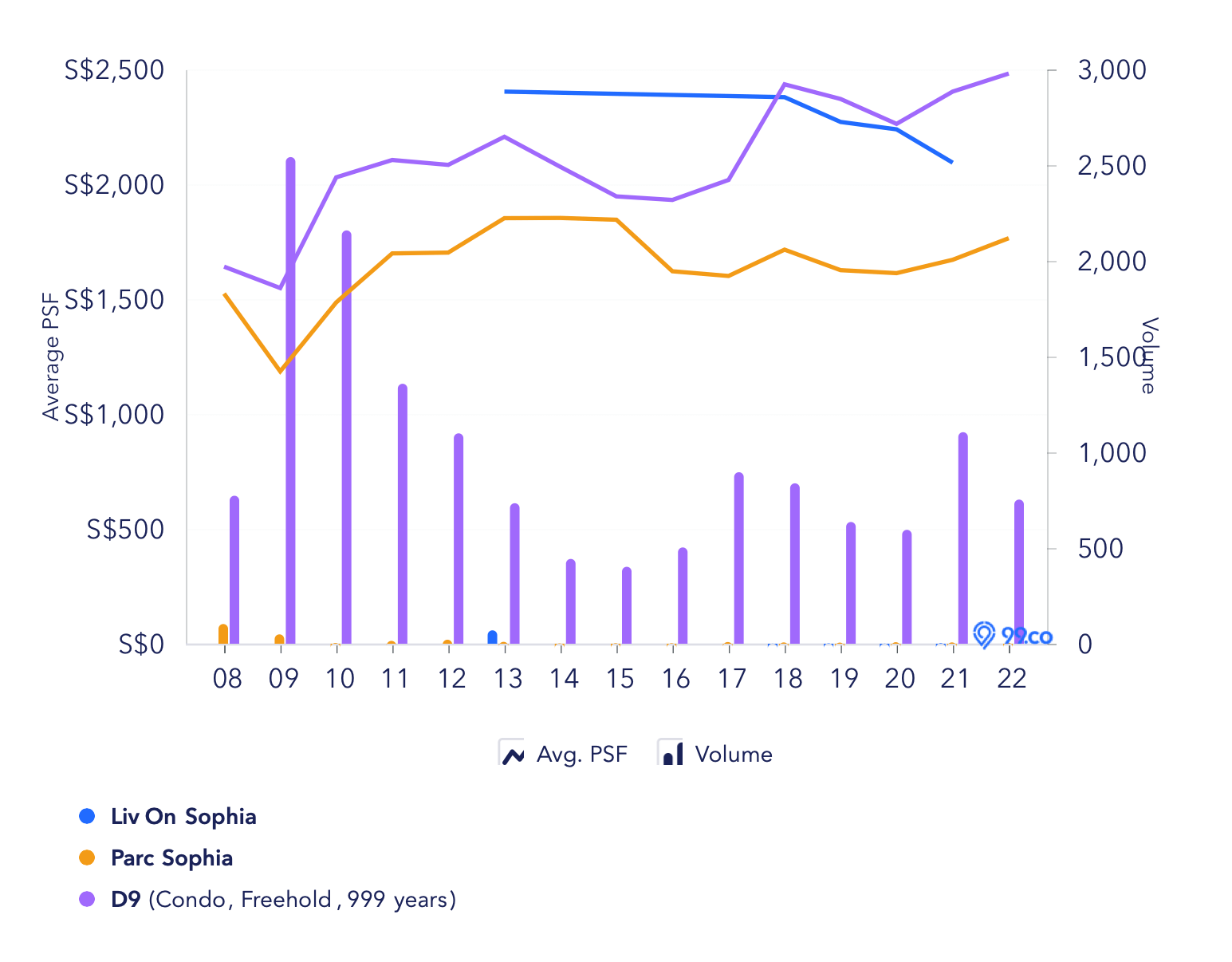
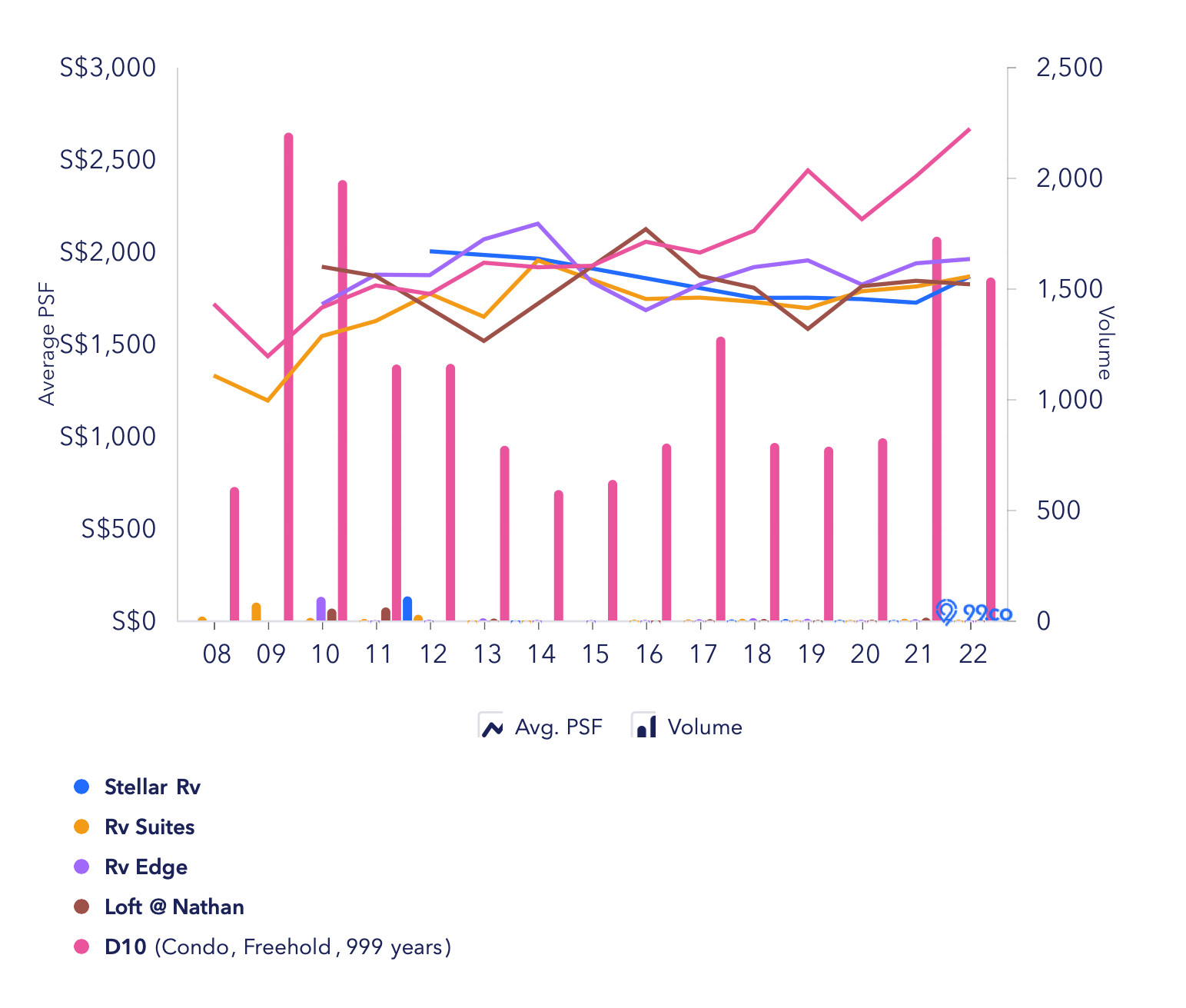
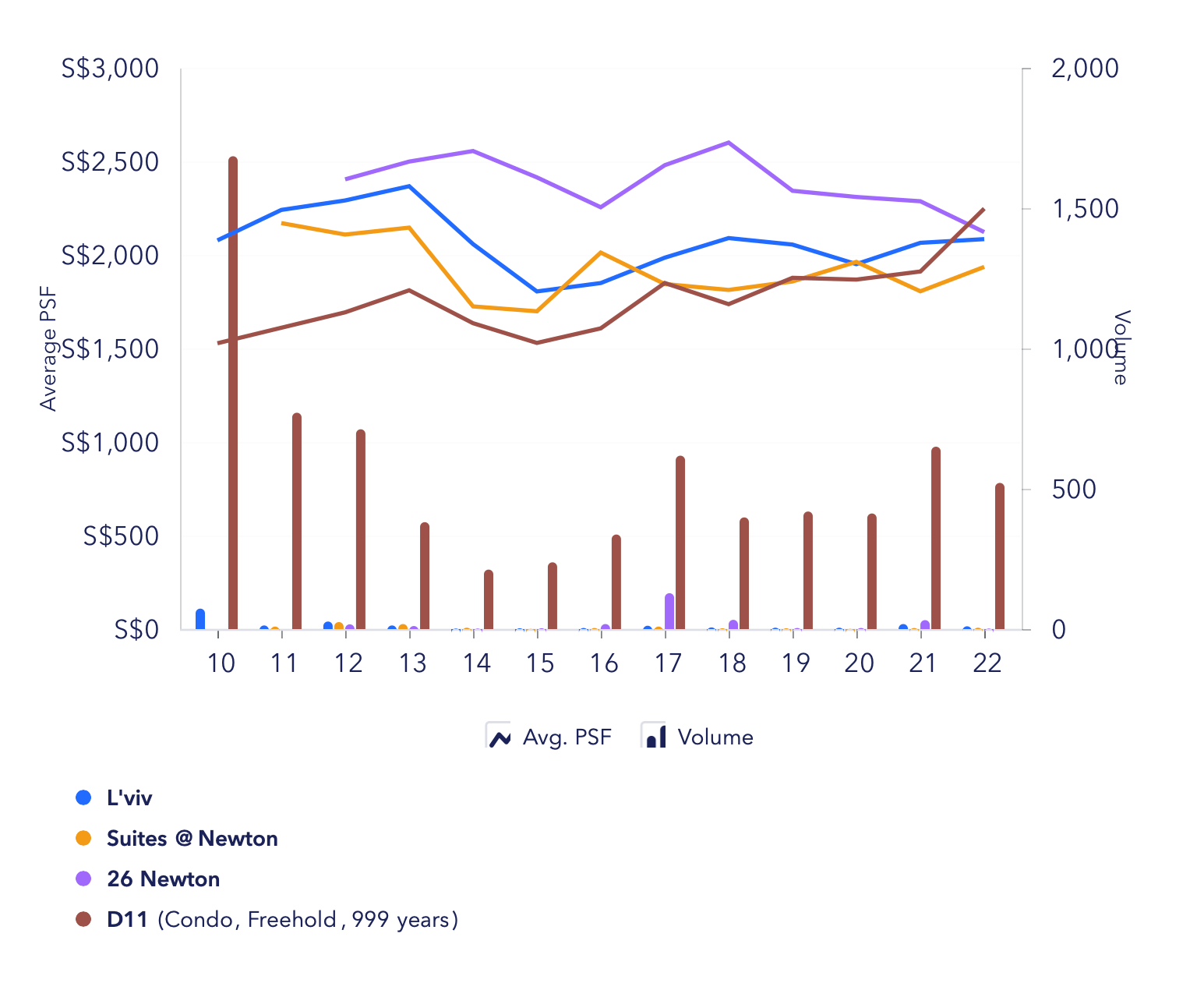
District 9 District 10 District 11 District 21
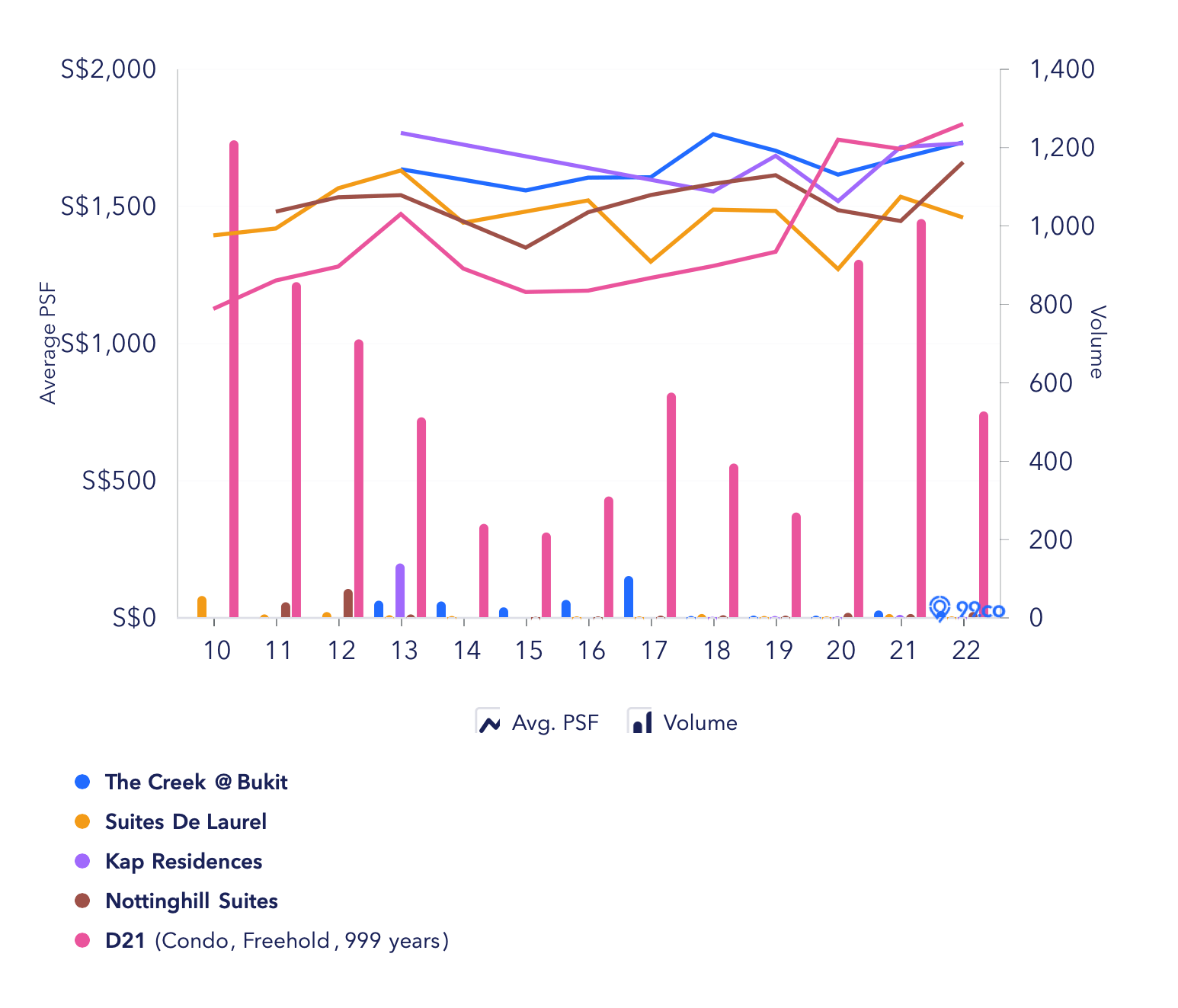
The developments shown above are those with available units that match your affordability. You’ll notice that after the launch, their transaction volumes are generally low, resulting in the trend lines appearing somewhat volatile. This is a usual concern with boutique developments because if the turnover rates are low, it is difficult for prices to move since banks value a property based on recent transactions. You can see from the graphs that prices are relatively stagnant for most of the projects, as compared to other freehold condos in the same district.

Also, many of these developments are made up of predominantly one and two- bedders which are catered more towards investors since the barriers to entry are lower. This is another issue as investors usually go wherever the money is, so if they find a better investment opportunity, they are less hesitant to let go of their units (even at a loss). This differs from genuine homeowners, who may be emotionally attached to their properties. It is advisable to get a development with a good unit mix, which caters to both homeowners as well as investors as prices are generally more protected.

Compared to an HDB flat, these projects are usually a better potential store of value. This is especially so in the long run as there is no lease decay issue. But if you’re looking for capital appreciation in the short to medium term, these may not be the best options.

That being said, we do believe there is potential for growth in the CCR provided you select the right properties.

Property Price Index (PPI) of non-landed residential properties in the different regions


Price Indices Q1 2021 Q2 2021 Q3 2021 Q4 2021 2021 Q1 2022 Q2 2022 Q3 2022 Q4 2022 2022 (Flash)
  QoQper cent change QoQper cent change QoQper cent change QoQper cent change YoY per cent change QoQper cent change QoQper cent change QoQper cent change QoQper cent change YoY per cent change
Overall PPI 3.3 0.8 1.1 5.0 10.6 0.7 3.5 3.8 0.2 8.4
Landed 6.7 -0.3 2.6 3.9 13.3 4.2 2.9 1.6 0.5 9.5
Non-landed 2.5 1.1 0.7 5.3 9.8 -0.3 3.6 4.4 0.1 8.0
CCR 0.5 1.1 -0.5 2.7 3.8 -0.1 1.9 2.3 0.5 4.6
RCR 6.1 0.1 2.6 6.7 16.3 -2.7 6.4 2.8 2.6 9.2
OCR 1.1 1.9 -0.1 5.7 8.8 2.2 2.1 7.5 -2.6 9.3

Source: URA, Propnex Research

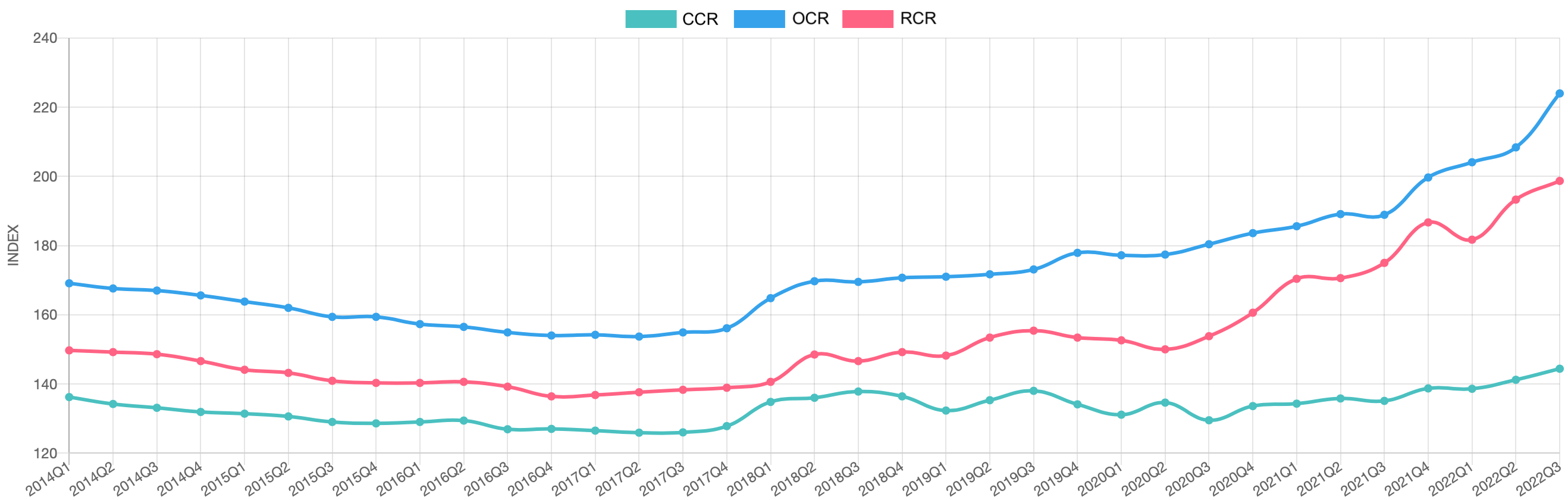
Drawing from the Property Price Index (PPI) in the different regions, we can see that prices in the RCR and OCR have appreciated significantly more than in the CCR in recent years. We do expect that prices in the CCR will eventually right themselves and the growth rate will catch up. We have recently also written a piece about the narrowing gap between prices of new RCR and CCR projects, which you can read here.

If CCR prices pick up can we expect prices of these boutique developments to pick up too?

Option 2: Save up to buy an additional investment property

Given that you currently own a flat, which we assume is under both your names, and have an outstanding housing loan, there are several things to take into consideration when purchasing a second property.

Loan-To-Value ratio (LTV)

When purchasing your first property, depending on your income, you may be eligible to loan up to a maximum of 75 per cent of the property value (for a bank loan). However, if you’re purchasing a second property while still repaying an existing mortgage loan for the first one, the LTV drops to 45 per cent of the property value.

Higher downpayment

As the LTV for a second property is reduced, naturally the downpayment increases. The downpayment is split into two portions; minimally 25 per cent needs to be paid in cash and the remaining 30 per cent can be paid using your CPF should you have sufficient funds.

Additional Buyer Stamp Duty (ABSD)

The current ABSD rate for Singaporeans buying a second property is 17 per cent which is on top of the regular BSD. Do note that when purchasing a private property, the stamp duty has to be paid in cash first, as this has to be done within 14 days after you have exercised the Option to Purchase (which isn’t enough time to apply for the withdrawal from CPF), and if you have sufficient funds in your CPF to pay for it, the cash will be reimbursed to you afterward.

CPF requirements

When buying a second property, you will need to set aside the following before you can utilise your CPF funds for the purchase:

  • The latest Basic Retirement Sum (BRS) if you have at least one property bought using CPF or the property that you are buying can cover you till age 95*
  • The latest Full Retirement Sum (FRS) if you do not have any property that can cover you till age 95

* If you subsequently sell the property that can cover you till age 95, you will need to set aside the FRS instead.

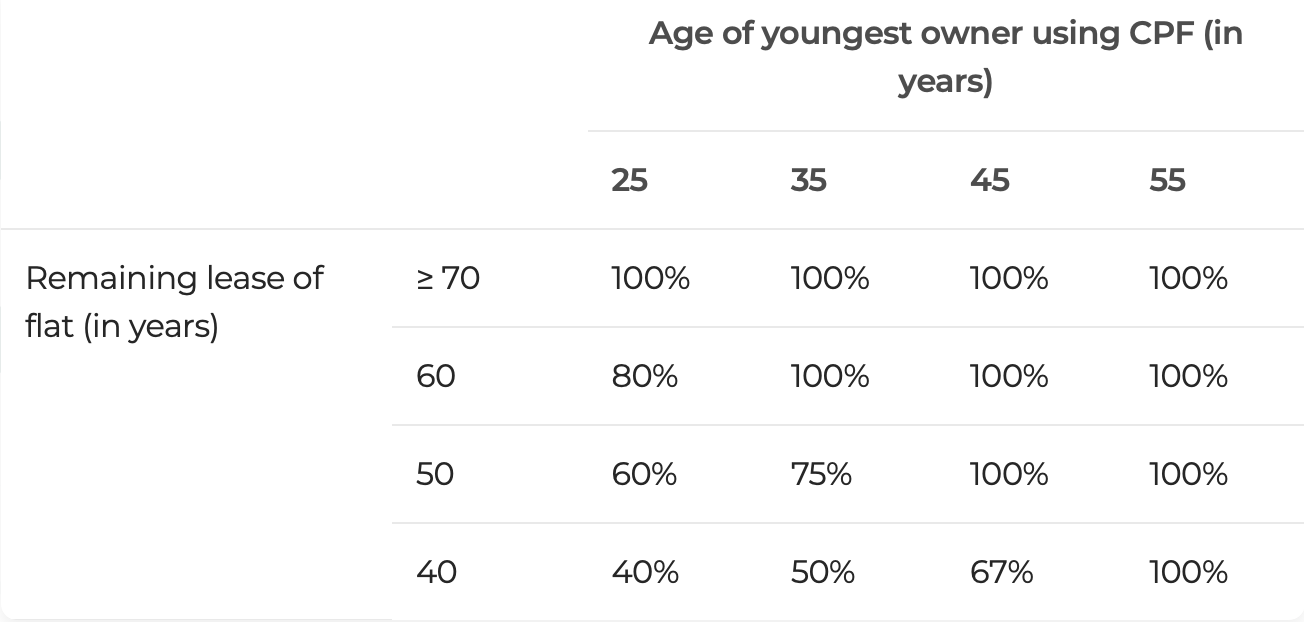
Also, the maximum amount of CPF that can be used for your second property depends on whether the remaining lease of this property can cover the youngest owner up to the age of 95.

Source: CPF

Let’s say you were to purchase a second property at $1 million for the sake of simple calculations:


Description Amount
Purchase price $1,000,000
25per cent cash downpayment $250,000
30per cent CPF/cash downpayment $300,000
BSD $24,600
ABSD of 17per cent $170,000

As we can see from the calculations above, the cash outlay required in order to purchase a second property is pretty substantial and it will likely take a long time to save up.

We’ve written a detailed piece on the merits of paying for the ABSD for an investment property, but in short, it’s not what we’d typically recommend.

Option 3: Upgrade to a larger flat (resale/BTO)

Being able to buy a BTO is a Singaporean privilege, and since we have two chances at it, most individuals/households will try for the second time if they are eligible. Of course, it’s much tougher the second time around given that only two to five per cent of BTO launches are set aside for second-timers. Also, the income ceiling to apply for a BTO is $14,000 which your household has unfortunately (or fortunately) exceeded so you are no longer eligible.

As you’ve mentioned you’re looking to build your retirement nest, buying a flat may not be the best investment choice. It is no doubt a good stepping stone for buyers looking to upgrade since you’d likely make some profits if you bought a BTO, or if you purchased a resale and managed to gain from the CPF Housing Grants.

Source: Edgeprop

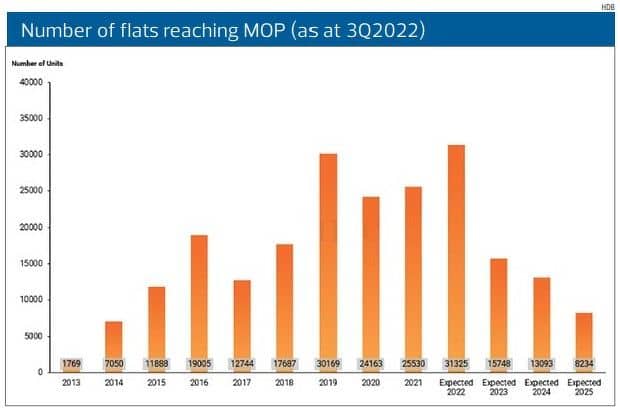
Given the reduced supply of newer MOP flats coming onto the resale market in the next couple of years, prices of HDB prices could still hold up in the short term. But even so, it is public housing after all; prices are regulated by the government in order to keep them affordable for the masses.

Alternative option

We’ve said this many times before, but a freehold property does not necessarily mean it’s better than a leasehold, and there are many other factors that contribute to the performance of a property besides its tenure. Perhaps instead of looking at freehold options in the districts you’ve identified, you can look at leasehold options instead, which will give you more choices to choose from. And if you were to open up to other locations, you’d have even more options.

These are some available 99-year leasehold units on the market that is within your affordability:


Project District Completion year Unit type Size Asking price
Sophia Hills 09 2018 2b2b 689 $1,482,000
The Panorama 20 2019 2b2b 797 $1,488,888
Thomson Impressions 20 2019 2b2b 764 $1,500,000
Sky Vue 20 2017 2b2b 678 $1,380,000
Daintree Residences 21 2023 2b2b 679 $1,399,999

These projects are picked out based on the fact that they are in your preferred districts, and for their age, so they may or may not be the most suitable for you. We would suggest you consult with an agent for further analysis.

In the ideal situation, you’ll stay in this property for the short to medium term and if it does appreciate well over the next few year, you can then upgrade again; perhaps to a bigger unit or a freehold development, which you can then live in for the longer term. You can eventually cash out for your retirement while you right size to a smaller unit.

Conclusion

Let’s do a quick recap of the options:

For the first option of buying a freehold condominium in District 9, 10, 11, 20, or 21, your choices are rather limited and the available developments are mostly boutique projects (which as mentioned, we do have some concerns over). You will have to pick carefully, as a freehold property definitely doesn’t always mean it will be a good investment.

The second option of saving up to purchase a second property for investment will require a huge cash outlay, which may take a considerable amount of time to save up for.

As for the last option of upgrading to a bigger HDB, unfortunately, your household is no longer eligible to apply for a second BTO due to your income. Regardless, buying an HDB is not the best investment tool given that it is after all a regulated market.

We will suggest looking at some younger leasehold developments that still have the potential for growth which will open you up to more choices. You can stay in this property while you wait for it to appreciate and from there, move on to a bigger unit or a freehold development where you can stay for the long term. As you’re only in your mid-30s, you’re able to maximise the loan tenure. We get that moving might be a pain, but it’s inevitable if you wish to cash out on your property which will go towards building your retirement nest.

ALSO READ: We make $15k per month and live in a 4-room HDB flat. Should we upgrade to a condo now once interest rates drop?

Why You Shouldn’t Buy Rental Properties In 2023

Why You Shouldn’t Buy Rental Properties In 2023

Why You Shouldn’t Buy Rental Properties In 2023

Feverpitched

Rental qualities are some of the most preferred investments of unique buyers.

It makes perception.

The concept of buying a house with the bank’s cash and then obtaining a tenant reimburse your house loan for you, and proudly owning the house

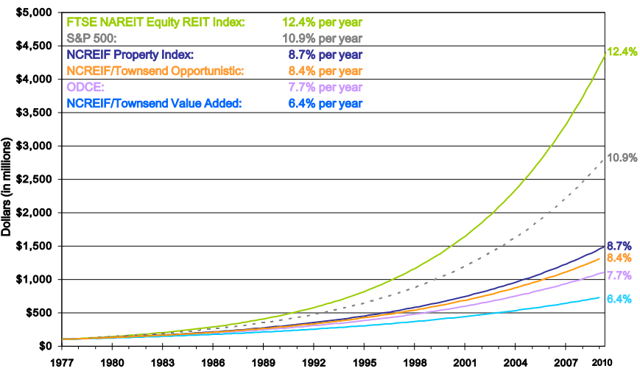
REITs outperform private real estate

EPRA

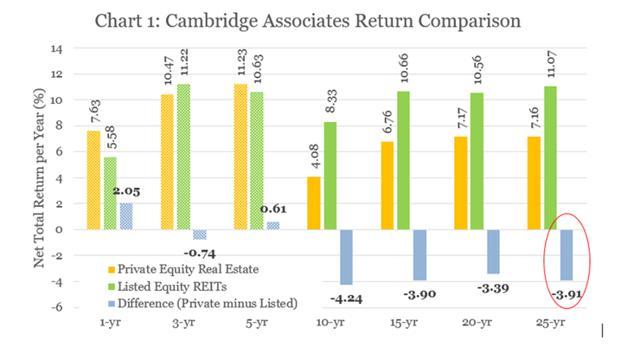
REITs outperform private real estate

Cambridge

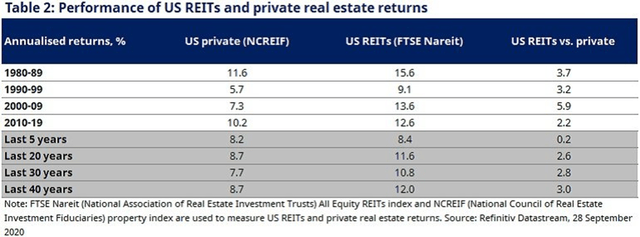
REITs outperform private real estate

NAREIT

Top 10 places in the U.S. to buy a lake house in 2023

Top 10 places in the U.S. to buy a lake house in 2023

Shopping for a lake property can be a terrific investment, whether or not as a to start with house, a trip residence, or a potential rental residence.

Evolve, a trip rental business, unveiled their rating of the most effective destinations to acquire a lake property in 2023. The corporation utilised the adhering to metrics:

  • holiday rental functionality metrics for lake towns across the U.S.
  • Zillow’s 2022 median house benefit
  • believed yearly costs to run a vacation rental

Louis Olds, the director of authentic estate at Evolve, explained to CNBC Make It that apart from using the criteria higher than to discover the very best spots, the business also looked at the ambiance of the spots to make absolutely sure visitors can rest, love by themselves and perhaps even have a breathtaking perspective.

No. 1 best location to get a lake home in 2023: Saranac Lake, New York

Median rental earnings: $25,294

Median listing selling price: $250,190

Case in point cap amount: 7.1{d4d1dfc03659490934346f23c59135b993ced5bc8cc26281e129c43fe68630c9}

Nested in the Adirondack Mountains, Saranac Lake is most regarded for its tumble foliage and ski resorts.

According to Evolve, Saranac Lake’s 7.1{d4d1dfc03659490934346f23c59135b993ced5bc8cc26281e129c43fe68630c9} cap rate— the ratio among the property’s internet income and industry value—proves the area’s financial gain potential.

Saranac Lake is also recognized for its preservation of outdated architecture. According to the Nationwide Belief for Historic Preservation, it has around 170 structures stated on the National Sign-up of Historic Spots.

The major 10 places to obtain a lake property in 2023

  1. Saranac Lake, NY
  2. Branson, MO
  3. Brainerd Lakes, MN
  4. Traverse Town, MI
  5. Smith Mountain Lake, VA
  6. Granbury, TX
  7. Pocono Lake, PA
  8. Norris Lake, TN
  9. Lake of the Ozarks, MO
  10. Gilford, NH

Branson, Missouri arrived in next on the list. The median rental profits spot is $19,440, the median listing value is $232,208, and the instance cap rate is 5.9{d4d1dfc03659490934346f23c59135b993ced5bc8cc26281e129c43fe68630c9}.

The Missouri town is also in shut proximity to other vacationer locations in the place which include Table Rock Lake.

It is a guy-produced lake with about 800 miles of shoreline and is known for its world-course fishing, according to Branson’s Tourism Board.

Brainerd Lakes, Minnesota arrived in 3rd on the list. In accordance to Evolve, homes that can carry in the largest profits in the area are lakefront cabins.

It has a median rental profits of $27,043, with a median listing price tag of $346,333 and an instance cap price of 5.5{d4d1dfc03659490934346f23c59135b993ced5bc8cc26281e129c43fe68630c9}.

According to Evolve, the space has some of the most scenic lakes, pristine general public beaches, leading-rated golf courses, and excellent ice fishing.

Indicator up now: Get smarter about your money and career with our weekly e-newsletter

Really don’t overlook:

These are the 10 U.S. towns the place housing marketplaces are cooling the fastest—and only 1 is in Florida

These are the top rated 10 most neighborly metropolitan areas in the U.S.—and only a single is in the South