If deer are prevalent in your area, then deer resistant plants are an essential addition to your garden.
While deer are shy animals, when hungry they will often stray into gardens and eat prized plants – putting a huge dent in your backyard ideas.
‘One thing to keep in mind is that if the deer are hungry, they will eat just about anything. So even though a plant may be considered deer resistant, it may still be targeted,’ says Jo Ellen Meyers-Sharp, gardening coach and creator of Hoosiergardener, and a member of the National Garden Bureau.
This makes it important to also consider how hardy your plants are, and whether they will easily recover from a deer munching session.
‘Gardeners don’t spend money on their plants to have them be a salad bar for deer, so many gardeners use repellents to keep deer away.’
While you can’t create a 100 per cent deer-proof garden, there is a wide voice of deer resistant plants available to help deter them and minimize any damage.
Best deer resistant plants
Whether you are looking for evergreen shrubs to serve as the backbone of your garden scheme, or annuals to fill in gaps in pots and borders, there are some wonderful deer resistant plants to choose from.
We asked the experts for their top picks.
Deer resistant shrubs
Shrubs provide much of the structure and interest in our gardens year round. Some are evergreen, adding color and interest in every season.
1. Panicle hydrangea
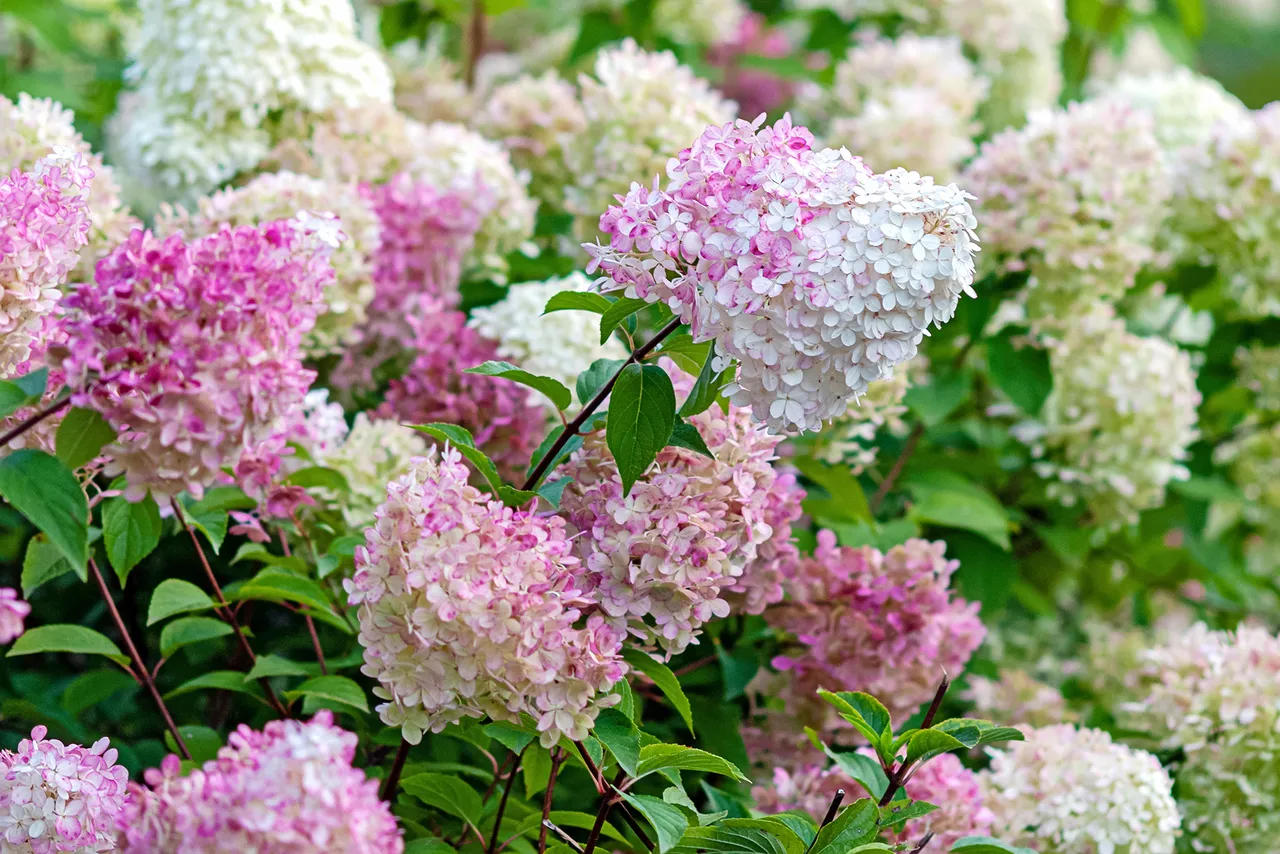
(Image credit: Getty Images)
Panicle hydrangeas – or Hydrangea paniculata – are moderately fast-growing shrubs that are not favored by deer. However, even if they do have a munch, the plants are hardy, so should recover well.
‘Panicle hydrangeas have flowers in the white to pink to light red range. They bloom during the summer months and the flowers last through fall, typically fading to a handsome light tan as temperatures drop before winter,’ says Sam Schmitz, horticulturist for Ball Horticulture.
‘There are many different varieties that range in mature size from 2ft x 2ft to 8ftx8ft. These shrubs are best in full sun but can also tolerate light shade.’
Make sure you know how to grow hydrangeas to get the best out of them.
2. Osmanthus

(Image credit: Clive Nichols / Getty Images)
‘Osmanthus is an easy-to-grow shrub that can tolerate many different soils and light levels. It is often used for hedging and privacy screens,’ says Michael Giannelli of East Hampton Gardens.
It produces a cluster of tiny white flowers that emit a sweet fragrance similar to magnolias and gardenias.
Its scent and the plant’s spiny leaves also make it unappealing to deer. ‘This has the consequence of making them difficult to handle, although there are smoother varieties available, like Carl Wheeler,’ adds Giannelli.
You can grow osmanthus in USDA zones 7-10.
3. Lavender

(Image credit: Adrian Wombwell / Getty Images)
Lavender’s scent may be heavenly to us, but deer tend to dislike it, making it an ideal shrub for your garden.
‘Lavender grows best in well-drained soil with full sun exposure,’ says Lindsey Hyland, founder of Urban Organic Yield.
‘It does not require a lot of maintenance, but can sometimes be susceptible to pests like mites and aphids.’
Learning how to grow lavender is easy for gardeners in most climates, however the plant dislikes humidity. Expect to be able to grow it in zones 5a to 9a.
4. Ninebark

(Image credit: Getty Images)
Ninebark – or Physocarpus opulifolius – is a fast-growing, medium to large shrub that typically produces frothy white flowers in late spring and early summer.
‘To add to this, the plants come in foliage colors of bronze-red, burgundy, purple, chartreuse, and a few others,’ says Schmitz. ‘
‘These shrubs are quite lovely and very easy to maintain. They are happiest planted in full sun but can tolerate a few hours of shade a day.’
Ninebark is also a great choice for colder climates, and can be planted in USDA zones 2-7.
5. Japanese andromeda

(Image credit: Getty Images)
Japanese andromeda – or pieris – has a distinctive scent that some gardeners like and others avoid – however, it smells particularly unpleasant to deer.
‘Andromeda is sometimes referred to as the lily of the valley plant as its early spring flowers look similar,’ says Giannelli
‘It is a great evergreen shrub that changes color as the season progresses, setting long clusters of buds in fall for great winter interest.’
However, bear in mind that andromeda are fussy about soil type. ’They need very well-drained acidic soil,’ adds Giannelli.
If your soil is more alkaline, then the best thing to do is to grow them in containers. They should thrive in USDA zones 5-8.
6. Red twig dogwood

(Image credit: Leigh Clapp)
‘Red twig dogwoods are mainly grown for their attractive foliage and bright red stems,’ says Schmitz. These particularly come into their own in winter.
The shrubs are deer resistant plants, but if deer do try to eat them, the good news is that red twig dogwoods are fast growing and tolerate harsh pruning, meaning they will easily spring back.
‘They are adaptable to a number of environmental conditions. You can grow them in full sun or up to 50 per cent shade,’ adds Schmitz.
‘Bear in mind that red twig dogwoods can become large over time, but maintaining their size is simple. These can be pruned any time of the year and can be transplanted quite easily.’
Keep on top of maintenance by removing old or diseased canes and keep the shrub looking tidy.
Grow them in USDA zones 3-8, and also consider other types of dogwoods that can be used, which range from medium shrubs to small trees.
Deer resistant perennials
There are many deer resistant perennials available that will make a beautiful feature in your borders. Discover the experts’ top picks.
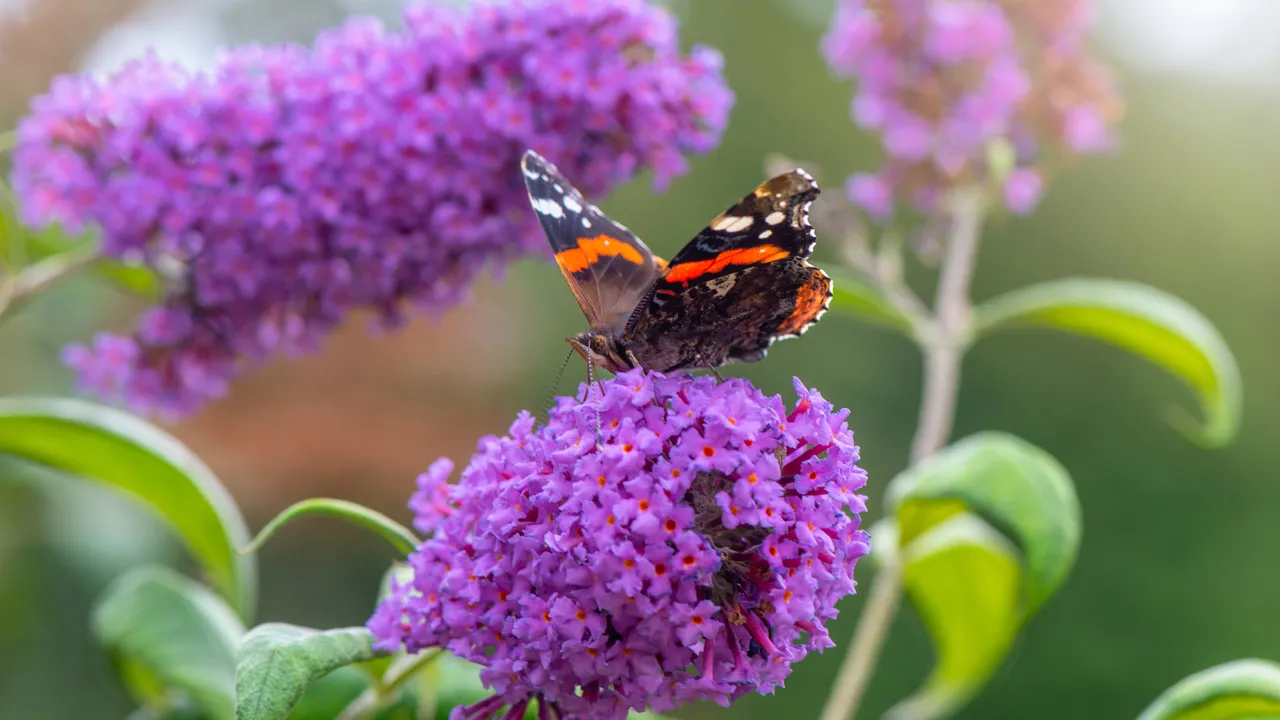
1. Buddleia
(Image credit: Getty Images)
Also known as butterfly bushes for being highly attractive to these precious pollinators, buddleia are not appealing to deer.
‘Though shrubs, buddleia behave more like woody perennials, as in colder areas they dye back almost to the ground each winter and regrow their full size through the season,’ explains Schmitz.
If the plant doesn’t completely die back, it’s a good idea to cut it right back anyway.
‘They grow quickly as they come back up and can reach 6-7 foot tall in a single season. The flowers can be white, blue, cranberry, purple, lavender, and pink with many shades in between.’
Buddleia require full sun in order to thrive, and can be grown in USDA zones 4-10, depending on the variety.
As it grows so fast, ensure you know how to prune buddleia to keep it under control and looking its best.
2. Purple coneflower

(Image credit: Getty Images)
Also known as echinacea, purple coneflower is a popular plant among pollinators – but its fragrance and spiny center make it unappealing to deer.
‘A native perennial, purple coneflower prefers moist, well-drained soils but is drought tolerant once established,’ says Millie Davenport, director of the Clemson Extension Home and Garden Information Center.
The plants die back to the ground over winter, and can grow up to 4 feet tall in the growing season.
‘Not only a great nectar source for pollinating insects, birds also enjoy the seedheads of purple coneflower in the fall,’ adds Davenport.
You should be able to grow purple coneflower in USDA zones 3-9.
3. Bearded iris

(Image credit: Unsplash)
The scent and taste of bearded iris is unpalatable to deer, but its exotic-looking blooms are a beautiful addition to the spring and summer garden.
‘Some varieties, such as Immortality, rebloom in late summer and early fall,’ says Meyers-Sharp.
‘Each flower can be one color or it can have two or more colors.’
You can grow bearded iris in a sunny spot in well-draining soil, in USDA zones 3-9 – learn how to grow irises properly to make sure they flower.
‘Cut back the leaves in the fall,’ adds Meyers-Sharp. ‘When planting, make sure the rhizome (underground stem) is right at, or slightly above the soil surface. If planted too deep, the iris will not bloom.’
4. Baptisia

(Image credit: Getty Images)
‘Baptista – or false indigo – is a perennial herb native to much of central and eastern North America, and is a great deer resistant plant,’ says Davenport.
It prefers moist, well-drained soil but is drought tolerant once established. You should be able to grow it in zones 5-9.
‘Though disliked by deer, it is a host plant for the larvae of several butterfly species, including orange sulphur, clouded sulphur, frosted elfin, eastern tailed blue, hoary edge, and wild indigo duskywing,’ adds Davenport.
Deer resistant annuals
Don’t forget annuals when choosing deer resistant plants for your garden – these are ideal for filling in gaps and many have a long flowering season.
1. Cosmos

(Image credit: Thompson & Morgan)
Not only are cosmos deer resistant plants, but they are beloved of pollinators, make great cut flowers, and fill out summer borders wonderfully.
‘Cosmos are beautiful airy plants that thrive in full sun, although they’re fine with some shade too,’ says Teri Knight, radio show presenter, and founder of the Garden Bite podcast and website.
‘They are easy to grow handling hot, dry conditions, and you can grow them from seed or potted plants.’
It’s so easy to learn how to grow cosmos as an annual in most climates, and they make such an impact in the garden. Choose from dazzling pinks through buttercup yellow and purest white.
2. Flowering tobacco

(Image credit: Getty Images)
‘Flowering tobacco – or Nicotiana alata – has wonderfully fragrant flowers, especially at night, so plant in a sunny area where you can enjoy the perfume,’ says Meyers-Sharp.
However, deer won’t enjoy their heavenly fragrance quite so much, which makes them a great deer resistant plant.
‘Hummingbirds, hummingbird moths and other night pollinators also visit these native plants,’ adds Meyers-Sharp.
‘Nicotiana sylvestris, or woodland flowering tobacco, tolerates shade and is also fragrant.’
As old-fashioned plants, flowering tobacco are also a great addition to your cottage garden ideas, working well in borders and containers.
3. Dusty miller

(Image credit: Getty Images)
Though technically a herbaceous perennial, dusty miller – or Senecio cineraria – is usually grown as an annual, and is prized for its silvery grey foliage that acts as the perfect foil for nearby flowers.
‘Dusty Miller is such a fantastic silver plant that will highlight the colors of other plants,’ says Knight.
It’s adaptable to various soil types, and can cope well with drought-like conditions. Being a Mediterranean plant, it does like full sun, so don’t plant it in the shade.
‘Plant potted plants in the ground or in a container that has good drainage,’ adds Knight.
4. Lantana

(Image credit: Getty Images)
Lantana is another perennial that is grown as a summer annual. ‘If you live in the south and south-west, you may find it to be winter hardy,’ says Meyers-Sharp.
Due to the flowers’ strong fragrance and the plant’s rough texture, lantana is usually avoided by deer. However, it is a magnet for pollinators and hummingbirds.
‘Lantana can take about as much heat and sun as you want to give it. It’s also fairly drought tolerant,’ adds Meyers-Sharp.
It’s ideal for adding to colorful borders and also grows beautifully in containers.
Deer resistant plants for shade
‘It’s fairly easy to find deer resistant plants that love the sun, but shade plants can be tricky,’ says Knight.
Luckily there are a few great choices to add to shady spots in the garden.
1. Bleeding heart

(Image credit: Getty Images)
Also known as Dicentra spectabilis, bleeding heart is a shade-tolerant herbaceous perennial named for its heart-shaped flowers that is repellant to deer.
Native to woodlands, it pops up in borders in the spring giving much-needed color, before dying back just in time for the summer showstoppers to take its place.
‘Bleeding heart is an old-fashioned plant with plenty of appeal to last,’ says Knight. ‘There are many cultivars now including ‘Golden Hearts Bleeding’ with its chartreuse leaves.
‘Growing to a compact 2ft x 2ft, this beauty tucked in around your hostas just might be able to give them some protection.’
You can grow bleeding heart in USDA zones 3-9.
2. Ferns

(Image credit: Getty Images)
Lush leafy ferns tend to be overlooked by deer, but make a lovely textural addition to a shade garden.
‘I particularly like autumn fern, Christmas fern and Japanese painted fern – their height reaches anything from 10-36 inches tall,’ says Davenport.
‘Ferns prefer moist, well-drained soil high in organic matter.’
Their hardiness is dependent on the variety, but you should be able to find ferns to grow in as low as zone 2.
3. Hellebores

(Image credit: Future)
As well as offering winter interest to gardens, hellebores are also highly deer resistant. Evergreen plants with jewel-colored flowers, they will tolerate dry shade.
‘Depending on the variety, hellebores bloom from early winter into June, and they even bloom in snow,’ says Meyers-Sharp.
It’s easy to learn how to grow hellebores , with varieties suitable for USDA zones 3-9.
‘A lot of gardeners trim off the winter-damaged leaves in spring as the plants begin to bloom, but it’s not necessary,’ says Meyers-Sharp.
What plants do deer hate the most?
‘Deer generally dislike plants with aromatic foliage, such as rosemary and sage,’ says Hyland. ‘They also avoid statuesque plants such as yews, hollies, and boxwoods.’
Anything spiny or fuzzy will also be unpalatable to deer – so consider a plant’s texture.
What plants do deer eat the most?
Deer tend to adapt well to their local habitat and enjoy many of the plants that are grown there. They particularly enjoy eating tulips and hostas.
‘In rural areas, they tend to browse crops such as soybeans, grains, vegetables and fruits,’ says Davenport.
‘However, the bottom line is that no plant is deer-proof. They prefer some plants over others, but they will eat what is available when they have no other choice.’
For more information, see the Clemson Extension Home & Garden Information Center Website and HGIC Deer Resistant Plants for the Landscape- Annuals & Perennials.