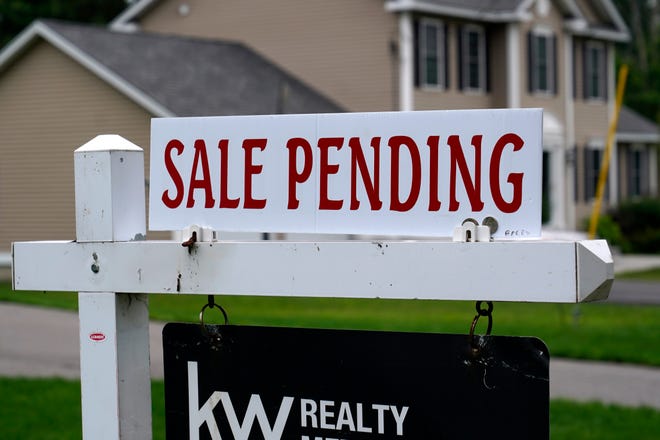
Anything can be done online. Some tech companies, like Zillow and Redfin, think they can even buy and sell houses online, and are dreaming of becoming the Amazon of what has come to be known as ‘‘iBuying.” But they’re finding out that buying and selling assets worth hundreds of thousands of dollars is a bit harder as an online industry than buying and selling books.
Last week, Zillow made a startling announcement that it would stop buying homes for the rest of the year, self-reportedly due to a “backlog of renovations and operational capacity constraints” that it blamed on the supply chain issues plaguing the economy.
This news made a splash in the world of iBuying, a relatively new industry in which companies like Zillow, Redfin, OfferUp, and Opendoor allow homeowners to avoid the tedious process of listing and staging homes by selling directly (and quickly) to them. But it also caught traction on TikTok where Sean Gotcher, a Las Vegas real estate agent, posted a video with Zillow’s news laughing at the company’s troubles.
Gotcher had already achieved the sort of brief internet fame one can most easily get on TikTok when he posted a video in September that has now received more than 3 million views. In it, he insinuates that iBuyer companies are manipulating the market by intentionally overpaying for some homes in order to sell others that they’ve already bought in nearby areas for a higher price.
While some of Gotcher’s claims are far-fetched and verge on conspiracy theories (and since real estate agents directly compete with iBuyers, you should take claims either entity makes about the other with a grain of salt), the video went viral because it struck at the heart of a growing fear that housing is becoming less like shelter and more like a risky financial asset traded on Wall Street. This anxiety is not new but has become electrified over the course of the pandemic as a hot housing market and a historic undersupply of housing have locked out young and first-time homebuyers. Earlier this year, fears that BlackRock and other institutional investors were responsible for current market conditions were rampant despite a lack of evidence for the claim.
iBuyer companies make up a very small share of the market — roughly 1 percent of home sales in the second quarter of 2021, at what is their peak so far — but it’s important to take concerns about their growth seriously. While iBuyers contend that they are offering a clear solution to reducing the stress of the home-selling process, US policy has predicated financial security on homeownership, and the introduction of large firms into the space raises fears of potential anti-competitive and predatory behavior.
The Amazon of real estate?
The process of selling a house is stressful, to say the least. On top of the general concern —about getting the best price for the most expensive thing you have ever owned and in which you have likely already invested tens of thousands of dollars and countless hours — is all the logistical stuff. As a part of staging the house, sellers may have to do front yard work, repaint the interior and exterior, replace the carpets, hire a professional photographer for the listing, keep the interior clean in preparation for showings, figure out where to take the home’s dogs and children when there are showings, hire a real estate agent, the list goes on.
This doesn’t even include trying to time your home sale to coincide with the move-in date of your new home or city. Often, people will need to have sold their home in order to buy a new one, which means there can be additional transaction costs there too if you have to put all your things in storage and live at a family member’s place or a rental while you look for your new home.
This is the problem iBuyer companies say they are looking to solve. Instead of having to go through the hassle of this entire process and potentially incur some costs, homeowners can take an iBuyer’s offer — and then the company does the work of staging, listing, and selling the house to someone else.
There are are a couple of ways these companies can turn a profit: first, the difference between what they purchased the home for and what they are able to sell it for (minus any costs for renovations, upkeep, and selling), and second, the fees they charge homeowners to sell the property.
Whether any of them are actually turning a profit is a whole other matter.
iBuyers are growing quickly. According to University of Colorado Boulder’s scholar-in-residence Michael DelPrete, in 2018 iBuyer companies made up roughly 0.2 percent of the market; in 2019, his numbers show that iBuyers accounted for roughly 31,000 purchases or 0.5 percent of the U.S. market. According to research by Zillow, in Q2 of this year iBuyers’ market share reached 1 percent for the first time.

But according to research by DelPrete, the profit margins in this industry are narrow. Looking at this past quarter, Opendoor and Zillow were posting net losses (-$144 million and -$59 million, respectively). While Offerpad did post a profitable quarter ($9 million), DelPrete notes that “the overwhelming majority of profits are coming from record home price appreciation, which is temporary, and appears to be falling.”
Though these numbers are small in the context of the national housing market, iBuyers have historically been relatively concentrated in specific regions like the Sun Belt where there’s more new single-family construction, since it’s easier to accurately price new, relatively similar homes. In 2019, DelPrete’s research showed that in the largest iBuyer market, Phoenix, they’d reached a 5.5 percent market share. However, Zillow data from Q2 of this year indicates that that number hasn’t shifted much with market share at 5.7 percent in Phoenix. Other cities with a relatively high share include Atlanta (5.3 percent), Charlotte (5.3 percent), and Raleigh (5.0 percent).
Redfin, despite expanding its iBuying business, is still heavily committed to its traditional real estate model. In a statement, Jason Aleem, vice president of RedfinNow (the iBuying arm of Redfin) said: “Part of what makes RedfinNow different is our ability to educate sellers on all of their options in a single conversation. … Many are drawn to the certainty of our competitive cash offers, but those who still want to list on the open market for the lowest fee can do that with a local Redfin agent.”
But are these companies big enough to manipulate the market?
Taking concerns about market manipulation seriously
Despite Gotcher’s TikTok video claims, I’m very skeptical that iBuyers could manipulate the market to systematically undercut homeowners on the initial price of their homes and then set higher prices when they return to the market.
Take the first part of that plan — to systematically buy homes for less than they’re worth. There’s simply too much competition to be able to do that reliably. For one, there are other iBuyer companies that compete against one another. They find themselves in bidding wars with the other companies not infrequently, and some research indicates that the price they’re willing to pay is going up faster than the rest of market. And it’s not just iBuyers competing against one another — there are also thousands of real estate agents who would be happy to sell your home for you.
These companies simply don’t have the power to consistently drive up prices on homes they sell. Let’s break down exactly what would have to happen for an iBuyer to be able to do something like that. First, they would need to buy a significant number of homes within a given market. What a market is is up for debate, but you’d need to get enough market share to shift prices — courts have defined monopoly power as greater than 50 percent. To emphasize how far away iBuyers are from this, in the markets where they are most active that have achieved roughly 5 percent of sales, not even all the homes, just the ones that are selling. And that’s all iBuyers, not one specific company.
But that’s not even the hard part. The hard part would be that they’d need to hold onto the homes until they’d achieved a high enough market share. iBuyers are usually putting houses back on the market in a matter of a few months. They’d need instead to pay upkeep costs, property taxes, and take on the huge risk that all the homes that they are holding onto within a given area don’t tank in value because of something unrelated like an economic downturn or changing living preferences or a hurricane.
This strategy quite evidently has some major downside risks. There’s only so much that even a regionally monopolistic firm would be able to charge before people would choose to live elsewhere.
It would also require that these companies can accurately price homes. Failing to accurately build an algorithm is very costly — Bloomberg reported that when Zillow “tweaked the algorithms that power its home-flipping operation to make higher offers … it had to stop making new offers” after winning too many bids. The market is appreciating more slowly than earlier this year, which means when you take into account the renovation costs and selling costs, Zillow could end up selling those homes at a loss.
It seems as though iBuyers are not resting their business model on selling homes. Instead, as the Wall Street Journal reports, they’ve “been clear that their businesses are built to mostly make money off of ancillary services like mortgage, title insurance and escrow.”
But not all the worries about these firms’ power can be brushed away easily.
To start an iBuying company, you need to be able to raise a lot of money. That means it’s hard for new competitors to join the market. It costs hundreds of millions of dollars in order to be a serious competitor — you have to be able to buy a lot of homes, hire contractors to do the necessary renovations, and also have all of the employees and independent agents to sell the homes as well. That doesn’t even include all the work needed to accurately build an algorithm that prices the homes accurately.
It’s possible that iBuyers could have downstream effects not just on homebuyers, but renters too: They’re not just putting the homes on the market for regular people to buy; they are often selling directly to institutional investors (like private equity firms) instead. According to Desiree Fields, assistant professor at UC Berkeley, there is a “growing role for iBuyers” observed in institutional investor activity in the market. She cites reporting from Business Insider that one CEO expects that up to 20 percent of homes his firm is buying for an institutional investor will come from iBuyers.
While the impact of institutional investors is contested, Fields says that these firms are more likely to pursue eviction than smaller landlords and some even practice predatory “serial eviction filings,” a tactic that disempowers tenants from “reporting problems to their landlords and fosters housing insecurity by adding late fees, attorney fees, and other costs to rent arrears.”
The bottom line: iBuyers are providing a service. It’s not clear they’ve really figured out how to make money. Understanding it as a fledgling industry in need of oversight rather than a behemoth manipulating the housing market is important to understand where the power really lies: in the hands of regulators.
Whether iBuyers end up being an option for homeowners or usher in an institutional investor frenzy that harms renters too is a regulatory question.
First, the underlying reason that home prices have skyrocketed is because of historic undersupply. Experts are clear that issue is largely the result of exclusionary zoning laws that have made it impossible to build sufficient homes to meet demand, and in particular demand for starter homes for first-time homebuyers and lower-income homebuyers. Because there is artificially constrained supply, investors hungry for quickly appreciating assets have turned to the housing market.
Second, lack of protections for low-income tenants was an emergency long before iBuyers or institutional investors ever became a presence in the American housing market. While this past year has pushed governments to be more willing to enact tenant protection measures like eviction moratoria and rent relief, tenants often lack basic protections from landlords who openly flout even the few laws that are enacted, due to lack of consistent enforcement.
People aren’t irrational to fear what increased investor activity in housing could mean. But it’s important to accurately diagnose what’s going on here and the actual range of potential harms. If not, the policy solutions designed by the government could fail to protect the people who need it the most.