‘Million Dollar Listing’ star Josh Flagg credits luxury real estate boom to more money in pocketbooks

‘Million Dollar Listing’ star Josh Flagg credits luxury real estate boom to more money in pocketbooks

The luxury real estate market is still experiencing exponential demand and “Million Dollar Listing Los Angeles” star Josh Flagg told “The Claman Countdown” that people having extra money to spend is to credit.

“The bottom line is this: There’s a lot of money available,” he said. “People have money and I don’t know where it came from all of a sudden… You think during a pandemic, you know, the last thing you would think that people would be doing is buying real estate. It’s totally counterintuitive.” 

Flagg repeated that he does not know where extra cash flow is coming from, but it’s evident that buyers are willing to spend it.

HOUSES IN THE HAMPTONS: A LOOK INTO LONG ISLAND’S LUXURY REAL ESTATE 

“It’s incredible,” he said. “And remember, for a minute, the market in New York was down. Remember, right before COVID, it was soft. And then it popped up like crazy.”

According to Flagg, the state of the real estate market is seemingly unpredictable and anyone who argues otherwise is “full of it.”

“There’s no answer,” he said. “I mean — this could stop tomorrow. This could go for another 10 years.”

Since earlier on in the pandemic when urban residents flocked to the suburbs and demand was blatantly urgent, Flagg expressed that not much has changed. Even in his primary market of Beverly Hills, inventory is still low.

GET FOX BUSINESS ON THE GO BY CLICKING HERE

In the last week, Flagg shared that he’s had four showings on a $30 million house which is practically unheard of in that high of a price range.

“I’ve never had four showings on the $30 million house before in my life,” he said. “Because there’s just not that many buyers at that price point… This is why people are having such a hard time getting houses because they’re being outbid left and right.”

Flagg promoted his new spinoff “Million Dollar Listings Los Angeles: Josh and Josh” which dives into the personal and professional lives of Flagg and real estate partner and former enemy Josh Altman.

“It took us a long time to get together. But now, you know, we’re best of friends,” he said. “We live a couple of blocks from each other. We’re on the phone three times a day. We do tons of business together. And this show is different, I guess, also, from “Million Dollar Listing” because it’s really focused on listings that are outside of Los Angeles.”

CLICK HERE TO READ MORE ON FOX BUSINESS

Investors Snap Up Metaverse Real Estate in a Virtual Land Boom

Investors Snap Up Metaverse Real Estate in a Virtual Land Boom

Justin Bieber performed at a live concert this month, but the show wasn’t in a stadium or an arena. Like recent performances from Ariana Grande, the Weeknd and Travis Scott, this concert was held in the metaverse, the online world that stretches the corners of the internet into immersive, four-dimensional experiences.

Fans from all over the globe watched Mr. Bieber’s avatar sing songs from his hit album “Justice.” Investors were watching, too. Preparing for a digital land boom that appears just months away, they are snapping up concert venues, shopping malls and other properties in the metaverse.

Interest in this digital universe skyrocketed last month when Mark Zuckerberg announced that Facebook would be known as Meta, an effort to capitalize on the digital frontier. The global market for goods and services in the metaverse will soon be worth $1 trillion, according to the digital currency investor Grayscale.

The metaverse comprises multiple digital realms. Each is like a 3-D virtual city where avatars live, work and play. Anyone who has been exposed to popular video games like Fortnite, Animal Crossing and the Roblox universe has had a taste of what these realms look like. In each, elements including virtual reality, streaming video, mobile gaming, avatars and artificial intelligence are combined into immersive digital experiences.

But real estate investing in the metaverse still is highly speculative, and no one knows for sure whether this boom is the next big thing or the next big bubble.

Technologists believe the metaverse will grow into a fully functioning economy in a few short years and offer a synchronous digital experience that will be as integrated into our lives as email and social networking are today.

Money in these digital worlds is cryptocurrency, as finance in the metaverse is powered by the blockchain — a digitally distributed public ledger that eliminates the need for a third party, like a bank. Anyone entering a virtual world can buy or trade art, music and even homes as nonfungible tokens, or NFTs, which are blockchain-based collectibles that are digital representations of real-world items. The NFT serves as proof of ownership and is not interchangeable.

And in recent months, the volume of transactions for commercial real estate in the metaverse has ramped up.

In October, Tokens.com, a blockchain technology company focused on NFTs and metaverse real estate, acquired 50 percent of Metaverse Group, one of the world’s first virtual real estate companies, for about $1.7 million. Metaverse Group is based in Toronto but has virtual headquarters in a world called Decentraland in Crypto Valley, which is the metaverse’s answer to Silicon Valley. Decentraland also has districts for gambling, shopping, fashion and the arts.

“Rather than try to create a universe like Facebook, I said, ‘Why don’t we go in and buy the parcels of land in these metaverses, and then we can become the landlords?’” said Andrew Kiguel, a co-founder and the chief executive of Tokens.com.

Since that acquisition, Tokens.com has broken digital ground on a tower in Decentraland. Louis Vuitton, Gucci, Burberry and other luxury brands have already entered the metaverse via NFTs, a move that makes company executives optimistic that the Tokens.com tower will soon generate revenue from leases and advertising for brands like these.

For those wondering why a company would want to invest in a virtual office in the metaverse, Michael Gord, a co-founder of the Metaverse Group, said skeptics should look at the trends catalyzed by the pandemic.

“As more people participate, it’s where you’re going with friends, where you’re having experiences like conferences and concerts,” he said. “It’s inevitable that the metaverse will be the No. 1 social network in the world.”

The Metaverse Group has a real estate investment trust, and it plans to build a portfolio of properties in Decentraland as well as other realms including Somnium Space, Sandbox and Upland. The internet may be infinite, but virtual real estate is not — Decentraland, for example, is 90,000 parcels of land, each roughly 50 feet by 50 feet. Among investors, there’s a sense that there’s gold in those pixelated hills, Mr. Gord said.

“Imagine if you came to New York when it was farmland, and you had the option to get a block of SoHo,” he said. “If someone wants to buy a block of real estate in SoHo today, it’s priceless, it’s not on the market. That same experience is going to happen in the metaverse.”

Last week, Tokens.com closed an even larger land deal in Decentraland’s fashion district for roughly $2.5 million. The company, which says the real estate transaction was the largest in metaverse history, plans to develop the area into a virtual commerce hub for luxury fashion brands, à la Rodeo Drive or Fifth Avenue.

Mr. Kiguel estimates his portfolio in the metaverse is valued at up to 10 times more than its purchase price, and much of the reasoning will sound similar to anyone who has ever bought or sold real estate.

“It’s location, location, location,” he said. “A parcel of land in the downtown core, which has a lot of visitor traffic, is worth more than a parcel of land in the suburbs. There’s a scarcity value.”

Many of these digital realms appear as cartoonish, gummy-colored fantasy worlds, while others are digital applications of the planet we already know and love. SuperWorld, a virtual real estate platform mapped over the entire face of the globe, offers 64.8 billion plots of land — each for sale as an NFT. The Taj Mahal is available, as is, most likely, your childhood home. Owners can buy plots for reasons sentimental or savvy, but either way, once they buy the NFT, they get a share of any of the commerce that happens on that piece of property.

“You can buy locations that you love, whether it’s Central Park or the pyramids in Egypt,” said Hrish Lotlikar, a co-founder and the chief executive of SuperWorld. “What you’re buying is the virtual land that covers the earth at those locations.”

And as the metaverse seeps more deeply into the everyday consciousness of our universe, there’s a new realm where the divide between them gets rubbed away: the omniverse.

The real world and the online world merge into one hybrid universe, where the fungible and the nonfungible intersect at multiple points, said Justin Banon, a co-founder and the chief executive of Boson Protocol, which enables the sale of physical products in the metaverse as NFTs. Real estate in the metaverse will house the commerce that will drive this transformation.

“It’s already happening, and it’s just a question of degree,” he said. “But I think in five years, my daughter will not allow me to pick her up from school if I’m not wearing a pair of sneakers that don’t also have an NFT.”

In June, Boson Protocol bought a an entire block of the Vegas City gambling district of Decentraland. The space, the company says, will become a commerce point where products from the real world can be exchanged for NFTs; those same NFTs, acting as digital representations of physical products, can also be traded for items in brick-and-mortar stores.

“Everybody recognizes that we’re very early and these things are going to be modern-day antiques,” Mr. Banon said. “So buying at this stage is hugely lucrative.”

There are only a handful of digital realms where investors can buy and sell real estate, and all of them use their own cryptocurrency. Decentraland’s is called MANA, for instance. Decentraland also has a marketplace where people can browse NFTs, including plots of land for sale. “It’s almost like a multiple listings service,” Mr. Kiguel said.

Wave, an entertainment company that stages interactive concerts, including Mr. Bieber’s, earns a profit from virtual merchandise and brand sponsorships for the shows, which are held in neutral zones rather than a digital arena. The company is not yet monetizing real estate, but Adam Arrigo, a co-founder and the chief executive, said he was researching possibilities.

“These platforms like Decentraland and Sandbox are pioneers in credentialing these plots of lands, these storefronts,” he said. “Over the next few years, what we do is going to become a lot more mainstream.”

How to be part of the NDIS property investment boom – Services

How to be part of the NDIS property investment boom – Services

How to be part of the NDIS property investment boom


NDIS service providers tend to rent the whole property for lengthy periods of time.
Photo by Tierra Mallorca on Unsplash

Property continues to be a star investment performer during the pandemic with certain types of property delivering even better returns than others. 

NDIS approved dwellings fall into this category.

Property is king at the moment and many people who are investing in property are making significant gains.

What we are finding is that investors who are purchasing NDIS approved dwellings are achieving extremely attractive returns of up to 20 percent per annum. The most common question I receive is how do I find or invest in an NDIS approved property. People want to know what the process involves which is a very good question.

I have outlined some of the most common NDIS property questions.

What is an NDIS property

Specialist Disability Accommodation (SDA) is housing that has been specially designed to suit the needs of people who have extreme functional impairment or very high support needs.

There is a significant undersupply of SDA properties across the country. Property investors who invest in the sector are not only generating strong returns, they are also helping to solve a social crisis.

SDA properties offer improved liveability. Improved liveability includes features such as external doors and outdoor private areas must be accessible by wheelchair and facilities such as the bathroom vanity and hand basin, kitchen sink, bench, cooktop and key appliances should be accessible in either a seated or standing position in order to meet the resident’s needs. In addition the properties must also be more robust which reduces the likelihood of reactive maintenance.

The current government incentives and structure for SDA properties means the rental income is much greater, on average by three to four times, than what investors would generally expect from a non NDIS property.

How can I purchase an SDA property

There are several ways you can purchase an SDA property. Firstly, you can purchase a property and adapt it based on SDA housing requirements, however, this tends to require substantial and complex work and the scheme set a minimum spend the investor must be able to demonstrate to qualify as a new build in the scheme.

There are builders and architects that specialise in undertaking this type of work. In addition, there are also advisory organisations that specialise in providing this type of guidance.

Alternatively, you can purchase an SDA property that is already approved and equipped to house NDIS participants. These can be sourced through real estate agents and specialist agents however they are in short supply. Family Offices, investment groups and other institutional investors actively seek out these properties for addition to their investment portfolios.

The scenario we see the most is for retail investors is the house and land package. This involves the purchase of a block of land in an SDA friendly location and then the construction of an SDA approved house on that parcel.

How do I find an NDIS tenant/s

This is a good question and one that many people want to know. How do NDIS participants and SDA dwelling owners connect.

The NDIS operates under a broad market approach. On this basis, participants are expected to find and apply for appropriate advertised vacancies themselves. This is done in two ways. Either a participant finds their own property directly through sites such as realestate.com.au, or via organisations such as NDIS service providers that lease entire properties and rent out rooms to participants.

NDIS service providers normally provide live-in house coordinators and provide other levels of support to participants. Organisations also search realestate.com.au and have connections with agents that know what properties are coming up on the market that are SDA appropriate.

Who pays the rent

The income from an SDA property is structured slightly differently to a standard investment property.

The income consists of several parts: SDA payment and the Reasonable Rent Contribution which is 25 percent of the recipient’s base disability support pension. Given the structure of the payments, the rent is virtually guaranteed which is important when it comes to investment returns.

NDIS service providers tend to rent the whole property for lengthy periods of time. SDA properties are typically not subject to the same market forces as other sectors of the community such as people who have lost their jobs through COVID.

Yannick Ieko is the founder and managing director of NDIS Loan Experts.

Home improvement, pool construction boom sweeps Galveston County | Special Sections

Home improvement, pool construction boom sweeps Galveston County | Special Sections

Buying an investment property in a boom can be risky

Buying an investment property in a boom can be risky

I am a 45-12 months-aged nurse earning about $120,000 a 12 months, with dwelling costs of $27,000 and superannuation of about $213,000. I utilized to salary sacrifice to the maximum but stopped in the past 3 years, considering the fact that I submitted for individual bankruptcy in February 2019, owing to a disastrous home investment in the mining city of Newman, Western Australia. I will be discharged from personal bankruptcy in February 2022. Following discharge at age 46, I prepare to get a house for about $650,000 with a $140,000 dollars deposit. I speculate if I must continue on to income sacrifice to the highest of $27,500 a calendar year, or should really I emphasis on entirely paying out off my home loan? I approach to pay back it off in 6.5 decades, earning about $150,000 from July 2022 onwards. I am single and have no little ones. Just after I pay out off my home loan at age 53, I can last but not least quit functioning evening shifts and my money will come down to $95,000 a yr. I prepare to retire at age 60 – when I’m nonetheless healthful. L.L.

I normally set two key targets for retirement: to end doing work with a fully paid-off household and more than enough funds in tremendous to make the tax-absolutely free money you need to have for dwelling expenses. It is difficult when starting up from scratch – and not normally attainable.

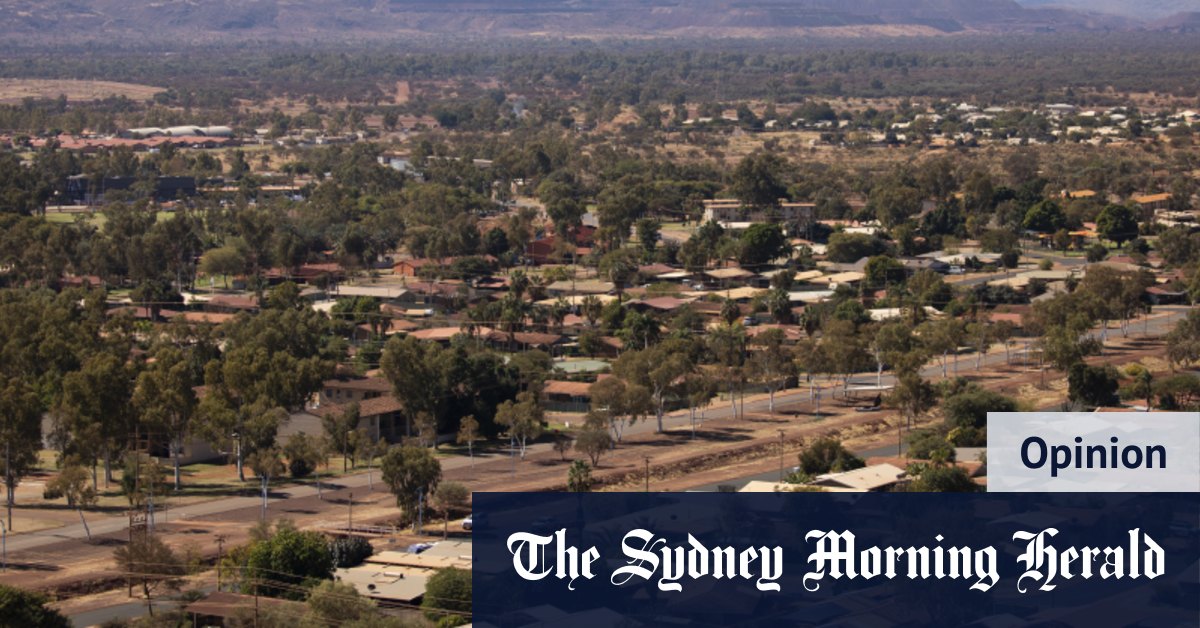
Property prices in Newman boomed before losing up to 80 per cent of their value.

Property costs in Newman boomed just before shedding up to 80 for each cent of their benefit.Credit score:Krystle Wright

At the finish of the working day, if both of those plans cannot be realized, there is normally the protection web of the age pension. So, that is why I propose supplying priority to having to pay off your home loan in advance of salary sacrificing to leading up your employer’s 10 for every cent tremendous contributions.

That’s unfortunate news about your individual bankruptcy.

I am mindful that residence prices in mining cities peaked in 2011-12 throughout the mining increase. An ABC news report signifies Pilbara median property selling prices afterwards fell a lot more than 80 for every cent when the growth soured.

It is a superior lesson that purchasing an investment property in a boom can be dangerous, even though price ranges in Newman have since turned up.

I am aged 46, earning $190,000 a year and my wife, 47, is doing the job 4 times a week and earning $120,000. We are each fairly healthy and have two kids aged 11 and 9, due to go to private substantial educational facilities at a cost of $40,000 a calendar year each in 2023 and 2025, respectively. We very own our dwelling valued at $2.4 million and have $955,000 in joint investments, as well as $556,000 in my tremendous and $358,000 in my wife’s super. We also have an investment unit valued at $450,000 with a mortgage of $400,000. Our combined monthly income is $17,000. Our monthly expenses are $10,000 (excluding personal faculty charges). We would like to maintain this way of living, or close to it, for the relaxation of our life, altered for long term inflation. We have equally acquired rather significant incomes for most of our performing lives and have a reasonably modest but comfy way of living, prioritising the requirements of our young children. We each would like to retire at age 50. Are we on keep track of? P. L.

If you retire at 50, your spouse would have a statistical lifestyle expectancy of some 37 a long time and, as generally, I insert five years to that, assuming she is healthful and will dwell for a longer time than the common.

If you then approach to commit $120,000 a calendar year, indexed to 3 for every cent for inflation, you could anticipate to go via financial savings of about $2.7 million. On prime of that, you would shell out about $500,000 on university expenses, additionally considerably a lot more on athletics as well as any non-public tuition and then tertiary instruction.