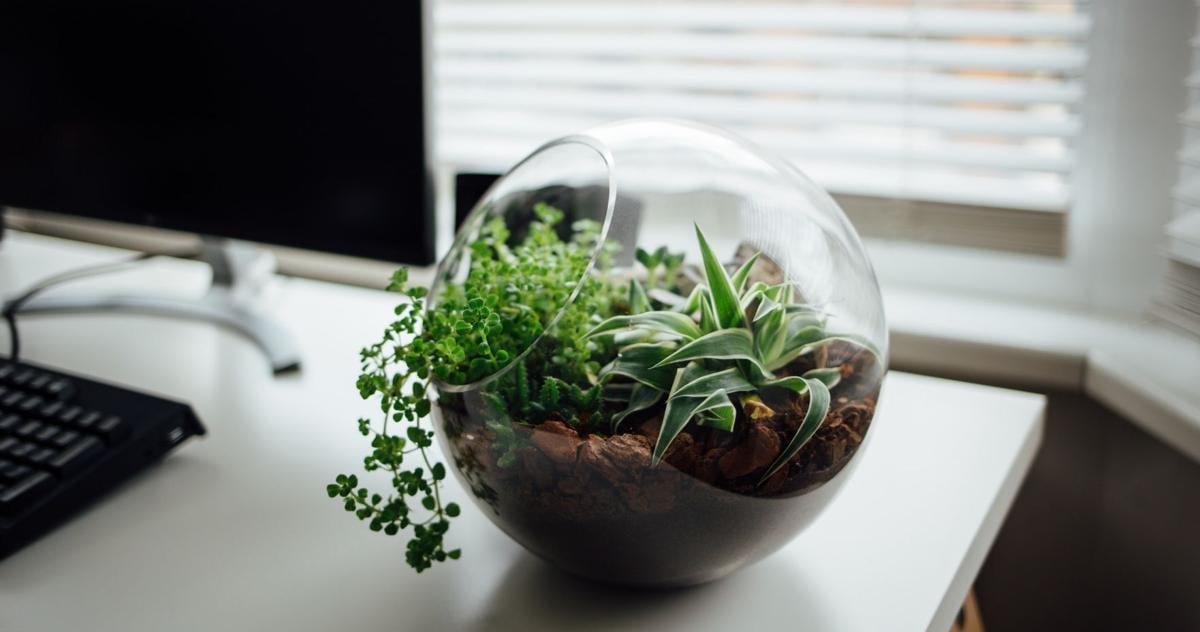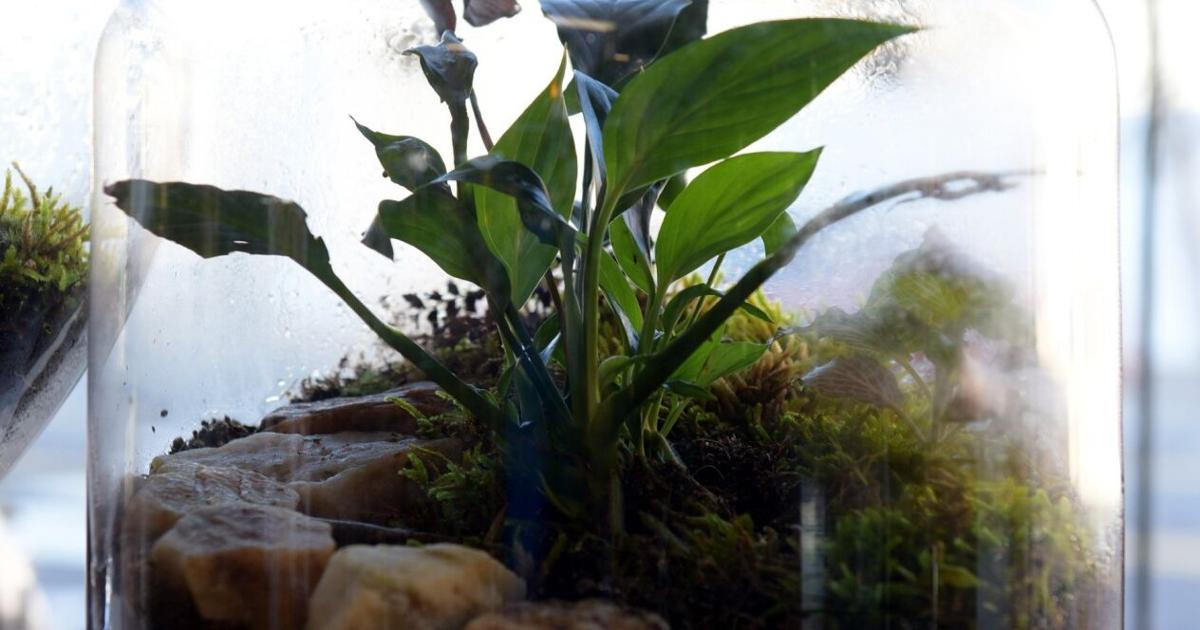

A large Mossy Mojo Terrarium available for sale at Design Archives on West Fourth Street.

A selection of Mossy Mojo Terrariums available for sale at Design Archives on West Fourth Street.

One of the Mossy Mojo Terrariums available for sale at Design Archives on West Fourth Street.

A detail of a Mossy Mojo Terrarium available for sale at Design Archives on West Fourth Street.

A selection of Mossy Mojo Terrariums available for sale at Design Archives on West Fourth Street.

A selection of Mossy Mojo Terrariums available for sale at Design Archives on West Fourth Street.

One of the Mossy Mojo Terrariums available for sale at Design Archives on West Fourth Street.
A resurgence in 1970s gardening trends has happened in the past few years. From rattan planters to macramé hangers, new gardeners have taken a shine to what we now consider “vintage” hobbies. This resurgence collided with the pandemic, which seemed to create the perfect storm for both outdoor and hip indoor gardens of the ‘60s and ‘70s.
During the pandemic, droves of people took up gardening as a way to find fulfillment with their extra time spent at home. This wasn’t just regulated to backyard vegetable gardens, though, as bringing the outdoors in was high on the priority list of those working from home.
I’ve noticed this swell of interest in indoor gardening has persisted — including obsessive interests in houseplants, seed starting and plant propagation, and my favorite — terrariums.
When you stop and think about it, terrariums are perhaps the most perfect way to bring nature into your home. With its own little ecosystem, a terrarium captures all the beauty and simplicity of nature, requiring little work on our end.
Over the course of the last year, a local couple has turned their love of building terrariums into a business. Mossy Mojo Terrariums is the brainchild of Moriah Gendy and Josh Myrick, a small, green business that aims to provide sustainable indoor gardens for their clientele.