Many people know the basics of the capital gains tax. Gains on the sale of personal or investment property held for more than one year are taxed at favorable capital gains rates of 0{d4d1dfc03659490934346f23c59135b993ced5bc8cc26281e129c43fe68630c9}, 15{d4d1dfc03659490934346f23c59135b993ced5bc8cc26281e129c43fe68630c9} or 20{d4d1dfc03659490934346f23c59135b993ced5bc8cc26281e129c43fe68630c9}, plus a 3.8{d4d1dfc03659490934346f23c59135b993ced5bc8cc26281e129c43fe68630c9} investment tax for people with higher incomes. Compare this with gains on the sale of personal or investment property held for one year or less, which are taxed at ordinary income rates up to 37{d4d1dfc03659490934346f23c59135b993ced5bc8cc26281e129c43fe68630c9}. But there are lots of exceptions to these general rules, with some major carveouts applying to residential real estate.
The residential real estate market is still hot, and if you’re like most individual owners of real estate these days, your property has likely gone up in value since you purchased it. Eventually, when you dispose of the property, you’ll need to determine the income tax consequences with respect to that built-in appreciation.
Maybe you’re thinking of selling your home or residential rental property that you own. Or you might unfortunately be experiencing financial trouble and are considering negotiating a short sale of your home with the bank. Other people may have had their home destroyed in a wildfire, hurricane or other natural disaster. If so, continue reading to find out how your gains may be taxed or not taxed in these situations and more.
1 of 8
Selling Your Primary Home
Many homeowners are aware of the general tax rule for home sales – if you have owned and lived in your main home for at least two out of the five years leading up to the sale, up to $250,000 ($500,000 for joint filers) of your gain is tax-free. Any gain in excess of the $250,000 or $500,000 exclusion is taxed at capital gains rates. (Losses from sales of primary homes are not deductible.)
Here’s an example: Say you’re married, bought your home in 1990, have a tax basis of $225,000, and are selling the home this year for $700,000. The entire $475,000 of gain is tax-free. Let’s now take the same example, but instead of selling the home for $700,000, you sell it for $1 million. The first $500,000 of the gain is tax-free, and the remaining $275,000 is subject to capital gains tax rates of 15{d4d1dfc03659490934346f23c59135b993ced5bc8cc26281e129c43fe68630c9} or 20{d4d1dfc03659490934346f23c59135b993ced5bc8cc26281e129c43fe68630c9}, depending on your income, plus a 3.8{d4d1dfc03659490934346f23c59135b993ced5bc8cc26281e129c43fe68630c9} surtax for upper-income individuals.
To determine your gain or loss from the sale of your primary home, you start with the amount of gross proceeds reported in Box 2 of Form 1099-S and subtract selling expenses such as commissions to arrive at amount realized. You then reduce that figure by your tax basis in the home to come up with your gain or loss.
To figure your tax basis in the house, start with the original cost, add certain settlement fees and closing costs, plus the cost of any additions as well as improvements that add to the value of your home, prolong its useful life, or adapt it to new uses. Cost of repairs or maintenance that are necessary to keep your home in good condition but don’t add to its value or prolong its life don’t increase your tax basis. Differentiating between improvements and repairs can be tricky, and IRS Publication 523 can help with this.
If you must sell before two years, you may still be eligible for a portion of the exclusion, depending on the circumstances. Sales due to job changes, illness or unforeseen circumstances qualify. The percentage of the $500,000 or $250,000 gain exclusion that can be taken is equal to the portion of the two-year period that you used the home as a residence. For example, say a single person bought a home for $700,000 in August 2020, lived in it for 19 months and sold it in February 2022 for $805,000 after moving out of state for a job. The maximum gain exclusion in this instance is $197,917 ($250,000 x (19/24)). So, the $105,000 gain is fully excluded. You can use days or months for this calculation.
2 of 8
Selling a Primary Home for Which You Took the Home Office Deduction
You may be wondering whether the tax consequences would differ if you took the home office deduction in prior years for using a room or other space in your residence exclusively and regularly for business or rental (e.g., as a home office or the rental of a spare bedroom). It depends.
Generally, the tax consequences are the same whether or not the home office deduction was previously claimed. Gain on the office or rental portion generally qualifies as part of the $250,000/$500,000 capital gains tax exclusion for the sale of a primary home, subject to two exceptions. The first is for so-called unrecaptured Section 1250 gain, which applies if you took depreciation deductions in the past for the office or rental space. (This is discussed in more detail below.) The second exception applies if the workspace or rental space is in a building on the property that is separate from the main home – think first-floor storefront with an attached residence, rented apartment in a duplex, or working farm with a farmhouse on the property.
3 of 8
Selling a Vacation Home
Gains from the sale of vacation homes don’t qualify for the $250,000/$500,000 capital gains tax exclusion that applies to the sale of main homes. When you sell a vacation home, your gain will be subject to the normal capital gains tax rules. If you owned the home for more than one year before you sell, then the difference between your amount realized on the sale and your tax basis in the home is subject to a capital gains tax rate of 0{d4d1dfc03659490934346f23c59135b993ced5bc8cc26281e129c43fe68630c9}, 15{d4d1dfc03659490934346f23c59135b993ced5bc8cc26281e129c43fe68630c9}, or 20{d4d1dfc03659490934346f23c59135b993ced5bc8cc26281e129c43fe68630c9}, depending on your income, plus a 3.8{d4d1dfc03659490934346f23c59135b993ced5bc8cc26281e129c43fe68630c9} surtax for upper-income individuals.
For example, say you sell a vacation home that you owned since 2005 for $850,000, and you have a tax basis of $725,000. Your $125,000 gain is taxed at capital gains rates. As with primary homes, you can’t deduct a loss on the sale of a vacation home.
4 of 8
Selling a Converted Vacation Home
What if you convert a vacation home to your primary residence, live there for at least two years and then sell it? Can you qualify for the full $250,000/$500,000 capital gains tax exclusion? No.
If you sell a main home that you previously used as a vacation home, some or all of the gain is ineligible for the home-sale exclusion. The portion of the gain that is taxed is based on the ratio of the period of time after 2008 that the home was used as a second residence or rented out to the total time that the seller owned the house. The remaining gain is eligible for the $250,000 or $500,000 home-sale exclusion.
5 of 8
Selling a Rental Home
If you hold rental property, the gain or loss when you sell is generally characterized as a capital gain or loss. If held for more than one year, it’s long-term capital gain or loss, and if held for one year or less, it’s short-term capital gain or loss. The gain or loss is the difference between the amount realized on the sale and your tax basis in the property.
The capital gain will generally be taxed at 0{d4d1dfc03659490934346f23c59135b993ced5bc8cc26281e129c43fe68630c9}, 15{d4d1dfc03659490934346f23c59135b993ced5bc8cc26281e129c43fe68630c9} or 20{d4d1dfc03659490934346f23c59135b993ced5bc8cc26281e129c43fe68630c9}, plus the 3.8{d4d1dfc03659490934346f23c59135b993ced5bc8cc26281e129c43fe68630c9} surtax for people with higher incomes. However, a special rule applies to gain on the sale of rental property for which you took depreciation deductions. When depreciable real property held for more than one year is sold at a gain, the rule requires that previously deducted depreciation be recaptured into income and taxed at a top rate of 25{d4d1dfc03659490934346f23c59135b993ced5bc8cc26281e129c43fe68630c9}. It’s known as unrecaptured Section 1250 gain, the number of its own federal tax code section.
Take this simple example: You bought a rental home for $300,000, deducted $109,000 of depreciation and sold the property for $500,000 this year. The first $109,000 of your $200,000 gain is unrecaptured Section 1250 gain that is taxed at a maximum rate of 25{d4d1dfc03659490934346f23c59135b993ced5bc8cc26281e129c43fe68630c9}, while the remaining $91,000 is taxed at the regular long-term capital gains tax rates.
Note that the unrecaptured Section 1250 gain can also apply to the sale of your main residence if you took depreciation deductions for it in the past, such as from a conversion from a rental home to your primary home or if you had an office in the home.
Capital losses from the sale of rental real estate can offset your capital gains, plus up to $3,000 of other income.
6 of 8
Short Sale of Your Main Home
Some financially distressed homeowners might be considering a short sale of their home. A short sale occurs when your mortgage lender agrees to accept less than the outstanding balance on your loan to help facilitate a quick sale of the property. The tax rules applicable to short sales differ depending on whether the debt is recourse or nonrecourse.
Recourse debt is when the debtor remains personally liable for any shortfall. If the lender ends up forgiving the remaining debt, a special tax rule provides that up to $750,000 in forgiven debt on a primary home is tax-free. The debtor will be taxed on any remaining forgiven debt at ordinary income tax rates up to 37{d4d1dfc03659490934346f23c59135b993ced5bc8cc26281e129c43fe68630c9}.
The tax results are different for nonrecourse debt, meaning the debtor isn’t personally liable for the deficiency. In this case, the waived debt is included in the amount realized for calculating capital gain or loss on the short sale. For primary homes, no loss is allowed and up to $250,000 of gain ($500,000 for joint filers) can be excluded from income for homeowners that meet the two-out-of-five-year use and ownership tests.
7 of 8
Like-Kind Exchanges
When real property used in a business or held for investment is exchanged for like-kind real property under Section 1031 of the tax code, all or part of the gain that would otherwise be triggered if the realty were sold can be deferred. This tax break doesn’t apply to main homes or vacation homes, but it can apply to rental real estate that you own.
The rules are very complicated and tricky, with many requirements to meet. Also, President Biden and Congress have proposed rules to limit the break. Make sure to talk to your tax adviser if you’re contemplating a like-kind swap.
8 of 8
Destruction of Your Main Home
If your principal residence is damaged or destroyed in a hurricane, wide-spread wildfire or other federally declared disaster, you’ll have gain to the extent the insurance proceeds you receive exceed your pre-disaster tax basis in the home. Up to $250,000 ($500,000 for joint filers) of that gain is excluded from income if you meet the two-out-of-five-year use and ownership tests. Gain in excess of those amounts is taxed at capital gains rates.
One way to delay the tax hit on all or part of the otherwise taxable capital gains is to use the proceeds you get from your insurance company to buy a new home within four years of the disaster. The so-called “involuntary conversion” rules are complex, so, again, be sure to contact your tax adviser if you’re thinking about going down this road.
Nir Meir, Ziel Feldman, and Helene Feldman. Photo-Illustration: Curbed; Photos: Shutterstock/Getty Images
This article was featured in One Great Story, New York’s reading recommendation newsletter. Sign up here to get it nightly.
Ziel Feldman is in good company. At least that’s what the real-estate developer at the center of one of the most spectacular meltdowns in recent memory has been telling himself. The Manhattan real-estate industry is a game of winners and losers, Feldman says, and even titans lose big sometimes. Over the past 18 months, Feldman’s firm, HFZ Capital Group, has been obliterated by foreclosures and investor lawsuits, a collapse that has dredged up unflattering details about the company’s inner workings. Which is why Feldman, on a cloudy afternoon earlier this year, ticked off the names of prominent developers who have, at one point or another, stared down the barrel of bankruptcy. Stephen Ross, Arthur Zeckendorf Sr., Harry Macklowe.
“Every single one — bar none — has run into potentially career-ending roadblocks,” Feldman says, sitting at a coffee table in his corner office, which, despite the imperiled state of his business, overlooks the Plaza Hotel and Central Park beyond. “It’s not for the faint of heart,” he says. “Most successful ones have been bankrupt.”
Though the tabloids and real-estate journals have covered HFZ’s fall with a journalistic fervor usually reserved for war and the Kardashians, this is the first time Feldman has spoken to the press about his company’s implosion. He’s clean shaven and his hair, a jet-black bouffant before the pandemic, is trimmed short and gray.
That Feldman can so easily string together a list of billionaires who have bounced back from financial ruin probably says more about the ludicrous nature of the Manhattan real-estate business than it does Feldman’s own circumstances. In truth, it’s hard to compare any other builder’s misfortunes with the enormous pile of rubble through which Feldman is presently wading. In addition to losing its portfolio, HFZ has been sued by a slew of contractors, lenders, and investors. Lawsuits are to be expected during bankruptcy proceedings, but the allegations of impropriety within some of the suits — including accusations that Feldman and his partner skimmed millions to fund their extravagant lifestyles — are not.
To make matters worse, last year, one of HFZ’s key investors, an Israeli diamond magnate, was convicted of bribery and sentenced to five years in a Swiss prison. And the company’s former managing director of development — someone Feldman employed for more than 20 years — was arrested and sentenced to prison for awarding contracts to the Mafia. Last year, the New York State attorney general confirmed her office was reviewing a fraud complaint against HFZ, though to date, nothing seems to have come of that investigation.
Manhattan has always been a playground for the rich, and the decade-long all-they-can-eat asset buffet that followed the Great Recession nurtured a fresh crop of luxury developers including HFZ, who soaked the city with units that advertised floor-to-ceiling windows and hotel-quality amenities. The boom was fueled in part by overseas buyers — from Russia, China, Latin America, and the Middle East — who stashed their money in those units, investments that offered stability and, thanks to the city’s tolerance of LLC property owners, anonymity. That influx of extreme wealth transformed New York. In little more than a decade, the city’s median sale price nearly doubled, driven by luxury condos in neighborhoods essentially invented by property developers and their marketing teams: West Chelsea along the High Line and Billionaires’ Row, a neighborhood with a boundary primarily defined by its being above everyone else.
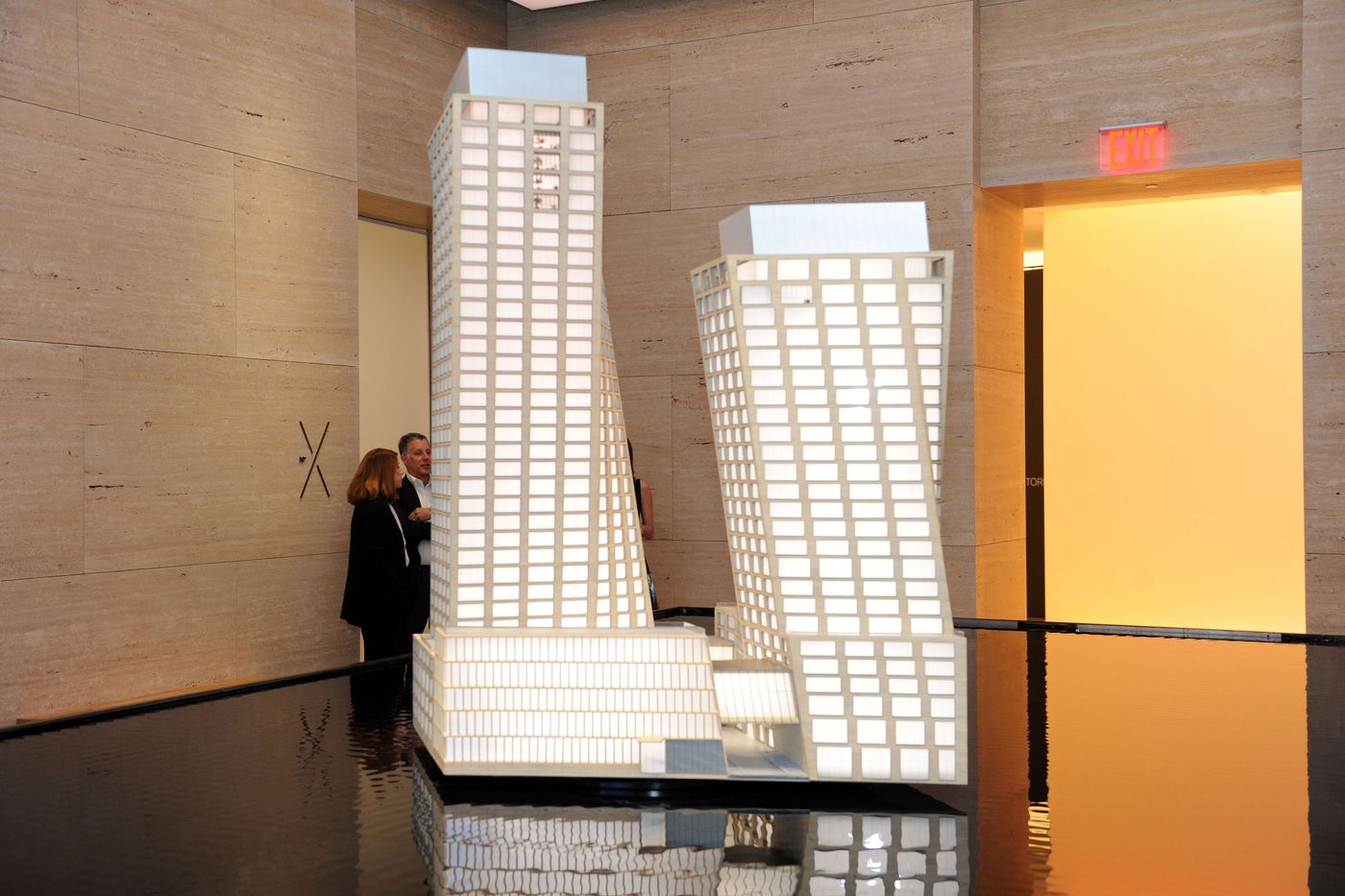
Luxury developers raced to keep up with demand, and HFZ was among the splashiest of the bunch. By the mid-2010s, the firm was responsible for a significant percentage of the luxury condos coming to market. By 2015, HFZ’s two top executives, Feldman and managing director Nir Meir, were appearing on lists of the most powerful developers in the city. Their rise culminated with HFZ’s announcement that it was building the XI, a $2 billion megadevelopment along the High Line. The XI, which Feldman called his “shining star” during our conversation, should have bumped Feldman and Meir into the highest echelon of builders, masters of the most recognizable skyline on the planet. Instead, over the course of a single real-estate cycle, their company went from being the industry’s darling to its biggest bust.
Insiders and former employees say there is no one reason HFZ imploded, pointing to an array of issues — poor decision-making, a chaotic work culture, extravagant spending, spreadsheets that said whatever the bosses wanted to hear. Even those who didn’t have a front seat to the turbulence sensed something was awry.
“I would never in a million years do a deal with Ziel,” said one major developer. “He had too many deals, too much leverage, too much razzle-dazzle.There was always a sense that things weren’t what they seemed to be. The pandemic was like that Warren Buffett line: Only when the tide goes out do you see who’s swimming naked.”
For a time, Feldman also blamed the pandemic for HFZ’s woes. In December 2020, HFZ filed a notice with the New York State Department of Labor indicating it had laid off 31 people, almost its entire staff, because of “unforeseeable business circumstances prompted by Covid-19.” But sitting in his office, the 63-year-old trains his ire on one person: his former partner, Meir.
Feldman and Meir worked together for 20 years and, according to former colleagues and friends, never seemed to have any issues until everything came crashing down. Since then, the two have been engaged in an ugly, very public divorce.
“We were like his family. I always said I have three children and that I gave them an older brother, Nir,” says Feldman’s wife, Helene, who is sitting beside him in his office. A former prosecutor in the Brooklyn district attorney’s office, Helene served as HFZ’s “design and creative” principal. She has blue eyes and platinum-blonde hair and wears black leather platform shoes she designed herself. “Ziel really took him in as a son.”
In August, Feldman filed a lawsuit against Meir accusing him of engineering a “Machiavellian scheme to enrich himself through theft, deception and ‘charm.’” Feldman alleged that Meir diverted millions away from HFZ accounts into his own pockets. The lawsuit seeks $688 million in damages. (Meir would not speak to me on the record for this story.)
“With Nir at the helm, we were doomed from the beginning,” Feldman says when he’s done listing formerly bankrupt billionaires. “I’m not aware of any other developer who relied so heavily on a person who turned out to be a very talented sociopath.”
The XI in April 2022. Photo: Gary Hershorn/Getty Images
A Queens native, Feldman started his career as a real-estate attorney in the mid-1980s, a time when, as the journalist Jerry Adler observed, “real estate replaced sex as the venue for the everyday fantasies of most Americans.” Sex never reclaimed the top slot, and in the wake of the 1987 stock-market crash, Feldman sensed there was more money to be made as a developer than as a developer’s attorney.
Eventually, Feldman co-founded a development firm, Property Markets Group, with a banker named Kevin Maloney. There was no shortage of opportunity in the early ’90s. PMG went after SROs, troubled walk-ups, and neglected buildings it could afford to buy and refurbish before raising rents. As a young start-up, PMG’s partners prided themselves on keeping overhead low, stuffing employees into a cramped office with space heaters. Everyone except Feldman worked off cheap folding tables.
“At one end, there was Ziel with his leather-topped partner’s desk, and at the other end, there was me with my card table,” said Maloney. “Ziel liked to have a higher standard of living than I did. That was important to him.”
In 1994, Maloney and Feldman partnered with Gary Barnett, who today runs Extell Development, one of the most successful luxury-condo developers in the city, to purchase the Belnord, a sumptuous Beaux-Arts building on the Upper West Side. The building had been neglected, and its tenants were locked in a bitter fight with their landlord. Barnett and PMG paid $15 million for the building, funded largely by the secretive Israeli diamond dealer Beny Steinmetz, and promised tenants they would spend $5 million on renovations in exchange for the right to increase rents. The project would serve as a blueprint for Feldman for two decades.
Feldman earned a small fortune at PMG. He and Helene built a mansion in Englewood inspired by a Fontainebleau chateau they’d toured on their honeymoon. But by the early aughts, Maloney, who continues to run PMG, wanted to spend more time concentrating on deals in Florida, while Feldman was eager to expand in Manhattan.
People who knew and worked with Feldman say he seemed to be driven by an unspoken desire to reach the penthouse of Manhattan real estate: the dynastic families — Durst, Zeckendorf, Speyer, LeFrak, Rose, et al. Feldman liked to talk about what made a successful developer, and more than anything, he thought of himself as a tastemaker attuned to the city’s trends and needs. In 2005, Feldman started HFZ (Helene, Feldman, Ziel) and brought with him a few PMG employees including Meir, whom Feldman tapped to be HFZ’s managing principal. In his 20s at the time, Meir was younger than Feldman. He had short, dark hair and the chiseled jaw of an action figure. He’d grown up between Israel and Paris, and he told people he served in the Israel Defense Forces before moving to New York in the early aughts.
In Meir, Feldman found someone whose skill and ambition matched Feldman’s own desire to grow HFZ. Meir was excitable, a fast-talking bulldog who dug into the minutiae of every project. During the day, he pored over spreadsheets, adjusting projections and timetables, and at night, he’d hit the town to develop relationships with lenders and investors. In that way, Meir complemented Feldman, who increasingly enjoyed playing the part of the elder statesman, providing big-picture strategy.
After the real-estate bubble burst in the late ’80s, Feldman learned a frustrating truth about postrecession markets: While there was no better time to buy real estate, there was also no harder time to find investors and lenders. To Feldman’s great satisfaction, Meir proved to be particularly adept at raising money from both institutional lenders and overseas investors. “JPMorgan loved him,” Feldman says.
According to Feldman and former colleagues, Meir had a magnetism that drew in wealthy investors, people he would wine and dine at Carbone or La Esquina before taking them to clubs. With their backing, HFZ went on a buying spree that resembled deals Feldman made in the ’90s with PMG, snatching up distressed buildings other developers wouldn’t touch. The press took notice. “Developer turns flops to gold,” read a 2013 Crain’s headline that referred to Feldman as the “man of the hour.” The Observer published a feature on Feldman, saying he’d “emerged out of nowhere” to rescue One Madison Park, the all-glass residential tower with a penthouse that would serve as Rupert Murdoch’s postdivorce bachelor pad. The Daily News called him the “modern-day John Jacob Astor” for his renovation of prewar apartments on the Upper West Side.
“These guys were magicians about playing the capital markets. They knew there was so much capital in the world and that banks and bankers were hungry to put that money to work,” said someone who worked with Feldman and Meir. “But they were the step-kids trying to get into the world of the big families controlling real estate. They were successful, but they were doing it in a shady way.”
Historically, the families haven’t needed to rely on foreign money to fund their projects. They are so obscenely rich that they can, for the most part, afford to play the game on their own. But if Feldman’s goal was to establish a dynasty, he needed to do so with other people’s cash.
By the late aughts, Steinmetz’s fortune had ballooned to make him one of the richest people in Israel, and he was pumping hundreds of millions of dollars into real-estate projects around the globe. It was an open secret among HFZ employees that Steinmetz, who is intensely private about his business and personal life, was a major HFZ backer. But when a reporter from The Real Deal asked HFZ about its relationship with the diamond dealer in 2016, a spokesperson emphatically denied any personal or professional connection to him.
Emails, text messages, and interviews with former HFZ employees show Steinmetz was intimately involved with HFZ. In fact, at one point, Steinmetz had employees based inside HFZ’s office. Multiple former HFZ employees recalled Meir taking last-minute trips to the Mediterranean to meet with Steinmetz. According to emails made public in court proceedings, Steinmetz would email Meir to discuss details of deals. Once, Steinmetz’s lawyer emailed Meir to ask him to scrub the diamond dealer’s name from an investment organization chart. Meir dutifully agreed.
Feldman denies ever lying about his connection to Steinmetz. He claims Meir erected a firewall between Feldman and the diamond dealer, as he did with most foreign investors. But HFZ and Steinmetz had good reasons to conceal their relationship. In 2009, Steinmetz’s company won the rights to mine the Simandou mountains in Guinea, one of the most prized mining contracts in the world. A year later, Steinmetz sold half of those rights to the Brazilian mining firm Vale for $2.5 billion. Then, in 2014, the Guinean government revoked Steinmetz’s rights, alleging his company had bribed the youngest of the late Guinean president’s four wives to secure the deal. In 2021, a Swiss criminal court found Steinmetz guilty of corruption and forgery related to the Simandou deal, sentencing him to five years in prison. (Steinmetz, who lives in Israel, has indicated he intends to appeal the decision. Last year, Steinmetz was briefly detained in Greece on an Interpol red notice related to a 2020 bribery case in Romania in which he was found guilty and sentenced to five years in prison.)
For years now, Vale has been trying to recoup its initial $1.25 billion payment to Steinmetz. As part of that action, Vale’s attorneys have traced money from the Simandou deal to investments Steinmetz made in HFZ projects including the XI. (HFZ isn’t the only developer Vale’s attorneys are interested in; they’ve also subpoenaed Aby Rosen’s RFR Holding.)
Helene, the daughter of a Holocaust survivor, and Ziel, whose father ran a family textile business, often talk about their humble roots in Queens. But as HFZ’s portfolio grew, so did the Feldmans’ presence in watermarked photos taken at New York society parties. They attended galas from Palm Beach to Antibes, were staples at Art Basel in Miami, and hosted charity fundraisers at their 8,000-square-foot home on Dune Road in Bridgehampton, where guests mingled between an infinity pool and a pool-size infinity hot tub. They chipped in $25,000 for Donald Trump’s 2016 presidential campaign and sat on the board of directors of a hospital in Israel. Acknowledging a connection to Steinmetz, a controversial figure by Feldman’s own admission, may have put his success in a new light.
“Ziel is a very high-flying guy, but he was never in the families,” said a former colleague. “He wanted to establish that for his family. He wanted a generational business. But Rob Speyer is not in bed with Steinmetz.”
The opening of the XI gallery on April 25, 2018. Photo: Craig Barritt/Getty Images for XI Gallery
In 2015, HFZ made its most aggressive move yet, purchasing the empty 1.75-acre lot at 17th Street and 11th Avenue with a plan to build a large luxury condo and hotel. Before the sale, the lot had an unremarkable history, hosting a few houses, a string of gasworks facilities, a rail yard, and Edison Properties parking lots. But in 2009, the neighborhood around the lot started to change. Thanks to a Bloomberg-era rezoning and the reinvention of the High Line, West Chelsea very quickly became an Eden for high-profile architects looking to leave a mark on Manhattan. In little more than a decade, Frank Gehry, Thomas Heatherwick, Renzo Piano, Jean Nouvel, Zaha Hadid, and others planted expensive buildings that crisscrossed the High Line with shadows. Property values skyrocketed, and by the time Edison put the lot at 76 11th Avenue on the market in 2014, it was a very valuable tract of land. When the dust settled, HFZ had the highest bid: $870 million. It remains one of the largest residential-land sales in New York City history.
“Everybody gasped. No one could believe the price they paid for the land,” said Andrew Gerringer, a veteran real-estate marketer who has worked with HFZ on a number of projects. “Everybody thought it was a good area, but those of us in the development business were like, Jeez, this is a really high number.”
Feldman’s willingness to pay stemmed, in part, from his vision for the building he planned to erect there. Feldman believed the XI (variously pronounced ex-eye, eleven, eleventh, zee, or shee, like the general secretary of the Chinese Communist Party, depending on whom you ask) would be so spectacular that it would woo one-percenters away from the Upper East Side and Billionaires’ Row. The XI would embody what Feldman believed to be the ultimate 21st-century fantasy: a self-contained urban-resort life with spaces and amenities that made residents feel as if they were living in a hotel — a 75-foot swimming pool, a sauna, a wine-tasting room, and an art gallery.
Luxury-condo sales were booming in 2015, but even the most data-driven developers were rolling the dice. By spending $870 million just for the land, HFZ was starting in a very deep hole, and it would need to sell the XI’s 576,551 square feet of residential units for roughly $4,000 per square foot, a price rarely secured in neighborhoods that don’t abut Central Park. And that was assuming the market kept apace.
“Very few people in the office thought that the XI was a smart deal,” said a former employee. “There was no ability for any of us below Ziel and Nir to influence this decision. My guess is that Ziel liked the idea of it. He liked the attention it brought him, and Nir needed to grow the company and get big deals and keep money coming in the door.”
Developers are by nature optimists, and Feldman was no exception. When The Real Deal’s Hiten Samtani asked Feldman about criticism of the $870 million price tag, Feldman balked at the question, saying he had too much experience to let naysayers influence him. “It meant nothing to me,” Feldman replied. “It was actually kind of humorous.”
One reason Feldman shrugged off naysayers was because he had bagged Bjarke Ingels, one of the most sought-after architects in the world, to design the XI. Starchitects can charge as much as 25 to 30 percent more than their lesser-known colleagues, and Ingels was all but guaranteed to deliver a complicated, expensive design, but that didn’t matter to Feldman. Partnering with the young, swaggering Dane would send a message to the entire industry: HFZ was ready to leave its mark on the Manhattan skyline. The final plans called for the top floors of the XI’s two towers to cantilever over the shared base by 50 feet, so they seemed to be leaning, unnervingly, like the Tower of Pisa. Engineering reports talked of “torsional irregularity” and “gravity load induced lean,” which added to the “inter-story seismic drift.”
By January 2018, some 800 workers were employed at the site. Rebar shot out of the ground like fingers poised to pull the rest of the building up behind it. After the concrete was poured, Ingles’s design took shape, and the first of the building’s 11,000 travertine panels, imported from a quarry in Tivoli, was put in place. Someone called 311 to report “a building that is leaning south.”
From the start, some HFZ employees expressed apprehension about bringing Ingels onto the project. They knew Ingels would deliver a complicated — and expensive — design that would have a greater likelihood of hitting snags than a conventional building. And when the XI’s concrete settled, it did so in such an unpredictable way that the initial batch of windows didn’t fit into their frames, triggering one of a number of costly delays that befell the project.
“The true risk to a developer is the time and the cost of funds. That’s for the good developers who estimate everything properly and don’t take too much for granted,” said Barnett, who partnered with Feldman on the Belnord in the early ’90s and whose company, Extell, is responsible for two of the twiglike towers swaying over Billionaires’ Row. “There are cautious developers and there are ultracautious developers, and Ziel has never been either.”
Es Devlin’s “Egg” on display in the XI gallery in 2018. Photo: Johannes Schmitt-Tegge/picture alliance via Getty Image
By 2016, HFZ had grown to employ more than 100 people, and its Madison Avenue offices reflected the company’s fast success, looking more like a modern-art gallery than a real-estate development firm. Feldman regularly talked about the connection between art and real estate. “Artists tend to be frustrated developers,” he told Artnet in 2018. “Architects think they’re artists. Developers, we think we’re all of those things.” (He and Helene say some version of this to me again during our interview.) Employees and visitors alike rolled their eyes at some of the over-the-top pieces from the Feldmans’ collection on display at the office — including Patricia Piccinini’s The Student, a hyperrealistic pig-baby made with actual human hair, a Gimhongsok dog made of stuffed garbage bags cast in bronze, and the George Condo portrait Girl With Green Hair, which was auctioned at Christie’s for $437,500 after HFZ’s downfall.
Former employees’ descriptions of the art ranged from “zany” to “so, so, so terrible.” Everyone believed the art was an extension of their bosses’ approach to development. Feldman’s obsession with art, and the status his proximity to the art world conferred upon him, frustrated some. “Ziel was always focused on stuff that didn’t matter,” said a former employee. “He thought he was an arbiter of design, style, and taste. He’d sit in architecture meetings and bring his wife in and think that that was the important part of the business.”
The art wasn’t the only disconcerting presence in HFZ’s offices. Feldman and Meir, employees say, ran HFZ as a diarchy in which they shared total power. Employees who expressed professional opinions — or, several claimed, facts that contradicted the leaders’ points of view — were disregarded or ridiculed. One former employee, talking about her experience on a recent wellness podcast, described HFZ’s atmosphere as “icky,” “Wolf of Wall Street-y,” and “Machiavellian.”
Former employees said it was Meir, more than Feldman, who set the tone. By the time HFZ broke ground on the XI, Feldman was hardly involved in his own company’s day-to-day operations. Meir floated around the hallways, popping into people’s offices to grill them about HFZ projects. In addition to his talent for raising capital, Meir had a gift for numbers. At times, former employees said, it was as if the company’s true ledger existed only in Meir’s head. HFZ proposals were not submitted to investors until Meir looked over the numbers. Sometimes, Meir would ask employees to juice spreadsheets so projects looked better on paper. Occasionally, if an employee refused to alter a projection, Meir would ask the employee to send him the Excel spreadsheet, presumably so he could make the adjustment.
In the spring of 2018, HFZ opened the XI Visionaries Gallery, a 12,000-square-foot salesroom located in a storefront a few blocks from the XI. The space was unlike any sales gallery anyone in the industry had ever seen before. At its center were “multi-sensory installations” by Es Devlin, a British artist known for designing elaborate stage sets for Kanye West, Lady Gaga, and the Weeknd. At the gallery’s opening, men in black suits poured complimentary glasses of Macallan 25, which retails at $1,999 a bottle. One former employee estimated the total cost of the sales gallery to be at least $25 million. Units went on sale in the fall of 2018. Jeff Bezos reportedly showed interest in a penthouse before opting for a Madison Avenue spread. Graeme Hart, the richest person in New Zealand, snatched up one of the XI’s penthouses for $34 million.
Then the luxury-condo market started to strain under the weight of excess inventory. A 2019 analysis by StreetEasyestimated that a quarter of all new luxury apartments built after 2013 had not found buyers, an inauspicious indicator for a developer that had recently brought 236 glistening units to market. (Filings would later show that just 38 of those units, or 16 percent, were sold by the time HFZ went bust.) Feldman remained optimistic that his brand of luxury was strong enough to buck market trends. “It’s about the buildings — you can’t broad-stroke an entire market,” he told the New York Times.
Yet HFZ was already showing signs of distress. In October 2019, HFZ failed to pay an $8.2 million invoice to Pioneer Window, which had a $98 million contract for work on the XI. Initially, executives at Omnibuild, the construction firm overseeing the XI, weren’t surprised by the unpaid invoice. “We knew through the industry that they may be a little bit of a crazy bunch, but I guess everybody’s crazy in this business,” Omnibuild COO John Mingione told Crain’s. But not all of HFZ’s contractors could afford to be so patient. “GUYS — CABINETS ARE READY — I NEED ‘my’ MONEY,” Jan Efraimsen wrote in an email in November. Efraimsen’s company had been producing millwork for an HFZ building on the Upper West Side, and Efraimsen was trying to collect an outstanding balance of $163,652.90, a lot of money for his small operation. “I am desperate for money right now–anything will work,” he wrote in a follow-up email. “Unfortunately we just don’t have answers,” David Szczapa, a project manager at HFZ, wrote back to Efraimsen, who was later forced to lay off three of his carpenters. Szczapa’s hands were tied. By the end of 2019, it seemed as if all payments depended on Meir’s approval. According to three former HFZ employees, project managers would tell Meir that some contractor was complaining because they hadn’t been paid only to be told that he would handle it.
The unpaid invoices were the first flutters of HFZ’s tailspin. At the end of 2019, the FBI arrested John Simonlacaj, HFZ’s managing director of development, for offering lucrative XI contracts to Gambino associates in exchange for free work on his Westchester home. (He eventually pleaded guilty to filing a false tax return and was sentenced to four months in prison last summer.) This wasn’t Simonlacaj’s first arrest. In 2015, he had spent three months in prison for tax fraud. Simonlacaj had worked for Feldman going all the way back to PMG, and when he finished his prison sentence, Feldman allowed him to return to work, a decision Feldman now calls “a big mistake.”
“They just let him show back up. It was mind-blowing that they never acknowledged it,” one former HFZ employee said. “Why would they let a convicted criminal come back?”
Then COVID-19 hit, and a wave of existential dread swept through the real-estate industry. “We were overleveraged even before COVID,” said a former HFZ employee in the accounting department. “They were depending on acquisitions to pay the payroll, insurance, everything. So there was suddenly no money.” HFZ’s foreign investors were getting agitated. Yoav Harlap, an Israeli car importer and art collector who had given HFZ more than $20 million for a development on the Upper East Side and a $10 million investment in the XI, began pestering Feldman and Meir about repayment. Meanwhile, the Los Angeles–based hedge fund CIM Group, which had loaned HFZ $90 million to convert four prewar buildings on the Upper East Side, was pestering Meir about a late payment. “What’s the latest? Running out of time,” wrote Adam Gibbons, a managing director at CIM, one afternoon in July. “On it. 2 min,” Meir wrote back. Four hours later, Meir sent Gibbons a confirmation code showing he’d initiated a payment. The code turned out to be fake, according to CIM, as The Real Dealwould later report.
In the early days of the pandemic, Meir and his family, like many Manhattanites, decamped to the Hamptons. In 2013, Meir had knocked down a ten-bedroom beachfront “cottage” on Southampton’s Meadow Lane and built a modern 6,600-square-foot mansion. The home had been a gathering place for friends, family, and the occasional HFZ employee. Meir and his wife, Ranee Bartolacci, regularly hosted omakase nights, bringing a sushi chef from Manhattan for private dinners. Sometimes omakase nights would be followed on Sundays with pizza catered by Nolita’s Pasquale Jones.
“Nir spent more money than God,” said a former HFZ employee. “No one was clear where the money was coming from. What success had the company realized that we were unaware of?” Feldman’s complaint against Meir alleges that Meir’s monthly American Express bill often exceeded $400,000. Meir spent hundreds of thousands on wine and kept a stable of luxury cars including five Mercedes G-Class wagons and a 1996 Porsche 911 Turbo valued at $300,000.
Back at the office, I ask the Feldmans why they never questioned Meir’s spending. In retrospect, Feldman says, he knew very little about Meir’s personal life. He and his wife claim they’d assumed the money had come from Bartolacci’s grandfather, not from HFZ. That assumption might be plausible if Meir had merely been someone they occasionally bumped into at Hamptons parties and not someone with whom Feldman had entrusted his multibillion-dollar business or someone whom Helene, minutes earlier, called an adopted son.
“It’s hard to describe,” Helene pleads. “You have to start with the mind-set that there was no reason not to trust him.”
According to Feldman, a series of incidents in the fall of 2020 tipped him off to how bad things had gotten at his company. One day at the office, Feldman said he checked in on a group of accountants carrying out an audit for an HFZ investor. When Feldman asked if they had everything they needed, the accountants told him Meir had instructed them not to bother Feldman because he’d recently had open-heart surgery. (He had not.) Then Feldman said he was alerted to documents bearing his signature, which he alleges Meir forged. Feldman also found out about a term sheet that he claims Meir doctored to look as if HFZ had received a $900 million loan from JPMorgan Chase in 2020. (HFZ had received the loan in 2019.) The final straw came when Feldman spoke to an investor who said Meir had fabricated a Korean investor, even enlisting someone with a Korean accent to dial into a phone meeting, according to Feldman’s complaint. Feldman fired Meir in December 2020. It was the last time the two spoke.
Former HFZ employees were quick to cast Meir as a rogue, but their descriptions of Feldman were more complex. He was aloof or asleep at the wheel. No one could say how much Feldman did or didn’t know about the way Meir was handling HFZ’s business. But they agreed that Feldman reveled in the success Meir brought to HFZ, and they blamed him for the company’s downfall just as much as they blamed Meir.
“You get complacent. Of course I’m to blame,” Feldman says, admitting for the first time that he made mistakes beyond trusting Meir. “But there really is no scenario, if you really study it, where it turns out to say that Ziel may have known, should have known, or was involved with it.”
That line of defense hasn’t played well in court. In March, the Appellate Division of the New York State Supreme Court said Feldman was fully aware of Meir’s role and authority at HFZ, ruling that he was liable for the claims brought by Harlap, the Israeli car importer. “For several months, Feldman had notice of all the underlying transactions, as well as the default thereunder and negotiations to resolve it,” the court wrote. “He then received actual copies of the allegedly unauthorized agreements, signed by Meir and one bearing his own ostensible signature, but conducted no investigation and made no objection for three months prior to being sued.”
Because Feldman offered personal guarantees on HFZ projects — risking his net worth, some $110 million — the company’s collapse has come at considerable personal cost. A year ago, the Feldmans sold their mansion in the Hamptons for $50 million, and they recently reduced the asking price for their 6,100-square-foot, black-marbled penthouse at the Marquand, an HFZ building on 68th Street and Madison Avenue.* They’ve sold off most of their art collection as well.
“People tell you all the clichés: ‘Oh, your family will be so much better off.’ Yeah, it’s very sweet and very nice. You read The Daily Stoic, it’s wonderful,” Helene says, rolling her blue eyes back. “I think, for us, it has really given us a chance to reset. It has changed our life drastically, certainly from a lifestyle perspective. No, we don’t have the house in the Hamptons anymore, and we don’t know what tomorrow’s going to bring. But as a family, and speaking as a mother, I’ve seen my family and children rise to the occasion and then some.”
When Meir listed his Southampton home last year, Feldman filed a lawsuit claiming the beachfront mansion had been HFZ’s property all along. Feldman accused Meir of forging his signature — again — to gain control of the house. In May, New England Patriots owner Robert Kraft bought the home for nearly $43 million. (The vast majority of the proceeds ultimately went to Bartolacci, under whose name it was registered. In a deposition, Bartolacci claimed the house was a birthday present but was unsure who had actually put up the money to purchase the property, per The Real Deal.) According to Feldman’s suit, Meir continues to spend like a Saudi prince, blowing hundreds of thousands on fine wine, strip clubs, private jets, and yachts. He and Bartolacci also spent $1.5 million on gold coins and bullion.
Meir is still on the hook for a $19 million judgment Harlap won against him. Harlap has alleged that, in order to avoid payment, Meir transferred his assets to Bartolacci and fled New York. At least part of this is true: Last summer, Meir and his family rented a modern bayside home in Miami Beach for $150,000 a month. In September, the landlord sued Bartolacci, whose name is on the lease, saying she had made some unauthorized modifications to the rental, which included the installation of a new dock, the replacement of the natural grass with synthetic turf, and the construction of a cage for the family’s bearded dragon.
Of the half-dozen major developers interviewed for this story and many more real-estate insiders, none would predict the end of either Meir’s or Feldman’s careers. That’s because their futures depend on whether they will be able to raise money, and as one former HFZ employee put it, the market’s blind hunger for New York real estate is insatiable.
“People are so hot for New York real estate — private investors are so eager to put money into New York real estate — that they don’t even pay much attention to the people they’re investing in,” the former employee said. “They just gave HFZ hundreds of millions of dollars because they trusted Nir or Ziel? It all kind of made me see how unsophisticated private-lender capital was. Banks were lending and then turning a blind eye for years. HFZ borrowed billions on what? A personal guarantee? A one-page balance sheet Ziel had?”
In the meantime, the luxury real-estate market has moved on without HFZ — sales of high-end units remain more than 50 percent higher on a monthly basis than they were in 2015. As for Feldman’s shining star, the XI, work on the building stopped in 2020, and the construction site has been eerily quiet for the better part of two years. In December, the Witkoff Group partnered with billionaire Len Blavatnik to purchase HFZ’s stake in the project for $900 million at a debt auction. Witkoff found a new contractor to oversee the site, and in the past few weeks, there have been signs that construction is restarting. Scaffolding has been repositioned, and the cladding is again creeping up the sides of the towers, securing the XI’s place in Manhattan’s skyline one travertine panel at a time.
*A previous version of this article said the Marquand, an HFZ building on 68th St. and Madison Avenue, is mired in litigation. In fact, HFZ is not involved in litigation over the Marquand and the story has been updated to reflect that.
ATLANTA, Might 3, 2022 /PRNewswire/ — The Home Depot® today declared House Depot Ventures, a enterprise money fund created to identify, fund and spouse with early-phase businesses to speed up rising technologies that intention to increase the customer encounter and shape the potential of house enhancement.
The $150 million fund aims to make investments in firms that progress The Residence Depot’s capability to give a seamless interconnected searching expertise, produce new and differentiated capabilities, and lengthen its low-expense service provider posture to:
Far better Serve Buyers:
Simplify how individuals devote in their properties all over the significant milestones of dwelling ownership, together with preliminary acquire and transfer-in, ongoing servicing and repairs, and renovations or remodels
Evolve how experienced (Professional) buyers competently control and improve their companies, saving them time and revenue
Much better Provide Associates:
Increase the life of Residence Depot associates and empower them to collaborate extra safely, very easily and efficiently to fulfill the fast changing expectations of customers
Deliver Operational Excellence:
Drive operational excellence to proceed to produce benefit for shoppers, including system innovation, supply optimization, asset and community optimization, and the application of knowledge science
“With Residence Depot Ventures, we are lending our aid and abilities to permit immediate scale of innovation,” mentioned Richard McPhail, government vice president and chief economic officer of The House Depot. “This is an exciting opportunity to locate and scale the following massive tips in technology and retail.”
The fund will look at investment possibilities in firms at several stages of development, with an emphasis on early and growth stage providers that remedy difficulties for The Household Depot’s buyers and clearly show possible to scale. Household Depot Ventures will provide as a valuable husband or wife by supplying rising businesses with direct entry to the skills and expansive footprint of the broader company.
Property Depot Ventures builds on a prosperous background of investments in startups, which have shipped continuously strong returns and company partnerships. Investments incorporate Afero, a safe, end-to-finish Web of Issues (IoT) platform to offer clever abilities for products and solutions in practically any business Loadsmart, a freight technologies enterprise made to enable shippers and carriers price, e-book and move freight more successfully Made Renovation, an conclusion-to-stop electronic system for rest room renovations and Roadie, a crowdsourced supply system that enables very same-day shipping to additional than 20,000 zip codes nationwide, which was obtained by UPS in 2021.
About The Home Depot The Residence Depot is the world’s most significant dwelling improvement specialty retailer. At the close of fiscal yr 2021, the corporation operated a total of 2,317 retail suppliers in all 50 states, the District of Columbia, Puerto Rico, the U.S. Virgin Islands, Guam, 10 Canadian provinces and Mexico. The enterprise employs about 500,000 associates. The House Depot’s inventory is traded on the New York Stock Exchange (NYSE: High definition) and is provided in the Dow Jones industrial common and Typical & Poor’s 500 index. The Household Depot is #18 on the 2021 Fortune 500.
Large capitals gains are good things for the balance of your investment accounts, but bad news when … [+] it comes to your taxes each year.
getty
Although the stock market had a rough January, if you have been investing for any amount of time, you have likely accumulated some capital gains over the past few years. Many projections for the rest of 2022 point to some positive stock market returns. Earning money on your investments in the stock market is great, but you need to be aware of the capital gains taxes that you may owe when buying and selling your holdings.
How much you end up owing in capital gains taxes on your investments’ gains will mostly depend on three factors.
1) How much the value of your investments has increased
2) How long you have held your investments
3) Your overall income from all sources
When you sell an investment (stocks, bonds, mutual funds, ETFs, real estate, cryptocurrency) for more than your cost basis (essentially, what you paid for the investment), your net profit will be taxed as either a long-term or short-term capital gain at the federal level. At the state level, your capital gains taxes due will depend on your particular state.For example, California taxes capital gains like regular income, with a top tax bracket of 13.3{d4d1dfc03659490934346f23c59135b993ced5bc8cc26281e129c43fe68630c9} at the state level. OUCH!
How long you have held an investment will determine whether your gains will be taxed at long-term or short-term capital gains rates. If you have owned your investment for more than one year, you will be taxed at long-term capital gains rates. For investments held less than a year, your capital gains will be taxed at the short-term capital gains rates.
Let’s take a look at how your long-term capital gains are actually taxed at the federal level. Generally, long-term capital gains will have favorable tax treatments when compared to the taxes owed on short-term capital gains. Long-term capital gains are taxed at the rate of 0{d4d1dfc03659490934346f23c59135b993ced5bc8cc26281e129c43fe68630c9}, 15{d4d1dfc03659490934346f23c59135b993ced5bc8cc26281e129c43fe68630c9}, or 20{d4d1dfc03659490934346f23c59135b993ced5bc8cc26281e129c43fe68630c9}, depending on a combination of your taxable income and marital status.
For single tax filers, you can benefit from the zero percent capital gains rate if you have an income below $41,675 in 2022. Most single people with investments will fall into the 15{d4d1dfc03659490934346f23c59135b993ced5bc8cc26281e129c43fe68630c9} capital gains rate, which applies to incomes between $41,675 and $459,750. Single filers with incomes more than $459,750 will get hit with the 20{d4d1dfc03659490934346f23c59135b993ced5bc8cc26281e129c43fe68630c9} long-term capital gains rate.
The brackets are a tiny bit bigger for married couples who file their taxes jointly, but most will see their investment income hit by the marriage tax penalty. Married couples with incomes of $83,350 or less remain in the 0{d4d1dfc03659490934346f23c59135b993ced5bc8cc26281e129c43fe68630c9} tax bracket, which is excellent news. You gotta love tax-free income. However, married couples who earn between $83,350 and $517,200 will have a capital gains rate of 15{d4d1dfc03659490934346f23c59135b993ced5bc8cc26281e129c43fe68630c9}. Those with incomes above $517,200 will find themselves getting hit with a 20{d4d1dfc03659490934346f23c59135b993ced5bc8cc26281e129c43fe68630c9} long-term capital gains rate.
MORE FROM FORBESNew Standard Deduction And Higher New Tax Brackets For 2022By David Rae
Medicare Surtax on Capital Gains Income
There may be additional taxes on investment income or lost tax deductions for people with higher incomes. For example, married taxpayers with incomes of more than $250,000 will also be required to pay an additional 3.8{d4d1dfc03659490934346f23c59135b993ced5bc8cc26281e129c43fe68630c9} net-investment surtax. (Medicare surtax applies to incomes above $200,000 for single filers.) This Medicare surtax is applied to all investment income regardless of whether the capital gains are long-term or short-term capital gains. This threshold is not pegged to inflation, so each year, more taxpayers can expect to get hit with the Net Investment Income Tax (NIIT).
MORE FROM FORBESTax Planning Tips To Minimize Your 3.8{d4d1dfc03659490934346f23c59135b993ced5bc8cc26281e129c43fe68630c9} Medicare SurtaxBy David Rae
Short-Term Capital Gains Rates 2022
When you realize short-term capital gains, they are typically taxed as ordinary income rates. If you hold an investment for less than one year and then sell it, any gains, or losses, will be treated as short-term capital gains or short-term losses. The good news is that up to $3,000 of short-term losses can be deducted against regular income each year. That provides a great opportunity to lower your taxes with tax-loss harvesting.
Pay Fewer Taxes with Tax-Loss Harvesting
The soaring stock market of the past few years doesn’t mean all investments have seen large increases in value. This is especially true with the recent volatility we have seen so far in 2022. I often take on new clients whose previous financial advisors appeared to have had the golden touch for picking terrible investments (probably part of why they are the previous financial advisor), as well as terrible market timing.
On the bright side, this provided some opportunities for them to use tax-loss harvesting to reduce the taxes due on their regular income. We were able to capture more than $3,000 in short-term capital losses, which they used to offset regular income. Similarly, we were able to use some of the other investment losses to offset investment gains incurred on their equity compensation at work.
Taxes on Investment Gains in Retirement Accounts
Gains in your 401(k), traditional IRA, Defined-Benefit Pension Plan, 403(b), and tax-sheltered annuities (TSA) will be tax-deferred. You won’t owe any taxes on the gains in your retirement accounts until you make a withdrawal. If you have a Roth 401(k) or Roth IRA, your withdrawal will be tax-free, assuming you follow Internal Revenue Service (IRS) rules.
MORE FROM FORBESRoth IRA Contribution Income Limits For 2022By David Rae
Taxation of Capital Gains on Real Estate
There are some tax advantages when you are selling real estate, specifically your primary residence. When you sell your primary residence, you may be able to avoid paying a substantial amount of taxes on your gains. In many parts of the country, you may not owe any capital gains taxes when selling your primary residence.
Homeowners who are single (not married) may be able to exclude up to $250,000 in capital gains on the sale of their primary residence. This number doubles to $500,000 for a married couple selling their primary residence. There are a few rules you need to follow to get this large tax break; most notably, you must have lived in your primary residence for at least two of the past five years.
You don’t have to live in the playbay mansion to owe capital gains taxes when you sell real estate, … [+] especially if you live in expensive markets like Los Angeles, Palm Springs or Manhattan.
AFP via Getty Images
Keep in mind that the taxable gain is based on the cost basis of your home, which may not be the same as your original purchase price. So, make sure to keep track of all those home improvements or remodeling projects that you have spent money on over the years. Even things like a new water heater or roof can increase the cost basis of your home. The higher your cost basis, the smaller your tax bill will be once you eventually sell your home. For example, if you purchase a McMansion in West Hollywood for $5 million, then spend $1 million remodeling it, you will have a cost basis of $6 million. If you are married and have lived there for two of the past five years, you could sell it for $6.5 million without having to pay any capital gains taxes on the sale.
The rules are slightly different for investment properties. You will owe capital gains taxes on the net profit from the sale, but you will also owe gains on the cumulative depreciation benefits you have received while you owned the property. That process is known as depreciation recapture. It is a topic too complicated to discuss here, completely. I just need you to be aware that on investment properties, your cost basis is likely less than you put into the property. Talk with your certified financial planner and CPA before selling your investment property to make sure you understand the tax consequences. If you are selling one property to buy another, you may be able to defer taxation with a 1031 exchange.
Should your try and avoid Short Term Capital Gains?
getty
Should You Avoid Short-Term Capital Gains?
Taxes should only be part of the equation when making decisions on whether to buy or sell investments. All the same, you should be aware of how long you have held the investment and what taxes are due when you sell. In many cases, especially if you are close to having held the investment for a year, you will want to try to avoid getting hit with short-term capital gains. The IRS tax code encourages long-term investing or holding an investment for at least a year. In most cases, long-term capital gains rates will be lower than your earned income tax rates.
Reducing the tax drag on your investment can help increase your net after-tax investment returns. Work with your financial planner and CPA to ensure you are investing in the most tax-efficient manner and avoiding paying unnecessary taxes.
In 1995, Adam Lilling, founder and managing associate of In addition Funds, an enterprise advisory business that can help talent commit to startups and make makes, moved into a business office in Culver Town, whose glory times as the house of MGM and RKO ended up very long past. “The office we have been in always leaked — if it rained you had challenges,” he recollects. “You just drove to get the job done and you drove out of there. [Culver City] was not an area you needed to end and shell out time. … My perception was it was just a sleepy and warehouse-y put.”
Rapidly forward to 2021: Amazon Studios, WarnerMedia, Apple and TikTok have all taken office environment place in the town in the earlier 4 several years, signing up for Sony, which acquired the previous MGM studios in 1990. On Oct. 8, Apple declared that it was even more raising its existence in Culver Town it is constructing two new connected facilities together Countrywide and Venice boulevards in what will be an additional than 550,000-sq.-foot headquarters for its teams across the location.
Lilling (who has lived in Culver City due to the fact of 2008) are unable to believe the changes he has witnessed. “It’s staggering what is happening below,” he suggests. Jeff Pion, vice chairman of professional genuine estate electrical power player CBRE, agrees. Culver City, he says, is now “one of the content material capitals of the world [and] one of the most vivid marketplaces in Los Angeles.”
Colin Diaz, president and CEO of the Culver Town Chamber of Commerce, factors to the development of the Hayden Tract region over the earlier decade as a turning issue for the town. When a rundown mild-industrial district, the location has been transformed by architectural corporations like Eric Owen Moss and improvement teams including Samitaur Constructs and Newmark into a cutting-edge, mixed-use organization centre for tech startups, advert companies and style and design companies with Future Technology.
The new desire for streaming written content, the 2012 arrival of gentle rail with the Expo Line, an abundance of current studio infrastructure and a central site have worked in Culver’s favour. “It’s the centre of the doughnut in that it is central to West L.A., Santa Monica, Beverly Hills, Pacific Palisades, Malibu, Hollywood, Silver Lake and Manhattan Seashore,” claims Pion
Apple’s content material division has leased this business creating at 8777 Washington Blvd., designed by LPC West and Clarion Partners. The Ivy Park undertaking, were HBO, prolonged based mostly in Santa Monica, has leased house.
Courtesy of CBRE, Courtesy of Lincoln Property Enterprise
1 of the most important landlords is Hackman Cash Partners, which acquired Culver Studios in 2014. It has leased most of the sophistication to Amazon whilst growing it. Hackman has invested thousands and thousands in acquiring adjacent The Culver Ways combined-use advancement, which features 45,000 sq. ft of retail house and 80,000 square ft of the business house (exactly where Amazon also has leased), and in January put in $160 million to purchase the campus of Sony Animation Studios.
Other main developments incorporate CBRE’s A person Culver (renovated in 2017 by Gensler), where Apple has leased a lot more than 150,000 sq. feet, and Lowe Enterprises’ $350 million combined-use Ivy Station, the place WarnerMedia (including HBO) has leased house. Entertainment and tech corporations also are obtaining. In 2020, Apple ordered an entire block of warehouses and office places for $162 million in partnership with Venice Pacific Investments. (Apple’s preliminary foray into Culver City was in 2014 when it moved its Beats by Dre division to workplaces there.)
In the 2nd quarter of the calendar year, inquiring premiums for the business house in Culver ended up $4.34 per sq. foot, 17 per cent better than for Larger L.A., per CBRE.
The inflow of electric power players has brought numerous guidance businesses scurrying for office environment place in the area. “A ton of those corporations are peripheral of movie or tv, and they can get the job done directly with the much larger gamers in the group. They have fashioned their ecosystem below regionally.” Diaz claims.
As out there, room in Culver Metropolis shrinks, its renaissance is spilling into neighbouring communities. Carmel Partners’ Cumulus District, a mammoth new blended-utilized enhancement, aims to website link West Adams with Culver City. The challenge includes a 31-story household tower and a 1-acre park.
CBRE’s Pion phone calls the city “a great area to do business. It’s a smaller town, the city officials are responsive, they’re obtainable, it is a superb business enterprise ecosystem.”
Other entertainment enterprises that have established up shop in Culver Town incorporate video clip game company Scopely, which opened a place of work there in 2013 and has considered that more than doubled the quantity of room it leases. A spokesperson for Scopely says about why it chose to put down roots in Culver Metropolis (it also has offices in Europe and Asia): “Every site has been selected based on: exactly where world-course talent are positioned or want to relocate, being centrally positioned within a city, and captivating to an inventive, impressive vibe.”
The increase is increasing work numbers. Diaz estimates that the influx of business will bring among 7,500 to 9,500 work to the metropolis. In April 2021, Apple alone announced that they prepared to have 3,000 more staff in Culver Town by 2026. As of 2019, Sony Pictures Amusement is the biggest employer in the town, with an estimated 3,000 men and women doing the job there.
To make confident inhabitants profit from the meteoric progress, the Chamber is starting a plan referred to as Employ the service of Culver. “We intend to have a job board exactly where people can use for positions a handful of weeks before opening them up to the common public,” suggests Diaz.
Having said that, not all of the city’s 40,000 or so inhabitants are thrilled with the tempo of transform. There are worries about targeted traffic, which the Town Council hopes to relieve by growing micro-transit alternatives (i.e., smaller-scale, on-need community transit). And some locals are concerned their quaint town is losing its soul as substantial-ticket rental buildings increase up and the median product sales cost of a home strike a history of $1.3 million in 2021.
The inflow of leisure employment also has brought more and more hip dining establishments and substantial-end retail suppliers, these types of as at the 5-year-old Platform retail task. “[The residents] will still refer to matters as Mayberry. It does not make any difference. If every little thing stopped currently, that will never occur back again,” Diaz suggests. Amongst the latest restaurant openings is Etta, from Michelin-starred Chicago chef Danny Grant, which just debuted at the new Shay resort, an element of the Ivy Station development.
Rendering of the rooftop pool at The Shay in Culver City.
The Shay, a Vacation spot by Hyatt lodge
Producer Dave Ragsdale (Pink Opaque), who has lived in Culver City for seven several years, compares the changes with what his old neighbourhood of Cobble Hill in Brooklyn went via throughout the early 2000s. “I do know that there has been some decline for the neighbourhood and the character of Culver Town,” he says. “But we’re stoked on the downtown area and all of the eating places popping up.”
An edition of this tale 1st appeared in the Oct. 6 challenge of The Hollywood Reporter magazine. Click on here to subscribe.
TORONTO, Oct. 12, 2021 (Globe NEWSWIRE) — Christopher Bonil with Cash Brokers Team in Ontario earned The Institute for Luxurious House Marketing’s Qualified Luxurious Dwelling Promoting Specialist™ (CLHMS) designation in recognition of knowledge, information, and experience in higher-close household attributes. Bonil joins an special group of serious estate specialists who have finished The Institute’s teaching and have a proven performance in the higher-tier industry.
“Agents who have acquired the CLHMS™ designation are performing at the best stage in their local community,” claimed Diane Hartley, president of The Institute. “The CLHMS™ seal is a symbol of difference. Affluent customers and sellers from all around the globe glance for this symbol of luxury residence knowledge and experience when placing their trust in a serious estate skilled.”
The specialised training and ongoing membership with The Institute provides Bonil with the understanding and applications to far better provide purchasers. The CLHMS™ designation provides evidence of the prosperous determination to support at the optimum amount. “Providing high-top quality providers to shoppers is our best priority, generally,” reported Bonil.
Christopher Bonil has been in actual estate due to the fact 2016 and specializes in luxurious serious estate & land progress. Numerous prestigious qualities detailed have been featured on a variety of media shops and acquired both of those countrywide moreover global publicity in the industry. Bonil is a effectively-acknowledged field chief who signifies an considerable portfolio of substantial-web-value people.
Capital Brokers Team offers top rated-of-class advisory and consultancy companies to persons, family members, and businesses seeking to make secure genuine estate investments. Capital Brokers Team Canada is a full-company actual estate crew and internet marketing company with an intention to simplify the process of obtaining & offering home throughout Ontario in regional locations these as York, Toronto, Peel, Simcoe and Durham.
For a lot more information about the luxurious market in Ontario, speak to Christopher Bonil (@mrbonil) with Funds Brokers Team Canada (@cbgroup_formal) through e mail at info@capitalbrokersgroup.ca // Visit www.capitalbrokersgroup.ca for much more facts.
Associated Pictures
Picture 1
of Money Brokers Team Genuine Estate Workforce.
This information was issued as a result of the press release distribution company at Newswire.com.