YARD AND GARDEN: Controlling the “bad guys” on your houseplants | Home & Garden

YARD AND GARDEN: Controlling the “bad guys” on your houseplants | Home & Garden

Yesterday, when I watered my plants, a small cloud of minute black insects ascended, reminding me of a scene from a Harry Potter movie. If you have those black things hovering ‘round your plants, see fungus gnats below.

Healthy houseplants usually don’t have problems with insects, but I don’t know a single indoor gardener who hasn’t had problems, so feel no angst. A good organic potting soil, the proper amount of light and water, and regular feedings with a good liquid houseplant food will go a long way toward keeping your plants healthy. NOTE: Winter is resting time for plants, so don’t fertilize then. Check new plants for insects before bringing them into your home. Inspect regularly for yellowing, discolored or sticky leaves. If you find insects, isolate the plant and treat the problem.


YARD AND GARDEN: It takes more than luck to get your amaryllis to rebloom

Insect/disease control indoors — sprays

Never use an insecticide inside your home unless the product label recommends it for household plants. Insecticidal soaps and pyrethrum sprays (made from chrysanthemums) can control most common indoor pests.

There are several effective insecticidal soaps, or you can use a mild, unscented non-detergent soap. Dilute 2 to 3 teaspoons of soap per quart of water. Solutions must be applied thoroughly to all surfaces, repeatedly and persistently (weekly for a month or more) to get good control. The bathtub is a handy place to perform this operation.

However, there is the potential of plant injury with homemade remedies so caution is recommended. Test the soap-detergent spray on a small area a day or two before an extensive area is treated.

Spiders are great predators of other insects. One of our U of I instructors during the Master Gardener training expressed the opinion that spiders inside indicated a healthy house!

However, spider mites are a different kettle of fish. Smaller than the period at the end of this sentence, they have tiny mouthparts for piercing individual plant cells and removing the contents. The foliage takes on a yellow or bronzed cast. Heavy infestations can kill plants.

Finding spider mites early is important. Take a piece of white paper, strike some foliage on it; look for the tiny mites walking on the paper. Another method is to mist the foliage, which highlights the hard-to-see webs.

CONTROL: Regular spraying with a forceful jet of water from a hose or shower spray can keep spider mites under control. Insecticidal soaps are also useful (see above).

These sap-feeding insects don’t even have the decency to look like insects. They affix themselves to the plant under a tan protective shell-like covering ranging in size from 1/16 to 1/4 inch. Scale insects feed by sucking plant sap, causing poor, stunted growth and eventually death. They excrete a large quantity of a sweet sticky liquid called honeydew which produces a sticky, shiny mess on the plant, furniture and floors. If your plant leaves or floor feel sticky, you’ve got scale. This, in turn, creates favorable conditions for black sooty mold fungus. The mold blocks photosynthesis, further weakening the plant.

CONTROL: You can rub the scales loose from the leaves and stems, a laborious chore on large plants, or use insecticidal soap or horticultural oil. But it’s a productive task to do during TV commercials. Another possibility is using the non-toxic sprays noted above.

I once had a huge, scale-infested schiffelera on which I experimented by pruning off all the leaves so all that remained was a stump with 6-inch twigs. I sprayed and repotted the stump in new soil. The leaves quickly re-grew into a shapely uninfested plant. Unless the plant is particularly valuable, you might find it best to toss it before the pests spread to other houseplants.

Adult fungus gnats are about 1/8 inch long with dusky wings, dark hairy bodies, and look a little like mosquitoes. Larvae are 1/16 inch long and clear bodied with a black head. Eggs are microscopic. Each adult can lay up to 200 eggs and in moist conditions, the eggs transform to adults in 10-14 days. Strong healthy plants are not affected, but younger plants are. Not only do the larva eat roots, but they spread disease, such as black root rot and Pythium wilt.

CONTROL: Avoid over watering, especially young plants. Add a top layer of one half inch of sand to your pots. Gnats don’t burrow that far and the eggs are open to drying out because sand desiccates quickly. Yellow sticky cards work. Bt H-14 is an organic control in the form of Gnatrol. Use it weekly for 2 or 3 weeks.

Whiteflies, related to scale insects, are tiny, snow-white insect pests that look like flying dandruff. Look for eggs on the undersides of leaves in a circular or crescent-shaped pattern. The adult whitefly emerges from the pupal case and flies to other host plants to lay eggs and begin the cycle again. Both adult and nymph stages suck plant juices. Heavy feeding produces mottled leaves, then yellowing and eventually death. Like scale, whiteflies also exude sticky honeydew (see above).

CONTROL: Control measures are complicated because the insects cling to the underside of leaves, making them difficult to reach with sprays. In heavy whitefly populations of mixed life stages, two to three applications per week of insecticidal soap may be necessary.

Mealy bug females lay eggs in cotton-like pouches from which the first nymphal stage emerges. They cannot be controlled with soap sprays because a repellant waxy covering protects the adult. The mature female mealy bug is soft bodied, pink / gray in color and about 5 mm long. They feed by sucking large amounts of sap from the stems or leaf joints. The excess sap is excreted as honeydew. (Sound familiar?)

CONTROL: You need to either use an insecticidal oil to suffocate them, or daub them with a 70{d4d1dfc03659490934346f23c59135b993ced5bc8cc26281e129c43fe68630c9} solution of rubbing alcohol in water with a cotton swab. Reapply every week or so until you’ve broken their life cycle.

All infested plants should be quarantined and heavily infested plants should be discarded. Remember to use only indoor plant insecticides labeled for use on your particular plant. Be sure to follow all directions on the product label.

Good luck in your crusade!

If you have questions about your garden or landscape, contact a master gardener at the University of Illinois Extension office in Mattoon at 217-345-7034.

Pittsburgh Home and Garden Show Owner John DeSantis Dies of Cancer at 69

Pittsburgh Home and Garden Show Owner John DeSantis Dies of Cancer at 69

Thumbnail Desantis John L 2022

Photograph Presented BY SLATER FUNERAL Provider

On New Year’s Working day, Pittsburgh lost a preservationist icon.

Longtime preservationist and activist John DeSantis died Saturday at 69, according to his son Mark Moore, who reported his father died of mind cancer. 

DeSantis was the creator and executive director of Pittsburgh’s Residence and Backyard garden Demonstrate, which he begun in the early 1980s. The celebration grew each and every yr, and promptly grew to become a neighborhood staple for the tens of countless numbers from the city and over and above who visited the David L. Lawrence Conference Centre. The show was the recently minted conference center’s very first tenant, and the very first demonstrate in 1982 attracted some 32,000 site visitors and 84 exhibitors in 131 booths.

It wasn’t generally quick. According to the Write-up-Gazette, the 1st Property and Yard Present was regarded as a excellent accomplishment by the community and media alike, but not to the florists and builders. Because of to an undervalue of labor expenses, they missing approximately $30,000 and fired the man they hired to operate the show. DeSantis then stepped in, volunteering to operate it without having shell out. 

When it lost twice as much funds the subsequent year, DeSantis fronted the invoice of $98,000. In its third 12 months, the demonstrate broke even, and by the late 1980s, enterprise was booming.

It now addresses 10 acres and draws additional than 350,000 website visitors above 10 times. According to the Tribune Overview, the display normally attributes additional than 1,800 exhibitors. It retains the title of the major house clearly show in the commonwealth.

Even just after DeSantis’ dying, the demonstrate need to go on — his son will go on the custom for decades to come. Moore informed KDKA that this year’s present will open as predicted in March.

DeSantis was also very well recognised for his work revitalizing the North Side in the 1970s and 80s, particularly with regards to the then-deteriorating Allegheny West part, which he would later on nominate as a metropolis historic district.

In 1990, he was appointed by Mayor Sophie Masloff to lead the city’s Historic Evaluate Commission right until he stepped down in 2003. 

For the duration of his time there, the range of city-specified historic districts grew from five to 12: Current market Sq., Manchester, Mexican War Streets, Penn Liberty, Schenley Farms, Allegheny West, East Carson Street, Oakland Civic Middle, Deutschtown, Allegheny Commons, Alpha Terrace and Murray Hill Avenue. 

DeSantis is survived by his son and grandchildren. Slater Funeral Assistance is dealing with the preparations.

Events in Milwaukee area (winter 2022)

Events in Milwaukee area (winter 2022)

Events in Milwaukee area (winter 2022)

Find home improvement and gardening classes for Milwaukee, Waukesha and the surrounding counties. Here is a roundup of home and garden events, craft and hobby shows, and where to find more information, Travel & Tips:

Apple Holler: Country Store, Bakery & Gift Shop, open daily. 5006 S. Sylvania Ave., Sturtevant, (262) 884-7100; appleholler.com

Boerner Botanical Gardens: Education & Visitor Center is open 9 a.m.-4 p.m. Monday-Friday. The Friends of Boerner Botanical Gardens offer a variety of year-round classes for adults and children. Whitnall Park, 9400 Boerner Drive, Hales Corners. General information: (414) 525-5653; boernerbotanicalgardens.org/events

  • Winterfest, 10 a.m.-2 p.m. Jan. 30. Nature walks, indoor and outdoor activities and seasonal crafts. Free.
  • Homemade Lavender Soap Making. Feb. 15.

Captain Frederick Pabst Mansion: Learn about the historic house museum dedicated to the preservation of the Pabst family legacy. Guided and self-guided tours are available. Onsite admissions are available, but advance online ticket purchase is recommended. 2000 W. Wisconsin Ave. pabstmansion.com

Cedar Creek Settlement: Visit a variety of mid-19th century buildings with gift and specialty shops, antique stores, galleries, restaurants, and the Cedar Creek Winery. N70-W6340 Bridge Road, Cedarburg. cedarcreeksettlement.com/festivals

  • Winter Festival. Feb. 19-20.
  • Winery/Settlement Open House. March 12-13.

Elegant Farmer: Shop the Farm Kitchen Bakery, Deli & Market, 9 a.m.-6 p.m. daily. 1545 Main St., Mukwonago, (262) 363-6771; elegantfarmer.com

  • National Pie Day Celebration. Jan. 22-23.
  • All Things Cherry. Month of February.
  • Maple Fest. Month of March.
  • National PI Day. March 12-14.

Friends of the Domes: Adult education programs held at Mitchell Park Domes Education Center, 524 S. Layton Blvd. (414) 257-5608; milwaukeedomes.org/adult-programs

  • Wellness Benefits of Herbal Tea. Jan. 22.
  • Nature Ignores Design that Ignores Nature. Jan. 29.
  • Succulent Propagation. February.

Hales Corners Public Library: Adult Crafting Club, 2 to 4 p.m. Jan. 18, Feb. 15, and March 15; or 6 to 8 p.m. Jan. 26, Feb. 23, and March 30. A monthly gathering for those who prefer a quiet place to relax and work on crafts of all kinds. Coloring supplies will be provided. Bring your own materials for all other crafts. Free and open to the public. No registration required; however, space is limited to 10 attendees. 5885 S. 116th St., Hales Corners. (414) 529-6150.

Handmade Market Craft Show: 10 a.m.-4 p.m. Feb. 18; 11 a.m.-4 p.m. Feb. 19. Waukesha County Expo Center, Forum Bldg., 1000 Northview Road, Waukesha. craftproductionsinc.com

Hearthstone Historic House Museum: Queen Anne style residential architecture, and first house to be incandescently illuminated by an Edison Electric System. 625 Prospect Ave., Appleton. (920) 730-8204; hearthstonemuseum.org

Historic Milwaukee: Self-guided tour maps are available highlighting local architecture and history. 235 E. Michigan St. (414) 277-7795; historicmilwaukee.org

  • Virtual House History Class. Feb. 22, March 15.

Lynden Sculpture Garden: Open 10 a.m.-5 p.m. daily, (closed Thursdays). Experience art in nature with sculptures sited across 40 acres of park, lake and woodland. 2145 W. Brown Deer Road. (414) 446-8794; lyndensculpturegarden.org

  • Cultural Plant Walk. March 12.

Melinda Myers Virtual Gardening Seminars: Each class is designed to deepen your horticulture knowledge, enhance your gardening skills, and help you transform your landscape. The seminars are free, but registration is required. melindamyers.com

Metropolitan Builders Association: Home Building & Remodeling Show, noon to 7 p.m. Jan. 14; 10 a.m. to 8 p.m. Jan. 15; 10 a.m. to 5 p.m. Jan. 16. Show features experts with weatherization tips, home modification innovations, and aging in place design trends. Wisconsin State Fair Park, Exposition Center, 8200 W. Greenfield Ave., West Allis. mbaonline.org

Milwaukee County Sports Complex Fieldhouse: re:Craft and Relic Winter Market, 10 a.m.-4 p.m. Jan. 29-30. Shop for vintage, upcycled and handmade goods. 6000 W. Ryan Road, Franklin.

Milwaukee Public Library: Full list of virtual workshops available at mpl.org

Milwaukee Recreation: Full list of adult enrichment courses available online at mkerec.net

Mitchell Park Horticultural Conservatory: Hours: 9 a.m.-5 p.m. Wednesday-Friday; 9 a.m.-4 p.m. Saturday-Sunday. General admission: $8; $6 for children ages 6 to 17, students and people with disabilities; free for children age 5 and younger. Milwaukee County residents receive $1 off entry, and resident seniors (60+) get $3 off entry. ID Required. 524 S. Layton Blvd. (414) 257-5600; milwaukeedomes.org

  • Annual Train Show. Jan. 15-April 3.

NARI Milwaukee: Spring Home Improvement Show, 10 a.m.-8 p.m. Feb. 18-19; 10 a.m.-5 p.m. Feb. 20. $10 online; $12 at the door; $10 for adults 60+ at the door or online. Presentations and demonstrations by home improvement specialists. Wisconsin Exposition Center, State Fair Park, 8200 W. Greenfield Ave., West Allis. (414) 771-4071; narimilwaukeehomeshow.com

REALTORS Home & Garden Show: Indoor and outdoor home improvement tips, with landscaping and gardening advice, cooking demonstrations and seminars, 10 a.m.-8 p.m. March 25-26; 10 a.m.-5 p.m. March 27; 4-8 p.m. March 30-31; 10 a.m.-8 p.m. April 1-2; 10 a.m.-5 p.m. April 3. Admission $10. Exposition Center, State Fair Park, 8200 W. Greenfield Ave., West Allis. (414) 778-4929; mkehgs.com

Richfield Historical Society: Events held throughout the year. Richfield Historical Park, 1896 Highway 164, Richfield. richfieldhistoricalsociety.org

  • Maple Syrup Family Day. March 26.

Richfield Historical Society: Concept of Sustaining Gardening lecture, 7 p.m. Feb. 24. Richfield Fire Hall, 2008 Highway 175, Richfield.

Tower Heritage Center: Campus includes two museums and one historic site that trace the history of Washington County. 320 S. Fifth Ave., West Bend. (262) 335-4678.

Urban Ecology Centers: Year-round educational programs at three locations: Riverside Park, 1500 E. Park Place, (414) 964-8505; Washington Park, 1859 N. 40th St., (414) 344-5460; and Menomonee Valley, 3700 W. Pierce St., (414) 431-2940; urbanecologycenter.org/

  • Native Landscaping 7-week Workshop, 6-8 p.m. Thursdays, Feb. 10-March 24. Washington Park branch.

West Suburban Quilt Guild: 2022 Quilting Stars Quilt Show, 10 a.m.-5 p.m. March 11; 10 a.m.-4 p.m. March 12. Waukesha County Expo Center, 1000 Northview Road, Waukesha. wsqg.net/quilt-show/

Wisconsin Antiques Dealers Association: Winter Show & Sale, 10 a.m.-7 p.m. Feb. 4; 10 a.m.-5 p.m. Feb. 5. Waukesha County Expo Center, Forum Bldg., 1000 Northview Road, Waukesha. wisconsinantiquesdealers.com

Wisconsin Museum of Quilts & Fiber Arts: Winter Quilt Show, 9 a.m.-4 p.m. Feb. 12. $8. Advance purchase online required. Enjoy free quilting lectures, raffle drawings, with food and refreshments available for purchase. Washington County Fair Park, 3000 Pleasant Valley Road, West Bend. (262) 347-6402.

Wisconsin Museum of Quilts & Fiber Arts: Workshops, lectures and exhibitions of works by fiber artists demonstrating traditional to contemporary techniques. N50-W5050 Portland Road, Cedarburg. (262) 546-0300; wiquiltmuseum.com

Wisconsin Orchid Society: Spring Orchid Festival, March 5-6. Milaeger’s, 4838 Douglas Ave., Racine. wisconsinorchidsociety.com

Please submit your event three weeks before the event or registration deadline to jsfeat@journalsentinel.com, with “Attention Home and Garden calendar” in the subject line.


Online Education
Business Law
Women Fashion

Kirkwood architects reconfigure 1928 home for modern family living | Home & Garden

Kirkwood architects reconfigure 1928 home for modern family living | Home & Garden

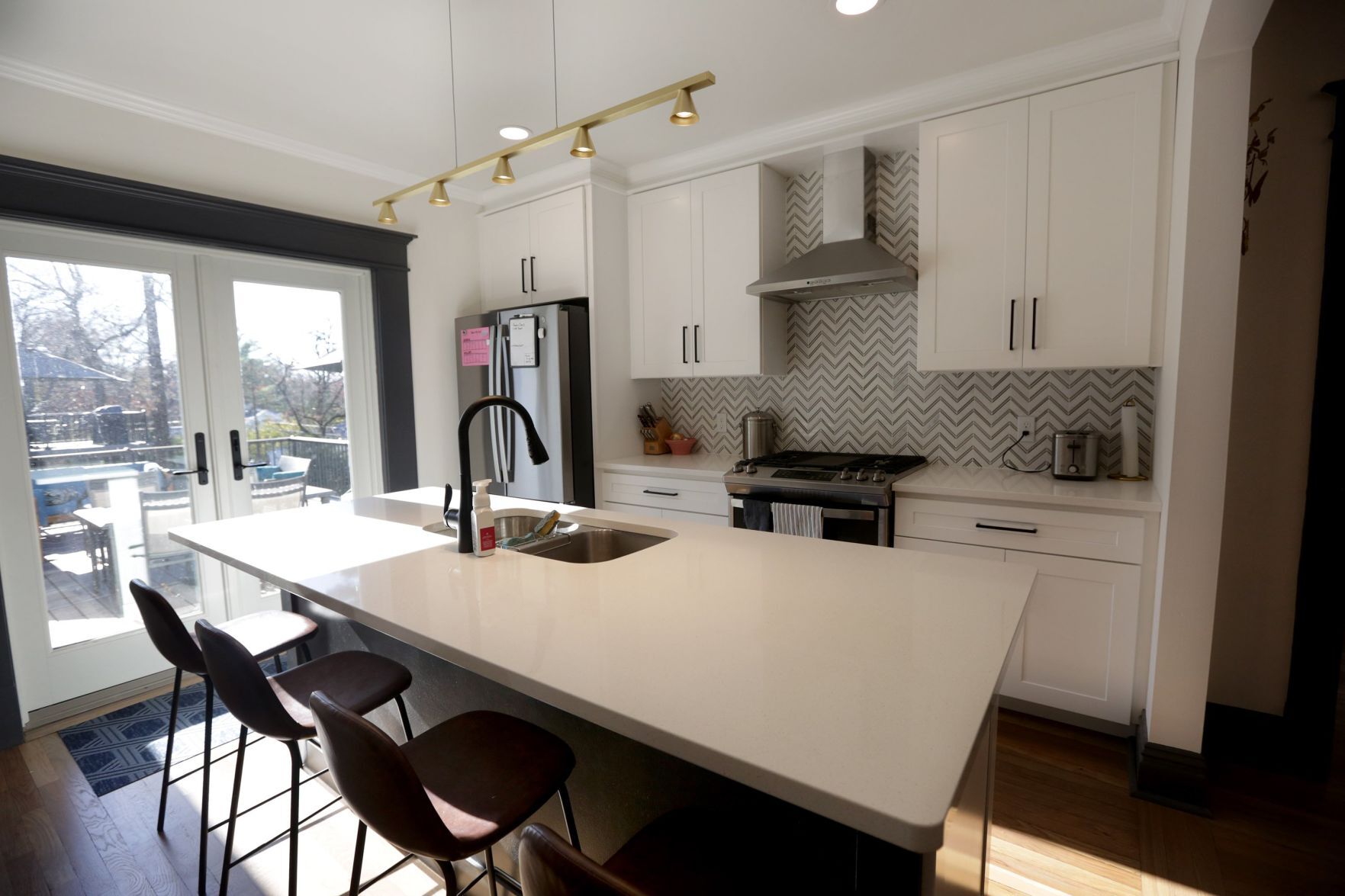
It often takes a strong vision to see the potential in an older home with an imperfect layout. For Jonathan and Katie Wirth, holding degrees in architecture allowed them to imagine what their 1928 Kirkwood home could be. Katie had noticed the house, in the Corona Park neighborhood, listed online in early 2015, but it quickly went off the market. It was relisted in April of that year, and she quickly contacted her real-estate agent.


Katie and Jonathan Wirth reworked the first floor of their old Kirkwood home to reflect a more modern use of space. Video by Hillary Levin


Hillary Levin


“What I liked about this neighborhood was that it was so close to the high school and the park. I was very much taken with it because the original houses in this neighborhood all have this storybook charm,” Katie says.

What wasn’t charming was the home’s dated and confining layout. The kitchen was tiny and closed off, tucked away in the back of the house. When Katie went to look at it with her two young daughters, their agent just shook her head and said it would never work for them.

“I said, ‘Well it has to work because I want to live in this location; this house is the right price, and it’s the right square footage for us.’ I went home and started drawing. … That night is when I had the idea of taking apart the biggest bedroom and turning it into a kitchen,” Katie remembers.

After Jonathan went back with her to look at the house, he said, “OK, show me those drawings.” With his architect’s eye, he was able to see how it could work and told Katie they should go for it.

Ways hellebores are perfect for Pacific Northwest gardens

Ways hellebores are perfect for Pacific Northwest gardens

Ways

Hellebores are fantastic for the Western Washington local climate.

The Olympian

The second week of January has us deep into the dormancy of wintertime, but there are signs of spring if you appear. Buds are swelling, bulbs are poking their pointed tips up out of the soil and there are constantly the hellebores flowering irrespective of snow and sleet and frozen soil.

This thirty day period at the Tacoma Home and Backyard Exhibit Jan. 2-30, I will be talking about “The Heavenly H Plants: Hellebores, Hydrangeas and Heucheras,” perennials that together can provide calendar year-spherical coloration.

In this article are the most questioned inquiries about hellebores:

Q. What is a hellebore?

A. Hellebores, also identified as Xmas Rose and Lenten Rose, are heavenly plants perfect for Western Washington as they love cloudy days, rain and awesome summers like ours. They have thick environmentally friendly leaves shaped a bit like maple leaves and, based on the range, send up bell-formed blooms from December until March.

Q. What about deer and slugs? Will they take in hellebores?

A. Nope. These rough vegetation are deer-, slug- and even drought-resistant.

Q. Will all hellebores return year following 12 months with no replanting?

A. Certainly, hellebores are perennial so as extensive as you give them with perfectly-drained soil and enough moisture to establish a root program, all the distinctive hellebore varieties will survive to flower winter season soon after winter season.

Q. Do hellebores need sunlight or shade?

A. Most hellebores do nicely in part shade but these adaptable plants will bloom in deep shade and some kinds these kinds of as the Corsican Hellebores with lime-eco-friendly blooms will prosper in comprehensive sun and sandy soil.

Q. I acquired a potted hellebore for Xmas wrapped in foil to get pleasure from indoors. When I can plant it outdoor in my backyard garden?

A. Discover a shovel and dig a wide hole as holiday getaway present hellebores want to go back outdoors as shortly as feasible. Place the plant outdoors at night promptly so it will become utilized to the cold. Whenever the floor is not frozen, you can plant a hellebore.

Discover a place where by the hellebore is guarded from the hottest afternoon sunshine and dig a hole that is 3 instances as extensive as the potted plant and 2 times as deep as the roots. Remove all the rocks from the gap and make certain the remaining soil is loose. Hellebores have thick fleshy roots that, if authorized to distribute out into free soil, will take up water and humidity on their own, building hellebores a quite undemanding plant.

Hellebores appreciate it if you incorporate compost or some other organic issue to the planting hole.

Q. What versions and what shades can I come across if I want to insert some hellebores?

A. Each individual year new kinds are made available, many by nearby growers in the Skagit Valley that provide chain retailers and independent nurseries. Numerous are pure white or pale, but other individuals are deep purple, lavender, pink, speckled, noticed and improve colour as they age

As a reward, hellebores can reseed in your garden and the infant plants can bloom in different shades as the mother.

Marianne Binetti has a degree in horticulture from Washington Condition College and is the creator of several guides. Arrive at her at binettigarden.com.

When trouble blooms | Home And Garden

When trouble blooms | Home And Garden

Now that you’ve survived the December get-togethers, you may well have a new houseplant to show up at to. Down below are a couple of standard conditions and pests that can have an effect on your indoor plant.

You may perhaps want to look at on the online at an .org or an .edu website for the most responsible information and facts about your particular plant.

So, what are some of the outward signs that your plant is in trouble?

Diseases

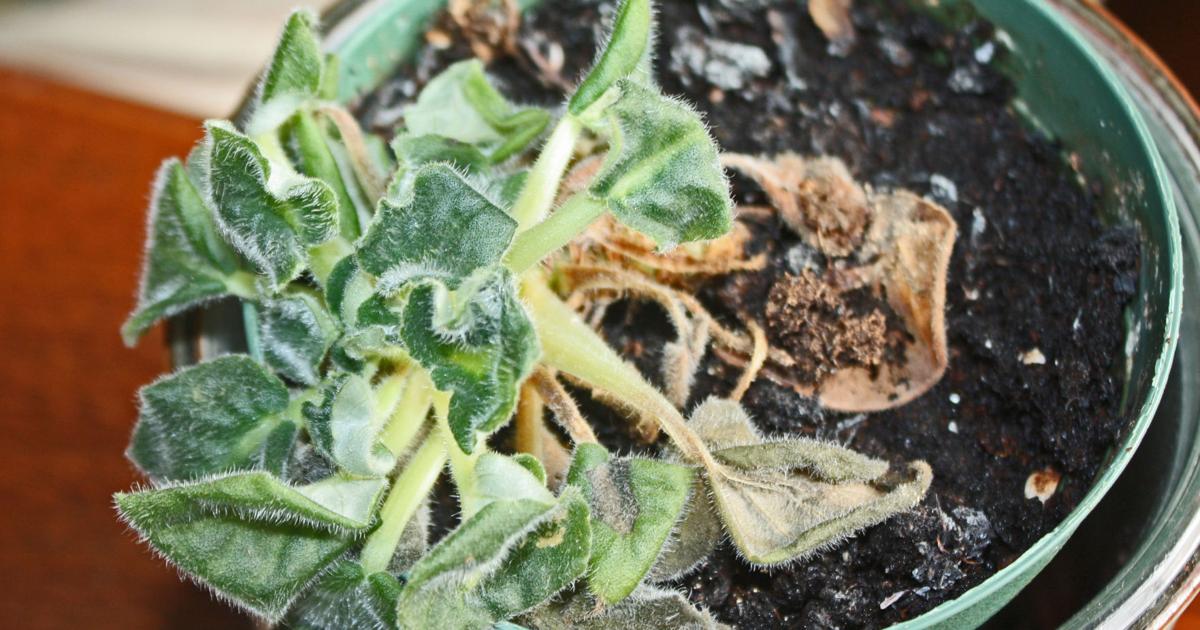
Plant wilting: Wilting can be triggered by overwatering, not watering enough, stem cankers, and root rot, between other points. Use a soilless media built for residence crops so that h2o quickly drains by the container into the saucer.

Wrinkled leaves: This is normally caused by low humidity and far too small water. You may well be able to rehydrate your plant in a few of ways. One particular way, specially with orchids, is to set two or 3 ice cubes on the soil surface area about when a 7 days.

One more is to position the plant (not orchids!) in a sink or tub and operate lukewarm drinking water in excess of the plant and soil surface, drenching the plant various periods.

Yellowed leaves, faded foliage: Large-soluble salts usually cause this dilemma. Give the pot an immersion tub to leach out salts, or, if there is a salt build-up all-around the rim of the pot, take out the plant, scrub the salts off, then exchange with clean soil. Look at the supply of h2o you use, way too. You could want to use distilled h2o in its place of water straight from the spigot.

Foliage yellows or browns, wilts crown of plant might change black or brown: Yet another rationale for wilting or foliage turning may possibly be root rot. Carefully take away the plant from the pot and take a look at the roots. If they are brown, discolored, or smooth, you have root rot.

Identifying the correct sum of h2o needed can be hard simply because in section, it relies upon on the house natural environment — how a lot gentle enters your household, how heat or great the room is, how considerably humidity is in the environment. Typically, we think, “It’s Saturday, time to h2o the vegetation.” Nonetheless, relatively than determining a specific day to h2o, it is better to in fact gauge the plant’s needs by examining the soil’s moisture degree.

According to the College of Maryland’s extension service, “Most plastic pots will dry from the prime down. Clay pots will shed moisture from the sides as very well as the top rated.” If you see a hole amongst the soil and the edge of the pot, variety of like the way an around-baked pan of brownies appears when you consider it out of the oven, the soil may be too dry.

PESTS

Indoor crops are prone to some of the identical pests as out of doors plants. Listed here are just a handful of of the pests that may well have an impact on your houseplant.

White dots or stippling on leaves and webbing on plant: Spider mites typically feed on the decrease surface areas of leaves. “Dense foliage and lousy air circulation add to this dilemma,” notes the College of Maryland Extension Service. To deal with, isolate the plant. If the plant and its container are modest ample to tackle quickly, give it a excellent shower. Repeat as wanted. You could also use a registered houseplant spray even so, make sure you take note that if you have a heavy infestation, the spray may possibly just make matters even worse.

Stunted or distorted plant expansion: These growth may well be brought about by aphids, little, sucking bugs which mostly assault flowering vegetation, this sort of as cyclamen. A great shower or registered insecticide for houseplants may perhaps be adequate to dislodge the aphids.

Fluffy white wax: You could location small, white, cottony insects, or mealybugs, just about wherever on your plant — from foliage to buds to roots. Assault with a registered houseplant spray, or touch an alcoholic beverages-soaked cotton swab to unique mealybugs.

Flying insects, white or black: These are both white flies or black fungus gnats. Use a registered insecticide and allow the potting media to dry among waterings.

You could also be able to use valuable nematodes to control fungus gnat larvae, in accordance to the University of Maryland.