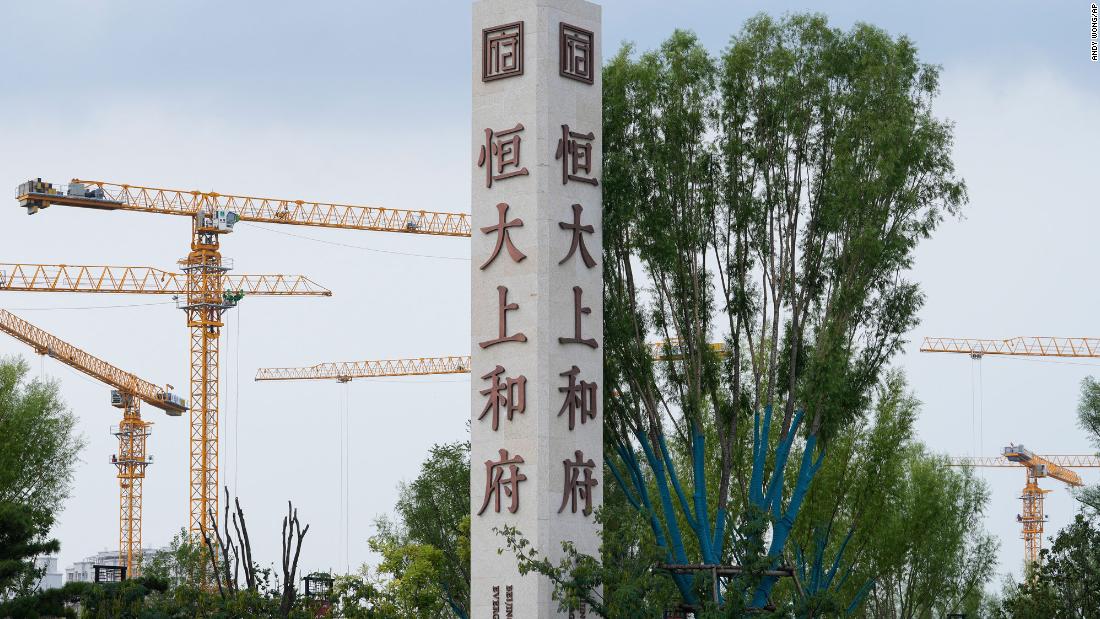
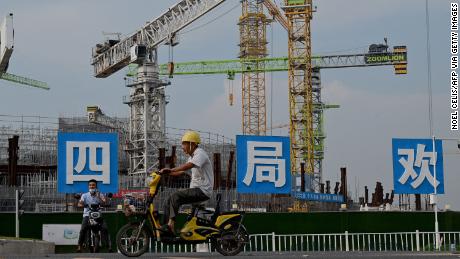
China home builders, suppliers issue spate of profit warnings as Evergrande woes bite

China home builders, suppliers issue spate of profit warnings as Evergrande woes bite

An aerial check out shows the 39 buildings produced by China Evergrande Team that authorities have issued demolition purchase on, on the manmade Ocean Flower Island in Danzhou, Hainan province, China January 6, 2022. REUTERS/Aly Tune/File Photo

Sign-up now for No cost unlimited obtain to Reuters.com

SHANGHAI, Jan 28 (Reuters) – A escalating amount of Chinese design and decoration businesses are crafting off belongings or issuing gain warnings as personal debt woes at China Evergrande Group and other assets builders debilitate their suppliers.

Extra these types of disclosures are expected all through the impending earnings period, placing pressure on Chinese authorities to do a lot more to limit the contagion from developers’ economical disaster and avert work losses.

Guangzhou Holike Imaginative Residence Co (603898.SS), a furniture maker, became the most current firm to disclose losses connected to Evergrande, which has racked up above $300 billion in credit card debt, together with 200 billion yuan ($31.44 billion) owed to suppliers through professional paper.

Sign-up now for Free of charge limitless entry to Reuters.com

Holike claimed in an exchange submitting on Wednesday it expects 2021 web revenue to slump as significantly as 60{d4d1dfc03659490934346f23c59135b993ced5bc8cc26281e129c43fe68630c9} from a calendar year previously, damage by receivables to Evergrande that are unlikely to be gathered.

In addition, China’s property market downturn has dented the benefit of a company it acquired in 2020, ensuing in impairment losses, Holike said, including it has slashed company with Evergrande and is looking for statements.

Beijing Jiayu Doorway, Window and Curtain Wall Co also flagged dangers this 7 days, saying it turned in a loss of up to 1.4 billion yuan very last 12 months, many thanks to receivables from Evergrande that are most likely to go bitter.

Earlier this month, Guangdong Pak Corp (300625.SZ), a maker of lights fixtures, reported it forecast a 85{d4d1dfc03659490934346f23c59135b993ced5bc8cc26281e129c43fe68630c9}-90{d4d1dfc03659490934346f23c59135b993ced5bc8cc26281e129c43fe68630c9} drop in 2021 earnings, many thanks to a leap in Evergrande-associated impairment losses. And Shenzhen Wenke Landscape Co (002775.SZ) stated it fell into the purple very last year because of to Evergrande defaults.

Most China-outlined companies will commence reporting annual results following thirty day period, with much more such disclosures predicted, as dozens of Chinese suppliers have disclosed debts owed by builders like Evergrande. Some have already set aside provisions.

And in spite of some easing steps taken by the govt to ease developers’ liquidity strain and guidance the cooling financial system, recent information suggests the issue will get worse.

Models of Shimao Group Holdings, Kaisa Group Holdings and Greenland Group were being named and shamed this month in a checklist of Chinese companies “continually overdue” on industrial paper payments.

And the full variety of this sort of delinquent corporations jumped 26{d4d1dfc03659490934346f23c59135b993ced5bc8cc26281e129c43fe68630c9} in December from the former month, according to the record compiler, the Shanghai Industrial Paper Trade. L1N2TS06Q

Evergrande, the world’s most indebted developer, is in search of a personal debt restructuring as it struggles to shell out creditors, suppliers and buyers in prosperity administration items.

Shanghai Trendzone Holdings Group (603030.SS), a household decoration enterprise, stated recently it had filed 333 lawsuits in opposition to Evergrande and its subsidiaries, and the affect on earnings is unclear ahead of lawful rulings.

($1 = 6.3558 Chinese yuan renminbi)

($1 = 6.3613 Chinese yuan renminbi)

Sign up now for Free of charge limitless obtain to Reuters.com

Reporting by Samuel Shen and Andrew Galbraith Modifying by Kim Coghill

Our Expectations: The Thomson Reuters Belief Rules.

Strategists on investing in Asia junk bonds after Evergrande crisis

Strategists on investing in Asia junk bonds after Evergrande crisis

High-rise apartment buildings at China Evergrande Group’s under-construction Riverside Palace development in Taicang, Jiangsu province, China, on Friday, Sept. 24, 2021.

Qilai Shen | Bloomberg | Getty Images

Asian high-yield bonds have been a hot favorite among institutional investors for the last few years.

Also known as junk bonds, they are non-investment grade debt securities that carry bigger default risks — and therefore, higher interest rates to compensate for them.

One recent high-profile example was the debt crisis at China’s Evergrande. Weighed under more than $300 billion of liabilities, the world’s most indebted property developer is teetering on the brink of collapse. Fears of a broader contagion to the industry, and perhaps even the economy, triggered a global sell-off in September.

Given the uncertainty of China’s junk bond market, CNBC asked five strategists and portfolio managers: Would you advise investors to buy Asia high-yield bonds?

To be clear, China real estate bonds form the bulk of Asia’s junk bonds. As Evergrande’s debt crisis unraveled, other Chinese real estate developers also started showing signs of strain – some missed interest payments, while others defaulted on their debt altogether.

Here are the responses from 5 strategists CNBC interviewed:

1. Martin Hennecke, St. James’s Place
Head of Asia investment advisory and communications

Investors should “avoid the use of leverage of any bonds or bond funds at this point in time,” Hennecke strongly recommends, referring to the practice of borrowing money to invest.

He said that predictability of returns in high yield bonds “isn’t nearly as clear-cut … and such a strategy can turn out to be much higher risk than anticipated.”

“The recent sharp sell-off in Asian high yields, coupled with the likely default or restructuring of some, is a good example of this,” he told CNBC.

Hennecke also said investors should diversify globally in order to manage sector and country risks.

… developments surrounding the Chinese property sector are likely to weigh on investor sentiment in the near term, but we believe that opportunities exist for the discerning investor.

Wai Mei Leong

PineBridge Investments

“Last but not least, investors should be well advised to diversify across asset classes as well, noting that fixed interest as an asset class generally is vulnerable not only to default risk, but also interest rate and inflation risks,” he said. Rising price pressures are “arguably on the rise and in my view possibly still underestimated today,” he added.

But that doesn’t mean investors should completely brush off high-yield bonds.

“All that being said, Asian junk bonds have already sold off sharply, sending yields much higher, and as long as one is conscious of the risk taken, I would suggest that the asset class shouldn’t be excluded from well diversified portfolios.”

2. Wai Mei Leong, Eastspring Investments
Portfolio manager for fixed income

“With China accounting for 50{d4d1dfc03659490934346f23c59135b993ced5bc8cc26281e129c43fe68630c9} of Asia’s high-yield bond market, the developments surrounding the Chinese property sector are likely to weigh on investor sentiment in the near term, but we believe that opportunities exist for the discerning investor,” Leong said.

While China’s property sector has historically been subject to episodes of policy-driven volatility, she said, “we recognize that the depth and scale of policy measures have been unprecedented this time.”

Still, the real estate sector remains an important driver of China’s economy, and accounted for 27.3{d4d1dfc03659490934346f23c59135b993ced5bc8cc26281e129c43fe68630c9} of the country’s fixed asset investment in 2020, while being a key revenue source for many local governments, Leong said.

“The Chinese government would therefore prefer to have a healthy property sector than to see multiple large-scale defaults, which could potentially trigger widespread systemic risks.”

Leong added that in the long run, China’s growing middle class, together with urbanization and the development of its megacities, will likely continue to support revenues of the property sector.

“Investors are likely to reassess their risk expectations towards the Chinese high-yield property bond sector in the near term,” Leong added.

Stock picks and investing trends from CNBC Pro:

But China’s drive to reduce debt within the property sector will ultimately result in “stronger market discipline” among real estate firms, and improve the quality of their bonds, she added.

3. Arthur Lau, PineBridge Investments
Co-head of emerging markets fixed income and head of Asia ex-Japan fixed income

Expect more defaults from the property sector in the near future, Lau said.

Still, he said he doesn’t expect defaults in specific companies to result in a systematic crisis.

He also said there will likely be policy easing on Beijing’s part — such as faster approval of mortgage applications and reopening of onshore bond market to stronger and better quality property developers.

All that should help ease some liquidity concerns, Lau added.

This type of volatile wild market phenomena is not often seen and opens up opportunities to be positioned in quality names. But caution is still warranted with volatility likely to remain…

Carol Lye

Brandywine Global

He also pointed out that selective property developers are still able to continue raising funds through the equity market, such as rights offerings and share placements, as well as asset sales.

The stronger developers will emerge from this crisis “even stronger” while the weaker companies may eventually default, Lau said.

“Hence, we cannot emphasise more the importance of careful credit selection to pick the winners and avoid the losers,” he said, adding that his firm expects “a very decent return in the coming six to 12 months if investors are able to identify the survivors and able to stomach the volatility.”

4. Sandra Chow, CreditSights
Co-head of Asia-Pacific research

“In general, we would stick to the more conservative credits in China,” Chow said, citing firms that have less debt or have strong government links.

“High yield credits in Indonesia and India have been more resilient and better supported by investors seeking diversification outside China or Chinese real estate,” she said.

“We wouldn’t avoid high yield altogether but individual credit selection is very important,” she concluded.

5. Carol Lye, Brandywine Global (investment manager under Franklin Templeton)
Associate portfolio manager

Chinese real estate firms issuing high-yield bonds have been sold off since August, particularly the lower quality bonds — but they later rallied, thanks to verbal interventions from Chinese authorities, Lye said.

However, Chinese real estate bonds had another selloff last week in what the portfolio manager said were “by far the worst.”

“This was driven by concern over hidden debt and contagion among higher quality [BB-rated] names which led to a fire sale across all names. Quality names were trading below 80 cents.”

B or BB-rated names are considered low credit quality rated bonds, and are commonly referred to as junk bonds. However, BB-rated bonds are of slightly higher quality than B-rated bonds.

News over possible changes in the three red line waiver for mergers and acquisitions “helped the market to stage a whipsaw rally especially in quality names,” she said referring to China’s “three red lines” policy which was rolled out last year. That policy places a limit on debt in relation to a firm’s cash flows, assets and capital levels.

Other encouraging signs for investors included a potential change in the reopening of issuance in the onshore interbank market, and a jump in October’s mortgage loans.

“This type of volatile wild market phenomena is not often seen and opens up opportunities to be positioned in quality names,” she said. “But caution is still warranted with volatility likely to remain as various property companies are still in a tight liquidity position.”

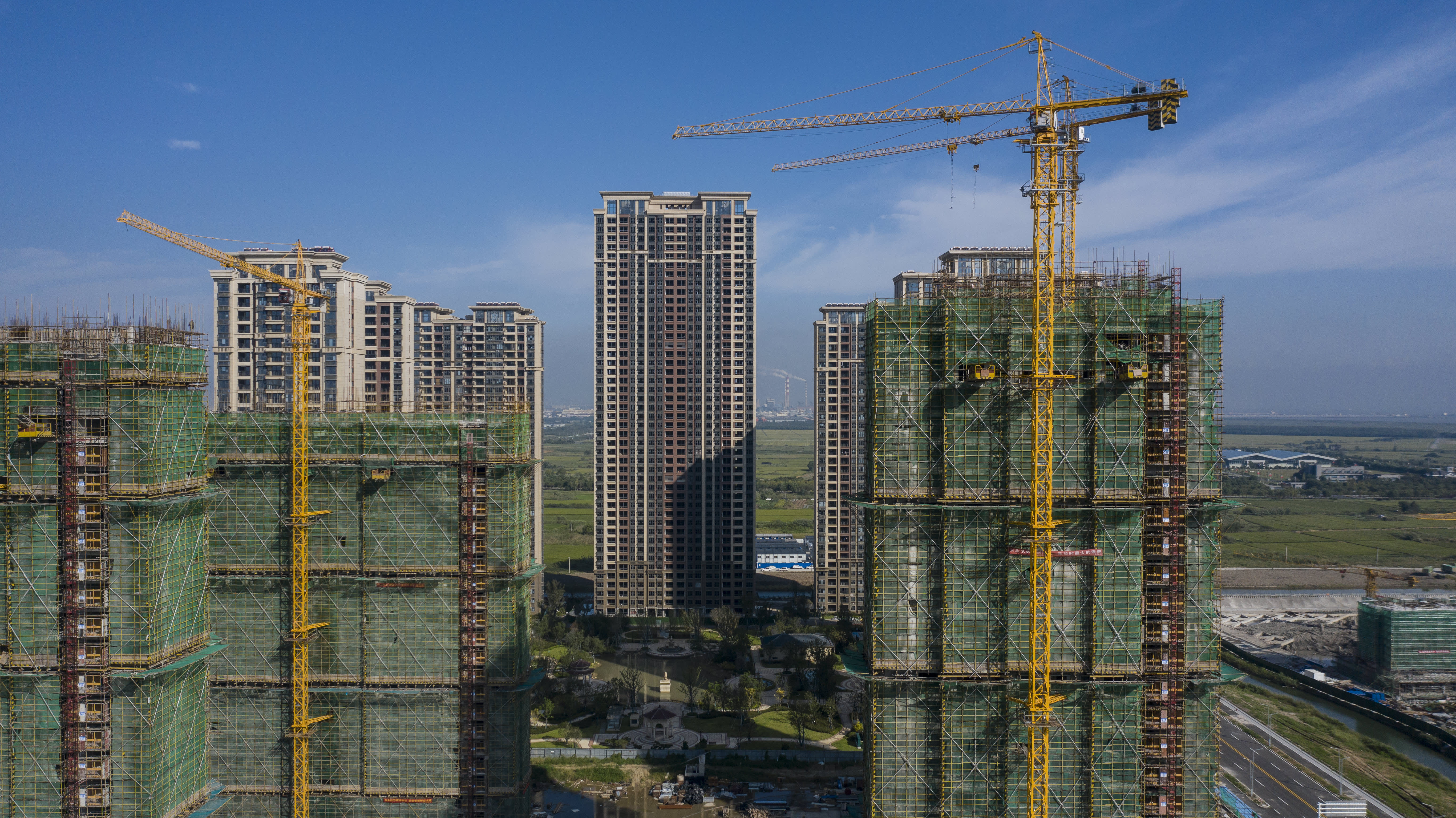
After Evergrande, Chinese developer Fantasia can’t pay its debts either. That’s stoking real estate fears

After Evergrande, Chinese developer Fantasia can’t pay its debts either. That’s stoking real estate fears

Fantasia Holdings, a Shenzhen-based developer, skipped repaying $206 million truly worth of bonds that matured Monday, the organization explained in a stock exchange filing. It is now evaluating “the prospective effect on the economical ailment and money placement of the group,” it extra.
Individually, the residence management device of Country Back garden, China’s second greatest developer by revenue following Evergrande, claimed in a submitting that Fantasia had failed to repay a organization mortgage of about 700 million yuan ($109 million). Fantasia experienced informed the firm that it would likely “default on [its] external money owed,” Place Garden Expert services added.

S&P and Moody’s slapped “default” credit rating ratings on Fantasia and reported the non-payment of principal would most likely also place the company in default on its remaining bonds.

“The downgrade follows Fantasia’s announcement … that it had skipped payment on its $205.7 million bond owing on the exact same working day, and demonstrates our expectation of weak recovery potential clients for Fantasia’s bondholders just after its default,” said Celine Yang, a senior analyst at Moody’s.

Fantasia shares had been suspended on Tuesday but shares of Nation Backyard garden Companies tumbled 3.2{d4d1dfc03659490934346f23c59135b993ced5bc8cc26281e129c43fe68630c9} in Hong Kong. State Backyard Holdings dropped 2.8{d4d1dfc03659490934346f23c59135b993ced5bc8cc26281e129c43fe68630c9}.

Defaults could hit development

The information revived fears that financial debt woes are deepening in China’s overextended home sector, which accounted for 29{d4d1dfc03659490934346f23c59135b993ced5bc8cc26281e129c43fe68630c9} of remarkable financial loans issued by Chinese banking institutions in yuan in the 2nd quarter of 2021. The sector is crucial to China’s financial system — true estate and related industries account for around 30{d4d1dfc03659490934346f23c59135b993ced5bc8cc26281e129c43fe68630c9} of GDP.

“The [Chinese] house sector is worrisome,” wrote Larry Hu and Xinyu Ji, China economists for Macquarie Team, in a analysis observe on Tuesday.

Fantasia’s default displays that Evergrande’s problems “could dampen the sentiment for homebuyers, developers and banking institutions, triggering much more developers to run into a liquidity crunch,” they reported.

The outlook for the Chinese property current market is not encouraging. House sales in the top rated 30 Chinese metropolitan areas plunged 31{d4d1dfc03659490934346f23c59135b993ced5bc8cc26281e129c43fe68630c9} in September from a year back, in accordance to Macquarie’s estimates.

Foreign investors are losing out in Evergrande's battle to survive

Evergrande’s personal debt disaster has unsettled world wide traders in modern weeks, raising fears about a possible domino impact on the broader Chinese overall economy and money markets.

The firm’s issues have been brewing for more than a year, immediately after Beijing commenced reining in the authentic estate sector in August 2020 to suppress excessive borrowing to avoid the market place from overheating.

Before this yr, the Chinese federal government built it very clear that it would prioritize “common prosperity” in its coverage ambitions and tame runaway home charges, which it has blamed for worsening income inequality and threatening financial and social balance.

Evergrande’s liquidity disaster has escalated in recent months. The firm warned buyers of its cash movement disaster in September, declaring that it could default if it was not able to elevate revenue swiftly. In the past couple months, it skipped at the very least two bond fascination payments.

What's next for Evergrande: Bailout, breakup or default?

“While Evergrande’s challenges are unlikely to result in a Lehman moment, they will aggravate the ongoing assets sector slowdown,” mentioned Louis Kuijs, head of Asia economics at Oxford Economics, in a report on Tuesday.

“Provided the substantial total footprint of the residential genuine estate sector by using ‘backward linkages’ to sectors such as metal, its slowdown will weigh substantially on over-all financial progress,” he explained.

Nevertheless, Chinese policymakers appear to be standing agency. Last 7 days, the People’s Financial institution of China and the banking regulator reported that they would guard homebuyers. Their assertion produced no point out of developers.

— Anna Cooban contributed to this short article.