Mynd’s Doug Brien on Single-Family Rentals and Remote Investing

Mynd’s Doug Brien on Single-Family Rentals and Remote Investing

Doug Brien of Mynd and The Real Deal's Hiten Samtani

Doug Brien of Mynd and The Real Deal’s Hiten Samtani

“Do you have to live in Atlanta to invest in Coca-Cola?”

Doug Brien is making a point about how provincial single-family rental investing is, with people tending to buy within driving distance of where they live. That’s because the market, unlike those for stocks and bonds, is messy and opaque.

Things we take for granted in debt and equities — reliable data, smooth portfolio management — are hard to come by in single-family rentals. Brien speaks from experience: He first took on the sector as co-founder and CEO of Wall Street-backed Waypoint Homes, which he built into a $3 billion, 17,000-home behemoth that is now part of Invitation Homes.

His focus now is Mynd, a startup he founded in 2016 with his Waypoint partner Colin Weil to transform how such rentals are managed.

The startup operates close to 13,000 single-family rentals on behalf of both retail investors and institutions such as Invesco, which committed $5 billion to the firm last year for acquisitions. Mynd has also raised nearly $200 million in venture capital, including $57 million in September at a valuation north of $800 million.

Brien, who began real estate investing after a career as a Super Bowl-winning placekicker, sees property management as the fulcrum upon which single-family sits. He spoke with The Real Deal about how investor interest, cloud computing and more adventurous homebuilders are ushering in a creative era for the sector.

Companies like yours talk about “democratizing investment,” but often end up becoming a more efficient investment vehicle for the big guys.

We’re a management platform. We help others execute their investment strategies. And we started with retail investors. If you look at single-family, that really is the market. To your point, we did a deal with Invesco last summer. It’s funny, even some of our own team have raised the question: “We’re trying to democratize access to real estate for all. What are we doing with Invesco and other institutional partners?”

Part of what I had to explain to them is, if you think about Invesco or any of these other institutional investors, they’re deploying capital on behalf of endowments and pension funds. What does that mean? It’s teachers and firefighters and police, folks that work hard their whole lives and this is their savings that they’re going to get back in the form of a pension. And single-family rental is a really good asset class on a risk-adjusted basis. So yes, there’s professional investors in front of them, but really we are providing accessibility to an asset class that we know really well, that we believe there’s a 21st-century way to invest in, and we want to be the pioneers in making that happen.

Why is this happening now as opposed to 10 years ago?

It’s three things. One was the foreclosure crisis — that was the fire sale, the economic impetus to go take some risk. The other two components are the advent of cloud computing and mobile computing. Prior to those technologies, you had folks running around with yellow pads of paper, going out to a house, writing down some notes. As we started building our system, they had iPads and they could get whatever information they needed, not only about that house, but the portfolio, the area, and could input data into the system. All of a sudden the asset class became manageable.

You could argue that it wasn’t really a unified asset class before. Now I’ve heard numbers as high as $4 trillion.

$4.5 trillion is the number we show in our investment deck, which makes it the largest asset class in the world. What made it institutional was a 10- to 12-year track record of real operating data. And then the final straw was Covid. We want to see how an asset class behaves during an economic downturn, and single-family was a shining star. And so, in 2011 and 2012 the private equity firms were coming in, but 2020 and 2021 were the big years when the traditional commercial real estate investors came in. We were deploying capital for GI Partners, and I and one of their partners went up to Sacramento to pitch CalSTRS [California teachers’ pension fund]. And I think they literally thought about our talk for 10 years before they started buying anything. That’s just how that capital behaves.

They have been burned pretty badly on some more speculative investments, like Stuy Town.

Yes. So they are careful, but that type of an investor, they are now in. Invesco changed the name of their “multifamily” group to “residential” and their goal is to have as much single-family as they do multifamily.

We started with property management. This is an important point about single-family: In almost every asset class within real estate, property management is considered a commodity. It’s like, “We’ll find somebody to manage it, it doesn’t really make any difference” — except for single-family, where it’s actually property management PLUS logistics management. We used to always say, “We’re a property manager, plus we’re FedEx.” No single asset has enough revenue to support a full-time employee; you have to manage it portfolio style, which necessitates a lot more technology.

What does that look like in the field?

Unlike traditional real estate where people are assigned to a property, here they’re assigned to a portfolio, which is typically 200 to 400 properties and they can be spread out all over Atlanta. And so how they spend their day is something that needs to be well thought out so that they’re not just doing the things that need to be done, but also incorporating the idea of prioritization.

I just flew in from Houston, an absolutely massive market. One of the things we talked about was, “Should there be such a thing as a Houston vendor? We need to be breaking this down into submarkets.” These are the types of challenges that we have to grapple with in single-family, so what you end up with is a pretty big difference between a good manager who has the technology backbone to support the operation at a high-growth pace and at scale versus those that don’t.

A home is still the most emotional asset. When there are big investors involved, it can come with a lot of bad press often and that can lead to more regulation.

I’m sitting here in the San Francisco Bay Area, the epicenter of residential real estate regulation. I own properties myself here. Think of Maslow’s hierarchy: Shelter is one of the most basic necessities, and we take that responsibility seriously. Our job is to educate our investors on why taking care of their residents, making sure that they have a good home, is good business. They stay longer, they pay on time and they take care of the assets. [Small] investors can be very emotionally charged because in some cases it’s their life savings in that one rental house.

Having said that, yes, as you get big, there’s always going to be a target on your back. I do think a lot of the aggression aimed at institutional investors is somewhat misguided. I remember firsthand in 2009, 2010, 2011, the market stopped falling, but it was flat and you had nice neighborhoods that had turned into flat-out dangerous places to be, there were boarded-up homes everywhere, squatters living in them, dealing drugs out of them. And we at Waypoint would come in and were buying aggressively in some of these neighborhoods, but we were investing $30,000 into these homes. Making them nice, making them livable, making it so other families would move in and we would have the neighbors come up and want to give us hugs. And so you kind of have to take a little bit of a walk down memory lane to remind ourselves that institutional capital kind of saved the housing market to some extent.

Home prices year-over-year are up 20 percent. In some markets, 30 percent. Institutional ownership is still a drop in the bucket, but institutions do have access to cheap debt. Their ability to buy homes at scale is being fingered as one of the reasons for increasing unaffordability for average homeowners.

Some markets have more robust institutional investment than others. None of them are really more than 20 to 25 percent of the buying activity. But one thing to keep in mind is institutional investors are still economic buyers — there has to be some economic rationale. Can they typically get lower debt? Yes. But end-user homeowner buyers are not economic buyers. People will pay as much as they possibly can — it’s not an economically rational decision.

We have an affordability problem, both in terms of owning and in terms of renting. And I’d love to be a part of the conversation of how we build more supply. I live in the worst metro in the U.S. in terms of Nimbyism and you cannot build new supply. So guess what, you have an imbalance that’s driving both rents and prices. If we built enough homes there’d be plenty for renters and owners and pension funds via institutional buyers. Prices and rents could be set at reasonable levels that work for everybody.

Are you involved at all, directly or indirectly, in any lobbying related to the single-family rental sector?

Starwood Waypoint was one of the four companies that helped to form the National Rental Home Council, which Mynd is a member of. The NRHC is the tip of the spear for representing single-family rental. I’ve been involved with some discussions with the mayor of Oakland around ideas for affordable housing.

Read more from The REInterview

You recently called built-to-rent “a gateway drug” for large investors and have been actively courting landlords and developers in that space.

The reason that I jokingly refer to it as the gateway drug is because I’ve been in so many of these conversations over the last dozen-plus years, where most institutional investors are accustomed to large multifamily. So you explain to them that we’re going to invest in distributed single-family homes, and they’re like, “Hold on a second. I own an apartment building, 300 units, I got six people. They’re all there.” Their heads kind of explode around the idea of how do I do all these houses?

And so what you have with built-to-rent, purpose-built communities is you might have 200 to 400 houses. It’s the same asset. But it’s in one area. You can have that community front office with some amenities and a local team that does everything. So [investors] are doing single-family rental, but in a way that’s more familiar to them.

Our hypothesis is that you’re getting a lot of the big multifamily investors coming into single-family via built-to-rent communities. They’re going to get good returns. And then as those product types start to get more expensive and you get cap rate compression, they’re going to want to branch out and also own houses, which will require portfolio-style management, which is what we specialize in.

It’s almost like a geographic security blanket. I know Lennar and other big builders have dived into built-to-rent. You wouldn’t be co-developers with them – instead, you’d be at-scale property managers?

We’d charge a traditional property management fee, leasing fee, renewal fee. And then when we’re buying homes for investors, we get a brokerage-like commission.

On the retail side, most of what we sell is built-to-rent. Lennar is a big public company. They were the first builder to get it. We have seen a big opportunity with smaller regional builders who don’t have the kind of balance sheet that a Lennar or a Pulte has. And so we partner with them and we can take down parts of their communities and pay them as they go and make their business work better. So we’re not necessarily buying the entire community, but maybe we buy 10 or 15 homes out of 40. And for us, those are great individual homes to put into the hands of individual retail investors who want to get access to single-family.

Would you go, say, to some small to midscale developer that has a plot outside Scarsdale and wants to do a built-to-rent?

In fact, we have a 40-home community that we actually bought on our balance sheet and are reselling to another investor and we’re going to manage for them. So there’s different ways we can play. We can take down deals ourselves, we can resell them. But our whole model is you get the property management right — we didn’t do anything but property-manage and build all the associated technology for four years.

If you think about all the services that one needs to successfully deploy capital — brokerage, financing, insurance — they’re all transactional. The enduring relationship is the property manager. It’s also where the really valuable data lies. And so if you can earn trust in that enduring relationship, collect all the relevant data, it puts you in a pole position to be there and just say, “Okay, would you like to now thoughtfully grow your portfolio? We’re in 25 different markets. We can help you buy here. We can help you finance. We can help you make it really easy and get you institutional-type pricing.”

Property management is also probably the stickiest factor, right? If a home is well managed, it’s probably the reason to stay. Conversely, my home could be in a great location, but if I’m getting shitty maintenance, I am moving.

Taking it even one step further: The way that the industry works, which is not the way it should work, is you go to a broker because you’re trying to buy a house. You want to buy an investment property and they give you a pro-forma. And it’s like, “Okay, how do you know that repairs and maintenance is going to run me this much?”

The broker’s trying to sell the property. So they’re basically fabricating numbers. The beauty of having all this data is we can use actual operating data from our own business. We can have feedback loops and tell investors, “Look, if you have a 1980 home in this market of this square footage, this is the range at which it’s going to perform.”

The way that you invest in real estate is to understand your risk and reward. And you study various markets and you have a diversified portfolio that blends to those return criteria. The tools we are building are enabling Main Street and institutional investors to more thoughtfully deploy capital.

The stat that I get stuck on is 180 million Americans own stock and 10 million own [investment] real estate. Why is it that only 10 million own fee simple real estate? The reason is because it’s hard.

Mynd has raised close to $200 million in venture capital, with the latest disclosed valuation north of $800 million. What’s the next step in your evolution?

Geographic expansion is a necessity — becoming the platform that can be in all the most relevant single-family markets and allow investors to use one platform to deploy, finance and manage in 40 to 50 markets, that is a big competitive differentiator. We’re also looking at some financing products that can reinvent what it means to finance a property for retail investors. We call it one-click investing, where Mynd is basically the lender, and we’re not even looking at the individual — we’re just looking at the asset.

We control the dollars. And so we pay ourselves the financing costs first and we can set up an institutional-caliber facility that individuals can leverage. Helping retail investors more efficiently finance, including power buying, going out onto the market as an all-cash buyer to be more competitive, by virtue of the fact that we’re also an institutional investor. And then also looking at some other interesting synergies that we call, “sell with Mynd” or “sell to Mynd.” So think iBuyer in the investment world.

It’s possible for us to basically have an all-cash offer for every single retail home in our portfolio. And if you think about one of the biggest risks or challenges for most retail investors, it’s liquidity. So imagine if in 24 hours you could have all cash, you’re out. That’s a product that we’re working on.

Would the lending be from your own balance sheet?

Partnering with banks, but basically leveraging our balance sheet to secure a warehouse line. And then what we ultimately did with that warehouse line, we could securitize it, take more of an institutional approach to financing that individual investors could never do and offer that to them.

And then just to finish out “the sell with Mynd.” We have 4,500 individual investors, we have 10 institutional investors. So if you want to sell, we can take you out quickly, but we can also sell off-market through our platform. And because we have all the data on your property, we can very quickly list your property to folks that are going to want to buy it as an investment property, meaning you don’t have to go clean it up, you don’t have to vacate your property. And we can do that transaction for less than you would incur on the open market.

I saw that you were also buying through iBuyers. Are you partnered with any specific player?

We’re iBuyer-agnostic. There’s probably eight to 10 different iBuyer-alternatives, MLS bulk portfolios, as well as built-to-rent. We have teams out scouring the market, looking for those deals.

We are in an amazing marketplace with tons of rental demand, tons of investor demand. These are the things you like to see in your business. The flip side of that coin is it’s hard to buy — it’s competitive. And since we do it all ourselves, we don’t just go buy houses. We buy houses that we have to manage and, and, you know, turn into returns for Invesco and pension funds and retail investors.

Ballpark, what kind of returns are they looking for in this game?

Specific buy boxes is not something that I can talk about, but institutional capital is now buying in the mid-4 percent cap rate, depending on the market. It’s meaningfully compressed.

Colin and I just came out with a new book called “The Big Long.” I remember back in 2008, 2009, ’10, ’11, we would be looking at eight caps and be like, “Yeah, we’re gonna pass.” Now we’re trying to buy 4.5 caps! So the world has changed.

What are you trying to get at in the book?

It’s a story about our journey from Waypoint to Mynd and where we see proptech going. A lot of things we talk about are very central to our thesis, using smart home technology to create a better experience for residents. And then, eventually owning [the ecosystem]. I mean, Amazon is an extreme example, but if you think of their business, it started with books and now they’re literally being FedEx.

They own the rails, the undersea cables, God knows what else.

Our hypothesis is that once you earn the trust of the investor and the resident, there’s so many different services around housing that we are now uniquely positioned to offer. We kind of own the payment gateway. So residents pay us rent, we pay investors and it just puts us in a very good place to be able to add value throughout that value chain. And it started with buying houses one at a time back in 2009.

We’ve just always seen this as an emerging industry — why wouldn’t it be? Look at other industries, the institutionalization of coffee shops with Howard Schultz and Starbucks, or 7-Eleven with the corner grocery store. Once these asset classes go institutional, they just tend to never go back. And there are these amazing opportunities with modern technology to create highly differentiated game-changing experiences. The book just kind of takes you through that whole thought process and evolution.

The Big Long. If you made a movie about that, it’s just not as dramatic as The Big Short.

Read the book and then tell me. There are some hilarious stories. Think of what we were doing — it had never been done before. These were crazy times. We were buying houses and there were squatters in them. We were trying to buy houses in foreclosure on the courthouse steps and people were getting indicted and going to jail. This was the Wild, Wild West that we had to navigate.

This interview has been condensed and edited for clarity.

(Write to Hiten at [email protected] or @hitsamty on Twitter. To check out more of The Real Estate Interview, a series of in-depth conversations with real estate leaders and newsmakers hosted by Hiten Samtani, click here.)
Cheap Meat or Luxury Rentals?

Cheap Meat or Luxury Rentals?

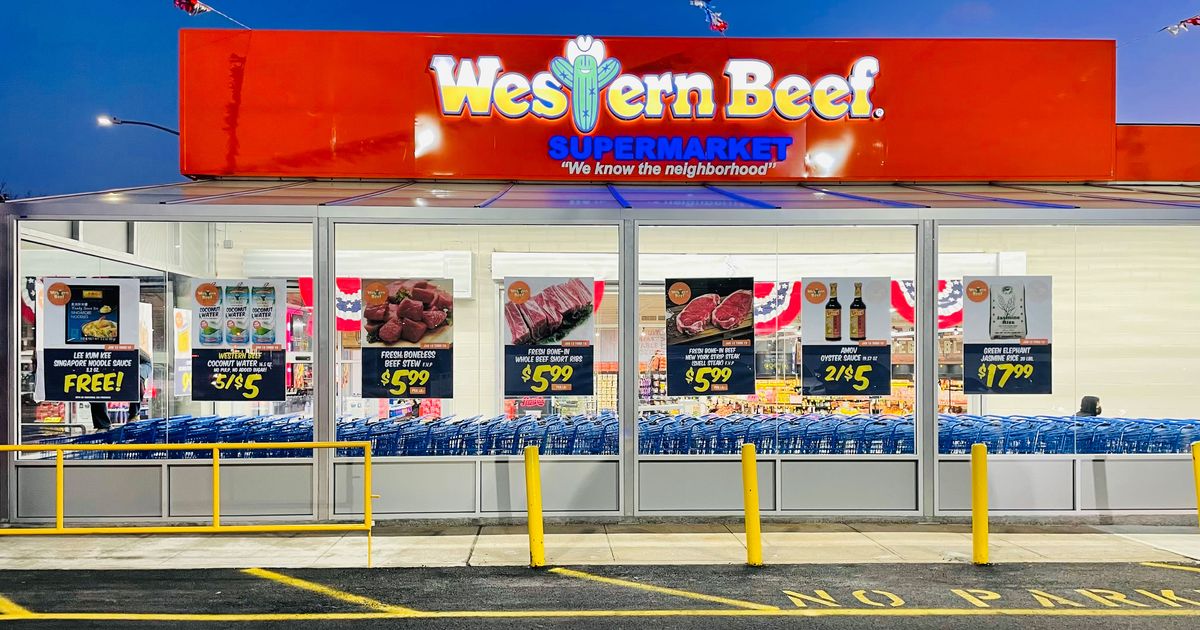
The newly reopened Western Beef in Queens.
Photo: Peter Castellana, Jr.

The crown jewel in the Castellana family real-estate empire is a 20,000-square-foot Queens warehouse wedged between a Home Depot and a row of mom-and-pop appliance stores. For five decades it was a busy grocery store that offered cheap staples as well as specialty ingredients for the neighborhood’s Asian and Latino residents: dumplings, seaweed, chayote. As the flagship store of Western Beef, its once-orange exterior and its grinning mascot, Charlie the cactus, made it one of the most conspicuous businesses on College Point Boulevard. But in August 2018 it abruptly closed.

When I visited the building last summer, spray paint covered the windows, and the orange exterior had been covered in white. The only evidence of commerce was a man in a black ski mask hawking $15 watermelons on the edge of the building’s empty parking lot. Inside, though, it was loud and bright, as a brigade of construction workers installed copper pipes and rows of refrigerators, part of a plan to bring the grocery store back to life.

Over the last half-century, this boxy building has transferred hands between three men named Peter Castellana. Peter Sr., the patriarch, who died in 2020 from COVID-19, used it as the headquarters for his mobbed-up wholesale meat business, which was accused by the government of food-stamp fraud and securities violations. His son, Peter Jr., who took full control of the company in 1996, converted the meat business into Western Beef and built dozens of outlets in New York’s food deserts, then expanded to New Jersey and Florida. All along, he has tried to distance the company from his father’s criminal associations. Now, at 61, he’s cleaning up after another Peter — his son, Peter III, who replaced him as CEO of the parent company, Cactus Holdings, in 2013. Six years later, Peter III was forced to cede the company back to his father, who came out of retirement to reverse what his son had done. Before his father’s return, the youngest Peter had begun shifting the company toward upscale real-estate development. The 40-year-old scion saw a better future in the dozens of properties that Cactus Holdings had amassed across the five boroughs at low prices and now were worth millions more.

With the grand reopening of the Queens grocery in December, it’s clear that the father has won, at least for now. Peter Jr. and Peter III are both tan, short, and stocky, with jet-black hair and thick New York accents. Both have warm smiles and wear gold chains. The son’s necklace, passed down from his father, features a crucifix pendant blessed by Pope John Paul I. They still meet regularly; on Sundays, the Castellana clan usually gets together for Catholic mass or dinner, and sometimes both.

The two seem to have sworn an omertà-style code of silence over how exactly their disagreements played out in the boardroom. But Peter Jr. is adamant that Western Beef stay in the grocery business for the low-income customers it has always catered to. “You can’t be everything to everyone,” he explained as we walked along a row of empty white shelves in the Queens warehouse. “Let someone else cater to the Whole Foods, to the upper income. I’ll stick to the low income. That’s what I know; that’s what I do.”

Western Beef supermarket in the Foxhurst section of the Bronx on Tuesday March 17, 2020.
Photo: G. Ronald Lopez/ZUMA Wire/Alamy Live News

The rise of Western Beef mirrors New York’s transformation from a city dominated by mob cartels to an above-board mecca of cutthroat capitalism. It begins with a son trying to shed his father’s reputation as a tough guy for the Gambino crime family. In the 1950s, Peter Sr. was convicted of selling adulterated meat. In 1961, his wholesale company, Ranbar Packing, was found guilty of “defrauding the government of $200,000 to $500,000 in a scheme involving stolen food stamps.” During the 1960s, he served four years in prison for bankruptcy fraud. In the 1970s, he lied to the Securities and Exchange Commission about the full scope and growing financial struggles of his business. And in 1981, he was charged with extortion after his employees threatened to break the legs of two small-time meat suppliers over an outstanding debt.

Like other mobsters of his generation, Peter Sr. sought to move beyond this history with generous donations and gifts to those in need. He gave to his church and dropped off turkeys to homeless shelters on Thanksgiving. A former law-enforcement official remembers Gambino boss John Gotti calling upon the Castellanas to provide free food for his annual July 4 blowouts in Ozone Park. “[Gotti] would call Western Beef to send over, you know, 1,000 pounds of hot dogs, and all the works,” he said.

His son, Peter Jr., began unloading meat trucks for his father at age 12. He intended to go legit and began the Western Beef grocery chain in 1976. His first store operated out of his father’s Flushing warehouse, which meant free space and cheap meat, but also risked linking him to his mobster father. In the mid-’90s, as Mayor Rudy Giuliani made it his mission to break the mob’s grip on food distribution, Peter Jr. cut his father out of the business, hired former FBI and NYPD officers to work security positions, and contracted with an auditing firm that employed Bart Schwartz, one of Giuliani’s former U.S. Attorneys. In 1997, the firm announced that it “did not find any evidence of organized crime influence or suspicious corporate affiliations or activities” at Western Beef.

Peter Jr. swears he never witnessed his father’s unsavory practices, but found that New York (and its major lending institutions) deemed him a tough guy nonetheless. “I understood it’s gonna take my lifetime to possibly clear up a name for the next generation,” he said.

He operated only in poor neighborhoods in Brooklyn, Queens, and the Bronx. National grocery chains were then afraid to touch these Zip Codes, and there was no competition. “The pockets we were going into didn’t have supermarkets,” explained Santino Montalbano, Western Beef’s former real-estate director. He said that they didn’t have the luxury of Google Earth back then, and would instead jump in the car and drive “street by street, block by block.” The company often set up shop near customers in public-housing projects. To save money, they’d scoop up lots just off major thoroughfares, and made aggressive offers for parcels they liked, even if they weren’t on the market.

From left: Some of the properties owned by Cactus Holdings include empty lots like 994 Myrtle Avenue. Photo: Google MapsAnother property owned by Cactus on Metropolitan Avenue. Photo: Google Maps

From left: Some of the properties owned by Cactus Holdings include empty lots like 994 Myrtle Avenue. Photo: Google MapsAnother property owned by Cact…
From left: Some of the properties owned by Cactus Holdings include empty lots like 994 Myrtle Avenue. Photo: Google MapsAnother property owned by Cactus on Metropolitan Avenue. Photo: Google Maps

This strategy, born out of necessity, made Western Beef into a $300 million chain with profit margins that were well above industry norms, and today it operates 20 stores in the New York area alone. By the early 1990s, Charlie’s face had popped up in more than a dozen food deserts in the city. Where the company saved money was in the stores themselves, where lower-quality products and poor conditions prevailed. Shortly after Peter Jr. took over Western Beef, the company was failing 60 percent of its sanitary inspections, compared to a high of 40 percent at other supermarkets.

The company’s sprawling 140,000-square-foot headquarters in Queens, which features offices, a wholesale wing, and a store, has an impressive view of the Manhattan skyline and is now worth more than $16 million, according to the city’s property-assessment database. The family has also scooped up many smaller properties across the five boroughs, from empty lots to modest residential and commercial spaces that bring in passive rental income. One is a three-story building located just under the Brooklyn-Queens Expressway in Carroll Gardens. Now worth nearly $3 million, it has 1,560 square feet of residential space on the first floor, plus two brightly renovated apartment units above it. To this day, Peter Jr. still drives around neglected neighborhoods, making offers on cheap parcels of land or buildings, even if he’s unsure exactly how he’ll use them. Cactus Holdings, the property arm of Western Beef, now claims to own more than 2 million square feet of real estate in the city.

A 1986 ad for Western Beef.

Unlike his father, Peter III never really wanted to join the family business. He was drawn first to tech, then real estate. He ran a computer-chip business while attending NYU, and later used the profits from that venture to provide loans and investment to hard-up real-estate developers after the 2008 financial crash. While Wall Street firms once sneered at Western Beef, Peter III snagged a college internship at Morgan Stanley. But he always knew that the family expected him, as the oldest son, to step up and run the business. When, in 2009, his father invited him inside the company, he believed that he could bring the business out of the old world. “I can’t help myself,” he told me. “I see something that could be improved, and I improve it.”

For Peter III, the gentrification remaking New York City’s poor neighborhoods was a threat to Western Beef’s low-income customer base, but also an opportunity to test a new business model. He believed that the company was worth far more as a real-estate portfolio than as a grocery chain. Some of those unassuming apartment buildings, modest shopping centers, and warehouses — not to mention the grocery stores themselves — are attached to air rights more valuable than the property’s initial purchase price.

Before he was appointed CEO in 2013, his father sent him to Florida to turn around an underperforming store in Boca Raton. When the store succeeded, his father handed him the keys to the company, then semi-retired to the Sunshine State.

Once in charge, Peter III put his real-estate-first strategy into action right away. He shuttered seven Western Beef stores, nearly all of which he tried to convert into upscale residential developments. At a store in Long Island City, he found a residential developer to lease the property. They tore down the store and erected the Astor, a glistening apartment complex with rooftop views of the Queensboro Bridge. He also purchased a property in the Bronx, partnered with a developer, and hired an architectural firm to plan a nine-story, 159-mixed-unit development, which would have been one of the biggest projects in the borough.

After he emptied out the Queens flagship in 2018, Peter III pushed for one of the store’s two commercial lots to be rezoned for residential use, hoping to put up a 100,000-square-foot apartment building. (He envisioned that the second lot could host a national outlet or a major Chinese grocer, perhaps with more apartments on top.) “I had a business plan, all the numbers worked out,” he told me. “I had some of the best economical minds available to me.”

He also, curiously, started a now-shuttered security firm. Called ISF Security and co-founded in 2016 with veterans of the Israel Defense Forces, the crew seemed to operate mostly inside Western Beef stores. A 2018 YouTube video shows a beefy ISF guard roughing up a Black customer who’d apparently stolen some bread. “It’s for my baby,” the man says before being roundhouse-kicked in the face. Similar stories of violence and intimidation have plagued Western Beef’s internal security staff, which is run by law-enforcement veterans. (In a 2011 lawsuit that was later dismissed, a customer alleged that a guard knocked him unconscious simply for whistling in a store to find his children.)

This new direction didn’t line up with his father’s, who remained board chairman and often popped into company headquarters. Mike Harkins, a former FBI agent and Western Beef’s recently retired security director, told me that Peter III’s short-lived security firm was indicative of a broader strategy that “didn’t make a lot of sense.” Santino Montalbano, Western Beef’s former real-estate director, said he didn’t want to “get into the politics of the family,” but added that, under Peter III, the company “was bleeding.”

Peter Jr., for his part, felt his son was neglecting Western Beef, the family’s bread and butter, while rushing into high-cost, high-risk ventures. Peter Jr. told me he’d always known his son was passionate about real estate, but said that this aspect of the business could only be expanded with profits from the grocery business. He also said he shut down ISF Security, but declined to explain why. “That’s another whole story,” he said. “You’ll need another two days.”

When Peter Jr. took back control of Western Beef, he halted the high-end residential projects that his son was planning. At the site of a recently reopened Western Beef outlet near the Marcy Projects in Bed-Stuy, developers had “offered us big, big money for the real estate,” Peter Jr. said. “They wanted to put huge condominiums over there, like they’re doing in the whole area.” But he rejected their offer, and similarly backed out of his son’s Bronx residential project.

Peter III denied that the business had declined under his tenure, and said that he left the company to focus on real estate and be his own boss. “I can do it on my own,” he said. “I am doing it on my own.” A year after his father’s return, he started a real-estate firm, Cactus Asset Management, with his brother, Andrew. They manage more than 25 mixed-use developments and Western Beef properties where he is a part- or full-time owner (he is still a major shareholder in Western Beef). He expects his company will continue to develop residential projects that are anchored by Western Beef grocery stores and other retail businesses in “ripening” areas like Carroll Gardens and the Bronx. Most of all, he’s relieved at his newfound autonomy. “There’s something about going home on a Sunday and having dinner with my family and not talking about business that is pleasant,” he said.

He’s also open to retaking his former title at some point down the road. However, as we toured one of his commercial properties in Prospect Heights, success as a developer still seemed to be out of reach. The three-unit space had just one tenant, Shining Smiles Daycare, though he said he’d soon announce others, as well as more ambitious projects with more square feet. “Real estate is a time business,” he explained.

The pandemic-fueled grocery-store boom has made Western Beef extremely profitable over the past two years, and Peter Jr. wants to keep growing. Recently, he paid $20 million to purchase a defunct gym in the Bronx to develop into another grocery store, which will largely serve nearby residents of Section 8 housing.

But in a city of increasingly upscale-grocery and specialty-food stores, not everyone is in favor of that ethos. In December 2020, a Western Beef store on the Upper West Side that largely served residents of the Amsterdam Houses projects lost its lease. Local assemblymember Linda Rosenthal tried to save it, arguing that “the community desperately needs a full-service supermarket with lower price points to ensure that low-income New Yorkers can continue to afford food in the neighborhoods they live in and helped build.” But the landowner, Brodsky Holdings, replaced it with Brooklyn Fare, a gourmet grocer that agreed to pay far more rent.

“When you see a store like Western Beef replaced by Whole Foods, the household costs to a poor family go up significantly, which can push them somewhere new,” said Matthew Kwatinetz, a professor of real estate at NYU and director of the school’s Urban Lab. Moreover, when an anchor store like Western Beef shutters, it also sends signals to nearby property owners to either jack up rents or flip their buildings. He believes that the family’s deep and expanding roots in the city are, on the whole, positive.

“Who would think that a once-mobbed-up family would stop powerful market forces and, quite often, be for the people?” Kwatinetz asked me. “It’s confusing, but it kind of makes sense.” The Castellanas’ healthy skepticism of outsiders has kept their massive portfolio out of the hands of developers. One could almost say that Western Beef provides a bulwark against gentrification in the low-income areas where it has set up shop.

Like his father, Peter Jr. insists that this is all part of the family’s mission to feed the poor and support the community. But for customers of Western Beef, that rhetoric does not always mean fresh food. For decades, customers have complained about mislabeled seafood, rotten meat, and unsanitary store conditions. The company has been accused of tax tricks, wage theft, even intimidation. Despite Western Beef’s troubled history, the city selected it in 2011 as the inaugural partner in the Food Retail Expansion to Support Health (FRESH) program, which aimed at establishing more grocery stores in food deserts. While the program’s track record in achieving its goals was less than stellar, according to The City, Cactus Holdings’ aggressive lobbying of Eric Adams, then Brooklyn borough president, seemed to help the company get another round of FRESH subsidies in 2018. On a recent trip to the company’s Prospect Avenue store in the Bronx, I saw rotten produce, expired yogurt, and smelly, questionable meat. Peter Jr. argued that quality is always improving. “If we see a problem, we clean it up, we fix it,” he said.

Last year, more than 100 local customers petitioned Peter Jr. to do better. “Give us a choice,” the petition reads, “or leave our neighborhood!” When the Flushing location closed, in 2018, some residents lamented its loss, but one posted on Facebook, “I’d rather eat a city rat [than] that garbage low-quality beef.” “Sometimes I’ve had to bring [the meat] back because it’s no good,” one elderly customer told me. Food activist Marilyn Moore, who organized and submitted the Bronx petition, accused Western Beef of “food apartheid.” But she also noticed that the company had listened to some of her demands. The Bronx outlet was freshly stocked with organic options, including various oats and flours from Bob’s Red Mill. “I am so happy they have this as an oatmeal option,” Moore said enthusiastically. “This is what joy looks like.”

In late December, Peter Jr. was buoyant as he walked the aisles of his Flushing flagship on its grand reopening on a chilly Saturday. As Christmas music was piped in over the store’s intercom system, customers, most of them Asian and Latino, perused shelves of fruit, vegetables, beef (of course), and, for the first time, live seafood in water tanks.

Peter Jr. told me he’d invested roughly $1.2 million to get this store back in shape, a tribute, of sorts, to his late father. It was the building that his dad had bought and first developed, the place where Peter Jr. learned the family business, then launched his own venture while sleeping on a weathered couch in the building’s back office. (As he’d overseen the finishing details of the relaunched grocery store, Peter Jr. often wore one of his father’s favorite jackets.)

He told me that family members planned to drop by for the opening, including his son, who’d shut down the store four years ago. He reiterated that Peter III has a “good mind for the real estate and developing,” but also that his business strategy had been “premature.” He further made clear that he has no plans of relinquishing company control any time soon. “I just want to get our business back,” he explained. “This is my baby. This is what I live for.”